All Questions
How Does An Automatic Lab Press Facilitate The Research Of Insulation Materials For Long-Distance Heat Transport?
Learn how automatic lab presses ensure sample consistency and thermal conductivity accuracy for high-performance insulation like HDPE.
How Does A Laboratory Press Contribute To The Development Of Numerical Simulations For Ftes? Boost Model Fidelity
Learn how laboratory presses provide critical density and porosity data to build accurate DFN models for Thermal Energy Storage simulations.
Why Is A High-Precision Lab Press Necessary For Ybco Superconducting Foam? Achieve Peak Material Consistency
Learn how high-precision lab presses enable uniform liquid phase infiltration and eliminate density gradients in YBCO superconducting foam.
What Role Does A Laboratory Press Play In Preparing Samples For Na8Snp4 Ionic Conductivity Measurements?
Learn how laboratory presses enable accurate Na8SnP4 conductivity measurements by eliminating voids and minimizing grain boundary impedance.
What Are The Benefits Of A Vacuum Laboratory Press For Solid-State Batteries? Achieve Superior Interface Conductivity
Learn how integrated vacuum systems in laboratory presses eliminate air interference and moisture to optimize solid-state battery performance.
Why Is High-Precision Pressure Control Required For Solid-State Battery Pellets? Unlock Superior Electrolyte Performance
Learn how high-precision pressure control ensures densification, enhances ionic conductivity, and prevents dendrites in solid-state batteries.
How Does A High-Pressure Laboratory Hydraulic Press Contribute To The Compaction Stage Of Titanium Powder?
Learn how high-pressure hydraulic presses achieve 97.5% density in titanium powder compaction through plastic deformation and pore elimination.
What Function Do Rubber Consumables Serve In Mlcc Pressing? Optimize Pressure For Defect-Free Capacitor Production
Learn how rubber consumables eliminate pressure gradients and prevent electrode exposure defects in MLCC pressing simulations.
What Is The Significance Of Using Pet Films In Mlcc Block Compression? Optimize Your Ceramic Research
Learn how PET films simulate rigid body pressing in MLCC experiments to ensure uniform displacement and reveal internal material dynamics.
How Are Laboratory Presses With Sensors Used For Mlcc Production? Optimize Stress-Strain Precision In Component R&D
Learn how industrial-grade laboratory presses use force and displacement sensors to simulate MLCC production pressures up to 100 MPa for better R&D.
What Is The Critical Role Of The Press Forming Process In Mlcc Production? Boost Capacitance And Density
Learn how press forming transforms ceramic sheets into high-density MLCC blocks by maximizing electrode area and eliminating structural voids.
Why Is A Laboratory Hydraulic Press Required For All-Solid-State Lithium-Sulfur Batteries? Enhance Ion Conductivity
Learn why high assembly pressure is critical for ASSLSBs to overcome interface resistance, eliminate voids, and prevent lithium dendrite growth.
Why Must A High-Purity Inert Gas Glove Box Be Used For Failure Analysis Of Cycled Lithium-Rich Manganese-Based Batteries?
Learn why inert gas glove boxes are essential for lithium-rich battery failure analysis to prevent oxidation and ensure valid material integrity data.
How Does A Laboratory Hydraulic Press Assist In Simulation Studies Of High-Wax Oil Reservoirs? Enhance Core Stability
Learn how laboratory hydraulic presses simulate reservoir stress, stabilize rock structures, and standardize artificial cores for wax plugging studies.
What Is The Application Value Of A Laboratory Press For H-Mbene Batteries? Enhance Solid-State Interface Integrity
Learn how laboratory presses optimize h-MBene solid-state battery prototypes by reducing interface resistance and suppressing volume expansion.
What Role Does Laboratory Pressure Loading Equipment Play In Force Transfer Tests? Validating 2200 Mpa Anchorage Zones
Learn how laboratory pressure loading equipment simulates extreme stress to validate safety and optimize 2200 MPa grade prestressed anchorage zones.
What Is The Role Of A Uniaxial Laboratory Hydraulic Press In Cma Powder Preparation? Achieve Maximum Densification
Learn how uniaxial hydraulic presses densify CMA powders, eliminate porosity, and create stable specimens for tribological testing.
Why Is Uniform Interface Pressure Critical For Lithium Metal Evaluations? Achieve Reliable Dendrite-Free Testing
Learn how uniform interface pressure prevents lithium dendrites and short circuits by optimizing SEI stability and current density distribution.
Why Is A Glove Box Necessary For Li6Ps5Cl Sulfide Electrolytes? Secure Your Solid-State Battery Research Integrity
Learn why environmental control is critical for Li6PS5Cl electrolytes to prevent toxic H2S gas and ensure high ionic conductivity in batteries.
What Are The Roles Of Pressure Equipment Vs Coin Cells In Sulfide Electrolyte Research? Optimize Your Battery Testing
Learn how high-pressure rigs and coin cells decouple contact resistance from chemical stability in sulfide electrolyte and current collector research.
Why Must Precision Pressure Control Systems For All-Solid-State Battery Testing Support Isobaric And Constrained Modes?
Discover why dual-mode pressure control is vital for ASSB testing to manage volume expansion, internal stress, and interfacial contact efficiency.
Why Must Halide Solid Electrolytes Be Prepared In An Argon Glove Box? Ensure Peak Ion Conductivity
Learn why high-purity argon environments are essential for halide electrolytes to prevent hydrolysis and maintain critical ion conduction pathways.
What Is The Significance Of Using A Stack Pressure Device With Sensors? Ensure Assb Testing Accuracy
Learn how stack pressure devices optimize all-solid-state battery performance by reducing impedance and suppressing lithium dendrite growth.
Why Is A Laboratory Hydraulic Press Required Up To 300 Mpa For Solid Electrolyte Pellets? Optimize Ion Transport
Learn why 300 MPa is essential for solid electrolyte pellet preparation to eliminate voids, reduce resistance, and ensure accurate conductivity.
What Is The Purpose Of Pressure-Measuring Films In Ltvo Battery Testing? Achieve Ultra-Lightweight Battery Designs
Learn how pressure-measuring films and low-pressure fixtures validate LTVO stability below 0.5 MPa to eliminate bulky external pressure hardware.
How Does Operando Pressure Monitoring Contribute To The Study Of Conversion-Type Cathodes In Solid-State Batteries?
Discover how operando pressure monitoring tracks phase transitions and reaction stages in solid-state battery cathodes through real-time data.
Why Is A Specialized Test Fixture Necessary For All-Solid-State Battery Testing? Ensure Stable Contact Under Pressure
Learn why constant pressure fixtures are essential for solid-state batteries to prevent interface separation and ensure reliable cycling data.
Why Must All Preparation And Assembly Steps For Sulfide Solid-State Batteries Be Performed In An Argon-Filled Glove Box?
Learn why sulfide solid-state batteries require argon glove boxes to prevent hydrolysis, oxidation, and interface resistance for peak performance.
Why Is It Necessary To Assemble 2032-Type Coin Cells Within An Argon-Filled Glove Box? Ensure Battery Stability
Learn why argon-filled glove boxes are vital for 2032 coin cell assembly to prevent anode oxidation, electrolyte hydrolysis, and ensure data validity.
Why Use A Glove Box For All-Solid-State Batteries? Protect Sulfide Electrolytes And Lithium Anodes For Better Data
Learn why inert atmosphere glove boxes are essential for sulfide electrolytes and lithium batteries to prevent hydrolysis and surface oxidation.
Why Must The Disassembly Of Sodium-Ion Batteries Be In An Argon Glove Box? Ensure Precise Failure Analysis Results
Learn why argon-filled glove boxes are essential for sodium-ion battery disassembly to preserve metallic sodium and prevent chemical degradation.
How Does Palletization Force Affect Gms Cathode Performance? Optimize Porosity For High-Capacity Batteries
Learn how controlling palletization force in GMS cathode preparation regulates porosity, mass transfer, and high-rate battery performance.
How Is A Laboratory Press Machine Used In Mo6S8 Cathode Preparation? Optimize Your Magnesium Battery Testing Results
Learn how laboratory press machines densify Chevrel phase cathodes to reduce resistance and improve electrical connectivity in magnesium batteries.
How Does Using An Automated Laboratory Press Compare To Manual Pressing For Coin Cells? Achieve Precision Assembly
Compare automated vs. manual pressing for coin cell assembly. Learn how automation improves precision, sealing, and data reproducibility.
What Role Does An Isostatic Press Play In The Assembly Of Sodium/Nasicon Half-Cells? Achieve Perfect Interfaces
Learn how isostatic pressing eliminates microscopic voids and reduces interfacial resistance in sodium/NASICON half-cells for battery research.
What Is The Purpose Of Using A Specialized Dumbbell-Shaped Cutting Press? Ensure Reliable Material Testing Data
Learn how specialized cutting presses ensure ASTM compliance, eliminate edge defects, and guarantee data integrity in tensile testing.
Why Is A Ptfe Conductivity Cell Preferred For Testing Solid Polymer Electrolytes? Ensure Accuracy And Chemical Inertness
Discover why PTFE is the top choice for conductivity cells, offering chemical resilience, insulation, and stability for solid polymer electrolytes.
Why Use An Argon Glove Box For Lithium-Sulfur Battery Testing? Achieve < 0.1 Ppm Moisture For High-Performance Research
Learn why lithium-sulfur battery assembly requires argon glove boxes with < 0.1 ppm O2/H2O to prevent degradation and ensure data accuracy.
How Does A Pressure Cell Contribute To Measurement Accuracy Of Eis For Solid-State Electrolytes? Optimize Your Data
Learn how pressure cells minimize contact impedance and stabilize interfaces to ensure accurate ionic conductivity measurements in EIS research.
How Can The Impact Of Hot-Pressing Parameters On Llzto/Pvdf Electrolyte Conductivity Be Measured? | A Quantitative Guide
Learn how to use Electrochemical Impedance Spectroscopy (EIS) to quantitatively measure how hot-pressing pressure improves LLZTO/PVDF electrolyte ionic conductivity.
Why Is It Necessary To Use A Lab Press Machine To Compact The Na3Fepo4Co3 Cathode Mixture? Ensure Accurate Battery Performance Testing
Learn why a lab press is essential for creating conductive, stable Na3FePO4CO3 pellets to achieve reliable sodium-ion battery test data.
How Can A Lab Press Assess Llzo Films? Validate Mechanical Integrity For Safer Solid-State Batteries
Learn how a lab press with three-point bending fixtures quantifies LLZO electrolyte strength, fracture resistance, and assembly reliability for battery safety.
What Is The Function Of A Laboratory Hydraulic Or Isostatic Press In The Assembly Of Li/Llzo/Li Symmetric Solid-State Battery Cells? Achieve Perfect Solid-State Battery Interfaces
Learn how lab presses create seamless Li/LLZO interfaces, reduce impedance, suppress dendrites, and enable stable cycling for solid-state battery R&D.
What Is The Purpose Of Using A Load Frame And Force Sensor For Pressure-Dependent Electrochemical Tests On Solid-State Battery Cells? Ensure Accurate And Repeatable Results
Learn how a load frame and force sensor enable precise pressure control to minimize interfacial resistance and simulate real-world conditions for solid-state battery testing.
What Are The Advantages Of Using A Heated Lab Press For Hot Pressing Li6Ps5Cl Electrolyte Powder Compared To Cold Pressing? Double Ionic Conductivity & Superior Densification
Discover how a heated lab press achieves superior densification for Li6PS5Cl electrolyte powder, doubling ionic conductivity vs. cold pressing via plastic deformation.
What Are The Roles Of The Nylon Die And Steel Rods In Pressing Electrolyte Pellets? Achieve Optimal Pellet Density For Ionic Conductivity
Learn how the nylon die and hardened steel rods work together to compact solid electrolyte powder into dense, conductive pellets for solid-state battery research.
What Is The Function Of A Carbon Steel Dry Pressing Die? Achieve High-Density, Uniform Bzy20 Ceramic Compacts
Learn how a carbon steel die ensures precise shaping and uniform density for BZY20 ceramic powder under high pressure (up to 375 MPa) in hydraulic pressing.
What Are The Advantages Of Using A Cold Isostatic Press (Cip) For Llzo Electrolytes? Achieve Superior Density And Conductivity
Discover how Cold Isostatic Pressing (CIP) enhances Li₇La₃Zr₂O₁₂ electrolyte density and ionic conductivity vs. uniaxial pressing alone for solid-state batteries.
What Is The Key Role Of A Laboratory Hot Press Machine? A Definitive Tool For Solvent-Free Peo-Litfsi Film Fabrication
Discover how a lab hot press enables one-step, solvent-free fabrication of dense, high-performance PEO-LiTFSI solid-state electrolyte films for advanced batteries.
Why Is A Heated Hydraulic Press Essential For Cold Sintering Process (Csp)? Synchronize Pressure & Heat For Low-Temp Densification
Discover why a heated hydraulic press is critical for CSP, enabling material densification below 300°C via precise control of pressure and thermal energy.
What Is The Purpose Of Using A Cold Isostatic Press (Cip) In The Forming Stage Of Li7La3Zr2O12 (C-Llzo) Ceramic Powder? Achieve Superior Density And Sintering For Solid-State Electrolytes
Discover how Cold Isostatic Pressing (CIP) creates uniform, high-density c-LLZO green bodies, enabling crack-free sintering and superior ionic conductivity.
What Are The Key Differences Between Uniaxial And Isostatic Pressing? Choose The Right Method For Superior Lab Components
Compare uniaxial vs. isostatic pressing for lab materials: understand force direction, density uniformity, and geometric limitations for optimal results.
Why Is It Necessary To Use A Hot Press Machine To Treat The Electrolyte/Cathode Composite Structure When Fabricating Llzto-Based Solid-State Batteries?
Discover why a hot press machine is essential for creating dense, low-resistance interfaces in LLZTO solid-state batteries, enhancing performance and safety.
What Is The Key Role Of The Hot-Pressing Process In Fabricating Perovskite Or Garnet-Type Solid-State Electrolytes? Achieve >95% Density For Superior Ionic Conductivity
Learn how hot-pressing achieves >95% density in solid-state electrolytes, eliminating pores to maximize ionic conductivity and mechanical strength for better batteries.
What Is The Role Of A Warm Isostatic Press (Wip) In The Manufacturing Of Pouch-Type All-Solid-State Batteries? Achieve Superior Battery Performance
Discover how Warm Isostatic Pressing (WIP) solves the solid-solid interface challenge in all-solid-state batteries, enabling high energy density and long cycle life.
Why Is A Heated Lab Press Essential For The Cold Sintering Pre-Treatment Process Of Bzy20 Ceramics? Unlock Superior Density With Force-Heat Coupling
Discover why a heated lab press is critical for BZY20 ceramics cold sintering. Learn how 180°C heat and 400 MPa pressure activate water as a transient solvent for ultra-high density.
What Are The Functions Of A Specialized Die Set Used In A Laboratory Press During The Cold Sintering Process, Beyond Sample Shaping? Ensure Uniform Force And Sample Integrity
Discover the critical roles of a CSP die set: precise force transmission, density gradient control, and enabling in-situ testing for superior material densification.
What Is The Core Function Of A Heated Hydraulic Press In The Cold Sintering Process? Achieve High-Density Electrolytes At Low Temperatures
Discover how a heated hydraulic press drives the Cold Sintering Process (CSP) to densify composite solid electrolytes with precise pressure and low heat.
What Is The Key Role Of The Cold Pressing Process In Assembling Anode-Free Batteries? Unlock High-Performance Assembly
Discover how cold pressing enables high-density, low-resistance anode-free sulfide batteries by leveraging material plasticity at room temperature.
What Are The Advantages Of Using A Laboratory Heated Press For Fabricating Polymer/Inorganic Filler Composite Solid-State Electrolytes? Achieve Dense, High-Performance Electrolytes
Discover how a lab heated press eliminates voids, enhances filler wetting, and boosts ionic conductivity in solid-state battery electrolytes for superior performance.
Why Is Precise Pressure Crucial For Solid-State Battery Test Cells? Ensure Accurate & Reproducible Data
Learn why precise, constant pressure is essential for solid-state battery assembly to eliminate voids, reduce impedance, and ensure data integrity.
Why Is A Heated Lab Press Used To Compact Nzsp Green Tape? Maximize Density For Defect-Free Ceramics
Learn how a heated lab press compacts NZSP green tape by softening the binder, enabling uniform particle packing for superior sintering results.
Why Is A Constant External Pressure Of Approximately 8 Mpa Applied And Maintained During The Electrochemical Testing Of An All-Solid-State Battery? Ensure Accurate And Reproducible Results
Learn why constant external pressure is critical for minimizing interfacial resistance and ensuring valid data in all-solid-state battery testing.
Why Is It Essential To Use Testing Equipment Capable Of Applying And Maintaining Precise Uniaxial Pressure When Studying The Mechanical Failure Mechanisms Of Solid-State Batteries?
Learn why precise pressure control is critical for valid solid-state battery research, enabling accurate study of mechanical failure and interface stability.
Why Is Cip More Effective Than Hp For Lifepo4/Peo Cathodes? Achieve Superior Density And Uniformity
Discover why cold isostatic pressing (CIP) delivers higher density and uniform microstructure in LiFePO4/PEO cathodes compared to uniaxial hot pressing.
How Does Cold Isostatic Pressing (Cip) Enhance Electrode-Electrolyte Contact? Achieve Superior Solid-State Battery Performance
Discover how CIP technology creates seamless, void-free interfaces in all-solid-state batteries, enabling higher energy density and longer cycle life.
What Is The Function Of A Pressure Apparatus In Solid-State Battery Testing? Unlock Stable Cycling Performance
Learn how a pressure apparatus applies force to solid-state battery components, ensuring intimate contact and reliable cycling data for research.
Why Is A Continuous External Pressure Of 200 Mpa Applied During The Cycling Tests Of All-Solid-State Batteries?
Discover why 200 MPa pressure is crucial for stable cycling in solid-state batteries, ensuring intimate contact between rigid components and managing volume changes.
What Are The Benefits Of Using A Heated Lab Press For Solid-State Battery Testing? Optimize Performance At 60°C & 100°C
Learn how a heated lab press controls pressure and temperature to enhance solid-state battery interface quality, ionic conductivity, and cycle life.
What Is The Objective Of Using A Customized In-Situ Pressure And Stress Monitoring Device In All-Solid-State Battery Research? Validate Mechanical Stability In Real-Time
Discover how in-situ pressure monitoring validates material performance, prevents delamination, and ensures efficient ion transport in solid-state battery research.
What Is The Purpose Of Applying And Maintaining Stable Pressure During The Assembly And Testing Of All-Solid-State Batteries? Ensure Battery Efficiency And Longevity
Learn why stable pressure is critical for minimizing interfacial resistance, managing volumetric changes, and ensuring data reproducibility in solid-state batteries.
What Is The Core Role Of A Laboratory Hydraulic Press In The Cold Sintering Process? Driving Low-Temperature Densification
Learn how a lab hydraulic press enables the Cold Sintering Process (CSP) for solid-state batteries by applying high pressure to densify composites below 300°C.
Why Is It Necessary To Apply A Controlled Stack Pressure During The Final Assembly Of An All-Solid-State Battery? Enable Superior Ionic Conduction
Learn how controlled stack pressure eliminates microscopic voids, minimizes interfacial resistance, and ensures long-term stability in solid-state batteries.
What Is The Critical Role Of A Laboratory Hydraulic Press When Pressing Lnmo Composite Cathode Powder Into A Pellet? Build The Foundation For Superior Battery Performance
Learn how a lab hydraulic press densifies LNMO cathode powder into a conductive pellet, establishing the microstructure for efficient ion transport and battery performance.
Why Is Applying Constant Pressure With A Lab Press Necessary During Electrochemical Testing Of Solid-State Electrolytes? Ensure Accurate & Reliable Battery Data
Learn why constant pressure is critical for minimizing interfacial resistance, preventing delamination, and achieving reproducible data in solid-state battery testing.
Why Is It Necessary To Apply A Precise Uniaxial Pressure Of 2 T/Cm² With A Laboratory Hydraulic Press When Preparing Lco/Latp Composite Green Pellets?
Learn why 2 t/cm² pressure is critical for LCO/LATP composite density, enabling solid-state reaction and preventing sintering defects for battery performance.
Why Is A Laboratory Hydraulic Press Essential When Preparing Ceramic Or Composite Electrolyte Pellets For Conductivity Testing?
Learn how a lab hydraulic press creates dense, uniform pellets for accurate ionic conductivity testing by eliminating insulating air gaps and porosity.
Why Is A Cell Holder Equipped With A Pressure Application Device Necessary? Ensure Accurate Solid-State Battery Testing
Discover why pressure-equipped cell holders are critical for minimizing interfacial resistance and ensuring reliable electrochemical data in solid-state battery research.
What Is The Function Of Applying Sustained External Pressure, Such As 35 Mpa, With A Laboratory Press During The Cycling Tests Of Solid-State Batteries? Unlock Battery Performance
Learn how sustained external pressure in lab tests ensures ionic contact, suppresses dendrites, and stabilizes interfaces for solid-state battery development.
What Is The Importance Of An In-Situ Compression Setup? The Key To Functional Solid-State Batteries
Learn why in-situ compression is vital for solid-state battery testing, ensuring intimate contact, managing expansion, and suppressing dendrites.
Why Is External Stack Pressure Necessary For Anode-Free Solid-State Batteries? Ensure Stable Cycling & Prevent Failure
Learn why external stack pressure is critical for anode-free solid-state batteries to maintain contact, fill voids via lithium creep, and suppress dendrites.
Why Is A Lower, Precisely Controlled Pressure Of 150 Mpa Required From A Lab Press When Attaching A Lithium-Indium Alloy Anode To A Pre-Formed Electrolyte/Cathode Pellet?
Learn why a precise 150 MPa lab press pressure is critical for bonding soft anodes to brittle ceramic electrolytes in solid-state battery research.
What Is The Function Of A Laboratory Hydraulic Press When Preparing Garnet-Type Solid Electrolyte Ceramic Pellets Like Llzto? Architecting Dense, Conductive Structures
Learn how a lab hydraulic press compacts LLZTO powder into dense green bodies, a critical step for achieving high ionic conductivity and suppressing dendrites in solid-state batteries.
Why Is An Eis Function Essential When Studying Stack Pressure On Solid-State Batteries? Decode Interfacial Resistance
Learn how Electrochemical Impedance Spectroscopy (EIS) isolates interfacial resistance from bulk effects, providing critical data for optimizing solid-state battery stack pressure.
What Is The Function Of A Specialized Testing Fixture For Solid-State Batteries? Simulate Real-World Stack Pressure For Accurate Results
Learn how a specialized testing fixture applies precise stack pressure to solid-state batteries, ensuring interfacial contact and enabling accurate electrochemical performance data.
Why Is High-Pressure Forming Critical For Solid-State Battery Cathodes? Build Superior Ion Transport Pathways
Learn how high-pressure forming with a lab press eliminates voids and reduces interfacial impedance for high-performance solid-state batteries.
Why Is Precise Pressure Control From A Laboratory Press Crucial When Assembling Batteries For Testing? Ensure Valid Electrochemical Data
Learn how precise lab press pressure ensures hermetic seals, uniform contact, and repeatable data for reliable battery testing and solid-state development.
Why Is A Specialized Test Fixture With Pressure Monitoring Required For The Cycling Tests Of All-Solid-State Batteries? Ensure Reliable Data And Performance
Discover why a specialized test fixture with pressure monitoring is essential for accurate all-solid-state battery cycling tests, ensuring reliable data and performance.
What Is The Primary Purpose Of Applying External Stack Pressure During The Operation And Testing Of Solid-State Batteries? Ensure Stable Performance And Longevity
Discover why external stack pressure is critical for solid-state battery performance, including maintaining contact, suppressing dendrites, and ensuring data reproducibility.
Why Is A Specialized Test Frame Required For All-Solid-State Battery Cycling Tests? Ensure Stable Solid-Solid Contact
Learn why external pressure is critical for all-solid-state battery testing to maintain contact, manage volume changes, and ensure accurate, repeatable data.
How Can The Effectiveness Of The Pressing Process In Solid-State Battery Assembly Be Evaluated Non-Destructively? Use X-Ray Ct To See Inside Your Battery
Learn how X-ray CT imaging non-destructively evaluates pressing effectiveness in solid-state batteries by detecting voids and delamination.
What Initial Step Is Crucial When Preparing Kbr Pellets For Spectroscopy? Eliminate Moisture For Perfect Ftir Results
Master the crucial first step of moisture removal for clear KBr pellets. Learn how to prevent cloudy discs and ensure accurate FTIR spectroscopy data.
Why Are Kbr Pellets Ideal For Ftir Analysis? Achieve Unmatched Accuracy And Reproducibility
Discover how KBr pellet presses create uniform, transparent samples for precise FTIR analysis, ensuring superior signal clarity and quantitative results.
What Factors Contribute To The Low Cost Of Ownership Of A Kbr Pellet Press? Maximize Long-Term Lab Efficiency
Learn how a KBr Pellet Press's durable construction and sealed hydraulic system minimize maintenance and material waste, reducing total cost per sample.
How Do Cylinders Function Within A Hydraulic Press? Unlocking The Core Of Industrial Force
Learn how hydraulic press cylinders, governed by Pascal's Law, convert fluid pressure into immense linear force for shaping and compressing materials.
What Types Of Pumps Are Used In Hydraulic Presses And What Is Their Function? Power Your Press With The Right Pump
Learn about hydraulic press pumps: piston, vane, and gear types. Discover their functions in generating pressure and ensuring consistent force for your lab or industrial needs.
What Is The Role Of A Hydraulic Accumulator In A Hydraulic Press? Boost Performance & Efficiency
Learn how a hydraulic accumulator acts as an energy reservoir to enhance press speed, stabilize pressure, reduce wear, and lower energy consumption.
What Is The Function Of The Ram In A Hydraulic Press System? Delivering Precise Force For Your Lab Needs
Learn how the ram in a hydraulic press converts hydraulic pressure into controlled linear force for shaping, compressing, and bonding materials in laboratory applications.
What Are The Main Advantages Of Hydraulic Press Machines? Unlock Power, Precision, And Versatility
Discover the key benefits of hydraulic press machines, including high force, precise control, repeatability, and versatility for lab and industrial applications.
What Safety Features Are Typically Included In A Hydraulic Press? Essential Guards And Controls For Operator Protection
Explore key hydraulic press safety features like guards, pressure relief valves, and two-hand controls to prevent crushing and system failure.
Related Products

Battery Testing Temperature Control System
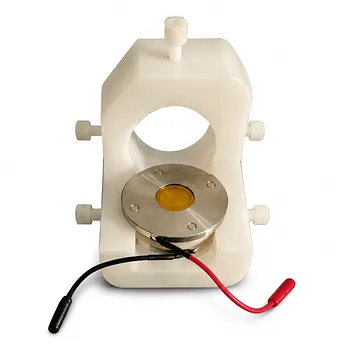
Aqueous Battery Testing Fixture for Laboratory Cell Evaluation

20V 10A Battery Testing Equipment
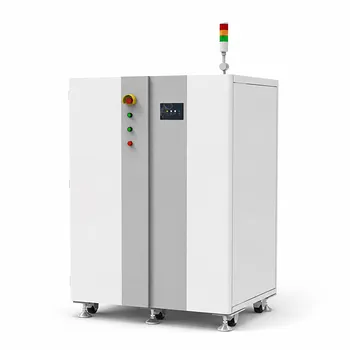
20V 10A Battery Tester Battery Testing Equipment

5V 5A Lithium Ion Battery Testing Equipment Battery Tester