Cold pressing is the fundamental process used to densify loose powders into a cohesive, high-performance cathode through the application of high pressure.
In all-solid-state batteries (ASSBs), cold pressing transforms a mixture of active materials (like NCM811) and solid electrolytes into a self-standing pellet by forcing particles into intimate mechanical contact. This step is essential because, unlike liquid electrolytes that "wet" the electrode, solid-state systems require extreme physical pressure to establish continuous transport pathways and minimize internal resistance.
Core Takeaway: Cold pressing replaces the wetting action of traditional liquid electrolytes by using mechanical force to create a dense, low-impedance interface. It is the bridge between loose chemical ingredients and a high-performance, mechanically stable battery component.
Achieving Structural Densification and Porosity Reduction
The Transition from Powder to Solid
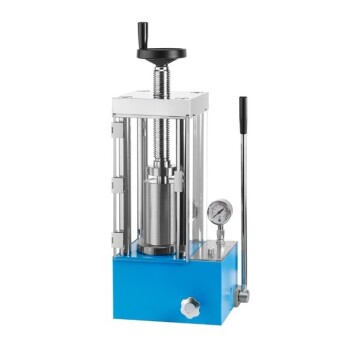
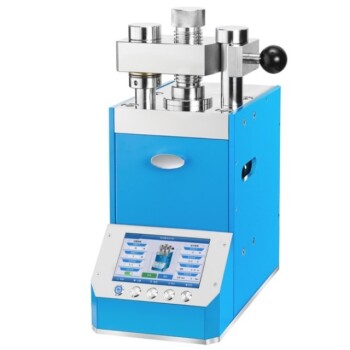
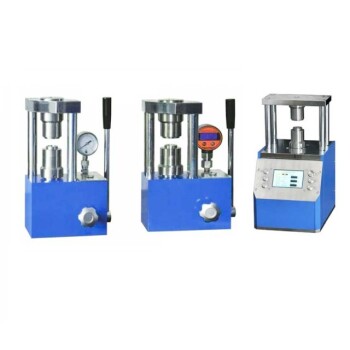
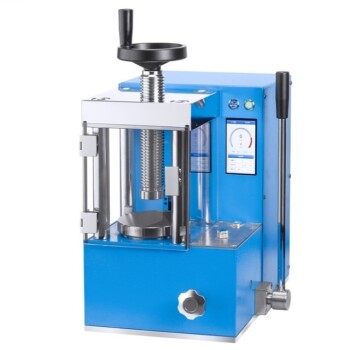
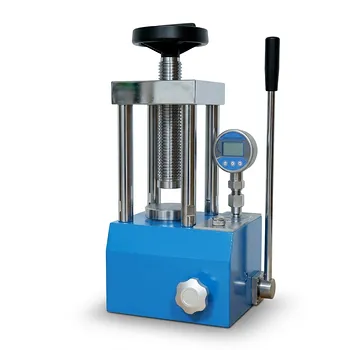
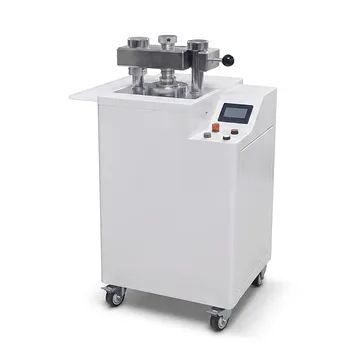
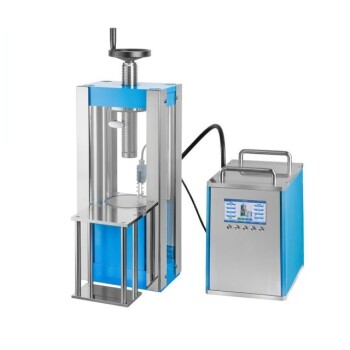
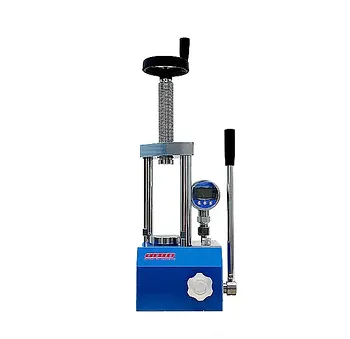
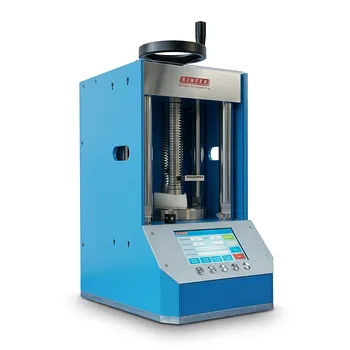
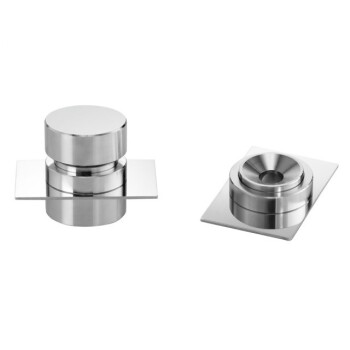
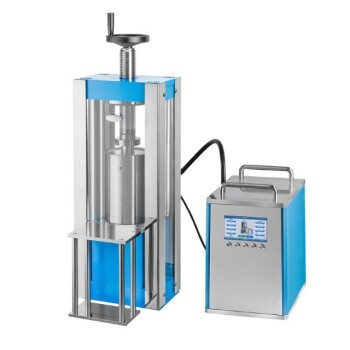
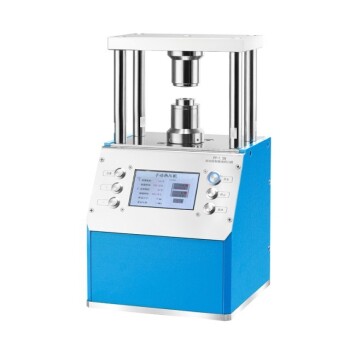
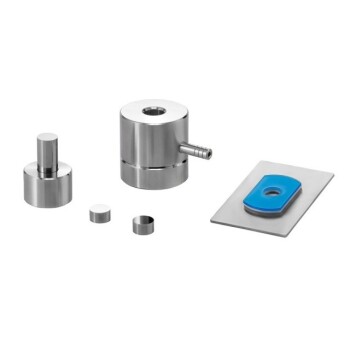
Cold pressing utilizes a hydraulic press to apply high pressures—often ranging from 150 MPa to 500 MPa—to powder mixtures. This process compacts the loose active materials and solid electrolytes into a dense, self-standing electrode pellet.
Eliminating Internal Voids
The primary goal of densification is to eliminate internal pores and voids within the pellet. Reducing porosity is critical because any air gap within the structure acts as an insulator, blocking the flow of both ions and electrons.
Establishing Targeted Relative Density
Successful cold pressing allows materials to reach a specific target density (e.g., approximately 82% relative density for certain sulfide electrolytes). Achieving this consistency ensures the battery acts as a high-density solid sheet rather than a brittle aggregate.
Establishing Ion and Electron Transport Networks
Creating Intimate Solid-Solid Contact
Since solid materials cannot flow, they must be forced together until they undergo plastic deformation and bonding. This tight contact is the only way to ensure that lithium ions can move seamlessly between the solid electrolyte and the active material particles.
Building Continuous Pathways
The process creates physical channels for rapid lithium-ion migration throughout the cathode. By pressing the conductive agents, electrolytes, and active materials together, you establish the initial, continuous networks required for both ion and electron transport.
Reducing Interfacial Impedance
The "interfacial resistance" between solid components is the biggest bottleneck in ASSB performance. Cold pressing creates a void-free, intimate interface that significantly lowers this resistance, directly improving the battery's rate capability and cycling stability.
Enhancing Mechanical and Integrated Stability
Providing Structural Integrity
Cold pressing provides the cathode with the mechanical strength necessary to remain self-standing. Without this strength, the pellet would crumble during subsequent assembly steps or during the volume changes associated with battery cycling.
Integrated Multi-Layer Molding
This process is often used for the integrated molding of functional layers, such as the cathode mixture, interlayers (like Ag/CB), and the electrolyte layer. Applying high pressure ensures these layers bond at an atomic or tight macroscopic level, preventing delamination.
Uniformity through Isostatic Pressing
While unidirectional pressing is common, cold isostatic pressing (applying pressure from all directions) is often used to ensure consistent density. This prevents cracks and deformations caused by internal stress concentrations in complex-shaped components.
Understanding the Trade-offs and Limitations
Material Cracking and Internal Stress
Applying too much pressure can lead to cracking of the active material particles or the solid electrolyte itself. Excessive internal stress can cause the pellet to warp or fracture once the pressure is released, compromising the battery’s longevity.
Pressure Limits and Material Deformation
Different electrolytes have different deformation thresholds. For instance, polymer-coated materials may respond differently to pressure than pure sulfide ceramics, requiring precise calibration of the MPa applied to avoid over-compacting or damaging the active material.
The Problem of "Spring-Back"
After the pressure is released, some materials undergo "elastic recovery" or spring-back, where the pellet expands slightly. This can introduce micro-cracks at the interfaces that were just established, potentially increasing impedance over time.
How to Apply Cold Pressing to Your Project
When preparing all-solid-state cathode pellets, your pressing strategy should be dictated by your specific performance goals:
- If your primary focus is Maximizing Ionic Conductivity: Use the highest pressure the material can sustain without cracking (typically 370–500 MPa) to eliminate all possible voids.
- If your primary focus is Structural Uniformity: Utilize cold isostatic pressing rather than unidirectional die pressing to prevent internal stress concentration and ensure even density.
- If your primary focus is Multi-Layer Integration: Employ integrated molding by pressing the cathode and electrolyte powders simultaneously to ensure a seamless, high-quality interface between layers.
Mastering the cold pressing process is the most effective way to turn high-performance solid materials into a functional, low-resistance battery system.
Summary Table:
| Key Function | Technical Mechanism | Impact on Battery Performance |
|---|---|---|
| Densification | High pressure (150-500 MPa) eliminates voids | Increases relative density and energy density |
| Network Building | Plastic deformation creates solid-solid contact | Establishes continuous ion/electron transport pathways |
| Impedance Reduction | Minimizes interfacial gaps and resistance | Improves rate capability and cycling stability |
| Structural Integrity | Mechanical bonding of active materials/electrolytes | Prevents delamination and crumbling during cycling |
| Layer Integration | Simultaneous molding of cathode and electrolytes | Ensures seamless, low-resistance internal interfaces |
Elevate Your Battery Research with KINTEK Precision Pressing
Turning loose powders into high-performance all-solid-state battery components requires precision and reliability. KINTEK specializes in comprehensive laboratory pressing solutions designed to help you master the densification process.
Whether you are focusing on maximizing ionic conductivity or achieving perfect structural uniformity, we offer a range of specialized equipment:
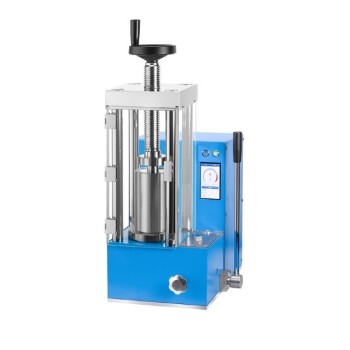
- Manual & Automatic Hydraulic Presses for versatile lab use.
- Heated & Multifunctional Models for advanced material synthesis.
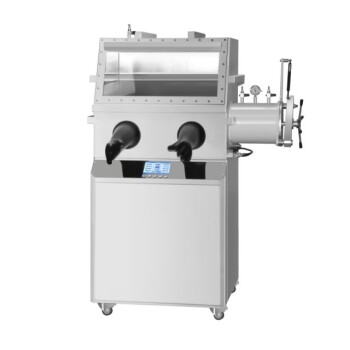
- Glovebox-Compatible Systems for air-sensitive solid electrolyte handling.
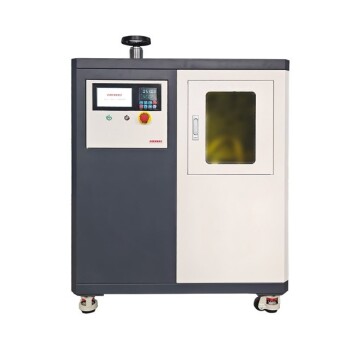
- Cold & Warm Isostatic Presses (CIP/WIP) to ensure uniform density and eliminate internal stress.
Don't let interfacial resistance hinder your research. Contact KINTEK today to find the perfect pressing solution for your lab!
References
- Guo Zhang Tang, Xinping Ai. Solid–Polymer–Electrolyte Interphase Inductively Formed by Surface Chemistry to Stabilize the High Ni Cathode in Sulfide‐Based All‐Solid‐State Lithium Batteries. DOI: 10.1002/cey2.70076
This article is also based on technical information from Kintek Solution Knowledge Base .
Related Products
- Manual Cold Isostatic Pressing CIP Machine Pellet Press
- Automatic Laboratory Hydraulic Press for XRF and KBR Pellet Pressing
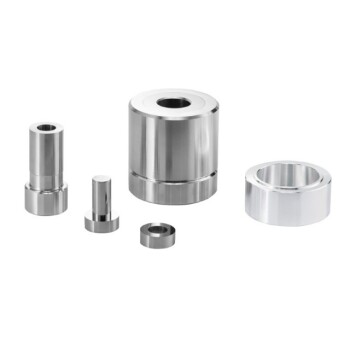
- Lab Cylindrical Press Mold for Laboratory Use
- Laboratory Hydraulic Press Lab Pellet Press Button Battery Press
- XRF KBR Plastic Ring Lab Powder Pellet Pressing Mold for FTIR
People Also Ask
- Why is Cold Isostatic Pressing (CIP) necessary for SBN ceramics? Achieve High-Density and Crack-Free Sintering
- What are the process advantages of using Cold Isostatic Pressing (CIP) for LSMO? Achieve Defect-Free Density
- Why is Cold Isostatic Pressing (CIP) applied after uniaxial pressing? Optimize Superconductor Precursor Density
- What types of equipment are available for cold isostatic pressing? Explore CIP Solutions for Labs and Production
- What are the technical advantages of cold isostatic pressing equipment compared to uniaxial compression equipment? Learn More!