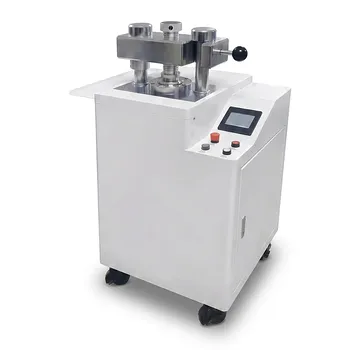
The KBr pellet technique serves as a transparent carrier matrix that allows infrared light to pass through solid bamboo samples. By mixing powdered Moso bamboo fibers with potassium bromide and compressing them into a thin disc, the method enables Fourier Transform Infrared Spectroscopy (FTIR) to detect the vibrational frequencies of functional groups, providing direct evidence of chemical changes like the removal of lignin and hemicellulose.
The KBr pellet technique is essential for transforming opaque solid fibers into a transparent medium, ensuring that infrared radiation can penetrate the sample to provide a clear and reproducible chemical signature.
The Role of KBr as an Infrared-Transparent Matrix
Achieving Optical Transparency
Potassium Bromide (KBr) is used because it is highly transparent to infrared radiation. Unlike the bamboo fibers themselves, which would scatter light in their raw form, KBr allows the infrared beam to pass through the sample without significant interference from the matrix material.
Functioning as a Sample Carrier
In this technique, the KBr acts as a structural host. Powdered Moso bamboo fibers are dispersed within the KBr powder, ensuring that the biological sample is thin enough for the spectrometer to capture the characteristic vibration peaks of its molecular bonds.
The Mechanics of Pellet Preparation
Using High Pressure for Uniformity
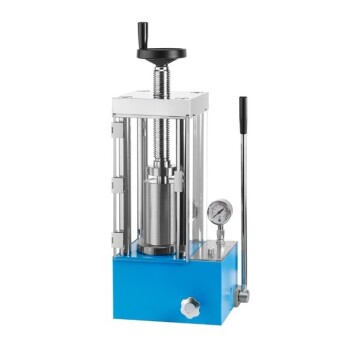
A laboratory press applies constant, high pressure to the KBr and bamboo mixture to induce plastic flow. This process excludes air from between the particles, resulting in a cylindrical pellet with uniform thickness and high light transmittance.
Ensuring Reproducible Results
The geometry of a flat, thin pellet is vital for consistent measurements. This uniformity allows researchers to compare different samples—such as treated versus untreated bamboo—with high accuracy, which is essential for longitudinal chemical studies.
Analyzing Chemical Changes in Moso Bamboo
Detecting Functional Group Vibrations
The primary goal of using this technique with Moso bamboo is to identify chemical bond changes. The FTIR spectrometer detects the vibration modes of specific functional groups, such as hydroxyl (OH-) and carbonyl groups, which shift or disappear during chemical processing.
Verifying Alkali Treatment Efficacy
This method provides the "fingerprint" needed to confirm if alkali treatments have successfully modified the fiber. By observing the reduction in specific peaks, researchers get direct evidence that lignin and hemicellulose have been effectively removed from the bamboo structure.
Understanding the Trade-offs
Sensitivity to Moisture
KBr is highly hygroscopic, meaning it readily absorbs moisture from the air. If the KBr or the bamboo sample is not perfectly dry, water peaks can appear in the spectra, potentially masking the very hydroxyl (OH-) groups the researcher is trying to analyze.
Sample-to-Matrix Ratio
The ratio of bamboo powder to KBr must be precisely controlled. If the concentration of bamboo is too high, the pellet becomes opaque, blocking the infrared beam; if it is too low, the signal-to-noise ratio decreases, making it difficult to identify subtle chemical shifts.
Applying This Technique to Your Analysis
When utilizing the KBr pellet technique for bamboo fiber analysis, your approach should vary based on your specific research objective:
- If your primary focus is quantifying lignin removal: Ensure a highly consistent sample-to-KBr ratio to allow for the comparative intensity analysis of aromatic skeletal vibrations.
- If your primary focus is identifying surface hydroxyl changes: Bake your KBr powder and bamboo samples in a vacuum oven immediately before pressing to eliminate interference from atmospheric moisture.
- If your primary focus is structural integrity: Use a high-pressure laboratory press to ensure the pellet is free of micro-voids, which can cause light scattering and result in a "sloping" baseline in your FTIR spectra.
By mastering the KBr pellet technique, you ensure that the complex chemical landscape of Moso bamboo is rendered visible and measurable.
Summary Table:
| Feature | Function in FTIR Analysis | Impact on Results |
|---|---|---|
| KBr Transparency | Allows IR light to pass through solid bamboo | Enables clear detection of functional groups |
| Carrier Matrix | Houses dispersed powdered fibers | Ensures sample is thin enough for light penetration |
| High Pressure | Induces plastic flow & excludes air | Creates uniform pellets with high transmittance |
| Fingerprinting | Detects OH- and Carbonyl vibrations | Verifies efficacy of alkali/chemical treatments |
Optimize Your Bamboo Fiber Analysis with KINTEK
To achieve the high optical transparency required for accurate FTIR results, precise sample preparation is non-negotiable. KINTEK specializes in comprehensive laboratory pressing solutions, providing the tools you need to create perfect, air-free KBr pellets every time.
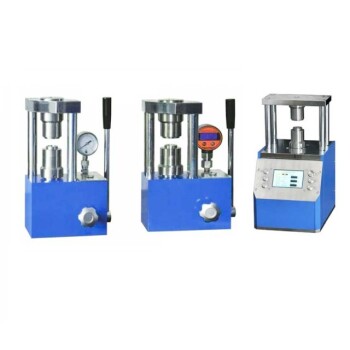
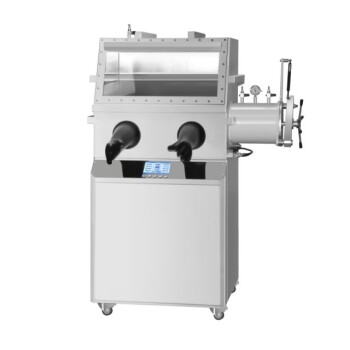
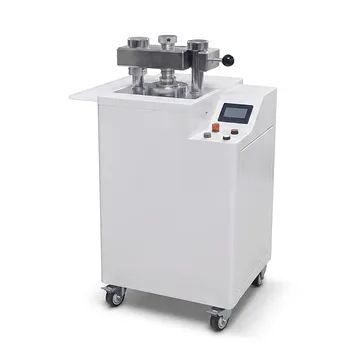
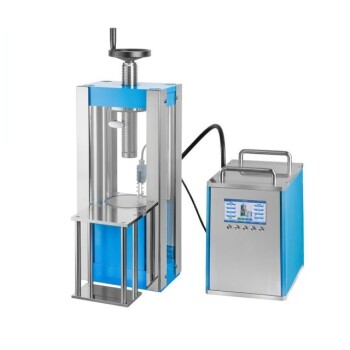
Our range includes manual, automatic, heated, multifunctional, and glovebox-compatible models, as well as cold and warm isostatic presses. Whether you are conducting fundamental plant science or advanced battery research, our equipment ensures the reproducibility and clarity your chemical analysis demands.
Ready to enhance your lab's efficiency and data precision?
Contact our experts today to find the perfect press for your research!
References
- Anteneh Geremew, Hans De Backer. Surface modification of bamboo fibers through alkaline treatment: Morphological and physical characterization for composite reinforcement. DOI: 10.1177/15589250241248764
This article is also based on technical information from Kintek Solution Knowledge Base .
Related Products
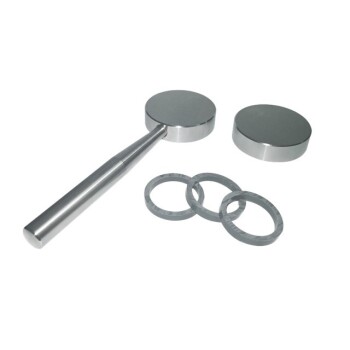
- XRF KBR Plastic Ring Lab Powder Pellet Pressing Mold for FTIR
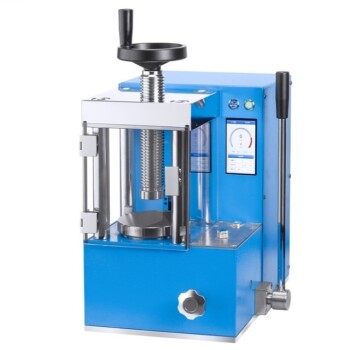
- Laboratory Hydraulic Press 2T Lab Pellet Press for KBR FTIR
- XRF KBR Steel Ring Lab Powder Pellet Pressing Mold for FTIR
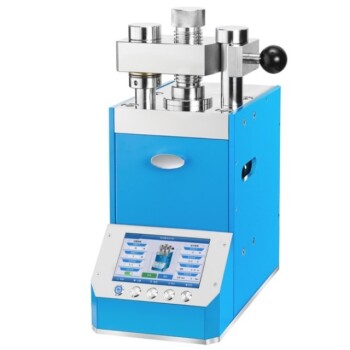
- Automatic Laboratory Hydraulic Press for XRF and KBR Pellet Pressing
- Laboratory Hydraulic Pellet Press for XRF KBR FTIR Lab Press
People Also Ask
- What is the purpose of making KBr pellets for FTIR? Achieve Precise Molecular Analysis with Solid Samples
- What factors should be considered when choosing a lab press for XRF pellet preparation? Ensure Accurate and Consistent Results
- Why are pellets used in XRF analysis, and what is their limitation? Boost Accuracy and Speed in Your Lab
- How are pellets prepared for XRF analysis and what is a potential drawback? Master XRF Sample Prep and Accuracy
- What are specialized XRF pellet preparation presses designed for? Boost Lab Efficiency with High-Throughput Automation