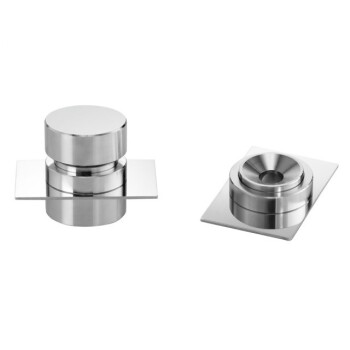
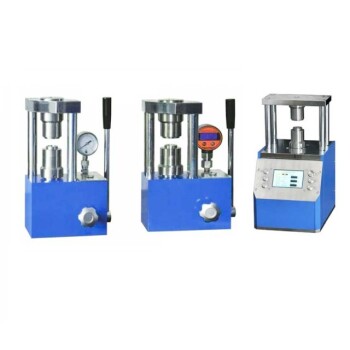
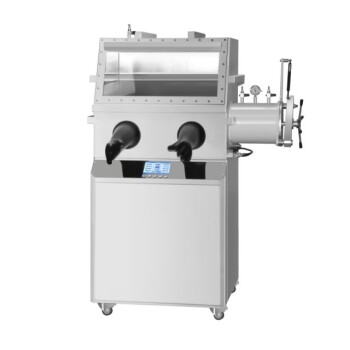
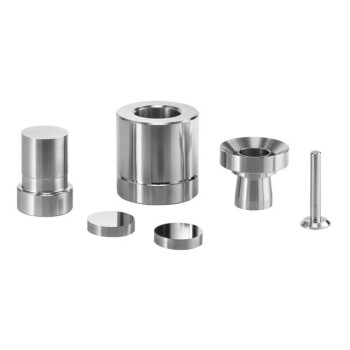
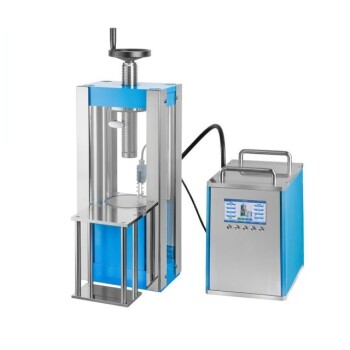
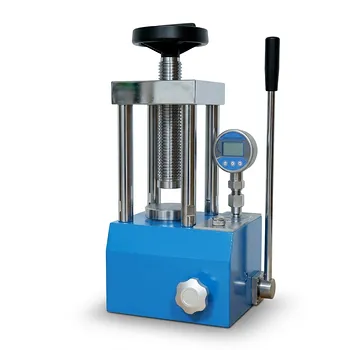
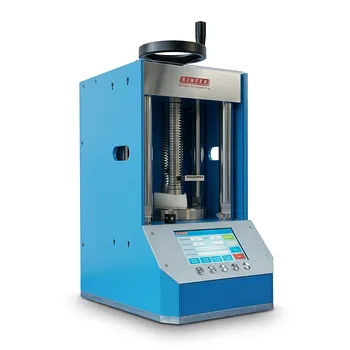
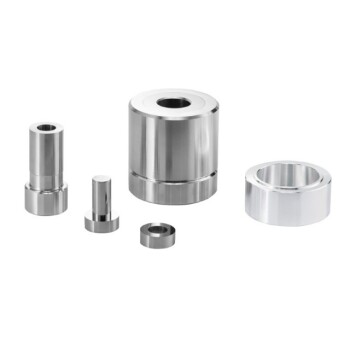
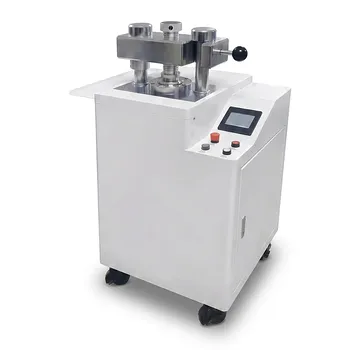
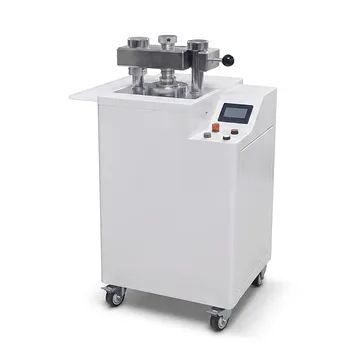
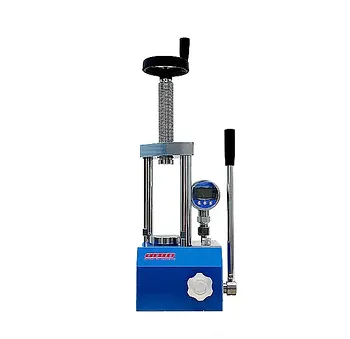
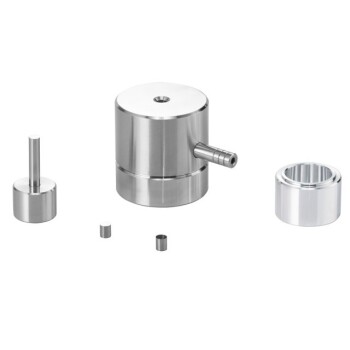
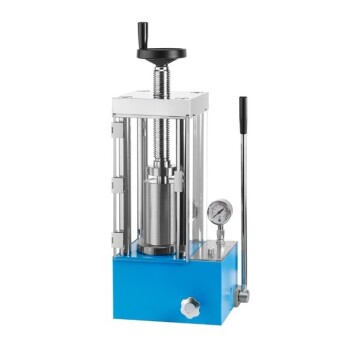
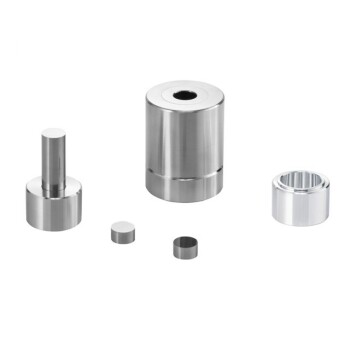
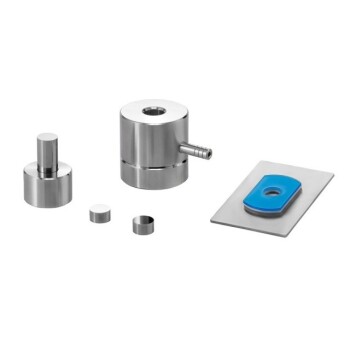
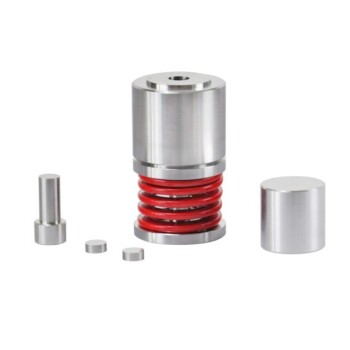
A laboratory press is essential for the KBr pellet technique because it provides the uniform, high-intensity pressure required to induce "plastic flow" in potassium bromide crystals. This physical transformation converts a dry powder mixture into a solid, transparent disc that allows infrared light to pass through the sample without significant scattering. Without the force of a hydraulic press, the resulting pellet remains opaque, rendering the FTIR spectral data noisy or unreadable.
Core Takeaway: The laboratory press is not merely a tool for shaping; it is a critical instrument that alters the physical state of the KBr-sample mixture to achieve the optical transparency and uniform thickness required for accurate infrared light penetration.
The Mechanics of Sample Transparency
Achieving Optical Transparency through Plastic Flow
The primary function of a laboratory press is to apply enough force to make KBr crystals flow together into a single, continuous lattice. Under high pressure—often around 1,000 psi—the KBr particles undergo plastic deformation, filling the voids between the sample particles. This creates a glass-like pellet that is transparent to infrared radiation, which is a prerequisite for capturing high-resolution spectra.
Eliminating Light Scattering and Air Pockets
A laboratory press excludes air from between the powder particles, which is vital for preventing light scattering. If air pockets remain, the infrared beam will bounce off the internal surfaces of the pellet rather than passing through it. By removing these gaps, the press ensures that the infrared light can effectively reach the detector, providing a high signal-to-noise ratio.
Maintaining Uniform Thickness for Signal Integrity
Precision pressing ensures that the pellet has a consistent thickness across its entire diameter. This uniformity is necessary for the infrared beam to penetrate the sample predictably and for the resulting data to be reproducible. Inconsistent thickness can lead to distorted absorption peaks, making it difficult to identify specific functional groups like hydroxyl (O-H) or carbonyl (C=O) groups.
The Role of KBr as an Infrared Carrier
Utilizing KBr as an IR-Transparent Matrix
Potassium bromide is used specifically because it has extremely high transparency in the infrared region of the light spectrum. Unlike many other materials, it does not generate interfering background signals that would mask the sample's data. The laboratory press embeds the sample into this transparent matrix, allowing the IR beam to interact solely with the sample's molecular bonds.
Expanding the Range of Analyzable Materials
The use of a lab press allows researchers to analyze diverse materials from biochar and plant extracts to tough substances like polyurethane elastomers. By grinding these materials into a micro-scale powder and pressing them into a KBr matrix, even structurally complex samples can be prepared for precise FT-IR characterization. This is essential for identifying vibration frequencies in everything from asphalt rejuvenators to titanium dioxide.
Understanding the Trade-offs
Balancing Pressure and Pellet Integrity
While high pressure is necessary, exceeding the recommended force for a specific die set can damage the high-polish surface of the tool. However, applying insufficient pressure will result in a "cloudy" or opaque pellet that obscures the infrared signal. Achieving the correct balance is the only way to ensure the pellet is thin enough for light penetration but structurally sound enough to handle.
The Impact of Ambient Moisture
Potassium bromide is highly hygroscopic, meaning it rapidly absorbs moisture from the air. If the pressing process is too slow or performed in a high-humidity environment, the KBr will absorb water, resulting in a large, unwanted "water peak" (around 3400 cm⁻¹) in the spectrum. Using an efficient hydraulic press minimizes the time the powder is exposed to the atmosphere before becoming a solid disc.
How to Apply This to Your Project
Selecting the Right Approach for Your Goal
To get the best results from your FTIR analysis, your use of the laboratory press should be tailored to your specific material.
- If your primary focus is identifying surface functional groups: Use a high-precision press to ensure the pellet is ultra-thin and clear, which maximizes the signal-to-noise ratio for groups like hydroxyl (OH-) or epoxy.
- If your primary focus is analyzing tough polymers or elastomers: Ensure the sample is pulverized to a micro-scale before pressing to achieve a uniform dispersion within the KBr matrix.
- If your primary focus is quantitative chemical evaluation: Focus on maintaining a strictly consistent pressure and weight of the KBr-sample mixture to ensure repeatable pellet thickness across different tests.
Mastering the use of the laboratory press ensures that your sample preparation is no longer the limiting factor in the quality of your infrared spectroscopic data.
Summary Table:
| Key Feature of Pressing | Physical Effect | Benefit for FTIR Analysis |
|---|---|---|
| High-Intensity Pressure | Induces "Plastic Flow" in KBr | Creates a transparent, glass-like pellet for IR penetration |
| Air Exclusion | Eliminates internal voids | Reduces light scattering and improves signal-to-noise ratio |
| Precision Compression | Ensures uniform pellet thickness | Critical for reproducible data and consistent absorption peaks |
| Rapid Processing | Minimizes atmospheric exposure | Reduces hygroscopic moisture absorption and water peak noise |
Elevate Your FTIR Accuracy with KINTEK Precision
Don't let poor sample preparation compromise your spectroscopic data. KINTEK specializes in comprehensive laboratory pressing solutions designed to ensure the optical integrity of your samples. From identifying surface functional groups to advancing battery research, our equipment provides the consistency required for high-resolution results.
Our versatile range includes:
- Manual & Automatic Presses for standard KBr pelletizing.
- Heated & Multifunctional Models for complex material analysis.
- Glovebox-compatible & Isostatic Presses (Cold/Warm) for specialized and sensitive environments.
Ready to enhance your lab's efficiency and data quality? Contact KINTEK today to find the perfect pressing solution tailored to your research needs!
References
- F. Granados-Correa, M. Jiménez‐Reyes. Correlation between Surface OH<sup>−</sup> Groups and Fractal Dimensions of Synthetic Boehmite, Goethite, and Manganite: Insights into Their Physical-Adsorbent Properties. DOI: 10.4236/jmmce.2025.134008
This article is also based on technical information from Kintek Solution Knowledge Base .
Related Products
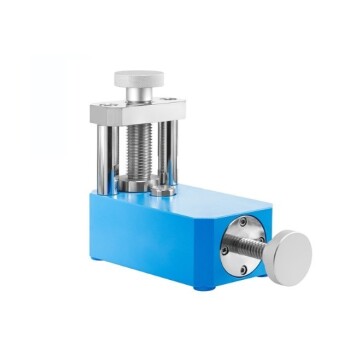
- Laboratory Hydraulic Press 2T Lab Pellet Press for KBR FTIR
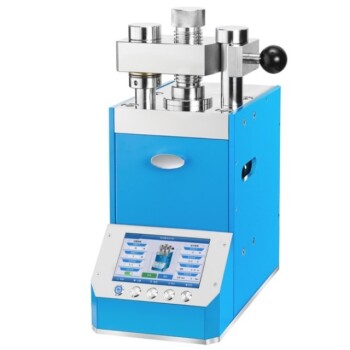
- Automatic Laboratory Hydraulic Press for XRF and KBR Pellet Pressing
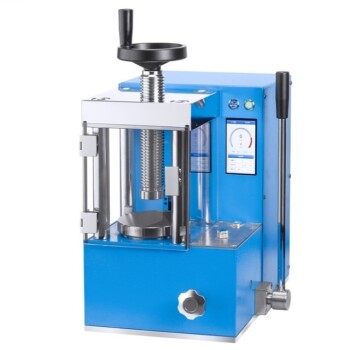
- Laboratory Hydraulic Pellet Press for XRF KBR FTIR Lab Press
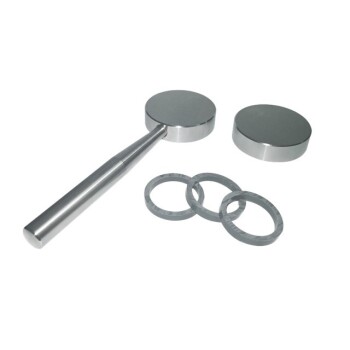
- XRF KBR Plastic Ring Lab Powder Pellet Pressing Mold for FTIR
- Lab Infrared Press Mold for No Demolding
People Also Ask
- What is the role of a laboratory pressure machine and KBr in FTIR? Master Sample Preparation for Flame Retardants
- What is the role of a laboratory hydraulic press in high-loading NCM811 cathode prep for solid-state batteries?
- What role does a laboratory hydraulic press play in reaction pellets? Optimizing Lunar Soil and Metal Fuel Density
- Why is a laboratory hydraulic press necessary for sample preparation? Precise Pelleting for Spiro Heterocyclic Analysis
- What role does a laboratory hydraulic press play in perovskite R&D? Essential for High-Density Material Synthesis