All Questions
How Do Heteroatom Doping And Nanostructural Modifications Affect The Ice And Cycling Stability Of Carbon Anode Materials In Sodium-Ion Battery R&D?
Learn how doping and nanostructuring impact sodium-ion battery anodes: trade-offs between capacitance and initial Coulombic efficiency, plus optimization tips.
What Key Technical Challenges Affect The Ice Of Sodium-Ion Battery Carbon Anodes, And How Do Laboratory Pressing And Testing Equipment Help Resolve Them?
Learn how electrode processing and testing reduce sodium loss, improving initial Coulombic efficiency in sodium-ion batteries.
How Can Temperature-Dependent Electrochemical Titration Measurements Be Used To Extract Thermodynamic Properties And Maximum Theoretical Specific Energy For Battery Materials?
Learn how temperature-dependent electrochemical titration extracts thermodynamic properties and maximum theoretical specific energy for battery materials.
How Are Battery Aging And Health Evaluated Experimentally, And What Role Do Laboratory Battery Testing Systems Play In Predicting Battery Second-Life Performance?
Learn about experimental battery aging evaluation methods and how lab testing systems enable second-life performance prediction.
What Causes Capacity And Internal Resistance Inconsistencies Across Battery Cells? Precision Pressing For Uniformity
Discover the causes of cell inconsistency and how precision pressing equipment reduces variation for reliable battery performance.
What Operational Insights Do High-Temperature Battery Testing Systems And Phase Diagrams Provide For Molten-Electrode Cell Architectures Such As Sodium-Sulfur Systems?
Discover how phase diagrams and high-temperature testing reveal operational limits, voltage plateaus, and failure risks in sodium-sulfur batteries. Optimize cell performance safely.
What Is The Distinction Between Integral And Difference Ellingham Diagrams, And How Do They Inform The Synthesis And Phase Stability Testing Of Metal Oxide Battery Materials?
Learn the difference between integral and difference Ellingham diagrams and how they guide metal oxide battery material synthesis and testing.
What Are The Primary Differences Between Repurposing, Refurbishing, And Remanufacturing Second-Life Ev Battery Packs, And What Laboratory Equipment Supports These Processes?
Explore the key differences and required lab equipment for repurposing, refurbishing, and remanufacturing EV batteries.
What Are The Key Technical Challenges In Evaluating Retired Electric Vehicle Batteries For Secondary Use? Discover How Reliable Battery Testing Systems Enable Safe And Economical Reuse.
Learn about the challenges in evaluating retired EV batteries and why reliable testing systems are essential for safe, efficient secondary use.
Why Is Rigorous Battery Testing And Cell Assessment Equipment Essential When Evaluating Spent Ev Lithium-Ion Batteries For Secondary Use (B2U) Applications At 70% To 80% State Of Health?
Rigorous testing is vital for safe, reliable second-life use. Our equipment ensures accurate grading.
How Can Precision Cell Testing Equipment Detect Single-Phase Solid Solution Regions In Binary Alloy Anode Materials? Identify Subtle Single-Phase Zones With High-Precision Coulometric Titration.
Learn how precision coulometric titration reveals subtle single-phase regions in alloy anodes via continuous voltage changes.
Why Is Identifying All Intermediate Phase Plateaus Essential When Determining The Theoretical Energy Density Of Lithium Alloy Anode Materials? Unlock The Complete Electrochemical Picture
Learn why each voltage plateau matters in lithium alloy anodes—accurately calculating theoretical energy density requires summing all phase reactions.
How Does Temperature Control During Electrochemical Coulometric Titration Influence The Thermodynamic Characterization Of Alloy Anode Materials In Battery R&D? Achieve Accurate Phase Mapping With Controlled Thermal Conditions
Learn how precise temperature control in coulometric titration reveals alloy phase stability, Gibbs free energy, and entropy changes for better battery R&D.
What Makes Chevrel Phase Mo6S8 An Effective Cathode Material For Rechargeable Magnesium Batteries, And How Are Test Cells Prepared In The Laboratory? Key Insights For Reliable Testing.
Learn why Mo6S8 is a benchmark Mg battery cathode and how to prepare test cells for reproducible results.
What Advantages Do Rechargeable Magnesium-Ion Batteries Offer Over Lithium-Ion Batteries Regarding Volumetric Capacity And Safety, And How Does Laboratory Pressing Equipment Support Their Development?
Discover how magnesium-ion batteries double volumetric capacity, improve safety, and rely on lab pressing for reproducible electrodes.
How Is The Maximum Theoretical Specific Energy Calculated For Binary Alloy Electrode Systems? Master The Integration Method For Mtse From Voltage-Capacity Data.
Learn to calculate MTSE via integrating voltage-capacity curves from electrochemical titration, accounting for all phase transformations.
Why Is Precise Temperature Control Critical During Electrochemical Characterization And Thermodynamic Evaluation? Master Thermal Accuracy For Reliable Data
Learn why precise temperature control is vital for accurate electrochemical and thermodynamic analysis of binary alloys. Optimize your experiments.
How Does Coulometric Titration Testing Help Battery R&D Engineers Evaluate Phase Transitions And Equilibrium Potential Plateaus In Alloy-Based Anode Materials?
Learn how coulometric titration reveals phase transitions and equilibrium plateaus in alloy anodes for better battery R&D.
What Are The Key Performance Differences Between Primary And Secondary Batteries That Impact Cell Research And Testing? Optimize Your Battery Testing With The Right Equipment
Understand primary vs. secondary battery performance for cell research, and how proper testing equipment improves accuracy.
What Are The Structural Components And Typical Electrode Materials Used In Coin-Cell Batteries For Laboratory Testing? Explore Key Components & Materials For Reliable Lab Coin Cells.
Learn the essential components and typical electrode materials in laboratory coin cells for consistent, accurate battery testing.
How Do Two-Phase Regions In Binary Phase Diagrams Explain The Occurrence Of Constant Voltage Plateaus During Battery Cell Testing? A Thermodynamic Perspective
Learn how two-phase coexistence creates flat voltage plateaus in batteries, from chemical potential to practical testing insights.
Why Are Inorganic Ceramic Coatings Applied To Polyolefin Separators? And What Lab Equipment Is Needed? Discover The Essential Tools For Battery Safety And R&D.
Learn why ceramic coatings enhance polyolefin separator safety and the key laboratory equipment for slurry, coating, drying, and testing.
What Are The Key Experimental Requirements For Accurate Coulometric Titration? Master Sample Prep & Cell Setup
Learn essential requirements for accurate coulometric titration of battery electrodes: electrolyte, sample prep, equilibrium, and more.
How Do Overcharging And Overdischarging Cause Structural Failure In Lithium-Ion Batteries? Discover The Critical Role Of Lab Testing Systems In Analyzing These Abuse Modes
Learn how overcharge and overdischarge damage lithium-ion cells and why precise battery testing systems are essential for safety and reliability.
What Causes Capacity Degradation In Spinel Lithium Manganese Oxide Cathodes? Mitigate It With Optimized Material Formulation And Processing.
Learn why LMO cathodes lose capacity and how lithium-rich doping, surface coatings, and proper electrode processing mitigate it.
How Is The Maximum Theoretical Specific Energy Of A Cell Calculated, And How Does Solid Electrolyte Product Growth Impact Internal Cell Resistance During Discharge?
Learn the MTSE formula and how solid electrolyte growth increases resistance, reducing practical energy in solid-state cells.
How Do Solid Solution Reactions Versus Multi-Phase Reconstitutions Affect The Voltage Profile Of Electrode Materials During Battery Discharge Testing?
Understand how solid-solution reactions yield sloped voltage curves, while multi-phase reconstitutions create flat plateaus, and how to interpret these profiles.
Why Are Modular Battery Testing And Cell Rematching Critical? Ensure Safe, Efficient Battery Remanufacturing
Learn how cell testing and rematching improve battery reuse safety, capacity, and lifespan. Essential for remanufacturing.
How Do Passive And Active Battery Equalization Methods Differ? Unlock Efficiency And Speed In Battery Management
Compare passive vs active equalization: energy efficiency, speed, cost, and thermal impact. Learn which method suits your BMS.
What Internal Challenges In Standard Lithium-Ion Batteries Are Driving R&D Interest Toward Post-Lithium Chemistries Such As Sodium-Ion And Potassium-Ion Systems? Discover The Key Drivers And Technical Hurdles.
Explore the internal challenges of lithium-ion batteries and why sodium-ion and potassium-ion chemistries are gaining R&D attention.
What Causes Initial Coulombic Efficiency Loss In Nanostructured Carbon Anodes For Sodium-Ion Batteries? Optimize Sei Formation For Better Performance
Learn key mechanisms of ICE loss and best practices for lab-scale SEI formation testing to improve sodium-ion battery performance.
Why Is Battery Cell Equalization Essential In Bms? Optimize Performance With Robust Cell Testing Solutions
Discover how cell equalization in BMS ensures safety and longevity, and how cell testing optimizes balancing for reliable battery packs.
How Do Batteries And Supercapacitors Complement Each Other In Hybrid Energy Storage Systems (Hess)? Essential Equipment For Development
Discover how batteries and supercapacitors work together in HESS to optimize performance and longevity, plus the essential equipment needed for development.
What Lessons Can Be Drawn From The Historical Development Of Rechargeable Batteries (Such As Lead-Acid, Ni-Cd, And Ni-Fe), And How Do Modern Laboratory Assembly And Testing Systems Support Research Into Alternative Chemistries?
Explore how historical battery trade-offs inform modern R&D, and how lab assembly and testing systems enable reproducible evaluation of new chemistries.
How Do Primary And Secondary Energy Storage Batteries Differ In Function, And Why Is Specialized Cell Fabrication And Pressing Equipment Necessary For Secondary Battery R&D?
Learn the key differences between primary and secondary batteries and why precision fabrication equipment is vital for reliable R&D.
How Does Electronic Leakage Across The Electrolyte Cause Self-Discharge And Heat Generation In An Electrochemical Cell? Exploring The Mechanism And Mitigation
Understand how electronic leakage leads to self-discharge and heat generation, and learn how to minimize these effects in electrochemical cells.
What Is The Relationship Between C-Rate, Internal Impedance, And Usable Capacity? Key Insights For Battery Testing
Discover how C-rate, internal impedance, and cutoff voltage affect usable capacity in battery discharge testing.
What Thermodynamic Relationship Governs The Temperature Dependence Of Open-Circuit Battery Voltage ($De/Dt$)? Discover The Gibbs–Helmholtz Equation And How To Evaluate Δs_R In Materials R&D.
Learn how $dE/dT$ relates to reaction entropy via the Gibbs–Helmholtz equation. Explore evaluation methods and applications in battery R&D.
How Does Microstructural Growth Of A Solid Reaction Product Layer During Discharge Impact Internal Cell Resistance, And Why Is Tracking This Essential During Laboratory Battery Testing?
Learn how reaction layer growth raises internal resistance and why tracking it is crucial for accurate battery testing.
Why Are Standardized Cell Assembly Equipment And Battery Testing Systems Essential When Developing Battery Cells For Series And Parallel System Integration? Ensure Consistency And Performance
Learn how standardized assembly and automated testing ensure consistent cells for reliable series and parallel battery pack performance.
How Do Manufacturing Process Variations During Battery Cell Preparation Impact Overall Battery Performance And State Of Health (Soh)?
Learn how uneven slurry, coating, pressing, and sealing affect battery performance and SOH, and how to measure and control these variations.
How Does Solvent Co-Intercalation Enable Sodium Storage In Graphite Anodes? Optimize Your Sib Design
Learn how ether-based co-intercalation enables graphite Na storage and its trade-offs for battery design.
How Does Coulombic Efficiency Impact The Long-Term Cycling Stability Of Rechargeable Batteries, And Why Is High-Precision Cell Testing Equipment Critical During Battery R&D?
Learn how Coulombic efficiency drives battery lifespan and why high-precision testing is crucial for advanced battery R&D.
What Electrochemical Testing Methods And Analytical Signals Are Used To Distinguish Sodium Storage Mechanisms In Hard Carbon Anode Materials?
Discover the key electrochemical techniques and signals to identify sodium storage mechanisms in hard carbon anodes.
Why Is Heteroatom Doping Combined With Surface Area Control Effective For Developing High-Performance Hard Carbon Anodes In Sodium-Ion Battery Research?
Learn how heteroatom doping and surface area control optimize hard carbon anodes for sodium-ion batteries, boosting capacity and efficiency.
What Are The Primary Performance Metrics Evaluated During Battery Material Research And Cell Testing, And How Do They Impact Practical Applications?
Explore key battery metrics—energy density, power density, cycle life—and how they affect real-world performance.
What Distinguishes Sodium-Ion Adsorption From Interlayer Intercalation In Hard Carbon? Key Evidence And Techniques
Learn how to distinguish Na-ion adsorption from intercalation in hard carbon anodes using electrochemical kinetics and structural evidence.
What Functional Properties Of Electrolytes Must Be Verified Using Laboratory Electrochemical Testing Systems To Prevent Cell Failure? Ensure Cell Reliability With Rigorous Electrolyte Testing
Discover key electrolyte properties verified by electrochemical testing: ionic conductivity, electronic insulation, stability, and durability to prevent cell failure.
What Role Does Precision Laboratory Pressing And Cell Assembly Equipment Play In Evaluating Next-Generation Battery Materials Like Prussian Blue Analogues?
Discover how precision pressing and assembly equipment ensure reliable PBA battery evaluation through controlled density, contact, and sealing.
How Do Amorphous/Hard Carbons Compare To Graphitic Carbons For Sodium-Ion Battery Anodes? Discover Key Differences In Storage Mechanisms And Performance.
Compare hard carbon vs graphite anodes for sodium-ion batteries: capacity, mechanisms, efficiency, and cycling performance.
What Structural Differences Distinguish Hard Carbon From Soft Carbon In Battery Anode Research? Optimize Your Material Design
Learn how hard and soft carbon differ in structure and battery performance, plus how to evaluate them using XRD and Raman.
How Is The Coulometric Titration Technique Used To Investigate Binary Phase Stability And Voltage Plateaus In Battery Electrode Development? Explore Key Methods, Thermodynamic Insights, And Experimental Tips.
Learn how coulometric titration maps phase stability and voltage plateaus in battery electrodes. Understand thermodynamics, workflow, and best practices.
What Distinguishes Primary From Secondary Battery Cell Testing, And What Laboratory Equipment Is Required For Characterising Secondary Cell Cycling Behavior? Key Insights & Equipment
Discover the key differences between primary and secondary battery testing, including required equipment for cycling characterization.
Why Is Distinguishing Between Intrinsic Electrode Potential, Cell Voltage, And Overvoltage Critical When Evaluating New Battery Materials With Laboratory Testing Equipment?
Learn the key differences between electrode potential, cell voltage, and overvoltage to accurately assess battery materials and improve testing.
Why Are Electromotive Force (E.m.f.) And Internal Resistance Critical Metrics In Battery Cell Testing And Development? Key Insights For Optimizing Performance And Safety
Learn why E.M.F. and internal resistance are vital in battery testing. Understand voltage sag, power loss, and safety for better cell design.
What Key Safety Protocols And Maintenance Steps Must Be Observed When Charging Wet-Cell Accumulators? Essential Guide For Safe Lab Battery Testing.
Learn critical safety protocols for charging wet-cell accumulators, including ventilation, temperature control, and maintenance steps.
How Can Sulphated Lead-Acid Accumulator Plates Be Restored During Battery Testing, And What Current Adjustments Are Necessary When Gassing Occurs? Restore Sulphated Plates With Gentle Charging
Learn step-by-step restoration of sulphated lead-acid plates with reduced current and adjust charging when gassing starts. Safe battery testing tips.
How Is Current Controlled In Series-Resistive Dc Battery Charging Circuits? Precision Current Regulation Essentials For Battery Testing Systems.
Learn how series resistance controls current in battery charging circuits and why precise regulation is vital for reliable testing.
What Are The Key Indicators And Risks Of Overcharging Versus Undercharging Lead-Acid Cells During Battery Testing And Evaluation?
Learn to identify overcharging and undercharging in lead-acid cells, their risks, and how to monitor key indicators for reliable battery testing.
How Is Electrolyte Specific Gravity Accurately Measured Using A Hydrometer? Master Precise Readings For Battery Quality.
Learn the correct hydrometer technique for accurate battery electrolyte specific gravity measurement, including sampling, reading, and temperature correction.
In Lead-Acid Battery R&D, How Does Plate Construction (Thin Vs. Thick) Impact Discharge Rates, Lifespan, And Specific Gravity?
Learn how thin vs. thick plates affect discharge, lifespan, and electrolyte specific gravity in lead-acid battery R&D.
What Design Considerations Dictate The Choice Between Thick And Thin Plate Structures In Lead-Acid Battery Cell Development? Optimize For Power Vs. Durability
Learn how thick and thin plates impact battery performance, durability, and charging. Match plate design to your application.
How Does The Discharge Rate Affect Effective Storage Capacity And Voltage Management In Secondary Cell Testing? Optimize Your Battery Testing Today
Learn how discharge rate impacts capacity and voltage in secondary cells. Essential for accurate testing and battery R&D.
How Does Series Connection Impact The Total Voltage Of Multi-Cell Battery Configurations, And What Precautions Are Necessary During Cell Fabrication And Testing? Optimize Your Battery Pack Performance
Learn how series connections add voltage, why cell uniformity matters, and essential precautions for safe battery fabrication and testing.
What Is The Difference Between Open-Circuit Voltage And Working Voltage? Discover How Battery Testing Systems Reveal Real Performance.
Learn the key differences between OCV and working voltage, and how battery testers measure both to characterize performance accurately.
What Is The Value Of Using Cr2032 Coin Cell Assembly Equipment For Testing Ccm Batteries? Precision Research Solutions
Discover how CR2032 assembly equipment provides the standardized, airtight environment needed to accurately test cellulose composite membranes (CCM).
What Is The Purpose Of Using A Laboratory Hydraulic Press For Ftir Analysis Of Erythritol? Achieve High-Clarity Pellets
Discover how laboratory hydraulic presses optimize erythritol FTIR analysis by creating clear KBr pellets to eliminate light scattering and noise.
How Does Precision Mold Design Influence Nickel-Iron Cement-Based Batteries? Optimize Geometry & Energy Density
Learn how precision mold design optimizes nickel-iron cement-based batteries by ensuring geometric accuracy and reducing interfacial resistance.
What Role Does A Laboratory Hydraulic Press Play In Aisi H13 Steel Powder Compaction? Key To 75% Densification
Learn how high-performance hydraulic presses consolidate AISI H13 steel powder to 75% density, ensuring uniform microstructure and sintering success.
What Role Does A Heated Platen Press Play In The Thermoforming Of Hemp-Pp Composites? Master Thermal Consolidation
Learn how heated platen presses optimize hemp-polypropylene composites through precise heat, pressure, and fiber encapsulation for superior strength.
Why Are Precision Steel Moulds Used During The Curing And Pressing Of Nitrile Butadiene Rubber (Nbr) Test Specimens?
Discover why precision steel moulds are essential for NBR testing, ensuring uniform vulcanization, dimensional accuracy, and reliable research data.
What Is The Function Of A Hydraulic Press In Aluminum Composite Processing? Enhance Strength & Density
Learn how hydraulic presses and die steel molds improve aluminum matrix composites through grain refinement, density increase, and work-hardening.
Why Is High-Pressure Molding Essential For Cathode Material Pellets? Ensure Accurate Battery Conductivity Testing
Learn how high-pressure molding eliminates porosity and contact resistance to ensure accurate conductivity results for cathode material pellets.
What Role Does A Laboratory Hydraulic Press Play In Chemical Laboratory Powder Sample Preparation? Ensure Precision Results
Discover how laboratory hydraulic presses create dense, uniform pellets for XRF, FT-IR, and electrochemical analysis with high-pressure precision.
Why Use Laboratory Hydraulic Presses For 375 Mpa Sulfide Battery Electrodes? Achieve High Density & Ion Flow
Learn why 375 MPa pressure is vital for sulfide solid-state batteries. Enhance electrode density and ionic conductivity through precision pressing.
What Is The Purpose Of Applying 375 Mpa To Solid-State Battery Interfaces? Optimize Ion Transport & Lab Performance
Discover how high-pressure assembly (375 MPa) transforms solid-state battery interfaces to reduce impedance and maximize ion transport efficiency.
What Key Supporting Role Do High-Precision Laboratory Pellet Presses Play In Validating Simulated Predictions? Bridging Theory With Sample Precision.
Discover how laboratory pellet presses bridge the gap between material simulations and reality through high-density sample preparation and control.
Why Is A High-Precision Laboratory Press Essential For Solid-State Pouch Batteries? Unlock High Energy Density
Learn how precision pressing reduces interfacial impedance and eliminates voids to achieve 586 Wh/kg in solid-state battery assembly.
Why Is A Battery Tester With High-Precision Temperature Control Needed For Liquid Metal Electrode Cycling Tests?
Learn why precise thermal control (+/- 0.1°C) is critical for liquid metal electrodes to ensure accurate capacity, efficiency, and phase stability.
How Does Precision Constant Temperature Testing Equipment Affect Lithium Symmetric Batteries? Master Precise Analysis
Learn how precision thermal control impacts lithium battery kinetics, activation energy calculations, and Arrhenius plot accuracy.
What Is The Importance Of A High-Precision Hydraulic Crimper? Achieve Consistent Data In Battery Material Testing
Learn how high-precision hydraulic crimpers ensure hermetic sealing and uniform pressure to eliminate variables in battery material performance tests.
How Does A Laboratory Hydraulic Press Improve Pals Data For Lto Samples? Achieve Precise Defect Detection
Learn how laboratory hydraulic presses enhance PALS accuracy by creating uniform LTO pellets for reliable defect analysis.
What Is The Application Of A Laboratory Hydraulic Press In The Preparation Of Electrode Sheets For Battery Testing?
Learn how laboratory hydraulic presses optimize battery electrodes by reducing contact resistance and ensuring stable, repeatable electrochemical data.
What Role Does A Laboratory Lab Press Play In Lnmo Battery Assembly? Optimize Electrode Performance And High-Voltage Stability
Learn how laboratory presses and rolling equipment enhance LNMO battery performance through precise electrode compaction and hermetic sealing.
What Role Does A Laboratory Hydraulic Press Play In High-Sulfur Electrode Preparation? Achieve Precision Compaction
Learn how high-precision laboratory hydraulic presses optimize electrode density and conductivity for high-sulfur battery research.
Why Is It Necessary To Use Dedicated Battery Test Fixtures? Optimize Solid-State Lithium Battery Assembly
Learn why constant mechanical pressure and dedicated fixtures like split-cell molds are critical for all-solid-state lithium metal battery testing.
What Is The Primary Purpose Of Using A High-Pressure Laboratory Hydraulic Press? Enhance Lpsc Pellet Performance
Learn how high-pressure hydraulic presses eliminate defects and reduce grain boundary resistance in LPSC solid-state electrolyte preparation.
What Is The Primary Function Of Laboratory Presses In Sulfide All-Solid-State Battery Development?
Learn how high-precision laboratory presses and fixtures eliminate porosity and maintain vital interface contact in solid-state battery research.
What Is The Critical Role Of A Laboratory Hydraulic Press In Asslib Assembly? Eliminate Interfacial Impedance Now
Learn how high-pressure laboratory presses reduce interfacial impedance in solid-state batteries by maximizing contact area and material density.
How Does A Laboratory Hydraulic Press Ensure The Reliability Of Testing Results For High-Entropy Cathode Materials?
Learn how laboratory hydraulic presses standardize electrode density and electrical contact to ensure reliable battery material testing results.
Why Do Sulfide All-Solid-State Batteries Require Continuous Stack Pressure? Optimize Your Lab Cycle Testing
Learn why continuous stack pressure is vital for sulfide solid-state batteries to maintain interfacial contact and prevent delamination.
Why Is A Laboratory Pellet Press Considered Essential Equipment For The Preparation Of Sulfide All-Solid-State Batteries?
Discover why laboratory pellet presses are vital for sulfide all-solid-state batteries through plastic deformation and densification techniques.
What Is The Function Of A Laboratory Hydraulic Press In Ev Battery Development? Achieve High-Energy Density Solutions
Learn how laboratory hydraulic presses enable high-energy density EV batteries by reducing resistance and densifying solid-state electrolytes.
Why Is Precise High-Pressure Control From A Laboratory Hydraulic Press Necessary? Optimize Electrolyte Pellets
Learn why precise high-pressure control is vital for oxysulfide-nitride electrolyte pellets to ensure density, conductivity, and safety.
Why Is A Laboratory Press Machine Necessary For Composite Electrolyte Samples? Ensuring Data Accuracy In Battery Research
Learn how laboratory presses eliminate voids and standardize sample geometry to ensure accurate EIS results for composite electrolytes.
Why Must Constant Stack Pressure Be Maintained In Solid-State Battery Testing? Key Mechanical Insights
Learn how constant stack pressure compensates for volume changes and prevents interface delamination in all-solid-state battery (ASSB) research.
Why Is A Precision Laboratory Hydraulic Press Typically Required For Sample Preparation? Ensure Battery Test Accuracy
Learn why a precision hydraulic press is essential for cathode material preparation, ensuring uniform density and reliable electrochemical data.
Why Must Battery Disassembly Be Performed Inside An Inert Atmosphere Glovebox? Ensure Data Integrity And Safety
Learn why inert atmosphere gloveboxes are essential for battery disassembly to prevent oxidation and preserve sample morphology for analysis.
How Do Specialized Battery Test Fixtures Affect Expansion Force Measurement? Achieve Precision In Battery R&D
Learn how specialized battery test fixtures and rigid constraints improve accuracy in measuring pouch cell expansion force and internal physics.
Why Is It Necessary To Use A High-Precision Displacement Sensor In Battery Expansion Research? Unlock Advanced Modeling
Learn how high-precision displacement sensors and force measurements create stiffness models to detect lithium intercalation and deposition.
Related Products

Battery Testing Temperature Control System

Aqueous Battery Testing Fixture for Laboratory Cell Evaluation

20V 10A Battery Testing Equipment
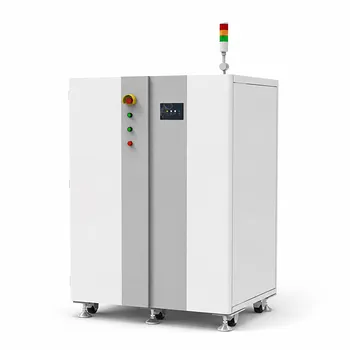
20V 10A Battery Tester Battery Testing Equipment

5V 5A Lithium Ion Battery Testing Equipment Battery Tester