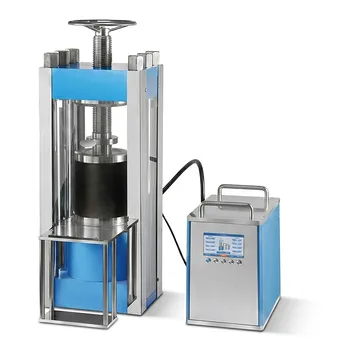
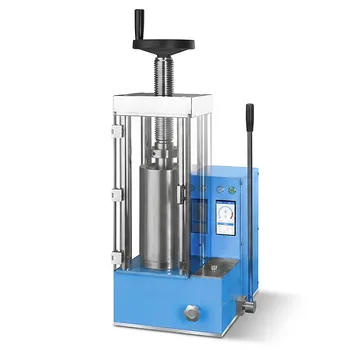
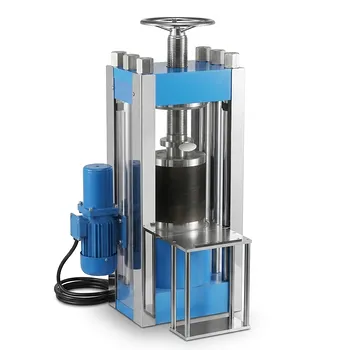
Laboratory-scale isostatic pressing devices are essential for researching high-silicon steels because they simulate the extreme industrial conditions required to manipulate solid-state phase transformations. By precisely controlling the timing and magnitude of pressure, researchers can suppress the formation of plastic deformation zones in the ferrite matrix caused by graphite, directly optimizing the material’s microhardness and structural integrity.
These devices enable the precise management of phase transitions and internal stresses, allowing researchers to eliminate microstructural defects and achieve a uniform, high-performance state in high-silicon steel that is unattainable through traditional processing.
Simulating Industrial Realities in a Controlled Environment
Replicating Extreme Pressure and Temperature
Laboratory-scale isostatic presses allow researchers to recreate the high-pressure and high-temperature combinations found in industrial production. This simulation is critical for observing how these variables interact in a controlled setting before scaling up to mass manufacturing.
Investigating Solid-State Phase Transformations
These devices provide a unique window into how pressure intervenes in phase changes, such as the formation and dissolution of graphite. Understanding these transitions is vital, as they directly dictate the final mechanical properties of the steel.
Managing Microstructural Evolution and Work Hardening
Suppressing Graphite-Induced Deformation
In high-silicon steels, the lower density of graphite can create plastic deformation zones within the surrounding ferrite matrix. Isostatic pressing allows researchers to apply external pressure at critical moments to eliminate these zones, preventing premature weakening of the material.
Optimizing Ferrite Matrix Microhardness
By suppressing localized deformation, the device helps in achieving a more optimized microhardness distribution. This ensures that the work hardening mechanism is uniform across the material, rather than being concentrated around structural defects.
The Role of Uniformity in Strain Engineering
Eliminating Internal Stress Gradients
Unlike uniaxial pressing, isostatic pressing applies uniform fluid pressure from all directions. This ensures that observed strain effects result from the structural design of the steel rather than inconsistencies or density gradients introduced during processing.
Achieving Theoretical Densification
The simultaneous application of heat and pressure (Hot Isostatic Pressing) eliminates residual internal porosity. This process drives the material toward its theoretical density, resulting in isotropic properties and superior toughness compared to cast or forged alternatives.
Understanding the Trade-offs and Challenges
Complexity of Process Timing
The effectiveness of isostatic pressing in research depends heavily on the precise timing of pressure application. Applying pressure too early or too late in the phase transformation cycle can fail to suppress defects or may even introduce new internal stresses.
Equipment and Operational Constraints
While laboratory-scale devices offer high precision, they require sophisticated maintenance and specialized training. The transition from laboratory-scale results to full-scale industrial production can also face challenges regarding thermal inertia and cooling rate consistency.
How to Apply These Insights to Your Research
Successful integration of isostatic pressing into high-silicon steel research requires aligning the equipment's capabilities with your specific metallurgical goals.
- If your primary focus is improving surface and core hardness: Prioritize the precise timing of pressure application during phase transitions to ensure a uniform ferrite matrix.
- If your primary focus is structural reliability in extreme environments: Use hot isostatic pressing (HIP) to eliminate internal voids and achieve maximum material densification.
- If your primary focus is investigating strain-induced effects: Utilize the uniform pressure of isostatic devices to isolate structural variables from processing defects like density gradients.
By mastering the variables of isostatic pressing, researchers can unlock the full performance potential of high-silicon steels for advanced engineering applications.
Summary Table:
| Feature | Research Benefit | Impact on High-Silicon Steel |
|---|---|---|
| Uniform Pressure | Eliminates density gradients & internal stress | Isotropic properties and superior toughness |
| Phase Control | Manages solid-state transformations | Suppresses graphite-induced plastic deformation |
| Densification | Eliminates internal porosity (HIP/WIP) | Achieves theoretical density and structural integrity |
| Industrial Simulation | Replicates extreme heat/pressure environments | Facilitates accurate scaling from lab to production |
Unlock Advanced Material Performance with KINTEK
Ready to elevate your metallurgical research or battery development? KINTEK specializes in comprehensive laboratory pressing solutions designed for precision and reliability. Whether you are investigating the work hardening of high-silicon steels or developing next-gen energy storage, our range of equipment—including manual, automatic, heated, multifunctional, and glovebox-compatible models, as well as advanced cold (CIP) and warm (WIP) isostatic presses—provides the controlled environment you need.
Our solutions empower researchers to eliminate microstructural defects, achieve theoretical densification, and simulate industrial realities with ease. Contact KINTEK today to find the perfect pressing system for your lab and accelerate your path to discovery!
References
- P. Rubin, Marta‐Lena Antti. Graphite Formation and Dissolution in Ductile Irons and Steels Having High Silicon Contents: Solid-State Transformations. DOI: 10.1007/s13632-018-0478-6
This article is also based on technical information from Kintek Solution Knowledge Base .
Related Products
- Split Hot Isostatic Pressing Machine 150 Ton Laboratory Heated Isostatic Press
- Electric Isostatic Pressing Machine 40 Tons Automatic Laboratory Powder Compacting Press
- Lab Isostatic Pressing Molds for Isostatic Molding
- Automatic Lab Cold Isostatic Pressing CIP Machine
- Electric Lab Cold Isostatic Press CIP Machine
People Also Ask
- What is the difference between Hot Isostatic Pressing (HIP) and hot pressing? Choose the Best Method for Your Lab
- What is Hot Isostatic Pressing (HIP)? Learn Operating Conditions for Maximum Density
- What treatment methods are used in Hot Isostatic Pressing (HIP)? Optimize Your Material Densification
- Why is it necessary to reduce the temperature to 80 °C before releasing pressure? Lock Wood Stability & Density
- What is the function of a laboratory heated press in manufacturing thermoplastic syntactic cores? Precision Bonding