Solid polymer electrolyte (SPE) coatings transform the cold pressing process by acting as a deformable buffer that fills inter-particle voids. This mechanism converts the fragile "point-contact" structure of raw NCM811 into a robust, mechanically interlocked network. Consequently, SPE-coated materials produce crack-free, high-density cathode pellets that far exceed the mechanical stability of uncoated powders.
The integration of a flexible SPE coating addresses the inherent brittleness of NCM811 during compaction. By utilizing viscoelastic deformation to create a continuous binder network, engineers can achieve superior electrode density and structural integrity while preventing the micro-cracking associated with rigid particle contact.
The Mechanics of Cold Pressing with SPE Coatings
Viscoelastic Buffering and Deformation
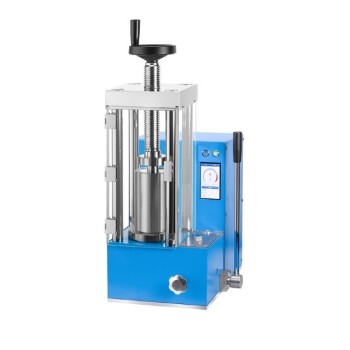
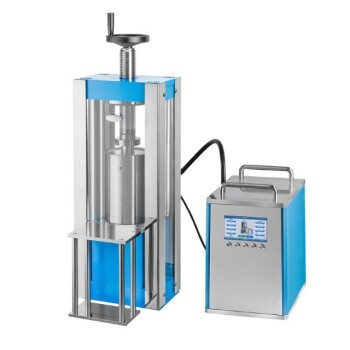
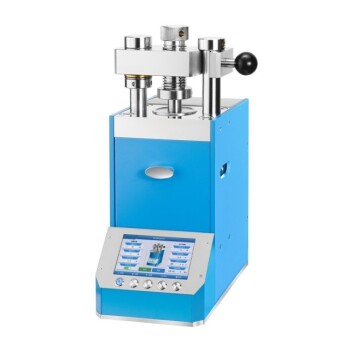
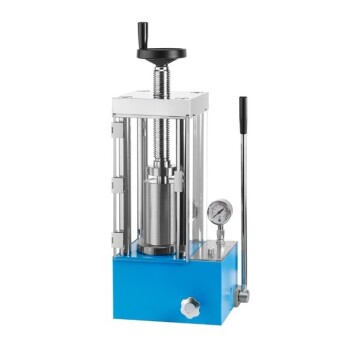
Unlike the rigid surface of uncoated NCM811, an SPE coating possesses viscoelastic and flexible properties. When a laboratory hydraulic press applies pressure, this coating deforms plastically rather than fracturing.
This deformation allows the polymer to flow into the voids between particles. It acts as a physical buffer that redistributes local stresses, preventing the active material from experiencing concentrated loads that cause structural failure.
From Point-Contact to Mechanical Interlocking
Uncoated NCM811 particles typically form "point-contact" structures, where particles touch only at small, specific areas. These structures are inherently fragile and prone to instability under mechanical stress.
The SPE coating facilitates a mechanical interlocking structure among the rigid NCM811 particles. This creates a cohesive "matrix" where the polymer acts as both a lubricant during pressing and a permanent binder post-pressing.
Impact on Pellet Density and Structural Integrity
Eliminating Voids and Cracks
The primary benefit of the SPE coating is the production of crack-free, high-density cathode pellets. By filling the interstitial spaces, the polymer ensures that the resulting electrode is a continuous solid rather than a collection of loosely bound grains.
This density is critical for improving the volumetric energy density of the battery. Furthermore, the absence of cracks prevents the premature degradation of the cathode during long-term cycling.
Enabling High Mass Loading
A robust mechanical structure is essential when manufacturing electrodes with high mass loading (such as 20 mg/cm²). The SPE coating ensures that even thick electrode layers maintain their integrity during the drying and pressing stages.
When using precision blade coaters, the presence of these coatings helps manage the high-viscosity slurries required for thick electrodes. This ensures a consistent distribution of active materials across the aluminum foil current collector.
Understanding the Trade-offs
Balancing Coating Thickness and Conductivity
While a thicker SPE coating improves mechanical interlocking, it can also act as an insulating barrier if not properly optimized. Excessive polymer content may increase internal resistance by hindering electron transport between NCM811 particles.
Engineers must find the "sweet spot" where the coating is thick enough to provide a buffer during pressing but thin enough to maintain high area-specific capacity.
Processing Complexity and Viscosity
Utilizing SPE-coated materials often requires tighter control over slurry rheology. High-viscosity slurries are necessary to maintain the suspension of coated particles, but they require precision equipment like blade coaters to ensure uniform thickness.
Failure to control the gap between the blade and the collector can lead to variations in electrode thickness. This inconsistency can undermine the benefits of the high-density pellet structure.
How to Apply This to Your Project
Making the Right Choice for Your Goal
- If your primary focus is maximizing electrode density: Utilize a viscoelastic SPE coating to ensure all inter-particle voids are filled during the hydraulic pressing stage.
- If your primary focus is high mass-loading (20 mg/cm²): Implement precision blade coating to manage the high-viscosity slurries required for stable, thick-film SPE cathodes.
- If your primary focus is long-term cycle life: Prioritize the mechanical interlocking structure to prevent the micro-cracking of NCM811 particles during repeated volume changes.
By leveraging the flexible nature of polymer electrolytes, you can overcome the structural limitations of rigid cathode powders to build more durable, high-capacity energy storage systems.
Summary Table:
| Feature | Uncoated NCM811 | SPE-Coated NCM811 |
|---|---|---|
| Contact Structure | Fragile point-contact | Robust mechanical interlocking |
| Mechanical Buffer | None (rigid particles) | Viscoelastic polymer buffer |
| Stress Distribution | Concentrated (prone to cracks) | Evenly redistributed via deformation |
| Pellet Integrity | Lower density, micro-cracks | High-density, crack-free |
| Void Filling | Interstitial spaces remain | Voids filled by polymer flow |
| Application Focus | Conventional cathodes | High mass-loading/all-solid-state |
Elevate Your Battery Research with Precision Pressing Solutions
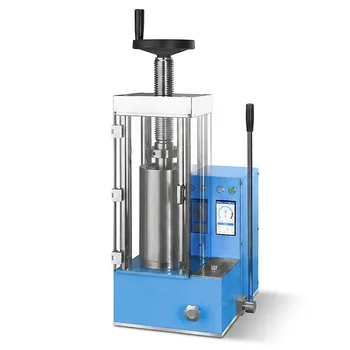
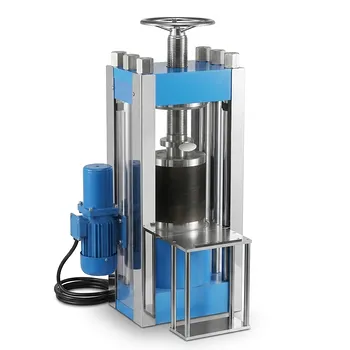
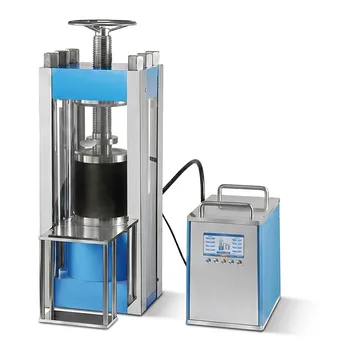
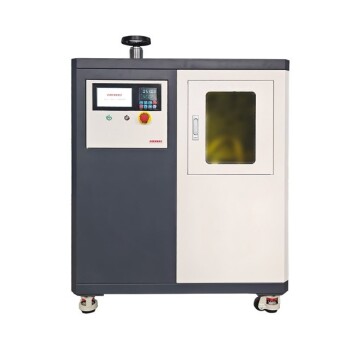
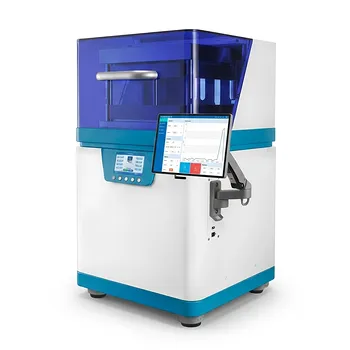
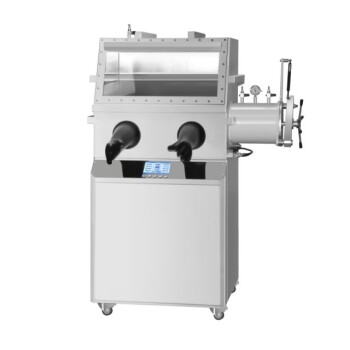
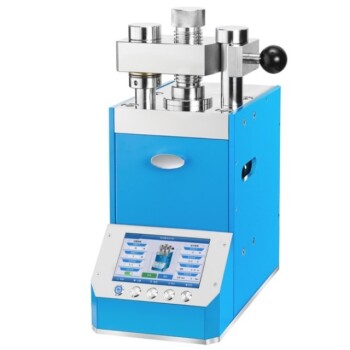
Unlock the full potential of your cathode materials with KINTEK’s specialized laboratory equipment. Our comprehensive range of pressing solutions—including manual, automatic, heated, and glovebox-compatible models, as well as cold and warm isostatic presses—is designed specifically to meet the rigorous demands of battery research.
Whether you are developing SPE-coated NCM811 or thick-film electrodes, our technology ensures the uniform compaction and structural integrity required for high-performance energy storage.
Ready to achieve crack-free, high-density results? Contact KINTEK today to find the perfect solution for your lab!
References
- Guo Zhang Tang, Xinping Ai. Solid–Polymer–Electrolyte Interphase Inductively Formed by Surface Chemistry to Stabilize the High Ni Cathode in Sulfide‐Based All‐Solid‐State Lithium Batteries. DOI: 10.1002/cey2.70076
This article is also based on technical information from Kintek Solution Knowledge Base .
Related Products
- Electric Lab Cold Isostatic Press CIP Machine
- Electric Split Lab Cold Isostatic Pressing CIP Machine
- Automatic Lab Cold Isostatic Pressing CIP Machine
- Manual Cold Isostatic Pressing CIP Machine Pellet Press
- Electric Isostatic Pressing Machine 40 Tons Automatic Laboratory Powder Compacting Press
People Also Ask
- What are the applications of electric lab cold isostatic presses in research settings? Advance Material R&D with High-Pressure CIPs
- What role do electric lab cold isostatic presses play in industrial contexts? Bridge R&D and Manufacturing with Precision
- How does electrical Cold Isostatic Pressing (CIP) contribute to cost savings? Unlock Efficiency and Reduce Expenses
- What are some research applications of electric lab CIPs? Unlock Uniform Powder Densification for Advanced Materials
- What are the characteristics of standard off-the-shelf electric lab CIP solutions? Achieve Immediate, Cost-Effective Processing