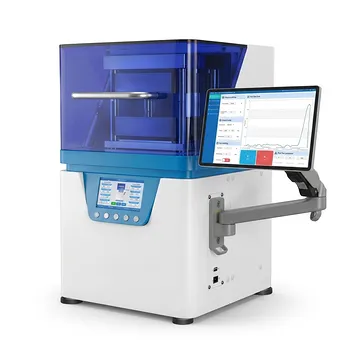
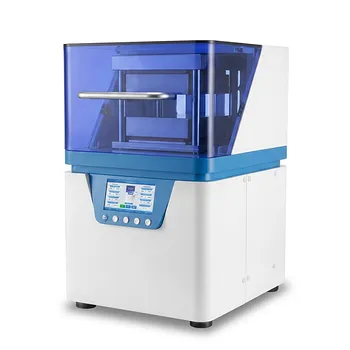
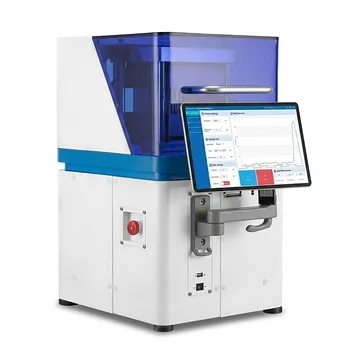
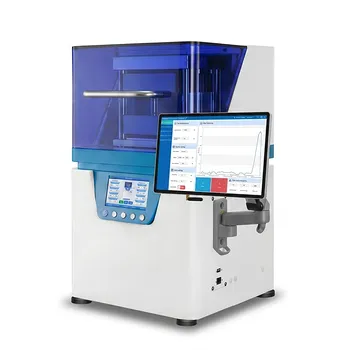
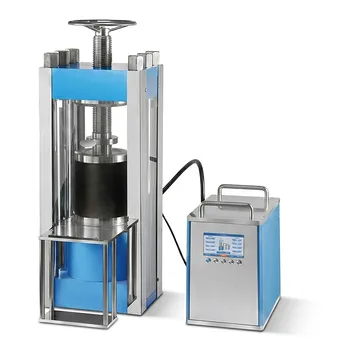
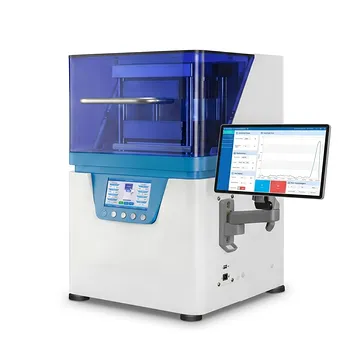
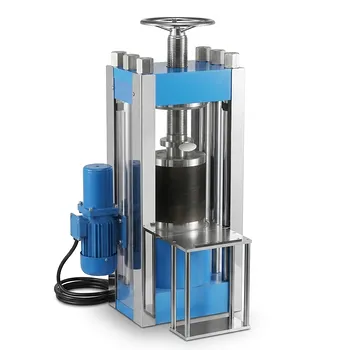
The primary purpose of using a high-pressure heating press for NiFeOx anodes is to compress the catalyst-loaded nickel substrate to a precise thickness. This mechanical process minimizes contact resistance between the NiFeOx catalyst and the nickel current collector while simultaneously optimizing the electrode's pore structure for gas evolution.
Core Takeaway: The high-pressure heating press transforms loosely loaded catalyst materials into a cohesive, high-performance electrode by maximizing electrical conductivity and mechanical stability through controlled densification.
Enhancing Electrical and Interface Conductivity
Reducing Contact Resistance
The application of high pressure forces the electrodeposited NiFeOx active materials into intimate physical contact with the nickel mesh or foam current collector. By eliminating microscopic gaps at the interface, the press significantly reduces contact resistance, ensuring that electrons flow efficiently from the catalyst sites to the external circuit.
Improving Interfacial Bonding
Using heat during the pressing process can soften the metallic components or binders, allowing the catalyst to better conform to the irregularities of the current collector. This creates a stronger mechanical bond and increases the effective contact area, which is vital for maintaining low internal resistance (Rct) during high-current operations.
Optimizing Mass Transport and Structural Integrity
Controlling Electrode Porosity
The press is used to reach a precise, predetermined thickness, which is critical for balancing the surface area with gas diffusion. An optimized pore structure allows oxygen bubbles generated during the Oxygen Evolution Reaction (OER) to escape easily while ensuring the electrolyte can penetrate the catalyst layer.
Ensuring Mechanical Stability
NiFeOx anodes must withstand the physical stress of vigorous gas bubbling during water electrolysis. The high-pressure press ensures mechanical adhesion of the active substances to the current collector, preventing the catalyst layer from delaminating or "flaking off" during long-term cycling.
Understanding the Trade-offs
The Risk of Over-Compression
Applying excessive pressure can lead to the "crushing" of the nickel foam or mesh, which destroys the macro-porous structure. If the pores are too small or fully closed, oxygen bubbles become trapped, leading to increased mass-transport resistance and potential mechanical failure of the electrode.
Balancing Temperature and Pressure
While heat improves bonding, excessive temperatures can potentially alter the oxidation state or crystallinity of the NiFeOx catalyst. It is essential to calibrate the press to ensure that the physical benefits of material softening do not come at the cost of the catalyst's inherent chemical activity.
How to Apply This to Your Project
Recommendations Based on Your Objectives
- If your primary focus is reducing Ohmic losses: Prioritize achieving a specific target thickness with high pressure to ensure the tightest possible contact between the NiFeOx and the current collector.
- If your primary focus is high-current density OER: Use the press to carefully tune porosity, ensuring the electrode is dense enough for conductivity but open enough for rapid gas bubble release.
- If your primary focus is long-term durability: Incorporate the heating element of the press to strengthen the chemical and mechanical bonding at the interface, which prevents catalyst detachment over time.
By precisely controlling the mechanical environment of the NiFeOx anode, the high-pressure heating press bridges the gap between raw material deposition and a functional, high-efficiency electrochemical component.
Summary Table:
| Process Function | Physical Benefit | Impact on Performance |
|---|---|---|
| Mechanical Compression | Minimizes contact resistance | Enhanced electrical conductivity |
| Thermal Integration | Strengthens interfacial bonding | Superior mechanical stability/adhesion |
| Thickness Regulation | Optimizes electrode porosity | Improved mass transport and gas release |
| Controlled Densification | Eliminates microscopic gaps | Reduced Ohmic losses during operation |
Elevate your battery research with KINTEK, your partner in comprehensive laboratory pressing solutions. We specialize in providing manual, automatic, heated, and multifunctional models, as well as cold and warm isostatic presses—many of which are glovebox-compatible for sensitive materials. Our equipment is engineered to help you achieve the precise densification and structural integrity required for high-performance NiFeOx anodes. Contact KINTEK today to find the ideal press for your lab!
References
- Wanyu Deng, Feng Jiao. Diaphragm-based carbon monoxide electrolyzers for multicarbon production under alkaline conditions. DOI: 10.1038/s41467-025-63004-1
This article is also based on technical information from Kintek Solution Knowledge Base .
Related Products
- Automatic High Temperature Heated Hydraulic Press Machine with Heated Plates for Lab
- Automatic Hydraulic Hot Press with Large Plate and Precision Temperature Control for Advanced Material Sample Preparation and Industrial Research
- Heated Hydraulic Press Machine with Heated Plates for Vacuum Box Laboratory Hot Press
- Automatic Large Format Laboratory Heated Hydraulic Press 400x400mm Plate Capacity
- Heated Hydraulic Press Machine With Heated Plates For Vacuum Box Laboratory Hot Press
People Also Ask
- Function of a Laboratory Hydraulic Press with Heated Platens in SSE? Enhance Battery Density & Conductivity
- How is the temperature of the hot plate controlled in a hydraulic lab press? Achieve Thermal Precision (20°C-200°C)
- How does a laboratory heated hydraulic press facilitate PBN sample prep for WAXS? Achieve Precise X-Ray Scattering
- Why is a heated laboratory hydraulic press necessary for PVC test specimens? Ensure Precise Tensile & Rheology Data
- What are the primary functions of a hydraulic press with heated platens in TP-RTM? Master Composite Manufacturing