High-purity potassium bromide (KBr) and pellet pressing serve as the essential preparation mechanism for solid-state FTIR analysis. This process transforms opaque polymer microspheres into a transparent, uniform disc that allows infrared radiation to pass through the sample rather than reflecting off it. By embedding the microspheres in an IR-transparent KBr matrix, researchers can accurately capture the vibrational signatures of the polymer backbone and any encapsulated drugs to verify the system's structural integrity.
Core Takeaway: KBr pelleting is a sample preparation technique that utilizes a transparent, chemically inert matrix and high pressure to create a stable optical path. This is necessary to achieve the high signal-to-noise ratio required for identifying functional groups and ensuring the molecular stability of polymer delivery systems.
The Functional Role of High-Purity KBr
An Infrared-Transparent "Window"
High-purity KBr is chosen because it is nearly 100% transparent in the infrared region of the electromagnetic spectrum. This allows the IR beam to interact solely with the polymer microspheres without interference from the surrounding matrix.
Chemical Inertness and Sample Protection
As a chemically inert salt, KBr does not react with the polymer or the encapsulated drug molecules. It also acts as a protective barrier, shielding sensitive chemical complexes from atmospheric moisture during the measurement process.
Uniform Sample Dispersion
In its powder form, KBr acts as a diluent and carrier. This allows for the even distribution of microspheres throughout the pellet, ensuring the IR beam penetrates a representative cross-section of the material.
The Mechanics of Pellet Pressing
Achieving Plastic Flow
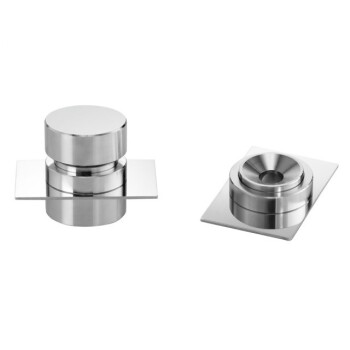
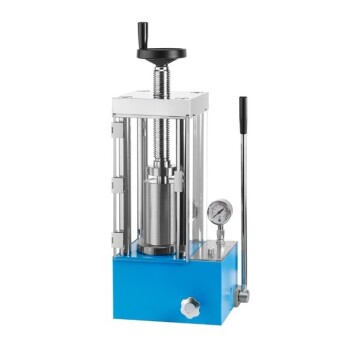
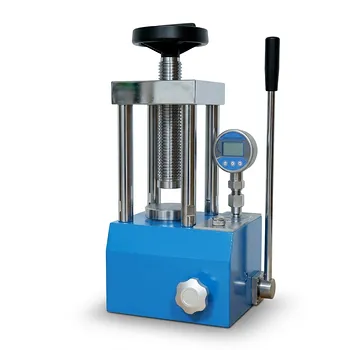
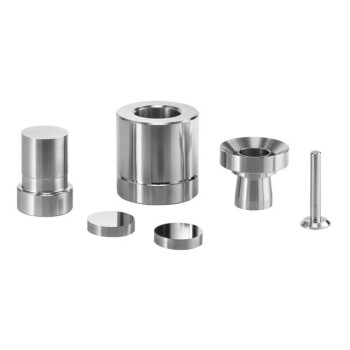
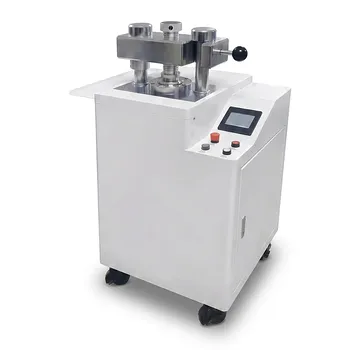
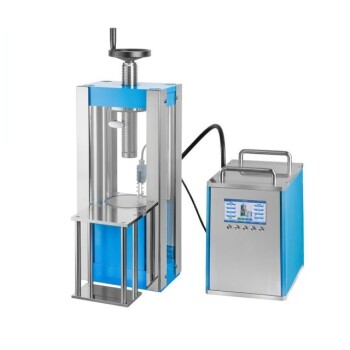
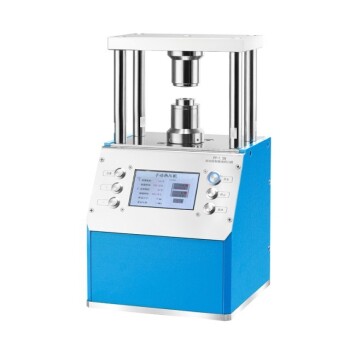
Under the high pressure of a laboratory press, KBr powder undergoes plastic flow. This physical transformation causes the salt crystals to fuse and encapsulate the polymer microspheres, creating a dense, solid disc.
Minimizing Light Scattering
A primary goal of pressing is to eliminate the air gaps between powder particles that cause light scattering. A well-pressed, transparent pellet reduces background noise and significantly improves the signal-to-noise ratio and spectral resolution.
Geometric Precision for Quantitative Analysis
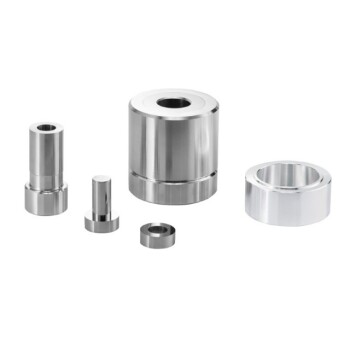
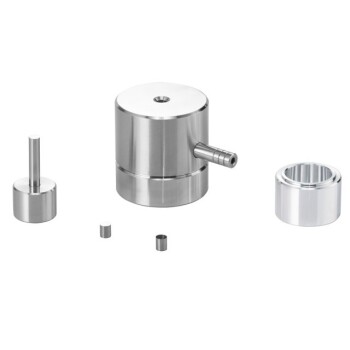
The press creates pellets with a uniform thickness and flat surfaces. This consistent geometry is critical for transmission spectroscopy, as it ensures the IR light path remains constant across the entire sample area.
Analyzing Polymer Microspheres
Verifying Structural Stability
For polymer microspheres used in drug delivery, FTIR is used to identify vibrational frequencies of the polymer backbone. Comparing these to standard spectra helps confirm that the microsphere fabrication process hasn't compromised the polymer's structure.
Identifying Drug-Specific Functional Groups
The clarity provided by the KBr method allows for the precise detection of functional groups such as hydroxyl (O-H), alkane (C-H), or nitrile (C≡N) groups. This is vital for verifying that the drug has been successfully loaded into the delivery system.
Understanding the Trade-offs and Pitfalls
The Challenge of Hygroscopicity
KBr is highly hygroscopic, meaning it rapidly absorbs moisture from the air. If the KBr or the sample is not perfectly dry, water bands will appear in the spectrum, potentially masking critical functional groups like the hydroxyl (O-H) bond.
Optimal Sample-to-KBr Ratio
Adding too much polymer sample can result in a pellet that is too opaque, leading to "flat-topped" peaks where the detector is saturated. Conversely, too little sample will produce a weak signal that fails to reveal the microsphere's subtle structural details.
Pressure-Induced Alterations
While high pressure is necessary for transparency, extreme force can occasionally alter the polymorphic state of certain drugs or polymers. It is essential to use the minimum pressure required to achieve a clear pellet to maintain the sample's original state.
How to Apply This to Your Project
Recommendations for Effective FTIR Analysis
- If your primary focus is spectral clarity: Ensure the KBr is "spectroscopic grade" (99%+ purity) and has been dried in a vacuum oven at 110°C before use.
- If your primary focus is quantitative measurement: Use a calibrated laboratory press to ensure every pellet has the exact same thickness and density for repeatable results.
- If your primary focus is sensitive drug complexes: Work quickly in a low-humidity environment to prevent KBr from absorbing water, which can interfere with the analysis of N-H or O-H bonds.
Mastering the KBr pellet technique ensures that your FTIR data is a true reflection of your polymer's molecular architecture, free from the distortions of poor sample preparation.
Summary Table:
| Component/Process | Role in FTIR Analysis | Key Benefit |
|---|---|---|
| High-Purity KBr | IR-transparent matrix | Allows IR beam penetration without background interference |
| Pellet Pressing | Induces plastic flow | Eliminates air gaps to minimize light scattering and noise |
| Sample Dispersion | Diluent for microspheres | Ensures a representative cross-section for signal accuracy |
| Geometric Precision | Standardizes path length | Provides uniform thickness for reliable quantitative measurement |
Optimize Your FTIR Analysis with KINTEK Precision
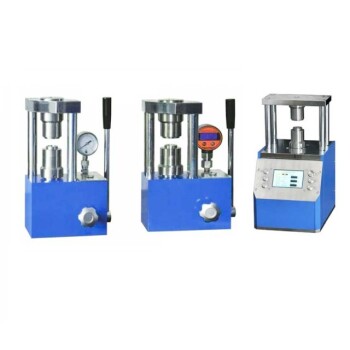
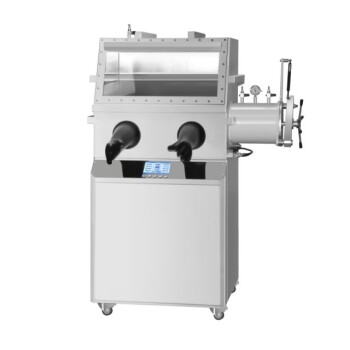
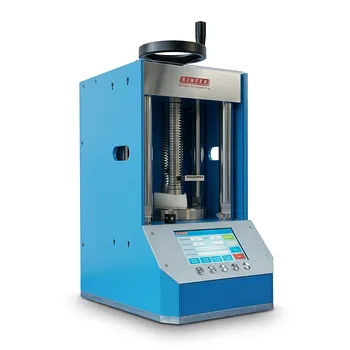
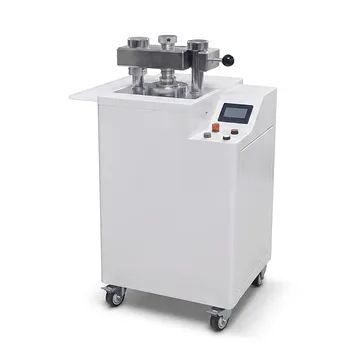
Precise sample preparation is the foundation of reliable spectroscopic data. KINTEK specializes in comprehensive laboratory pressing solutions tailored for demanding research environments. Whether you are conducting battery research or analyzing complex polymer microspheres, our range of manual, automatic, heated, multifunctional, and glovebox-compatible models—including high-performance cold and warm isostatic presses—ensures the geometric precision and stability your analysis requires.
Don't let poor sample preparation compromise your molecular insights. Contact KINTEK today to discover how our pressing solutions can enhance your laboratory's efficiency and accuracy.
References
- Alexandru‐Mihail Serban, Aurica P. Chiriac. Preparation and Characterization of Polymeric Microparticles Based on Poly(ethylene brassylate-co-squaric Acid) Loaded with Norfloxacin. DOI: 10.3390/pharmaceutics16040550
This article is also based on technical information from Kintek Solution Knowledge Base .
Related Products
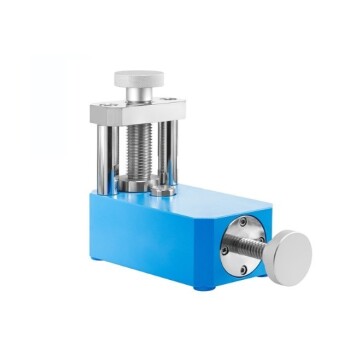
- Laboratory Hydraulic Press 2T Lab Pellet Press for KBR FTIR
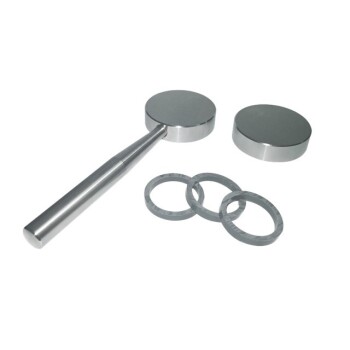
- XRF KBR Plastic Ring Lab Powder Pellet Pressing Mold for FTIR
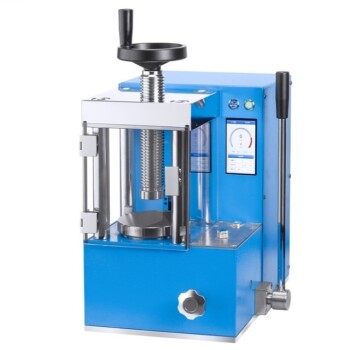
- Laboratory Hydraulic Pellet Press for XRF KBR FTIR Lab Press
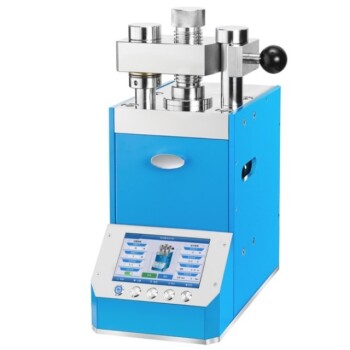
- Automatic Laboratory Hydraulic Press for XRF and KBR Pellet Pressing
- Lab Infrared Press Mold for No Demolding
People Also Ask
- What is the role of a laboratory pressure machine and KBr in FTIR? Master Sample Preparation for Flame Retardants
- What is the role of a laboratory hydraulic press in high-loading NCM811 cathode prep for solid-state batteries?
- Why is a laboratory hydraulic press necessary for sample preparation? Precise Pelleting for Spiro Heterocyclic Analysis
- What role does a laboratory hydraulic press play in reaction pellets? Optimizing Lunar Soil and Metal Fuel Density
- How does the application of a laboratory hydraulic press improve the performance of Tungsten Trioxide (WO3) electrodes? - Pro Tips