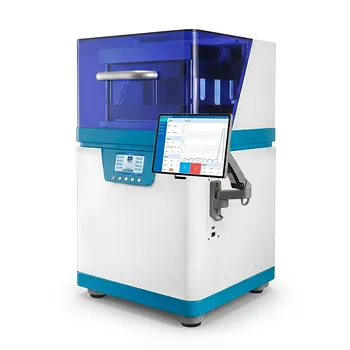
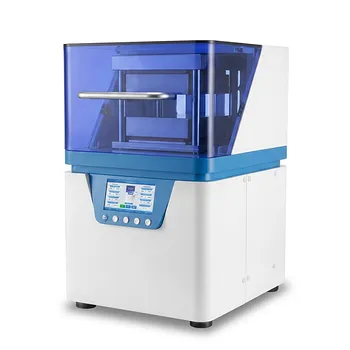
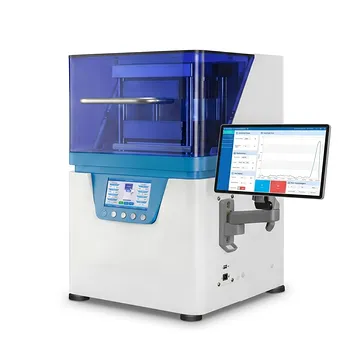
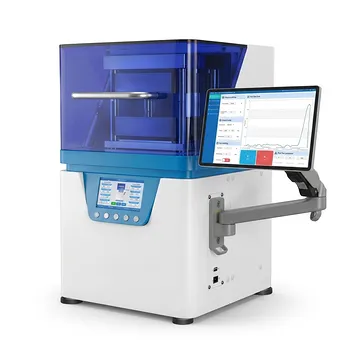
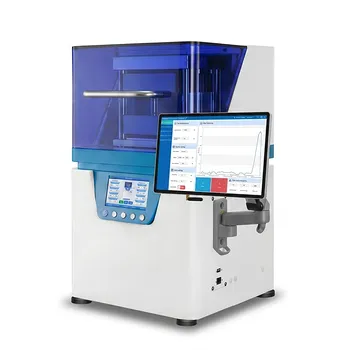
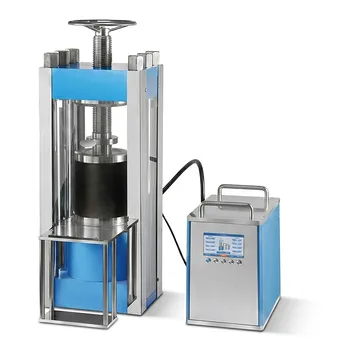
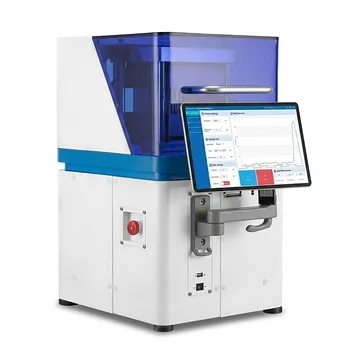
A heated press is the critical instrument used to transform raw thermal interface material (TIM) into a high-performance laminate by applying simultaneous heat and pressure. This process causes B-staged TIM sheets to soften and flow, ensuring a seamless bond with metal substrates like copper or aluminum while effectively purging trapped air from the interface.
Core Takeaway: The heated press serves as the bridge between raw materials and functional samples, providing the controlled environment necessary to eliminate air gaps and establish the low thermal resistance path required for efficient heat transfer.
Achieving Optimal Interfacial Contact
Softening and Flow of B-staged Materials
The primary role of the heated press is to induce a phase change in B-staged TIM sheets. By applying precise temperatures, the material softens, allowing it to conform perfectly to the microscopic irregularities of the metal substrates.
Eliminating Interfacial Air
Air acts as a powerful thermal insulator that can ruin TIM performance. The simultaneous application of high axial pressure—often up to 50 MPa—forces air out of the assembly, creating a "void-free" bond between the polymer and the metal surfaces.
Establishing Low Thermal Resistance
By ensuring a tight, molecular-level bond, the press establishes the low thermal resistance path necessary for heat transfer. This process is essential for creating a reliable thermal bridge that mimics real-world application conditions in electronic cooling.
Enhancing Material Integrity and Conductivity
Consolidating Composite Structures
For composite TIMs, the press acts as a consolidation tool that remelts and fuses fragmented materials into a dense bulk sample. This consolidation ensures that the internal structure of the material is uniform and free of microscopic pores.
Maximizing Particle-to-Matrix Wetting
In materials filled with ceramic or metallic particles, the heated press facilitates optimal wetting. The heat reduces the viscosity of the polymer matrix, allowing it to fully coat each conductive particle, which significantly improves the overall thermal conductivity of the laminate.
Controlling Diffusion Bonding
The press allows researchers to operate across the glass transition point or melting point of the materials. This promotes diffusion bonding between different layers or powders, which dramatically increases the interfacial bonding strength of the resulting composite.
Ensuring Geometric Precision for Testing
Precision Thickness and Flatness
Using precision molds within the press allows for the creation of samples with exact, consistent thickness (e.g., 1.0 mm) and extreme flatness. This geometric control is vital for downstream processes where dimensions must be known with high certainty.
Minimizing Experimental Error
Consistent sample density and geometry are prerequisites for accurate characterization. By producing uniform samples, the heated press ensures that data obtained via methods like laser flash analysis is both reliable and representative of the material's true properties.
Standardizing Curing Environments
The press provides a stable, constant temperature environment (typically between 150°C and 160°C) for curing. This standardization ensures that every sample in a test series undergoes the same chemical and physical transformation, eliminating variables in experimental results.
Understanding the Trade-offs
Thermal Degradation Risks
While heat is necessary for flow and curing, excessive temperature or prolonged dwell times can lead to the thermal degradation of the polymer matrix. This can make the TIM brittle or reduce its long-term adhesive strength.
The Pressure-Flow Balance
Applying too much pressure can cause "squeeze-out," where the TIM is forced out from between the substrates, leading to a sample that is thinner than intended. Conversely, insufficient pressure fails to eliminate internal porosity, resulting in artificially low thermal conductivity readings.
Material Compatibility
Not all TIMs respond the same way to heat and pressure. Low-melting-point alloys or specific thermoplastic polymers require very different ramp rates and cooling cycles compared to thermosetting resins to avoid internal stresses and delamination.
Optimizing the Pressing Process for Your Goal
How to Apply This to Your Project
To achieve the best results with a heated press, you must align your press parameters with your specific testing or application requirements.
- If your primary focus is maximizing thermal conductivity: Prioritize high axial pressure and sufficient dwell time to ensure complete consolidation and the total elimination of internal air pockets.
- If your primary focus is sample-to-sample consistency: Utilize precision-ground molds and automated temperature ramping to ensure every laminate has an identical thickness and density.
- If your primary focus is structural bonding strength: Focus on the "wetting" phase by maintaining the material just above its melting point for a duration that allows for maximum diffusion bonding between the TIM and the metal.
Properly calibrated heat and pressure are the fundamental requirements for turning raw TIM components into a scientifically valid thermal laminate.
Summary Table:
| Function | Key Benefit | Impact on TIM Quality |
|---|---|---|
| Softening & Flow | Surface Conformance | Ensures a seamless bond with metal substrates |
| High Axial Pressure | Air Elimination | Removes insulating air gaps for low resistance |
| Thermal Consolidation | Dense Bulk Structure | Maximizes particle wetting and conductivity |
| Precision Molding | Geometric Control | Guarantees consistent thickness for accurate testing |
Elevate Your Material Research with KINTEK’s Precision Pressing Solutions
Achieving the perfect thermal interface requires precision and reliability. KINTEK specializes in comprehensive laboratory pressing solutions tailored for high-performance material preparation. Whether you are conducting advanced battery research or developing next-generation electronics, our range of manual, automatic, heated, and multifunctional presses ensures void-free, uniform samples every time.
Our expertise extends to specialized glovebox-compatible models and cold/warm isostatic presses, designed to meet the most demanding research environments.
Why choose KINTEK for your TIM preparation?
- Maximize Conductivity: Effectively eliminate air pockets with controlled axial pressure.
- Ensure Consistency: Produce samples with exact thickness and flatness for reliable characterization.
- Advanced Control: Optimize curing environments with precise temperature and ramp rate management.
Ready to enhance your lab's efficiency and sample quality? Contact KINTEK today to find your ideal pressing solution!
References
- Hiroki Mori, Akira Shimada. Highly Reliable Polyimide-based Thermal Interface Material Sheets for Power Modules. DOI: 10.2494/photopolymer.38.237
This article is also based on technical information from Kintek Solution Knowledge Base .
Related Products
- Automatic Hydraulic Hot Press with Large Plate and Precision Temperature Control for Advanced Material Sample Preparation and Industrial Research
- Warm Isostatic Press for Solid State Battery Research Warm Isostatic Press
- Lab Heat Press Special Mold
- Automatic Hydraulic Heat Press Machine with Multi Stage Programmable Control and Integrated Water Cooling Plate Size 180x180mm
- Automatic High Temperature Heated Hydraulic Press Machine with Heated Plates for Lab
People Also Ask
- What are the industrial applications of a hydraulic heat press? Powering Lamination, Bonding, and R&D Efficiency
- How does a laboratory hydraulic heat press facilitate the molding of cellulose composite specimens? Precision Molding
- How does an automatic hydraulic press operate? Achieve Precision and Consistency in Lab Pelleting
- What is a hydraulic heat press? Discover Precision Material Bonding and Sample Preparation
- What is the technical significance of setting a precise dwell time? Achieve Peak Material Density and Stability