Cold isostatic pressing (CIP) is the critical catalyst for achieving the ultra-high relative density required to make $10\text{NiO-NiFe}_2\text{O}_4$ ceramic anodes commercially viable. By applying omnidirectional pressure, CIP eliminates internal porosity and density gradients that would otherwise allow corrosive cryolite electrolytes to penetrate the material. This structural integrity, when combined with specific chemical dopants, reduces the annual wear rate of the anode to approximately 3.66 cm.
Core Takeaway: Cold isostatic pressing transforms $10\text{NiO-NiFe}_2\text{O}_4$ from a porous powder mixture into a high-density ceramic shield. By ensuring uniform densification from all directions, it blocks the primary pathways for chemical attack and grain boundary degradation.
The Relationship Between Porosity and Electrolyte Attack
Protecting Against Cryolite Penetration
The corrosion resistance of $10\text{NiO-NiFe}_2\text{O}_4$ ceramic anodes is directly tied to their relative density. In a high-temperature aluminum electrolysis environment, low-density materials suffer from the penetration of cryolite electrolytes into the bulk of the anode.
Preventing Grain Boundary Failure
When electrolytes penetrate the ceramic structure, they initiate grain boundary attacks. These attacks weaken the internal structure, leading to localized excessive loss and premature failure of the anode.
Achieving Low Wear Rates
A highly dense structure effectively blocks these penetration pathways. Research shows that utilizing cold isostatic pressing in tandem with BaO activated sintering can result in a remarkably low annual wear rate of just 3.66 cm.
The Mechanical Advantages of Isostatic Pressure
Eliminating Internal Density Gradients
Unlike traditional uniaxial or die pressing, which applies force in a single direction, CIP applies omnidirectional uniform pressure—often reaching up to 200MPa. This hydraulic approach eliminates the friction-induced pressure gradients that typically plague dry-pressed components.
Facilitating Particle Rearrangement
The use of a liquid medium and flexible molds allows for the full rearrangement and tight bonding of powder particles. This ensures that the "green body" (the unfiled ceramic) is consistent in density from its core to its outer surface.
Establishing Isotropic Properties
Because the pressure is equal from all directions, the material exhibits isotropic compression. This uniformity is the technical safeguard required to prevent anisotropic shrinkage or deformation during the subsequent high-temperature sintering process.
Structural Integrity During Sintering
Reducing Sintering Defects
Materials produced via CIP are less prone to deforming or cracking when exposed to the intense heat of sintering. The high-precision control of pressing force and holding time ensures the green body has the necessary strength to survive thermal processing.
Preventing Microcracks
By eliminating internal stress imbalances at the molding stage, CIP prevents the formation of microcracks. These microscopic flaws are often the starting points for major structural failures once the anode is placed in an electrolysis cell at 1233K.
Ensuring Regular Geometric Shapes
Stable pressure output from a laboratory or industrial press ensures that the $10\text{NiO-NiFe}_2\text{O}_4$ and BaO dopant mixture maintains a regular geometric shape. This precision is vital for maintaining consistent electrical current distribution during operation.
Understanding the Trade-offs
While cold isostatic pressing provides superior density, it involves significantly higher equipment costs and slower production cycles compared to uniaxial die pressing. The process requires flexible tooling and specialized hydraulic systems, which increases the complexity of the manufacturing workflow.
Additionally, while CIP ensures density uniformity, it cannot compensate for poor powder preparation. If the $10\text{NiO-NiFe}_2\text{O}_4$ mixture is not perfectly homogenized before pressing, even 200MPa of uniform pressure will not prevent chemical inhomogeneities that can lead to localized corrosion.
Applying These Insights to Your Project
Recommendations for Material Development
- If your primary focus is maximum corrosion resistance: Use cold isostatic pressing at pressures of at least 200MPa to eliminate the porosity that allows electrolyte penetration.
- If your primary focus is preventing structural cracking: Prioritize CIP over uniaxial pressing to remove internal stress gradients that cause failure during high-temperature sintering.
- If your primary focus is optimizing wear rates: Combine the densification benefits of CIP with activated sintering dopants like BaO to achieve the targeted wear rate of 3.66 cm per year.
Standardizing on cold isostatic pressing is the most effective way to ensure the long-term durability and structural reliability of ceramic anodes in harsh electrolytic environments.
Summary Table:
| Key Feature | Benefit for Ceramic Anodes |
|---|---|
| Omnidirectional Pressure | Eliminates internal porosity and density gradients for a uniform structure. |
| High Relative Density | Blocks cryolite electrolyte penetration and prevents grain boundary failure. |
| Low Wear Rate | Achieves an annual wear rate of ~3.66 cm when combined with BaO dopants. |
| Isotropic Compression | Prevents deformation and microcracks during high-temperature sintering. |
Maximize Your Material Performance with KINTEK
Elevate your laboratory's capabilities with KINTEK’s specialized pressing solutions. As experts in material densification, we provide the precision tools necessary for advanced research in battery technology and ceramics. Our comprehensive range includes:
- Cold Isostatic Presses (CIP): Ideal for achieving the ultra-high density required to block electrolyte corrosion.
- Versatile Lab Presses: Manual, automatic, heated, and multifunctional models.
- Specialized Systems: Glovebox-compatible and warm isostatic presses designed for rigorous battery research.
Don't let porosity compromise your results. Contact KINTEK today to find the perfect pressing solution and enhance the durability of your advanced materials!
References
- Hanbing HE, Hanning Xiao. Effect of Additive BaO on corrosion resistance of 10NiO-NiFe2O4 Composite Ceramic anodes. DOI: 10.2991/emeit.2012.305
This article is also based on technical information from Kintek Solution Knowledge Base .
Related Products
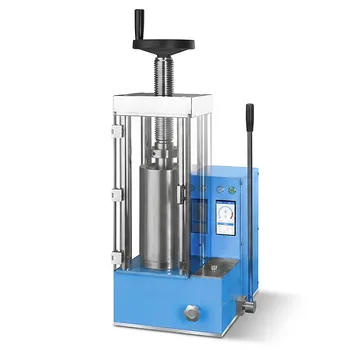
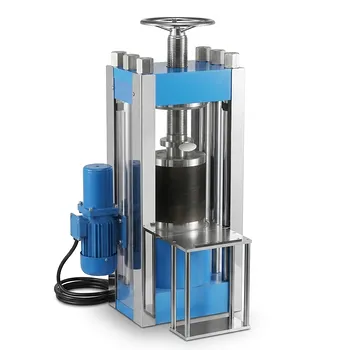
- Electric Lab Cold Isostatic Press CIP Machine
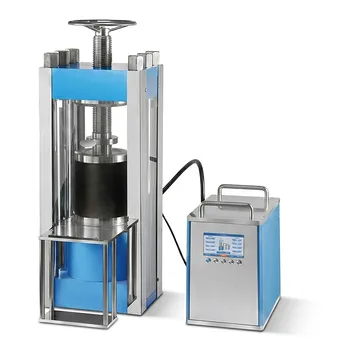
- Electric Split Lab Cold Isostatic Pressing CIP Machine
- Automatic Lab Cold Isostatic Pressing CIP Machine
- Manual Cold Isostatic Pressing CIP Machine Pellet Press
- Electric Isostatic Pressing Machine 40 Tons Automatic Laboratory Powder Compacting Press
People Also Ask
- What role do electric lab cold isostatic presses play in industrial contexts? Bridge R&D and Manufacturing with Precision
- What are the applications of electric lab cold isostatic presses in research settings? Advance Material R&D with High-Pressure CIPs
- How does electrical Cold Isostatic Pressing (CIP) contribute to cost savings? Unlock Efficiency and Reduce Expenses
- What are some research applications of electric lab CIPs? Unlock Uniform Powder Densification for Advanced Materials
- What are the characteristics of standard off-the-shelf electric lab CIP solutions? Achieve Immediate, Cost-Effective Processing