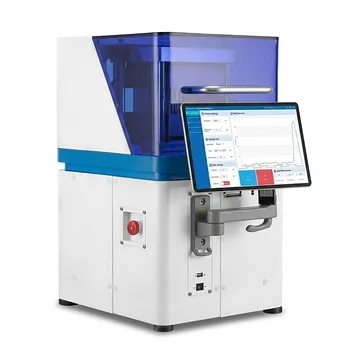
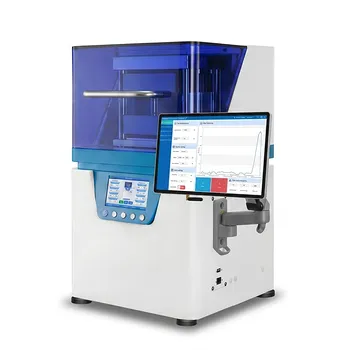
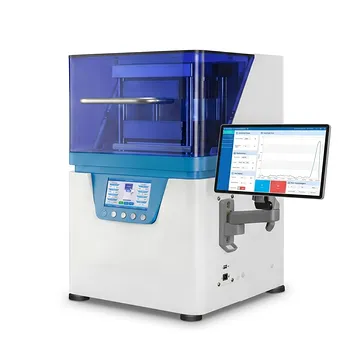
Laboratory and hot presses serve as the foundational tool for establishing specimen integrity. They are used to mold powder metallurgy samples, mount metallographic specimens, and apply hot deformation to cast ingots. This ensures high material density and a uniform microstructure, which are vital for accurate tribocorrosion analysis.
The primary role of a laboratory press in tribocorrosion testing is to eliminate internal voids and macro defects through precise pressure and temperature control. This stabilization is essential for obtaining reproducible electrochemical signals and consistent wear data during experimental cycles.
Ensuring High Density and Microstructural Uniformity
Eliminating Internal Voids and Defects
Laboratory presses apply high pressure to ensure that aluminum alloy samples achieve maximum density. By eliminating internal voids and macro defects, the press prevents premature material failure or localized corrosion sites that could skew test results.
Powder Metallurgy and Green Compacts
In the preparation of powder metallurgy samples, presses compact metal powders into "green bodies." This process increases the contact area between particles, ensuring that the final sintered alloy has the structural integrity required for friction and wear testing.
Achieving Compositional Homogeneity
Uniform pressure distribution during the molding process prevents internal density gradients. This homogeneity is critical for ensuring that the alloy's mechanical properties, such as hardness, remain consistent across the entire surface of the specimen.
Refinement of Cast Structures and Surface Prep
Breaking Down Dendritic Structures
For cast aluminum ingots, a laboratory forging press applies significant hot deformation to break down coarse dendritic structures. This transformation into a wrought microstructure mimics industrial profiles and ensures the material is representative of real-world applications.
Establishing a Stable Surface Baseline
Precise temperature and pressure compensation during pressing help establish a stable surface roughness baseline. This consistency is vital for subsequent tribocorrosion tests, where surface topography directly influences friction coefficients and wear rates.
Metallographic Mounting for Signal Accuracy
Hot presses are used to mount specimens in resin, providing a stable platform for polishing and subsequent testing. This mounting ensures that the specimen remains perfectly perpendicular to the wear tip, which is essential for the accurate collection of electrochemical signals.
Understanding the Trade-offs
Thermal Alteration of Microstructures
While heat is necessary for densification, excessive temperatures in a hot press can inadvertently trigger unwanted phase changes or grain growth in certain aluminum alloys. This can alter the very corrosion resistance the researcher intended to measure.
Pressure Gradients and Micro-cracking
If pressure is applied too rapidly or unevenly, internal micro-cracks can develop within the specimen. These defects may remain invisible to the naked eye but will act as stress concentrators and corrosion pits during tribocorrosion experiments.
Geometric Fidelity vs. Material Stress
High-pressure molding improves the geometric fidelity of the specimen but can introduce residual internal stresses. Without proper annealing or controlled cooling paths, these stresses may lead to specimen warping during the friction phase of the test.
How to Apply This to Your Project
When preparing aluminum alloy specimens, your choice of pressing parameters should align with your specific analytical goals.
- If your primary focus is Powder Metallurgy: Utilize high-performance presses with precise displacement monitoring to ensure maximum green density and minimize sintering shrinkage.
- If your primary focus is Cast Ingot Analysis: Use a laboratory forging press to apply at least a 40% reduction in thickness to eliminate cast porosity and refine the grain structure.
- If your primary focus is Electrochemical Signal Accuracy: Prioritize the use of a hot mounting press to ensure rigid, gap-free encapsulation of the specimen, preventing electrolyte leakage and signal noise.
By mastering the control of heat and pressure during the preparation stage, you ensure that your tribocorrosion data reflects the true performance of the material rather than the flaws of the specimen.
Summary Table:
| Application | Preparation Role | Key Benefit for Testing |
|---|---|---|
| Powder Metallurgy | Compacting metal powders | Maximizes green density & structural integrity |
| Cast Aluminum | Hot deformation/forging | Refines grain structure & eliminates cast porosity |
| Metallographic Prep | Hot mounting in resin | Ensures stable signal collection & specimen alignment |
| General Specimen Prep | Precise heat/pressure | Achieves compositional homogeneity & stable surface roughness |
Elevate Your Research Precision with KINTEK
Ensure your tribocorrosion data reflects true material performance—not specimen flaws. KINTEK specializes in comprehensive laboratory pressing solutions designed to meet the rigorous demands of advanced material science and battery research.
From achieving maximum green density in powder metallurgy to refining the microstructure of cast alloys, our equipment provides the stability and uniformity your analysis requires. Our diverse range includes:
- Manual & Automatic Presses for reliable metallographic mounting.
- Heated & Multifunctional Models for precise thermal-mechanical processing.
- Glovebox-Compatible & Isostatic Presses (Cold and Warm) for specialized battery and air-sensitive material research.
Ready to eliminate internal voids and stabilize your electrochemical signals? Contact KINTEK today to find the perfect pressing solution for your lab!
References
- Yucong Gu, Lin Li. Accelerating the design and discovery of tribocorrosion-resistant metals by interfacing multiphysics modeling with machine learning and genetic algorithms. DOI: 10.1038/s41529-024-00549-4
This article is also based on technical information from Kintek Solution Knowledge Base .
Related Products
- Laboratory Hydraulic Press Lab Pellet Press Button Battery Press
- Laboratory Hydraulic Press Lab Pellet Press Machine for Glove Box
- Laboratory Split Manual Heated Hydraulic Press Machine with Hot Plates
- Laboratory Hydraulic Split Electric Lab Pellet Press
- Laboratory Hydraulic Pellet Press for XRF KBR FTIR Lab Press
People Also Ask
- What role does a laboratory hydraulic press play in the assembly of all-solid-state battery test cells? Expert Guide
- Why is the temperature control precision of a lab hydraulic press critical in micro-structure thermal forming?
- How is a laboratory hydraulic press used for HAP composite gels? Master Mineral Substrate Standardization
- How does a laboratory hydraulic press contribute to the assembly and performance of intermediate-temperature K-S batteries?
- Why is a laboratory hydraulic press required for PBAT and PLA sample preparation? Achieve Flawless Characterization