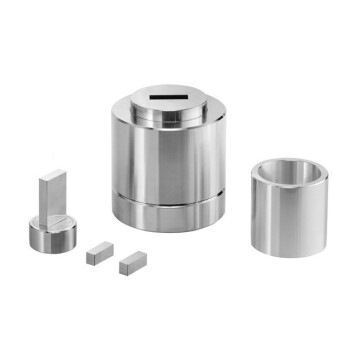
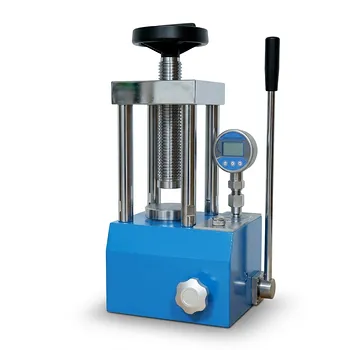
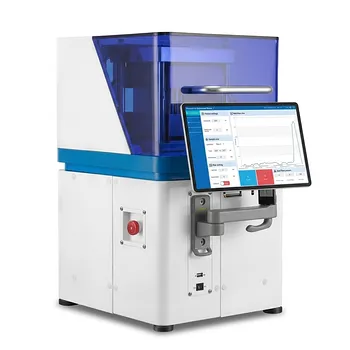
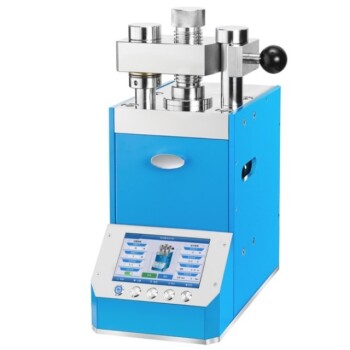
Precise control of cavity dimensions via laboratory pressing equipment is the linchpin of valid Phase Change Material (PCM) experimentation. This precision ensures that the physical test cell—such as one measuring exactly 8.89 cm by 6.35 cm—perfectly mirrors the boundary conditions defined in numerical models. By eliminating geometric variances, researchers can isolate thermal performance variables, ensuring that heat transfer paths and natural convection behaviors are accurately captured and reproducible.
Core Takeaway: Laboratory presses enable the creation of standardized, high-density PCM modules that align physical results with theoretical simulations. This alignment is essential for reducing experimental error and validating the predictive accuracy of thermal management models.
Bridging the Gap Between Simulation and Reality
Alignment with Numerical Boundary Conditions
Numerical models rely on specific, static geometries to calculate heat flux and phase transition rates. Laboratory pressing equipment allows for the fabrication of test shells that match these digital dimensions with high fidelity. This synchronization ensures that the experimental data collected is a direct reflection of the model’s intent rather than a byproduct of structural irregularities.
Standardizing Heat Transfer Paths
The dimensions of a cavity dictate the aspect ratios that influence how natural convection develops within the melting PCM. Precise control over these dimensions ensures that the heat transfer paths remain consistent across multiple test cycles. Without this control, slight variations in shell size can lead to significant discrepancies in the observed movement of the liquid-solid interface.
Reducing Experimental Error
Consistency in the outer shell dimensions of a test unit minimizes "noise" in the data. By using high-precision presses, researchers ensure that every sample produced is identical in volume and surface area. This uniformity allows for a more rigorous validation of thermal energy exchange efficiency without the interference of manufacturing-induced variables.
Enhancing Material Integrity and Performance
Eliminating Internal Voids and Air Pockets
Precise pressure control during the molding stage is critical for eliminating internal air bubbles that act as thermal insulators. In Liquid Crystal PCM (LC-PCM) composites, high-pressure environments ensure that the liquid crystal units and fillers achieve full wetting. Removing these voids is essential for maintaining a clear path for thermal energy to travel through the composite.
Optimizing Thermal Conductivity through Compaction
Utilizing a hydraulic press ensures tight bonding between powder particles or porous matrices within Composite PCMs (CPCM). This process increases the packing density, which directly improves the structural integrity of the material. A higher density generally correlates with more consistent thermal conductivity, which is vital for systems like battery thermal management.
Inducing Ordered Filler Arrangements
Controlled processing parameters can induce an ordered arrangement of fillers, such as boron nitride or alumina, within a polymer matrix. By manipulating the pressure and temperature during pressing, researchers can optimize the density of the composite. This organized structure maximizes the efficiency of the phase change process by streamlining the flow of heat.
Understanding the Trade-offs and Limitations
The Risk of Over-Compression
While high pressure increases density, excessive force can damage the structural integrity of sensitive porous matrices. Over-compression may lead to the "squeezing out" of the PCM from its supporting structure, causing a loss of material and reduced thermal capacity. Finding the equilibrium between structural density and material retention is a critical challenge.
Equipment Calibration Requirements
The reliability of a laboratory press is only as good as its calibration. Even minor deviations in pressure or plate temperature can lead to non-uniform samples, defeating the purpose of high-precision equipment. Researchers must implement rigorous maintenance schedules to ensure that the laboratory press processing parameters remain within strict tolerances over time.
How to Apply This to Your Project
When integrating laboratory pressing into your PCM research, your strategy should shift based on your specific experimental goals.
- If your primary focus is Numerical Validation: Prioritize the use of high-precision molds to ensure the physical test cell dimensions match your simulation's boundary conditions within a fraction of a millimeter.
- If your primary focus is Composite Performance: Focus on the precise control of pressure and temperature to eliminate air voids and optimize the wetting of fillers like boron nitride within the polymer matrix.
- If your primary focus is Scalability: Establish standardized pressing protocols that can be replicated outside the lab environment to ensure that the material's thermal energy exchange efficiency remains consistent in mass production.
Mastering the physical dimensions of your test environment is the most effective way to transform theoretical PCM models into reliable, real-world thermal solutions.
Summary Table:
| Factor | Impact on PCM Experimentation | Outcome |
|---|---|---|
| Dimensional Accuracy | Matches physical cells to numerical boundary conditions | Consistent heat transfer paths |
| High-Pressure Molding | Eliminates internal air pockets and voids | Enhanced thermal conductivity |
| Compaction Density | Optimizes filler arrangement (e.g., Boron Nitride) | Structural integrity and consistency |
| Thermal Control | Regulates wetting in composite PCMs (LC-PCM) | Maximized energy exchange efficiency |
Maximize Your Research Precision with KINTEK
Precise experimental validation requires equipment that leaves no room for error. KINTEK specializes in comprehensive laboratory pressing solutions designed to meet the rigorous demands of material science and battery research.
Our range includes:
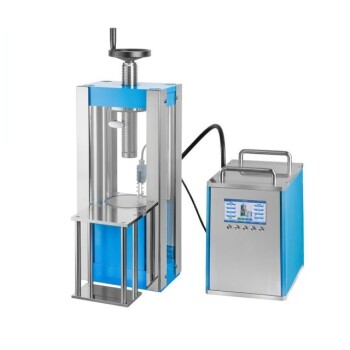
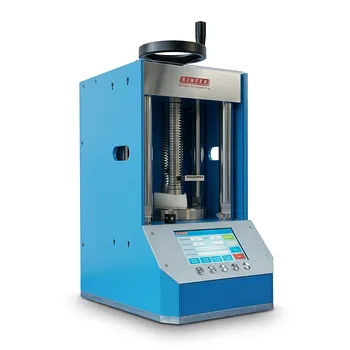
- Manual & Automatic Hydraulic Presses for consistent sample preparation.
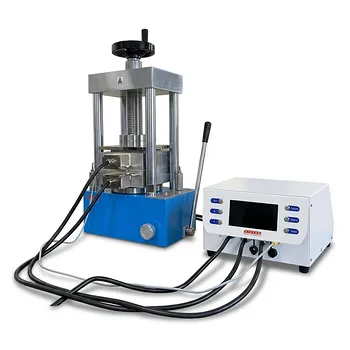
- Heated & Multifunctional Models for advanced composite material processing.
- Glovebox-Compatible & Isostatic Presses (Cold/Warm) for sensitive battery research environments.
Ready to align your physical results with your theoretical simulations? Contact KINTEK today to discover how our high-precision pressing solutions can enhance your lab's thermal management experiments.
References
- Abdullatif A. Gari. Modeling Thermal Energy Storage Capability of Organic PCMs Confined in a 2-D Cavity. DOI: 10.3390/computation13090209
This article is also based on technical information from Kintek Solution Knowledge Base .
Related Products
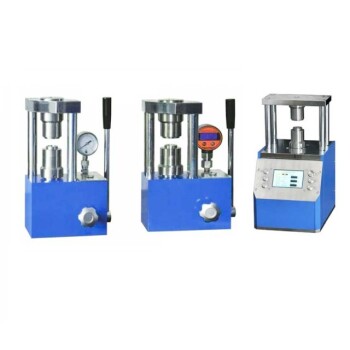
- Laboratory Hydraulic Press Lab Pellet Press Button Battery Press
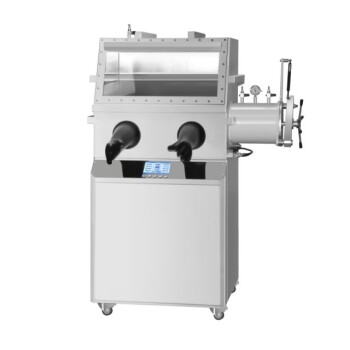
- Laboratory Hydraulic Press Lab Pellet Press Machine for Glove Box
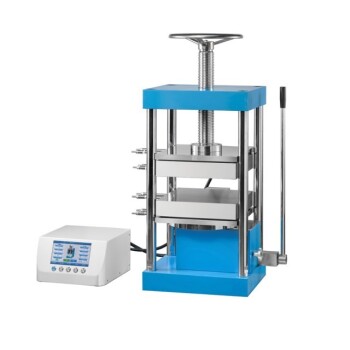
- Laboratory Split Manual Heated Hydraulic Press Machine with Hot Plates
- Laboratory Hydraulic Pellet Press for XRF KBR FTIR Lab Press
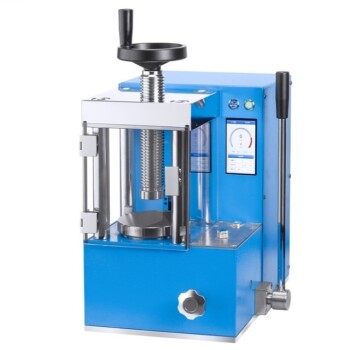
- Laboratory Hydraulic Split Electric Lab Pellet Press
People Also Ask
- How is a laboratory hydraulic press used for HAP composite gels? Master Mineral Substrate Standardization
- What role does a laboratory hydraulic press play in reaction pellets? Optimizing Lunar Soil and Metal Fuel Density
- What role does a laboratory hydraulic press play in the preparation of piezoelectric ceramic discs for DC-PG? | KINTEK
- What role does a laboratory hydraulic press play in the assembly of all-solid-state battery test cells? Expert Guide
- Why is a laboratory hydraulic press required for PBAT and PLA sample preparation? Achieve Flawless Characterization