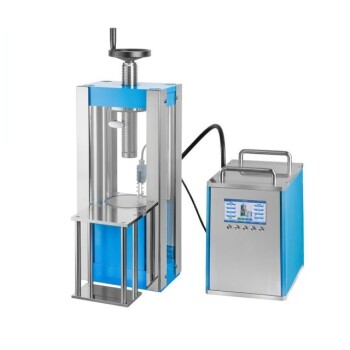
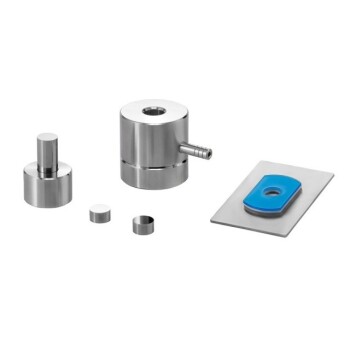
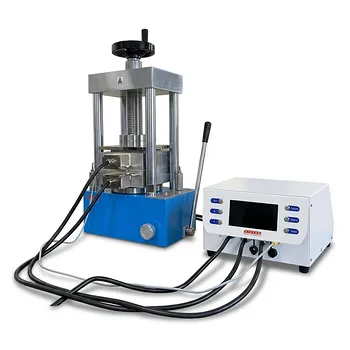
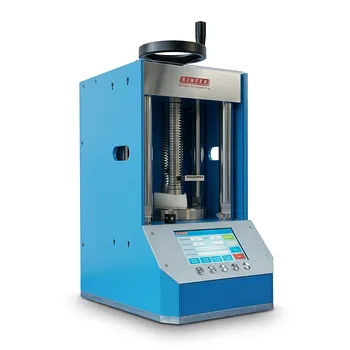
The precision of a laboratory press is the bridge between loose powder and reliable data.
Laboratory presses facilitate the characterization of micropore-confined organic solids by compacting them into dense, uniform pellets with precise dimensions. This preparation is essential for stabilizing the sample and ensuring that measurements—whether electrical, thermal, or structural—reflect the material’s bulk properties rather than the inconsistencies of a loose powder. By applying controlled force, these machines eliminate air gaps and ensure the sample is robust enough for rigorous analytical testing.
The core value of a laboratory press lies in its ability to eliminate physical variables that skew experimental results. By creating a standardized, high-density pellet, researchers ensure that the data collected is both reproducible and representative of the material's true molecular behavior.
Enhancing Structural and Chemical Precision
Eliminating Random Particle Orientation
In techniques like Powder X-ray Diffraction (PXRD), loose powders suffer from random particle stacking and height deviations. A laboratory press creates a smooth, flat surface that eliminates these geometric errors, ensuring that diffraction intensities are accurate and the crystal structure is properly verified.
Improving Signal Quality in Spectroscopy
For Infrared Spectroscopy (FT-IR) and X-ray Photoelectron Spectroscopy (XPS), surface uniformity is paramount. Compaction ensures a consistent photoelectron emission and minimizes signal scattering, which is critical for the quantitative measurement of surface elements and chemical states, such as oxygen vacancies.
Preventing Signal Scattering
Loose powders often cause significant noise or scattering when exposed to analytical beams. By transforming these powders into a fixed shape with a smooth surface, a laboratory press allows for a cleaner interaction between the probe and the sample, leading to higher-resolution data.
Optimizing Physical and Functional Testing
Minimizing Contact Resistance
When measuring electrochemical performance or electrical conductivity, loose particles create high contact resistance that masks the material's actual properties. Compressing the organic solids into a dense pellet ensures intimate contact between particles, allowing for an accurate assessment of electron or ion transport within the micropores.
Ensuring Mechanical Stability in Reactors
For microporous materials used as catalysts, such as zeolites or MOFs, mechanical strength is a functional requirement. Laboratory presses mold these powders into tablets that can withstand the pressures of a fixed-bed reactor, preventing the material from pulverizing and ensuring optimal fluid dynamics during reactions.
Facilitating Thermal and Bulk Property Analysis
Measuring the thermal conductivity of organic solids requires a sample with a uniform density gradient. Manual or heated presses allow researchers to reach a specific density that mimics the material's intended application environment, ensuring that thermal data is relevant to real-world performance.
Understanding the Trade-offs and Risks
The Risk of Pore Structural Collapse
While high pressure increases density, excessive force can lead to the collapse of the delicate micropore structures within organic solids. It is critical to determine the "threshold pressure" to ensure that the pellet is stable without sacrificing the internal surface area that defines the material.
Maintaining Mixture Homogeneity
A laboratory press can only produce a representative pellet if the starting material is thoroughly homogenized. If the mixture is not uniform—often achieved via magnetic stirring prior to pressing—the resulting pellet may have internal voids or density gradients that lead to structural failure or "hot spots" during analysis.
Influence of Temperature during Compression
Using a heated laboratory press can improve the binding of organic solids, but it also risks inducing phase changes or degrading sensitive organic components. Researchers must balance the need for pellet integrity with the thermal stability of the specific organic molecules being characterized.
Applying Compaction to Your Research Goals
How to Apply This to Your Project
To achieve the most accurate characterization of your micropore-confined organic solids, select your pressing parameters based on your primary analytical objective:
- If your primary focus is Structural Verification (XRD/XPS): Use a high-precision hydraulic press to achieve maximum surface flatness and eliminate height deviations that cause peak shifts.
- If your primary focus is Catalytic Performance: Focus on creating tablets with high mechanical strength to prevent pulverization, ensuring you do not exceed the pressure limit that collapses the micropores.
- If your primary focus is Electrical/Thermal Transport: Prioritize achieving a uniform, high-density pellet to minimize contact resistance and ensure consistent conductivity measurements across the sample.
Proper sample preparation through controlled compaction transforms a volatile powder into a stable, measurable medium, unlocking the true potential of advanced organic materials.
Summary Table:
| Analytical Technique | Benefit of Pellet Compaction |
|---|---|
| PXRD | Eliminates random orientation and geometric errors for accurate diffraction. |
| FT-IR & XPS | Minimizes signal scattering and ensures consistent surface emission. |
| Electrochemical Testing | Reduces contact resistance for accurate electron and ion transport data. |
| Catalysis | Ensures mechanical stability in reactors and prevents material pulverization. |
| Thermal Analysis | Creates uniform density gradients for real-world performance relevance. |
Elevate Your Material Characterization with KINTEK
Precise sample preparation is the foundation of breakthrough research in microporous materials and battery technology. KINTEK specializes in comprehensive laboratory pressing solutions designed to eliminate physical variables and unlock reliable data.
Whether your project requires manual, automatic, heated, or multifunctional models, we provide the precision tools necessary for your specific research goals. Our range includes:
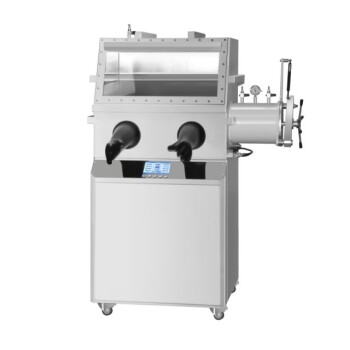
- Specialized Presses: Glovebox-compatible models and high-precision heated presses.
- Advanced Compaction: Cold (CIP) and warm (WIP) isostatic presses widely applied in cutting-edge battery research.
Don't let sample inconsistencies skew your results. Contact KINTEK today to find the ideal pressing solution for your laboratory and ensure your pellets meet the highest standards of structural and functional integrity.
References
- Kaiya Nakasone, Daisuke Takimoto. Micropore-Confined Organic Solid for a High-Rate and Durable Electrode. DOI: 10.1021/acsami.5c11604
This article is also based on technical information from Kintek Solution Knowledge Base .
Related Products
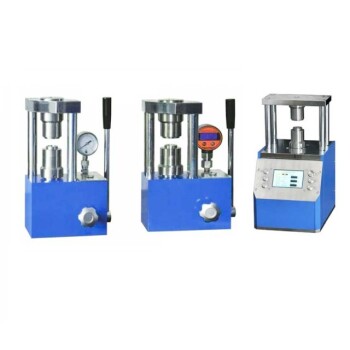
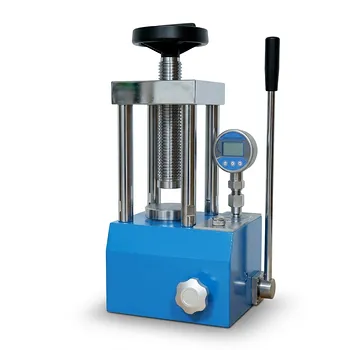
- Laboratory Hydraulic Press Lab Pellet Press Button Battery Press
- Laboratory Hydraulic Press Lab Pellet Press Machine for Glove Box
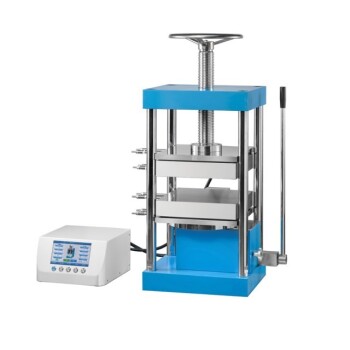
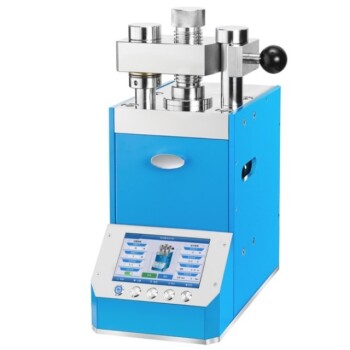
- Laboratory Split Manual Heated Hydraulic Press Machine with Hot Plates
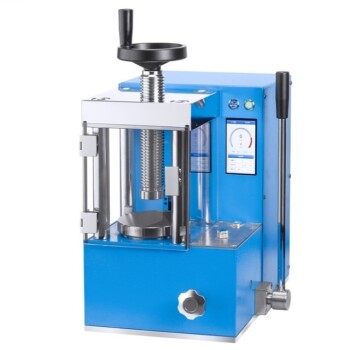
- Laboratory Hydraulic Pellet Press for XRF KBR FTIR Lab Press
- Laboratory Hydraulic Split Electric Lab Pellet Press
People Also Ask
- How is a laboratory hydraulic press used for HAP composite gels? Master Mineral Substrate Standardization
- What role does a laboratory hydraulic press play in reaction pellets? Optimizing Lunar Soil and Metal Fuel Density
- What role does a laboratory hydraulic press play in the preparation of piezoelectric ceramic discs for DC-PG? | KINTEK
- What role does a laboratory hydraulic press play in the assembly of all-solid-state battery test cells? Expert Guide
- Why is a laboratory hydraulic press required for PBAT and PLA sample preparation? Achieve Flawless Characterization