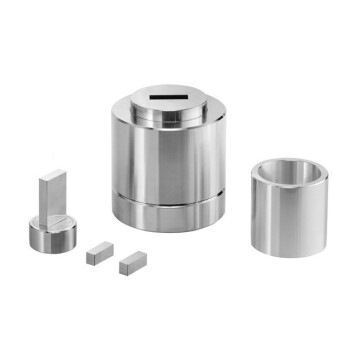
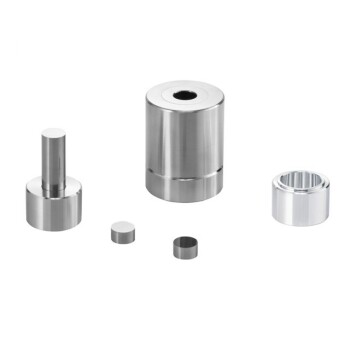
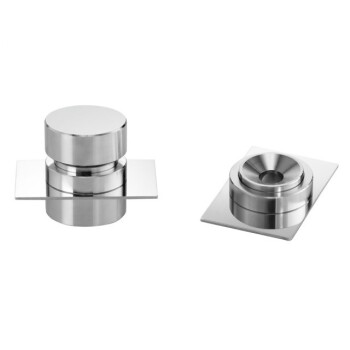
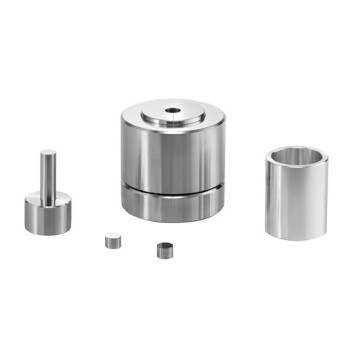
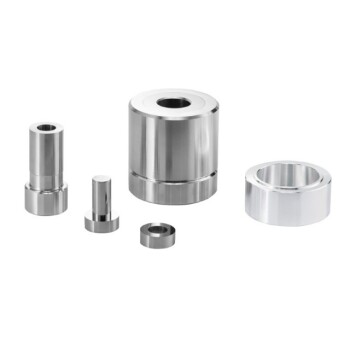
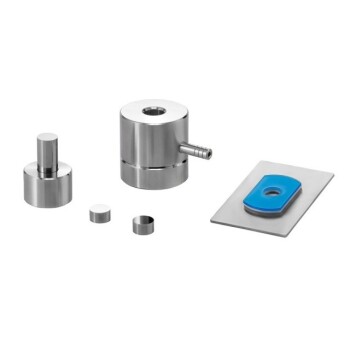
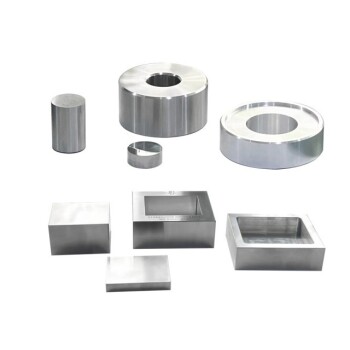
Using Polytetrafluoroethylene (Teflon) mold blocks is critical for achieving high-quality Cellulose Phenoxyacetate (CPaE) films. These molds provide a non-stick interface that prevents film adhesion during drying, while the mechanical stability of the mold blocks ensures precise control over film thickness and prevents material deformation as solvents evaporate.
Core Takeaway: PTFE mold blocks serve as both a chemical barrier and a structural stabilizer, ensuring that CPaE films can be demolded without damage while maintaining the strict dimensional tolerances required for high-performance applications.
Surface Properties and Demolding Efficiency
Overcoming Adhesion with Low Surface Energy
Teflon possesses extremely low surface energy, which creates a naturally "non-stick" environment. During the CPaE film-forming process, this property prevents the polymer from bonding to the mold surface as it transitions from a liquid or slurry state into a solid film.
Preserving Structural Integrity
Because the film does not adhere to the mold, it can be completely peeled off without the need for excessive mechanical force. This is vital for preventing structural defects, such as micro-cracks or tearing, which often occur when removing thin, flexible membranes from high-energy surfaces like metal or glass.
Enhancing Surface Quality
The smooth surface of a PTFE mold translates directly to the film, resulting in a defect-free surface finish. This lack of surface roughness is essential in technical applications, such as battery electrolytes, where interfacial resistance must be minimized.
Precision Control and Dimensional Stability
Managing Thickness Uniformity
The use of precision-machined mold blocks allows for a clamping mechanism during the drying phase. This mechanical constraint provides strict control over the film's cross-section, ensuring a uniform thickness across the entire surface area of the CPaE film.
Preventing Solvent-Induced Deformation
As solvents evaporate from the CPaE mixture, the material naturally tends to contract. The structural rigidity of the Teflon mold blocks prevents shrinkage and warping, forcing the film to maintain its intended dimensions and flatness throughout the evaporation process.
High-Temperature Stability
In processes involving heat, such as hot-pressing or accelerated drying, Teflon’s thermal stability ensures the mold does not degrade or lose its shape. This allows for consistent results even when the film-forming process requires elevated temperatures to reach the desired material density.
Chemical Purity and Material Compatibility
Chemical Inertness and Contamination Control
Teflon is characterized by excellent chemical inertness, meaning it does not react with the CPaE polymer or its precursors. This ensures that no chemical impurities are leached from the mold into the film, preserving the electrochemical and mechanical properties of the final product.
Resistance to Harsh Organic Solvents
The film-forming process often involves strong organic solvents (such as NMP). PTFE is highly resistant to corrosion and swelling from these chemicals, ensuring the mold remains reusable and the film remains free from contamination by dissolved mold fragments.
Protection Against Cross-Contamination
Because materials do not stick to the PTFE surface, the molds are easy to clean and maintain. This reduces the risk of cross-contamination between different batches of material, ensuring a high-yield production process.
Understanding the Trade-offs
While PTFE is an exceptional material for mold blocks, it is relatively soft compared to steel or ceramic molds. This makes the surface susceptible to scratches if handled with metal tools, which can eventually telegraph imperfections onto the CPaE films.
Additionally, PTFE has a high coefficient of thermal expansion. In high-precision applications involving significant temperature swings, the mold's dimensions may change slightly, which must be accounted for during the tool design phase to ensure the final film meets exact specifications.
How to Apply This to Your Project
Recommendations for Implementation
- If your primary focus is high production yield: Utilize PTFE molds to ensure rapid, damage-free demolding and minimize the loss of fragile CPaE membranes.
- If your primary focus is dimensional precision: Use heavy-duty, precision-machined Teflon blocks with a clamping system to strictly regulate film thickness and prevent edge curling during solvent evaporation.
- If your primary focus is chemical purity: Leverage Teflon’s inertness to prevent the leaching of metallic ions or organic impurities, which is critical for films intended for battery or electronic applications.
By integrating PTFE mold blocks into the CPaE manufacturing workflow, you ensure a repeatable process that yields structurally sound, chemically pure, and dimensionally accurate films.
Summary Table:
| Key Advantage | Benefit for CPaE Film | PTFE Property |
|---|---|---|
| Non-Stick Interface | Damage-free demolding and no surface tearing | Low surface energy |
| Dimensional Stability | Precise control over film thickness and flatness | Mechanical rigidity |
| Chemical Purity | Prevents contamination and leaching of impurities | Chemical inertness |
| Solvent Resistance | Prevents mold corrosion/swelling from organic solvents | Corrosion resistance |
| Surface Quality | Produces smooth, defect-free interfacial surfaces | Low friction/smooth finish |
Elevate Your Battery Research with KINTEK Precision Solutions
Struggling with film adhesion or inconsistent thickness in your material synthesis? KINTEK specializes in comprehensive laboratory pressing solutions designed to meet the rigorous demands of battery research.
From manual and automatic heated models to multifunctional, glovebox-compatible, and isostatic presses (cold and warm), we provide the tools necessary to ensure your CPaE films meet exact dimensional and purity specifications.
Maximize your lab's efficiency and film quality today—contact our technical experts here to find the perfect pressing solution for your project!
References
- Wenbo Chen, Kai Zhang. Water training initiates spatially regulated microstructures with competitive mechanics in hydroadaptive polymers. DOI: 10.1038/s41467-024-50328-7
This article is also based on technical information from Kintek Solution Knowledge Base .
Related Products
- Lab Double Plate Heating Mold for Laboratory Use
- Lab Anti-Cracking Press Mold
- Lab Ball Press Mold
- XRF KBR Plastic Ring Lab Powder Pellet Pressing Mold for FTIR
- Lab Polygon Press Mold
People Also Ask
- How does the geometry of laboratory molds influence mycelium-based composites? Optimize Density and Strength
- Why are precision laboratory molds essential for forming basalt-reinforced lightweight concrete specimens?
- Why are high-precision laboratory molds and specific compaction processes required? Ensure Data Integrity in Soil Research
- What is the purpose of using a laboratory hot plate and weight pressing? Mastering Cellulose Filament Bond Strength
- How is a laboratory hot plate utilized in Li-Si alloy electrode preparation? Achieve High-Activity Battery Materials