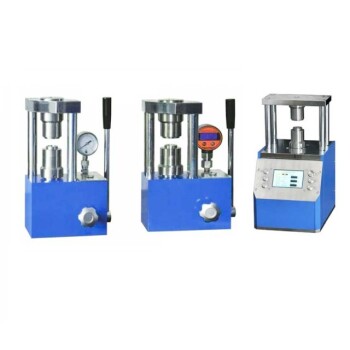
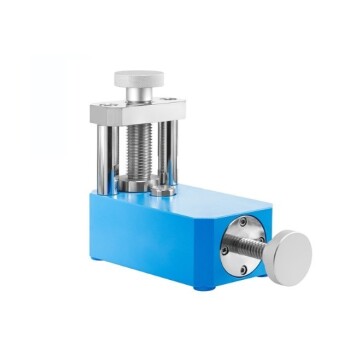
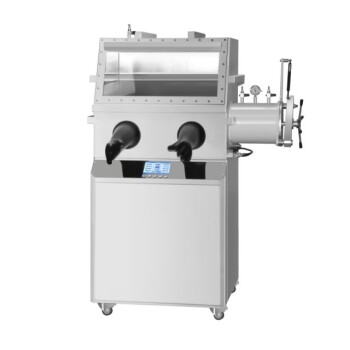
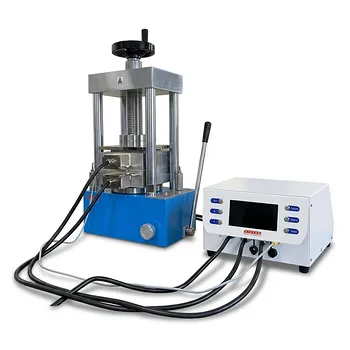
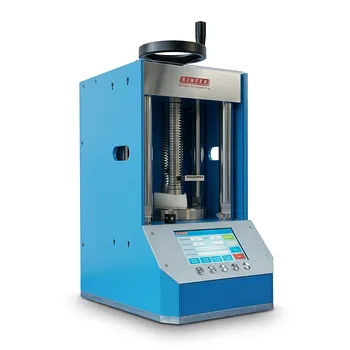
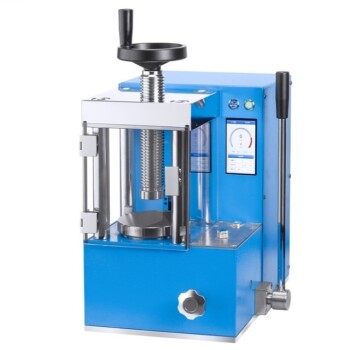
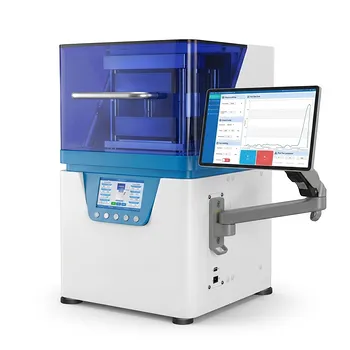
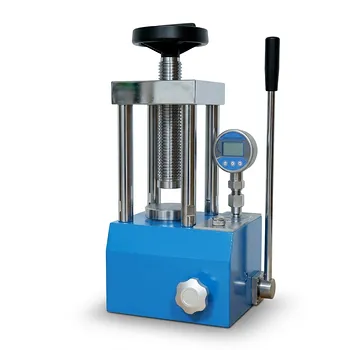
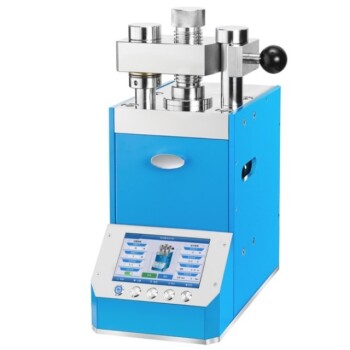
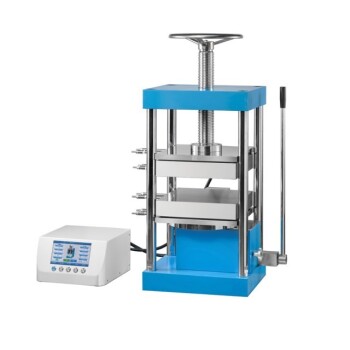
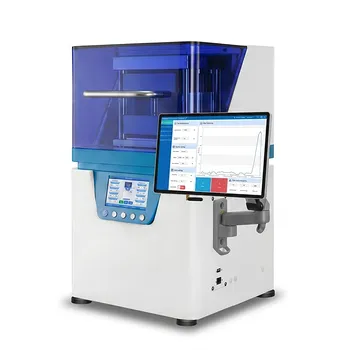
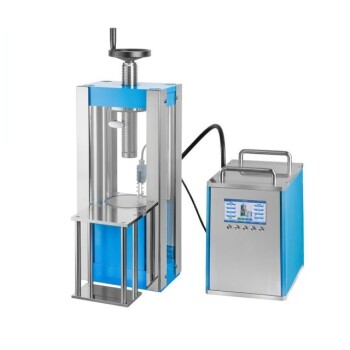
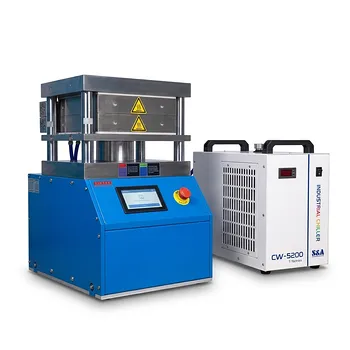
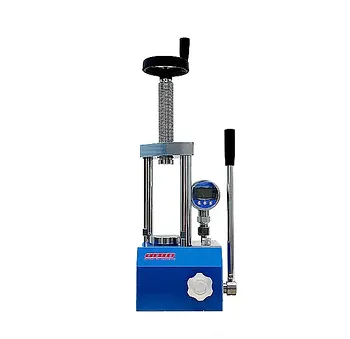
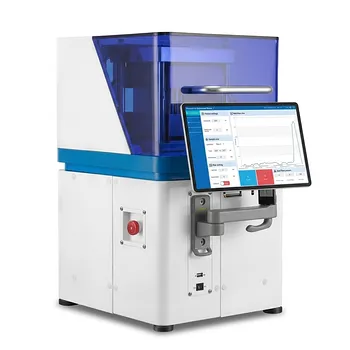
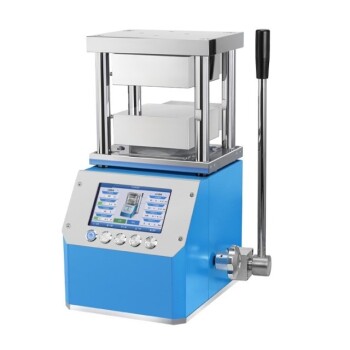
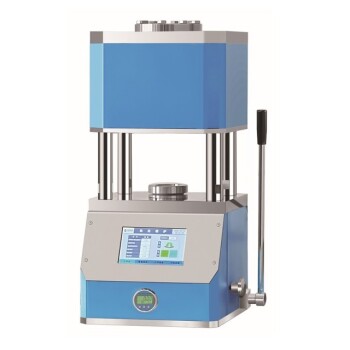
Powder metallurgy provides a superior alternative for MPEA target production by ensuring extreme chemical homogeneity and eliminating the crystalline texture common in cast materials. Unlike traditional vacuum induction melting, which often suffers from elemental segregation during cooling, powder metallurgy utilizes solid-state or controlled-phase processing. This allows researchers to use laboratory hydraulic presses and vacuum furnaces to produce complex, multi-element targets with high precision and significantly lower capital investment.
While traditional melting is often the default for industrial-scale alloys, powder metallurgy is the definitive choice for MPEAs because it provides total control over multi-element ratios and eliminates the microstructural inconsistencies that degrade sputtering performance.
Overcoming the Limitations of Traditional Casting
Eliminating Chemical Segregation
Multi-principal element alloys (MPEAs) consist of five or more elements, which often have vastly different melting points and densities. In traditional casting, these elements can separate or "segregate" as the melt cools, leading to a target with inconsistent chemistry across its surface. Powder metallurgy avoids this by mixing powders in their solid state, ensuring the final target maintains the exact stoichiometric ratio intended by the researcher.
Removing Unwanted Microstructural Texture
Casting and subsequent thermo-mechanical processing often create a "texture" or a preferred orientation of grains within the metal. This texture can lead to uneven sputtering rates and inconsistent film thickness during thin-film deposition. Sintered targets produced via powder metallurgy are typically isotropic, meaning they lack this texture and provide a more uniform erosion rate during the vacuum coating process.
The Economic and Operational Advantages
Lowering Capital Expenditure (CAPEX)
Traditional vacuum induction melting (VIM) requires massive, specialized machinery that is expensive to purchase, maintain, and operate. In contrast, powder metallurgy utilizes standard laboratory hydraulic presses and vacuum high-temperature furnaces. This significantly lowers the barrier to entry for laboratories looking to develop proprietary alloy compositions.
Enabling Rapid Prototyping
The research and development phase for MPEAs requires testing dozens of different elemental combinations to find the "sweet spot" for specific properties. Melting a new batch for every minor adjustment is slow and creates significant material waste. Powder metallurgy is inherently flexible, allowing for the rapid production of small-batch prototypes with varying compositions in a fraction of the time.
Precision Control in Complex Alloy Design
Managing Five or More Elements
As the number of elements in an alloy increases, the thermodynamics of the melt become increasingly difficult to manage. Volatile elements may evaporate, while heavy elements may sink to the bottom of the crucible. The laboratory hydraulic press method allows for the precise mechanical trapping of these elements before sintering, ensuring the final product matches the initial design.
Fine-Tuning Microstructure via Sintering
Vacuum furnaces allow for the precise control of both heating rates and "soak" times at peak temperatures. This level of control allows users to optimize the density and grain size of the target without the chaotic variables of a liquid melt. Precise temperature management prevents the formation of undesirable intermetallic phases that can occur during the slow cooling of large ingots.
Understanding the Trade-offs
Porosity and Density Challenges
The primary challenge with powder metallurgy is achieving "theoretical density," as sintered parts can sometimes retain microscopic pores. Residual porosity can lead to arcing during the sputtering process, which creates defects in the thin film. To mitigate this, high-pressure hydraulic pressing and optimized sintering cycles are required to ensure the target is as dense as possible.
Risk of Atmospheric Contamination
Because metal powders have a high surface-area-to-volume ratio, they are highly susceptible to oxidation or moisture absorption. If the powders are not handled in inert environments (like glove boxes), the resulting target may contain high levels of oxygen or nitrogen. These impurities can be transferred to the sputtered film, potentially altering its electrical or mechanical properties.
Making the Right Choice for Your Goal
How to Apply This to Your Project
Selecting the right production method depends on your current stage of development and your specific material requirements.
- If your primary focus is rapid compositional screening: Use powder metallurgy to quickly iterate through different element ratios without the cost and cleanup of a full melt.
- If your primary focus is achieving isotropic sputtering behavior: Opt for hydraulic pressing and sintering to ensure a texture-free microstructure that erodes evenly.
- If your primary focus is minimizing equipment costs: Leverage laboratory-scale presses and vacuum furnaces to bypass the need for industrial-scale vacuum induction melting.
By leveraging the precision of powder metallurgy, researchers can move beyond the metallurgical constraints of the past to unlock the full potential of complex MPEA designs.
Summary Table:
| Feature | Powder Metallurgy (PM) | Traditional Casting (VIM) |
|---|---|---|
| Chemical Homogeneity | High; prevents elemental segregation | Low; prone to cooling segregation |
| Microstructure | Isotropic (no preferred orientation) | Textured (uneven sputtering) |
| Capital Cost (CAPEX) | Low; uses lab hydraulic presses | High; requires industrial VIM units |
| Prototyping Speed | Rapid; flexible composition changes | Slow; large batches, high waste |
| Elemental Control | Precise mechanical trapping | Difficult; volatile elements may evaporate |
Elevate Your Material Research with KINTEK
Ready to overcome the limitations of traditional casting? KINTEK specializes in comprehensive laboratory pressing solutions designed for precision and performance. Whether you are developing complex MPEAs or conducting cutting-edge battery research, our range of equipment ensures theoretical density and chemical homogeneity.
Our Solutions Include:
- Manual, Automatic, and Heated Laboratory Presses
- Multifunctional and Glovebox-Compatible Models
- Cold (CIP) and Warm Isostatic Presses (WIP)
Maximize your lab's efficiency and achieve superior sputtering results today. Contact our experts now to find the perfect press for your application!
References
- Elena Colombini, Paolo Veronesi. Powder Metallurgy Route for the Synthesis of Multiprincipal Element Alloys Sputtering Targets. DOI: 10.1002/adem.202101518
This article is also based on technical information from Kintek Solution Knowledge Base .
Related Products
- Laboratory Hydraulic Press Lab Pellet Press Button Battery Press
- Laboratory Hydraulic Press 2T Lab Pellet Press for KBR FTIR
- Laboratory Hydraulic Press Lab Pellet Press Machine for Glove Box
- 24T 30T 60T Heated Hydraulic Lab Press Machine with Hot Plates for Laboratory
- Automatic Laboratory Hydraulic Press Lab Pellet Press Machine
People Also Ask
- How is a laboratory hydraulic press used for HAP composite gels? Master Mineral Substrate Standardization
- What role does a laboratory hydraulic press play in reaction pellets? Optimizing Lunar Soil and Metal Fuel Density
- What role does a laboratory hydraulic press play in the preparation of piezoelectric ceramic discs for DC-PG? | KINTEK
- What role does a laboratory hydraulic press play in the assembly of all-solid-state battery test cells? Expert Guide
- Why is a laboratory hydraulic press required for PBAT and PLA sample preparation? Achieve Flawless Characterization