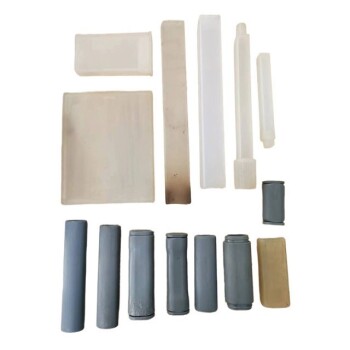
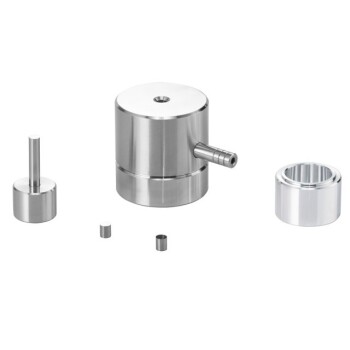
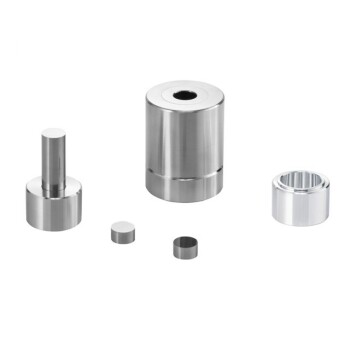
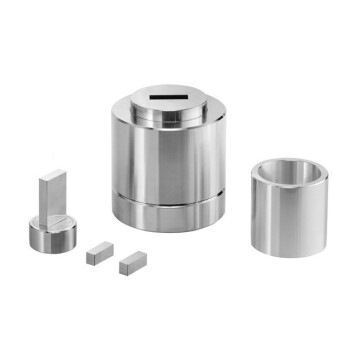
Teflon (PTFE) molds are the preferred choice for alumina-nickel (Al2O3-Ni) composite preparation because they provide a chemically inert, ultra-low-friction interface that prevents adhesion. By eliminating the bond between the mold and the composite, these molds allow fragile green bodies to be removed without cracking or losing dimensional accuracy.
Core Takeaway: The primary advantage of Teflon molds lies in their extremely low surface energy, which minimizes demolding stress and prevents chemical contamination, ensuring the structural integrity of complex composite parts.
Eliminating Mechanical Failure During Demolding
Preventing Adhesion with Low Surface Energy
Alumina-nickel green bodies, particularly those created through gel-casting, are prone to sticking to traditional mold materials. Teflon’s low surface energy creates a non-stick environment that prevents the solidified body from bonding to the mold walls after gelation.
Reducing Demolding Stress and Cracking
Green bodies possess a degree of toughness but remain inherently fragile after curing. The low friction coefficient of Teflon allows the part to slide out easily, significantly reducing the mechanical stress that often causes micro-cracks or catastrophic deformation.
Preserving Complex Geometric Accuracy
For parts with intricate shapes, any resistance during demolding can lead to dimensional warping. Teflon molds ensure that the fine details and edges of the Al2O3-Ni composite are preserved exactly as intended by the mold geometry.
Protecting Chemical and Structural Integrity
Ensuring Chemical Inertness
The process of forming Al2O3-Ni composites often involves reactive monomers or solvents. Teflon is exceptionally inert, meaning it will not react with the slurry or introduce impurities that could compromise the final material properties.
Preventing Solvent-Induced Damage
In processes involving organic solvents, Teflon provides superior solvent resistance. Unlike some plastics or metals that might degrade or leach, Teflon remains stable, ensuring that the dried composite is peeled off cleanly without surface "injuries" or contamination.
Thermal Stability in Multi-Stage Processing
While primarily used for casting, Teflon can also withstand moderate heat, such as in hot-pressing environments up to 180°C. This thermal stability allows it to act as a protective barrier between metal platens and the composite, preventing the matrix from sticking during heat-intensive steps.
Understanding the Trade-offs
Dimensional Stability Under Load
While Teflon provides excellent non-stick properties, it is a relatively soft material compared to steel. Under extreme clamping pressures or high-load hot pressing, Teflon components may experience slight deformation or "creep," which can affect the absolute precision of the part.
Limited Service Temperature
Teflon is ideal for green body preparation and low-temperature curing, but it cannot be used during the high-temperature sintering phase of ceramic-metal composites. If the molding process requires temperatures exceeding 260°C, the Teflon will begin to degrade and release toxic fumes.
Surface Texture Considerations
Because Teflon is softer than metal, the mold surfaces can be scratched or marred more easily over time. Any damage to the Teflon surface will be mirrored on the green body, potentially requiring more frequent mold replacements or resurfacing to maintain high surface quality.
How to Apply This to Your Project
When selecting a mold strategy for Al2O3-Ni composites, your choice should be dictated by the specific phase of production and the complexity of your part.
- If your primary focus is preventing cracks in fragile gel-cast parts: Use machined Teflon blocks to ensure the lowest possible demolding resistance and highest part yield.
- If your primary focus is maintaining chemical purity: Leverage Teflon’s inertness to avoid ion leaching or solvent reactions that could alter the composite’s electrical or mechanical performance.
- If your primary focus is high-pressure hot pressing: Use thin Teflon sheets as liners between the composite and a precision metal mold to combine non-stick properties with structural rigidity.
Teflon remains the definitive material for ensuring that the transition from a liquid slurry to a solid green body occurs without structural or chemical compromise.
Summary Table:
| Feature | Advantage for Al2O3-Ni Composites | Benefit to Material Integrity |
|---|---|---|
| Low Surface Energy | Prevents slurry adhesion to mold walls | Eliminates surface defects and cracking |
| Low Friction | Facilitates easy removal of fragile green bodies | Preserves complex dimensional accuracy |
| Chemical Inertness | No reaction with monomers or organic solvents | Ensures high purity and structural integrity |
| Thermal Stability | Resists degradation during low-temp curing | Maintains barrier during moderate hot-pressing |
| Non-Stick Interface | Reduces mechanical stress during demolding | High yield for delicate gel-cast components |
Elevate Your Material Synthesis with KINTEK Precision
Optimizing your Al2O3-Ni composite production requires more than just the right mold—it demands a high-performance pressing environment. KINTEK specializes in comprehensive laboratory pressing solutions tailored for advanced battery research and material science.
Whether you are working with fragile gel-cast bodies or high-density powders, our range of equipment ensures consistent, high-quality results:
- Manual & Automatic Presses: For versatile, user-friendly sample preparation.
- Heated & Multifunctional Models: To manage thermal stability and multi-stage processing.
- Glovebox-Compatible Systems: For sensitive materials requiring controlled atmospheres.
- Cold & Warm Isostatic Presses (CIP/WIP): Ideal for achieving uniform density in complex composite geometries.
Don't let demolding stress or inconsistent pressure compromise your research. Contact KINTEK today to find the perfect pressing solution for your laboratory needs!
References
- Justyna Zygmuntowicz, W. Kaszuwara. Thermoanalytical studies of the ceramic-metal composites obtained by gel-centrifugal casting. DOI: 10.1007/s10973-017-6647-z
This article is also based on technical information from Kintek Solution Knowledge Base .
Related Products
- Lab Double Plate Heating Mold for Laboratory Use
- Lab Anti-Cracking Press Mold
- Lab Polygon Press Mold
- Lab Round Bidirectional Press Mold
- XRF KBR Plastic Ring Lab Powder Pellet Pressing Mold for FTIR
People Also Ask
- How does the geometry of laboratory molds influence mycelium-based composites? Optimize Density and Strength
- Why are precision laboratory molds essential for forming basalt-reinforced lightweight concrete specimens?
- Why are high-precision laboratory molds and specific compaction processes required? Ensure Data Integrity in Soil Research
- What is the purpose of using a laboratory hot plate and weight pressing? Mastering Cellulose Filament Bond Strength
- How is a laboratory hot plate utilized in Li-Si alloy electrode preparation? Achieve High-Activity Battery Materials