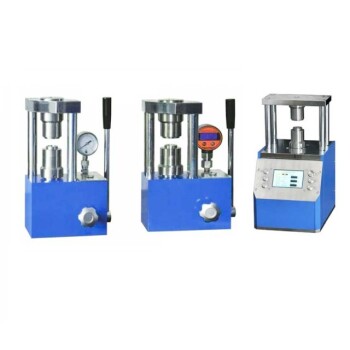
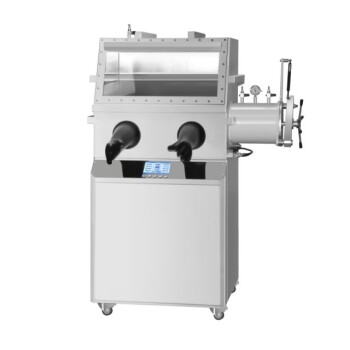
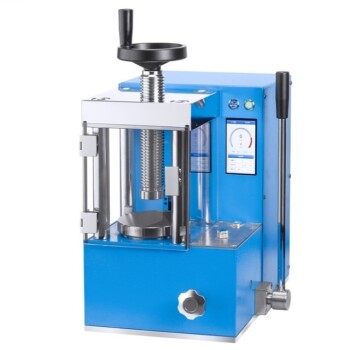
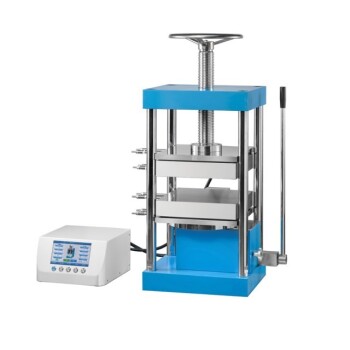
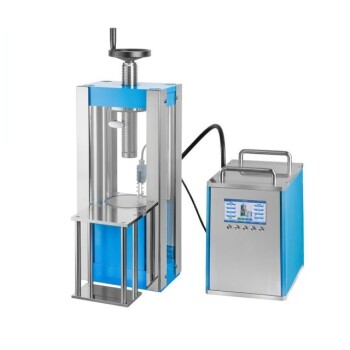
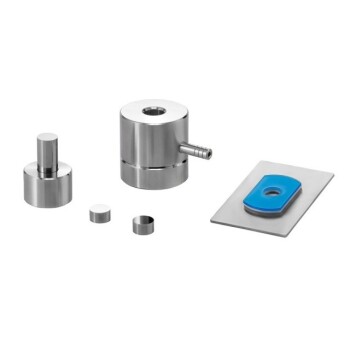
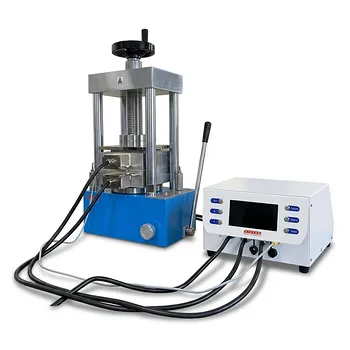
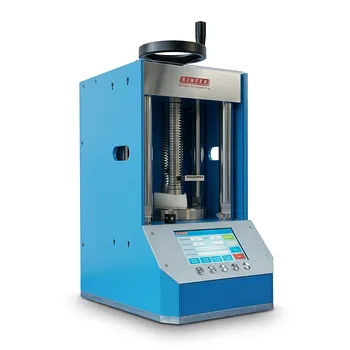
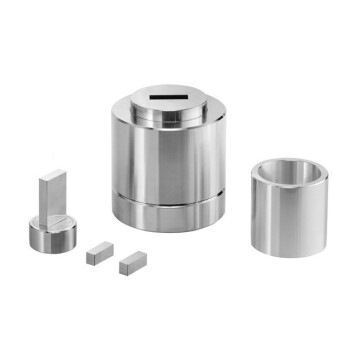
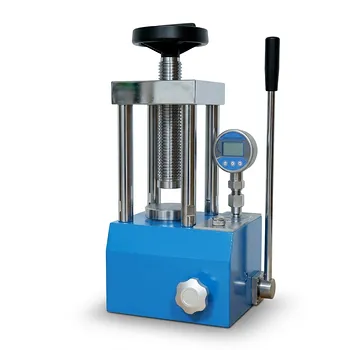
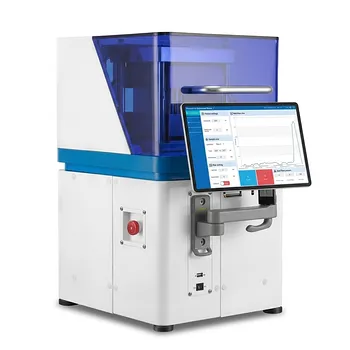
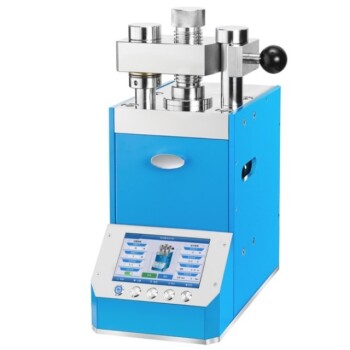
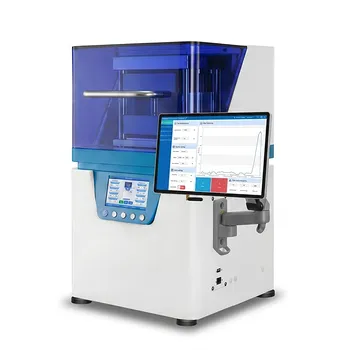
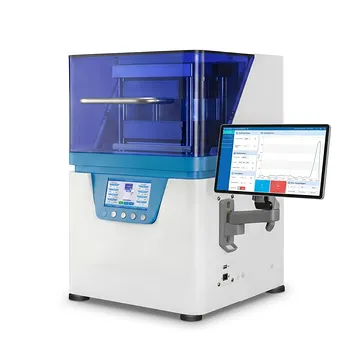
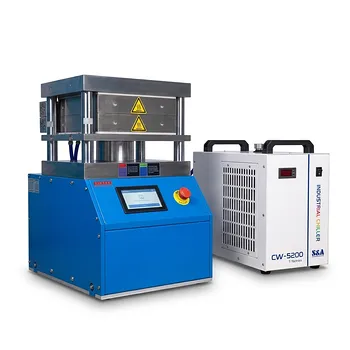
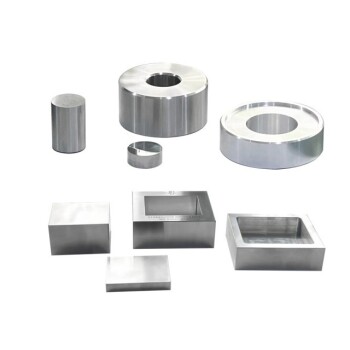
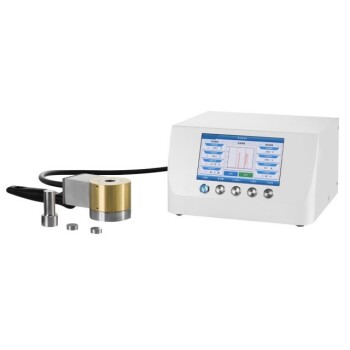
The hallmark of a versatile laboratory press is its ability to balance high-force precision with meticulous environmental control. These machines commonly feature automatic operation, heated components, and programmable cycles to ensure experimental reproducibility. To accommodate diverse research needs, modern designs prioritize glovebox compatibility for work in inert atmospheres and offer modularity to scale from benchtop testing to small-scale production.
A versatile laboratory press serves as a precision instrument that integrates mechanical force, thermal regulation, and atmospheric control into a single, compact footprint. By prioritizing automation and modular hardware, these devices allow researchers to maintain consistency across applications ranging from pharmaceutical pelletizing to advanced polymer development.
Precision Control and Automation
Digital Thermal Management
Versatile presses are equipped with precision digital temperature controls that manage heated platens, often reaching temperatures between 600°F and 1200°F (approx. 450°C). This accuracy is critical for thermal processing and ensures that materials like thermoplastic resins or ceramics are treated according to exact specifications.
Automated Force Application
To eliminate human error and ensure consistent density in samples, these units often utilize automatic operation. This allows for the precise application of force—ranging from 15 to upwards of 100 tons (1,000 kN)—which is essential for creating uniform pellets for spectroscopy or bomb calorimetry.
Programmable Logic and Data Acquisition
Advanced models incorporate programmable controls that allow users to store specific pressure and temperature profiles. Many units also include data acquisition features, enabling researchers to export performance metrics for quality control and academic documentation.
Physical Design and Adaptability
Scaling Form Factors
Manufacturers design these units to be highly space-efficient, offering a minimal footprint to conserve valuable laboratory real estate. While many begin as benchtop or countertop units, they often feature optional pedestals that convert them into floor-standing units as production needs scale.
Glovebox Integration
For research involving sensitive materials that react with oxygen or moisture, specific models are engineered for glovebox compatibility. This allows the press to operate within an inert atmosphere, protecting the integrity of the experiment without compromising the press's mechanical capabilities.
Durability and Low Maintenance
Designed for the rigors of daily use, these machines focus on long service life and low maintenance requirements. They are engineered to operate with low noise levels, reducing workplace disruptions in quiet research environments while maintaining the durability needed for heavy-duty material testing.
Performance Specs for Advanced Research
High-Force Thresholds
The ability to generate significant compressive force is a core requirement for versatile labs. These presses can handle a wide range of materials, including rubbers, composites, and textiles, providing enough tonnage to facilitate laminating or high-density pellet synthesis.
Integrated Cooling Systems
To speed up experimental cycles, many high-temperature presses include cooling platens. This feature allows for the rapid stabilization of samples after high-heat processing, which is vital for maintaining high throughput in "lean" manufacturing or research settings.
Understanding the Trade-offs
Complexity vs. Ease of Use
While automated and programmable features increase precision, they also introduce a steeper learning curve compared to manual hydraulic presses. Users must balance the need for advanced data acquisition with the technical training required to operate digital interfaces.
Footprint vs. Capacity
Benchtop models offer excellent space conservation, but they may be limited in platen size or maximum tonnage compared to dedicated floor-standing units. Researchers must evaluate whether their future projects will require the larger working areas typically found only in high-tonnage, industrial-framed models.
Thermal Inertia
High-temperature platens provide immense processing power but require significant warm-up and cool-down periods. Without integrated rapid-cooling systems, the duty cycle of the press may be limited, potentially slowing down projects that require multiple temperature shifts.
Making the Right Choice for Your Goal
To select the appropriate laboratory press, you must align the machine's technical specifications with the physical requirements of your specific research environment.
- If your primary focus is sensitive chemical synthesis: Prioritize models specifically labeled for glovebox compatibility and inert atmosphere integration.
- If your primary focus is material science and polymers: Opt for units with high-temperature heated platens (up to 450°C) and integrated cooling systems for rapid cycling.
- If your primary focus is analytical chemistry and pelletizing: Ensure the unit features automated digital force control to guarantee the repeatabilty of pellet density.
- If your primary focus is pilot-scale production: Invest in a floor-standing unit or a benchtop model with a pedestal expansion and a tonnage rating upwards of 100 tons.
By selecting a press that integrates automation with robust thermal and mechanical limits, you ensure your laboratory remains equipped for both current experiments and future innovations.
Summary Table:
| Feature | Key Capability | Primary Application |
|---|---|---|
| Automation | Programmable cycles & data acquisition | Consistent reproducibility in QC & research |
| Thermal Control | Heated platens (up to 450°C) & cooling | Material science, polymers, and ceramics |
| Force Range | Precise application from 15 to 100+ tons | Pelletizing, laminating, and high-density synthesis |
| Design | Compact footprint & glovebox compatibility | Battery research and inert atmosphere experiments |
Elevate Your Research with KINTEK’s Precision Pressing Solutions
Unlock the full potential of your laboratory with KINTEK, your partner in comprehensive pressing technology. Whether you are conducting cutting-edge battery research or advanced material synthesis, we offer a diverse range of manual, automatic, heated, multifunctional, and glovebox-compatible models, alongside cold and warm isostatic presses.
Our equipment is engineered to deliver the high-force precision and meticulous environmental control your experiments demand. Don't settle for standard—choose a solution tailored to your specific research goals.
Ready to optimize your lab's performance? Contact KINTEK today to find the perfect press for your needs.
References
- Rafael Brisolla OBARA, Luis Chaves. Motores a Hidrogênio de Alta Durabilidade: Um Estudo Comparativo entre Ferros Fundidos e Aços. DOI: 10.5151/simea2025-pap56
This article is also based on technical information from Kintek Solution Knowledge Base .
Related Products
- Laboratory Hydraulic Press Lab Pellet Press Button Battery Press
- Laboratory Hydraulic Press Lab Pellet Press Machine for Glove Box
- Laboratory Hydraulic Pellet Press for XRF KBR FTIR Lab Press
- Laboratory Split Manual Heated Hydraulic Press Machine with Hot Plates
- Laboratory Hydraulic Split Electric Lab Pellet Press
People Also Ask
- How is a laboratory hydraulic press used for HAP composite gels? Master Mineral Substrate Standardization
- What role does a laboratory hydraulic press play in reaction pellets? Optimizing Lunar Soil and Metal Fuel Density
- What role does a laboratory hydraulic press play in the preparation of piezoelectric ceramic discs for DC-PG? | KINTEK
- What role does a laboratory hydraulic press play in the assembly of all-solid-state battery test cells? Expert Guide
- Why is a laboratory hydraulic press required for PBAT and PLA sample preparation? Achieve Flawless Characterization