The primary objective of pre-pressing LLZO and LCO-LLZO powders is to establish a high-density "green body" with maximized particle-to-particle contact. This initial compaction ensures uniform thermal and electrical distribution during the main sintering stage, which is critical for achieving a dense final ceramic and a high-quality interface between the electrolyte and the cathode.
Pre-pressing transforms loose, aerated powder into a structured precursor that minimizes volume shrinkage and prevents mechanical failure. By establishing a high initial green density, this step creates the necessary physical foundation for efficient chemical reactions and uniform densification during high-temperature processing.
Optimizing Sintering Dynamics
Promoting Uniform Current and Heat Distribution
In processes like Spark Plasma Sintering (SPS), pre-pressing ensures that electrical current and heat flow evenly through the material. Without this initial compaction, localized "hot spots" can occur where particles touch, leading to uneven densification or material degradation. Uniform thermal conductivity is established early, allowing the entire pellet to reach sintering temperatures simultaneously.
Facilitating Solid-State Diffusion
Sintering relies on atoms moving across particle boundaries, a process known as solid-state diffusion. Pre-pressing increases the number of contact points between precursor particles, providing the "bridges" necessary for these atoms to migrate. This enhanced contact is essential for the chemical reactions required to synthesize complex ceramics like LLZTO.
Enhancing Interface Quality
For composite materials like LCO-LLZO, pre-pressing is vital for establishing a high-quality interface between the cathode and the electrolyte. Tight physical contact at the green body stage allows the two materials to bond more effectively during sintering. This results in lower interfacial resistance, which is a key performance metric for solid-state batteries.
Mitigating Structural Risks
Controlling Volume Shrinkage
Loose powders undergo significant volume reduction as they densify, which can lead to warping or cracking. Pre-pressing reduces the internal porosity and expels trapped air before the high-temperature phase begins. By minimizing the total amount of shrinkage that occurs during sintering, the risk of macro-defects and deformations is significantly lowered.
Establishing Mechanical Strength
The "green body" must have enough structural integrity to be handled and placed into the sintering furnace or die. Applying unidirectional pressure (often between 30 MPa and 78.5 MPa) creates a pellet with specific mechanical strength. This geometric foundation prevents the material from crumbling under its own weight or the pressure applied during the sintering cycle.
Eliminating Trapped Air and Large Pores
Large internal pores and air pockets act as barriers to both heat and ion transport. Pre-pressing forces the air out, leading to a more homogeneous final ceramic product. This process is a fundamental prerequisite for achieving a final cathode sheet or electrolyte pellet with a relative density as high as 95%.
Understanding the Trade-offs
The Risk of Over-Compaction
While high pressure is beneficial, exceeding the material's limits can cause lamination cracks or "capping" where the pellet splits into layers. If the pressure is too high, the stored elastic energy can cause the green body to expand and fracture when the pressure is released. Finding the optimal pressure—such as the 30 MPa or 78.5 MPa cited in lab protocols—is crucial for balancing density with structural stability.
Temperature Effects During Pressing
Using a heated lab press (e.g., at 80°C) during the pre-pressing stage can further enhance initial physical properties. Warm pressing can help certain additives or binders flow better, leading to even higher initial relative density. However, this adds complexity to the preparation process and may not be necessary for all LLZO formulations.
How to Apply This to Your Project
Recommendations Based on Goals
- If your primary focus is maximizing ionic conductivity: Prioritize high pre-pressing pressures (near 78.5 MPa) to minimize final porosity and maximize particle contact.
- If your primary focus is preventing cracks in large pellets: Ensure a slower pressure release after pre-pressing to allow the green body to stabilize without lamination.
- If your primary focus is optimizing LCO-LLZO composites: Use a heated press during the pre-compaction stage to improve the wetting and contact between the cathode and electrolyte particles.
A precise pre-pressing stage is the non-negotiable foundation for transforming loose ceramic powders into high-performance, dense solid-state battery components.
Summary Table:
| Objective | Primary Benefit | Key Mechanism |
|---|---|---|
| Densification | Maximized particle contact | Creates high-density "green body" foundation |
| Thermal Uniformity | Prevents "hot spots" | Ensures even current/heat flow during sintering |
| Structural Control | Minimized shrinkage | Reduces internal porosity to prevent warping |
| Interface Quality | Lower ionic resistance | Enhances bonding between cathode and electrolyte |
| Mechanical Strength | Geometric stability | Establishes integrity for handling and processing |
Elevate Your Battery Research with Precision Pressing
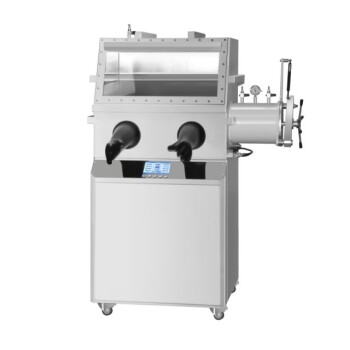
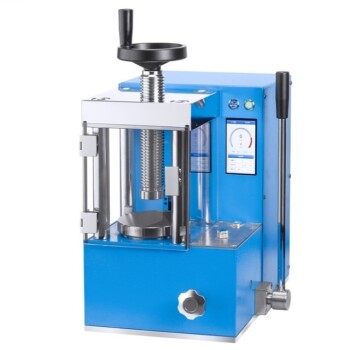
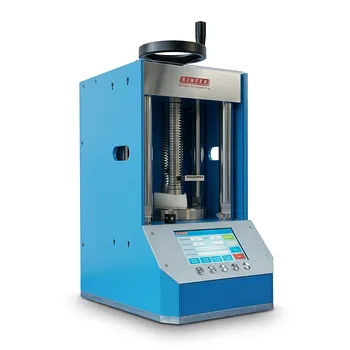
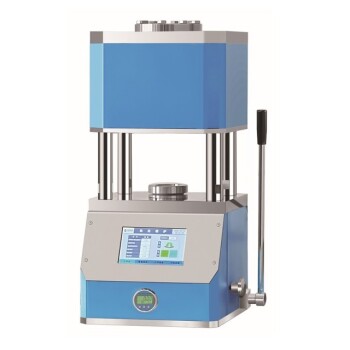
Achieving the perfect green body is the foundation of high-performance solid-state batteries. KINTEK specializes in comprehensive laboratory pressing solutions tailored for advanced material research. From manual and automatic systems to heated, multifunctional, and glovebox-compatible models, we provide the tools necessary to optimize your LLZO and LCO-LLZO processing.
Our range also includes specialized cold and warm isostatic presses designed to eliminate internal defects and maximize density in ceramic pellets and cathode sheets.
Ready to enhance your material densification? Contact KINTEK today for a customized solution
Related Products
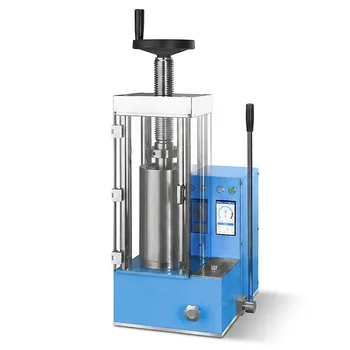
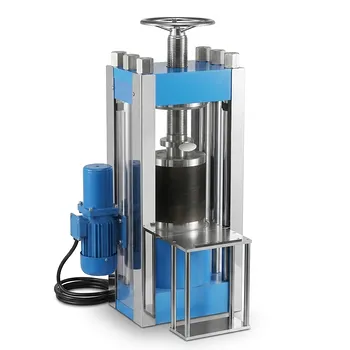
- Electric Isostatic Pressing Machine 40 Tons Automatic Laboratory Powder Compacting Press
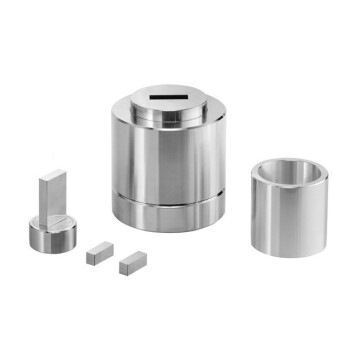
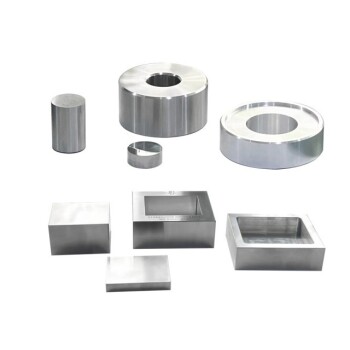
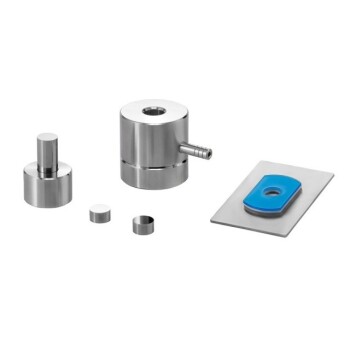
- Assemble Square Lab Press Mold for Laboratory Use
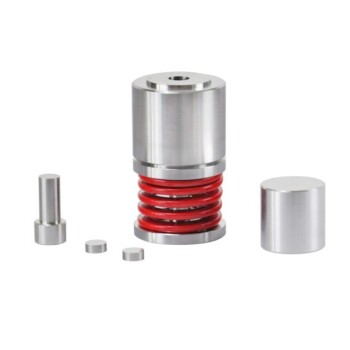
- Lab Round Bidirectional Press Mold
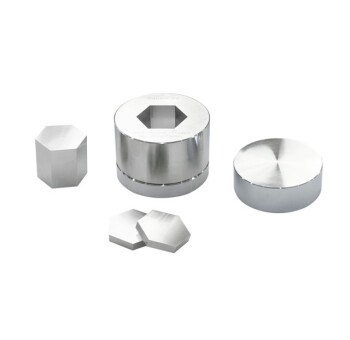
- Lab Polygon Press Mold
- Lab Heat Press Special Mold
People Also Ask
- What are the key characteristics of the isostatic pressing process? Unlock Uniform Density and Complex Geometries
- Why is vacuum-sealed packaging necessary before isostatic pressing of CuPc thin films? Protect Integrity & Uniformity
- How is pressure applied to the material during isostatic pressing? Master Uniform Density and Complex Geometries
- How does pressure distribute during isostatic pressing of aluminum? Achieve Uniform Density for Your Lab Materials
- What are the applications of isostatic pressing in the automotive industry? Precision Manufacturing for High-Performance Parts