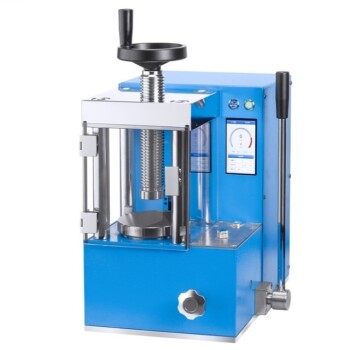
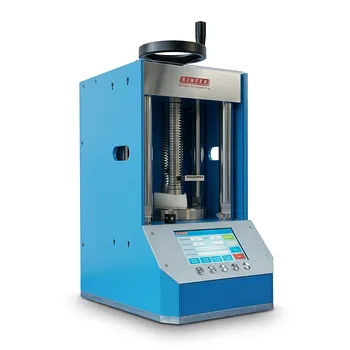
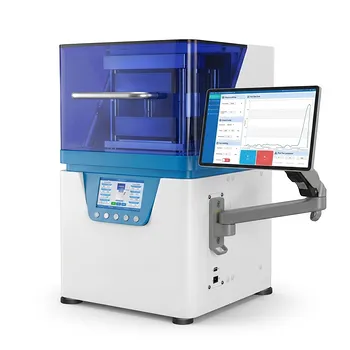
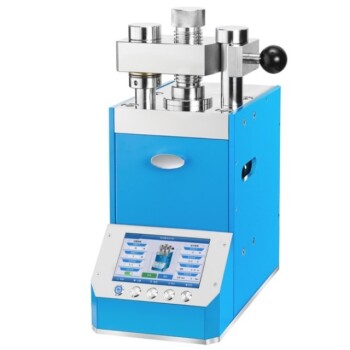
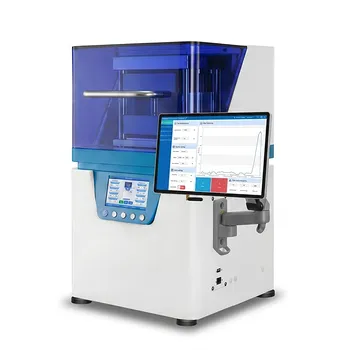
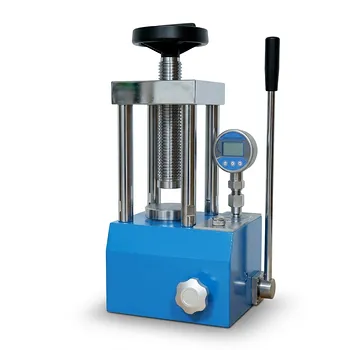
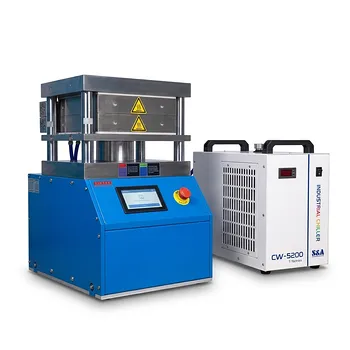
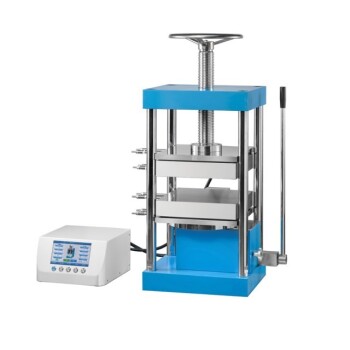
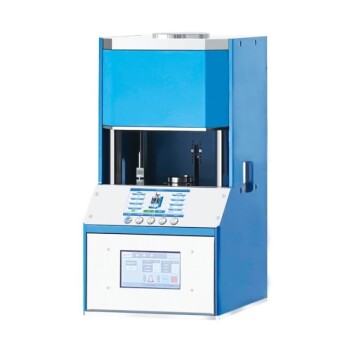
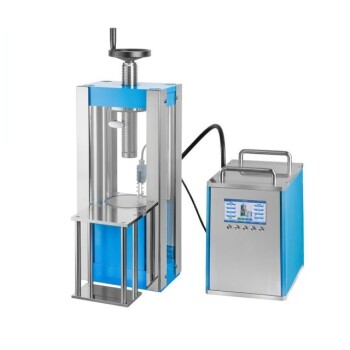
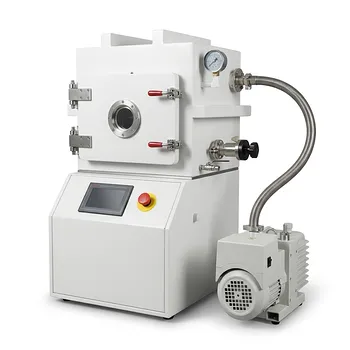
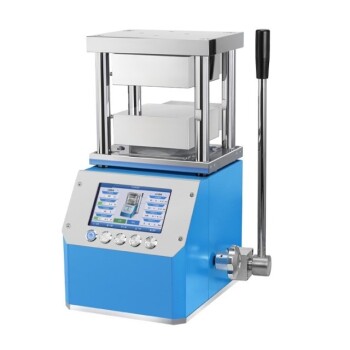
Laboratory hydraulic presses are the fundamental tools used to transform raw powder mixtures into high-performance battery components. By applying precise, uniform force, these machines compress active materials, conductive agents, and binders into dense electrode sheets or solid electrolyte discs. This densification is critical for reducing internal resistance and achieving the energy density required for modern electric vehicle (EV) applications.
The laboratory hydraulic press is the bridge between experimental chemistry and functional hardware, enabling the creation of ultra-thin, high-density layers that maximize energy storage while ensuring efficient ion transport.
Optimizing Energy Density Through Densification
Increasing Tap Density and Volumetric Capacity
In the context of electric vehicles, maximizing the amount of energy stored in a limited space is paramount. Hydraulic presses increase the tap density of electrode materials by eliminating internal pores and air gaps within the powder matrix. This results in thinner, more compact electrodes that can store more energy per unit of volume.
Fabricating Ultra-Thin Electrolyte Layers
For next-generation solid-state batteries, presses are used to create sulfide electrolyte layers as thin as 30 micrometers. Achieving these dimensions without sacrificing structural integrity is essential for increasing both gravimetric and volumetric energy density. High-precision pressure control ensures these thin films remain uniform and free of microscopic defects.
Enhancing Electrochemical Performance
Reducing Interfacial Resistance
One of the primary roles of the hydraulic press is to ensure tight physical contact between active material particles and the current collector. This physical proximity is vital for lowering interfacial resistance, which directly translates to faster charging and more efficient power delivery. Without precise compression, gaps between particles act as bottlenecks for electron and ion flow.
Improving Ion Transmission Paths
By compressing high-load composite electrodes, researchers create optimized ion transmission paths between the active materials and the electrolyte. In solid-state systems, this pressure is necessary to facilitate the efficient migration of lithium or sodium ions. A well-pressed pellet or sheet ensures that the battery can maintain high performance even under high-discharge conditions.
Ensuring Long-Term Stability and Safety
Preventing Interlayer Delamination
Electric vehicle batteries undergo significant stress during repeated charge and discharge cycles. The hydraulic press creates a dense composite layer that resists delamination, where layers physically separate over time. This structural consistency is critical for maintaining a long cycle life and preventing internal failures that could lead to safety issues.
Eliminating Internal Voids and Pores
Internal microscopic pores can lead to uneven electrolyte wetting or "dead zones" within a battery cell. Precise compression molding ensures high densification and uniformity, which eliminates these voids. This process is particularly vital for pouch-type batteries, where uniform pressure ensures full electrolyte saturation and stable cycling.
Understanding the Trade-offs and Pitfalls
The Risk of Over-Compression
While high density is generally preferred, applying excessive pressure can be counterproductive. Over-compression can crush active material particles or close off necessary pathways for liquid electrolyte infiltration in traditional cells. This can lead to increased internal resistance and a decrease in the battery's overall rate capability.
Pressure Uniformity Challenges
If a hydraulic press does not apply force with absolute uniformity, the resulting material will have density gradients. These variations cause uneven current distribution during battery operation, leading to localized "hot spots." Over time, these hot spots accelerate material degradation and can significantly shorten the battery's lifespan.
Making the Right Choice for Your Research Goal
Depending on your specific development focus for electric vehicle batteries, your use of a laboratory hydraulic press will vary:
- If your primary focus is Solid-State Electrolytes: Prioritize a press with high-precision control to achieve ultra-thin, 30-micrometer films without structural defects.
- If your primary focus is Pouch Cell Assembly: Focus on achieving uniform electrode compaction to ensure total electrolyte wetting and high tap density.
- If your primary focus is Solar-Powered EV Materials: Use high-precision compression molding to ensure the densification of perovskite or electrolyte pellets for maximum photoelectric conversion.
- If your primary focus is Reducing Internal Resistance: Emphasize the quality of interfacial contact between the active material and the current collector through constant, precise pressure.
The laboratory hydraulic press remains an indispensable asset for turning advanced material theories into the high-density energy storage realities required for the future of transportation.
Summary Table:
| Feature Case | Impact on Battery Material | Research Benefit |
|---|---|---|
| Densification | Increases tap density of powders | Higher volumetric energy density for EVs |
| Thin-Film Fabrication | Creates layers as thin as 30μm | Maximized gravimetric density for solid-state |
| Compression Quality | Reduces interfacial resistance | Faster charging and efficient ion transport |
| Structural Control | Eliminates internal voids/pores | Prevents delamination and ensures safe cycling |
Elevate Your Energy Storage Research with KINTEK
Precise material densification is the key to unlocking the next generation of electric vehicle performance. KINTEK specializes in comprehensive laboratory pressing solutions designed to meet the rigorous demands of battery material synthesis.
Our range includes:
- Manual & Automatic Presses for routine electrode fabrication.
- Heated & Multifunctional Models for advanced composite research.
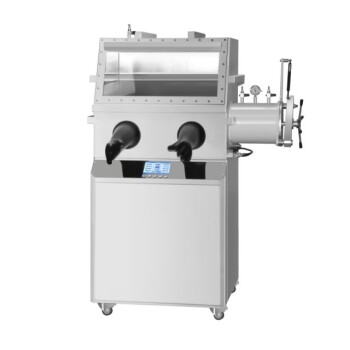
- Glovebox-Compatible Units for moisture-sensitive battery chemistries.
- Cold & Warm Isostatic Presses to ensure absolute density and uniformity.
Ready to achieve superior energy density and ultra-low resistance in your battery designs? Contact KINTEK today to discuss your laboratory pressing needs!
References
- Dominik Horváth, Norbert Miskolczi. Thermo-catalytic co-pyrolysis of waste plastic and hydrocarbon by-products using β-zeolite. DOI: 10.1007/s10098-023-02699-6
This article is also based on technical information from Kintek Solution Knowledge Base .
Related Products
- Laboratory Hydraulic Press Lab Pellet Press Machine for Glove Box
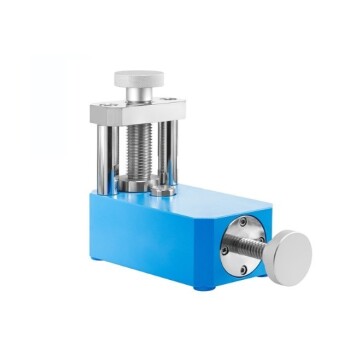
- Laboratory Hydraulic Press 2T Lab Pellet Press for KBR FTIR
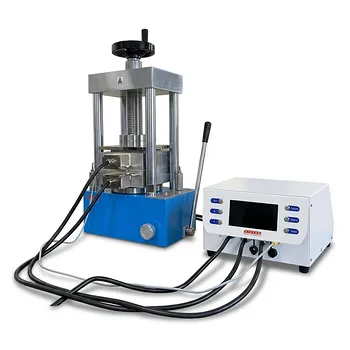
- 24T 30T 60T Heated Hydraulic Lab Press Machine with Hot Plates for Laboratory
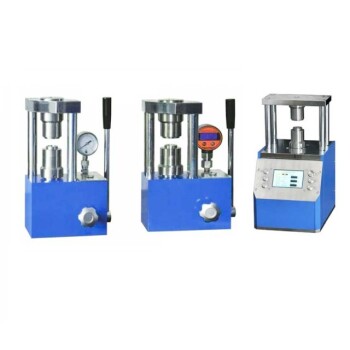
- Laboratory Hydraulic Press Lab Pellet Press Button Battery Press
- Laboratory Hydraulic Pellet Press for XRF KBR FTIR Lab Press
People Also Ask
- How does a laboratory hydraulic press contribute to the preparation of Li3-3xScxSb samples? Optimize Ionic Conductivity
- What is the function of a laboratory hydraulic press in FT-IR of curcumin-coated MWCNTs? Achieve Optical Clarity.
- Why is a laboratory hydraulic press required for compression molding boron-siloxane? Solve High-Loading Density Challenges
- What role does a laboratory hydraulic press play in reaction pellets? Optimizing Lunar Soil and Metal Fuel Density
- What role does a laboratory hydraulic press play in the preparation of piezoelectric ceramic discs for DC-PG? | KINTEK