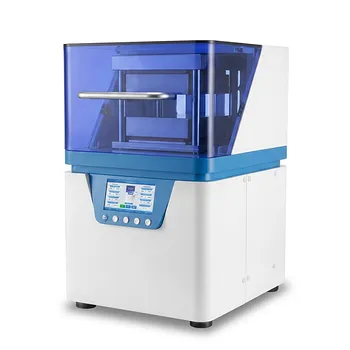
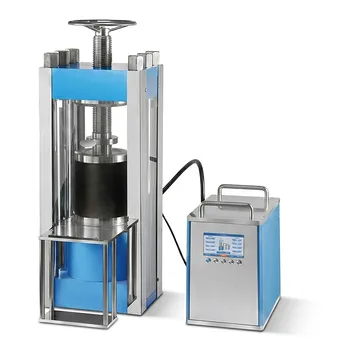
An oil-heated plate press is used because it provides the thermal stability and uniform pressure distribution necessary to transform raw EPDM/PP/AL composites into high-quality sheets. This specific equipment ensures the material reaches a precise, consistent temperature (such as 175 °C) across the entire surface of the plates, which eliminates the thermal history of the ingredients and allows the polymer matrix to flow evenly.
Core Takeaway: The oil-heated plate press is critical for achieving a dense, defect-free composite structure. By providing superior temperature control compared to electric heating, it prevents localized thermal degradation while ensuring the matrix fully encapsulates reinforcements to reach standard thickness and density.
The Superiority of Oil-Based Thermal Management
Precision Over Electric Heating
Unlike electric heating elements that can create "hot spots," oil-heated plates utilize circulating thermal oil to maintain a consistent temperature gradient across the entire work surface. This uniformity is vital for EPDM/PP/AL composites, as even minor temperature fluctuations can lead to uneven curing or inconsistent material properties.
Preventing Thermal Degradation
By providing a stable heating environment, oil presses prevent local stress and thermal degradation within the polymer sheets. Precise control ensures that the material stays within its optimal processing window, protecting the integrity of the polypropylene (PP) and EPDM components.
Implementation of Staged Heating
Industrial oil systems allow for staged heating processes, such as holding at 160°C before increasing to 180°C. This controlled ramp-up ensures that PP granules melt uniformly from the exterior to the core, preventing edge charring while allowing the matrix to diffuse into microscopic gaps.
Achieving Structural Density and Consolidation
Eliminating Thermal History
The molding process must "erase" the thermal history—the internal stresses and structural patterns—created during previous stages like extrusion granulation. The constant heat and pressure of the plate press allow the molecular chains to relax and reorganize into a standardized sheet form.
Maximizing Material Density
A high-clamping-pressure hydraulic press (often reaching 2000 kN) is used to force the composite mixture into every corner of the mold cavity. This high pressure is essential for expelling residual air and eliminating micropores that could otherwise weaken the final product.
Ensuring Matrix Wetting
For the composite to be effective, the molten polypropylene must thoroughly wet and encapsulate the other phases, including the aluminum layers and any fiber reinforcements. The uniform heat transfer from the oil plates creates the necessary thermophysical conditions for this effective bonding to occur.
Understanding the Trade-offs
Maintenance and Complexity
While oil heating offers superior uniformity, it requires a more complex infrastructure, including pumps, reservoirs, and piping. Users must monitor for potential oil leaks and perform regular maintenance on the circulation system, which is not required with simpler electric setups.
Thermal Inertia
Oil systems have higher thermal inertia, meaning they take longer to heat up and cool down than electric systems. While this inertia contributes to temperature stability during a run, it can lead to longer transition times if the production line needs to switch between different temperature requirements frequently.
How to Apply This to Your Project
Making the Right Choice for Your Goal
- If your primary focus is mechanical reliability: Use an oil-heated press to ensure maximum densification and the elimination of internal voids that cause premature failure.
- If your primary focus is dimensional accuracy: Prioritize the uniform pressure capabilities of a high-tonnage hydraulic press to maintain a standard thickness across the entire sheet surface.
- If your primary focus is processing heat-sensitive resins: Leverage the precise temperature distribution of oil heating to avoid localized charring or polymer degradation.
The strategic use of oil-heated plate presses ensures that EPDM/PP/AL composites transition from raw mixtures into high-performance, structurally sound materials through rigorous thermal and physical consolidation.
Summary Table:
| Feature | Advantage of Oil Heating | Impact on Composite Quality |
|---|---|---|
| Temperature Uniformity | Eliminates hot spots common in electric heating | Prevents localized degradation and edge charring |
| Structural Density | High clamping pressure (up to 2000 kN) | Expels residual air and eliminates micropores |
| Thermal Management | Staged heating and high thermal inertia | Ensures uniform melting and matrix wetting |
| Molecular Recovery | Precise control at specific points (e.g., 175°C) | Erases thermal history for consistent properties |
Elevate Your Materials Research with KINTEK Precision Presses
Achieving the perfect EPDM/PP/AL composite requires more than just heat—it requires precise thermal control and consistent pressure. KINTEK specializes in comprehensive laboratory pressing solutions designed to meet the rigorous demands of advanced material science.
From manual and automatic heated models to multifunctional and glovebox-compatible systems, we provide the tools necessary for superior densification and matrix wetting. Our range also includes specialty cold and warm isostatic presses, widely applied in cutting-edge battery research and composite development.
Ready to enhance your lab's efficiency and product quality? Contact our experts today to find your perfect pressing solution!
References
- Rui Gou, Minghui Guo. Effects of different polypropylene and ammonium lignosulfonate contents on the crystallization behavior, rheological behaviors, and mechanical properties of ethylene propylene diene monomer/ polypropylene/ ammonium lignosulfonate composites. DOI: 10.15376/biores.14.1.2079-2096
This article is also based on technical information from Kintek Solution Knowledge Base .
Related Products
- Split Automatic Heated Hydraulic Press Machine with Heated Plates
- Automatic High Temperature Heated Hydraulic Press Machine with Heated Plates for Lab
- Manual Heated Hydraulic Lab Press with Integrated Hot Plates Hydraulic Press Machine
- 24T 30T 60T Heated Hydraulic Lab Press Machine with Hot Plates for Laboratory
- Laboratory Split Manual Heated Hydraulic Press Machine with Hot Plates
People Also Ask
- How does a laboratory heated hydraulic press facilitate PBN sample prep for WAXS? Achieve Precise X-Ray Scattering
- What are the requirements for electrode pressing with high-viscosity ionic liquids like EMIM TFSI? Optimize Performance
- What are the industrial applications of heated hydraulic presses? Master Heat & Force for Precision Manufacturing
- Why is a laboratory hydraulic press with heating plates required for PLA/TEC films? Achieve Precise Sample Integrity
- Function of a Laboratory Hydraulic Press with Heated Platens in SSE? Enhance Battery Density & Conductivity