High-precision pressure control is the fundamental variable in wood densification. It ensures that wood veneers reach an exact degree of densification—typically between 10% and 40%—which directly dictates the final material's density distribution and tangent modulus. Without this precision, experimental repeatability is lost, and the mechanical performance of the resulting composite becomes unpredictable.
High-precision pressure control allows researchers to manipulate wood at the cellular level, transforming a variable natural product into a consistent engineered material. By stabilizing the pressure and temperature environment, the laboratory press eliminates internal stresses and ensures the final specimen aligns with theoretical performance benchmarks.
Controlling the Microstructure and Mechanical Properties
Achieving Targeted Densification Levels
The primary role of precision control is to reach a specific densification percentage accurately. Because even minor fluctuations in pressure can lead to variations in how much the wood cells collapse, maintaining a stable load is vital for the consistency of material performance.
Modulating the Vertical Density Profile (VDP)
The closure speed of the press plates is a critical subset of pressure control that determines where the densification occurs. A faster closure speed concentrates thermal energy on the surface, creating a high-density outer layer that enhances surface hardness while maintaining a thinner densified core.
Enhancing Fiber Interlocking
Fibers with thick cell walls are naturally rigid and resistant to deformation. Precise, sustained pressure is required to force these fibers into close contact, promoting physical interlocking and preventing the finished board from cracking due to internal tension.
Managing Post-Process Stability
Mitigating the Spring-Back Effect
Wood possesses "shape memory," meaning it tends to return to its original thickness once the load is removed. By maintaining controlled pressure during the cooling phase (typically down to 70°C), the laboratory press "locks" the deformed cellular structures in place, ensuring a stable target density.
Relieving Viscoelastic Tension
Precise pressure gradient control is essential for neutralizing residual stresses and viscoelastic tension within the wood matrix. This step minimizes thickness expansion when the veneer is later exposed to moisture, which is critical for the long-term dimensional stability of the material.
Eliminating Structural Voids
High-precision hydraulic systems ensure the exclusion of residual air and the tight bonding of individual layers. This homogenization eliminates density gradients that could otherwise lead to localized failures or inaccurate measurements during subsequent tensile and elongation testing.
Understanding the Trade-offs
The Risk of Pressure Fluctuation
Even slight deviations in pressure can result in uneven suction distribution or localized rapid water penetration in the final product. These inconsistencies often lead to "phantom" data in experiments, where results are skewed by manufacturing defects rather than the properties of the wood itself.
Speed vs. Uniformity
While rapid pressing can increase surface density, it may fail to provide the heat conduction time necessary for uniform densification through the entire thickness of the veneer. Finding the balance between closure speed and thermal soak time is essential for meeting specific engineering requirements.
How to Apply This to Your Project
To achieve the best results in wood veneer densification, align your press parameters with your specific material goals:
- If your primary focus is Surface Hardness: Prioritize precise control over closure speed to concentrate densification on the outer layers of the veneer.
- If your primary focus is Dimensional Stability: Focus on the cooling phase and pressure-hold times to ensure the cellular structure is fully "set" before the load is released.
- If your primary focus is Mechanical Modeling: Ensure the press can maintain stable, constant pressure to eliminate density gradients, ensuring your specimens align with Classical Lamination Theory (CLT).
Mastering these pressure variables allows for the creation of standardized, high-performance wood composites that behave predictably under stress.
Summary Table:
| Key Variable | Impact on Wood Microstructure | Engineering Benefit |
|---|---|---|
| Pressure Stability | Controlled cell collapse (10%-40%) | Consistent density and predictable modulus |
| Closure Speed | Modulates Vertical Density Profile (VDP) | Enhanced surface hardness and core integrity |
| Cooling Phase Load | Mitigates natural "spring-back" effect | Superior dimensional stability and thickness control |
| Gradient Control | Relieves internal viscoelastic tension | Eliminates cracks and localized structural failures |
| Hydraulic Precision | Exclusion of residual air/voids | Homogenized layers for reliable tensile testing |
Elevate Your Material Research with KINTEK’s Precision Pressing Solutions
To achieve predictable results in wood densification or advanced material synthesis, equipment precision is non-negotiable. KINTEK specializes in comprehensive laboratory pressing solutions tailored to meet the rigorous demands of modern research.
Our extensive range includes:
- Manual & Automatic Presses: For versatile load applications.
- Heated & Multifunctional Models: Perfect for managing thermal soak and densification cycles.
- Glovebox-Compatible Systems: For sensitive material processing.
- Cold & Warm Isostatic Presses: Essential for uniform density in battery research and high-performance composites.
Whether you are neutralizing viscoelastic tension in wood or pioneering new battery technologies, KINTEK provides the stability and control you need to succeed.
Ready to refine your laboratory workflows?
Contact our experts today to find the perfect press for your project!
References
- Adam Síkora, Róbert Németh. Properties of wood-based composites manufactured from densified beech wood in viscoelastic and plastic region of the force-deflection diagram (FDD). DOI: 10.1515/rams-2021-0053
This article is also based on technical information from Kintek Solution Knowledge Base .
Related Products
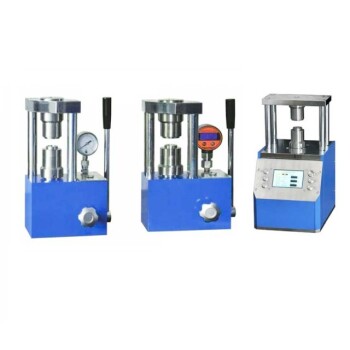
- Laboratory Hydraulic Press Lab Pellet Press Button Battery Press
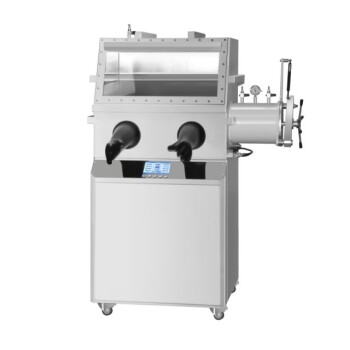
- Laboratory Hydraulic Press Lab Pellet Press Machine for Glove Box
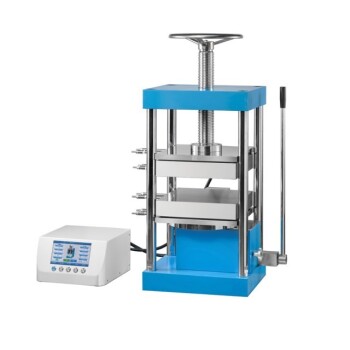
- Laboratory Split Manual Heated Hydraulic Press Machine with Hot Plates
- Laboratory Hydraulic Pellet Press for XRF KBR FTIR Lab Press
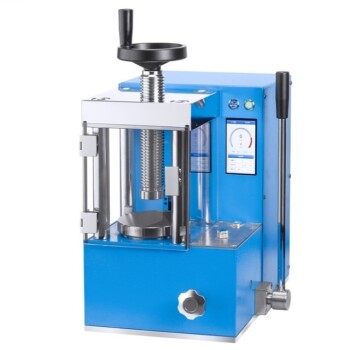
- Laboratory Hydraulic Split Electric Lab Pellet Press
People Also Ask
- How is a laboratory hydraulic press used for HAP composite gels? Master Mineral Substrate Standardization
- What role does a laboratory hydraulic press play in reaction pellets? Optimizing Lunar Soil and Metal Fuel Density
- What role does a laboratory hydraulic press play in the preparation of piezoelectric ceramic discs for DC-PG? | KINTEK
- What role does a laboratory hydraulic press play in the assembly of all-solid-state battery test cells? Expert Guide
- Why is a laboratory hydraulic press required for PBAT and PLA sample preparation? Achieve Flawless Characterization