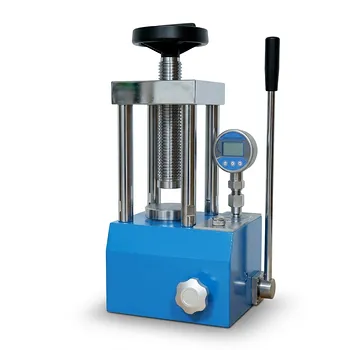
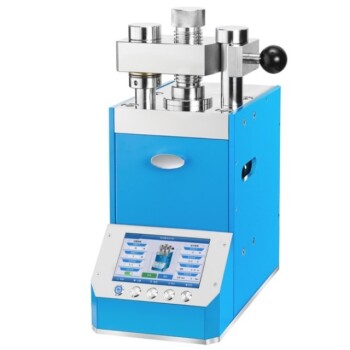
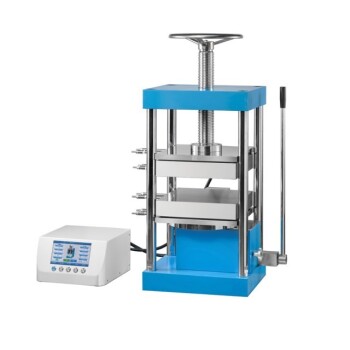
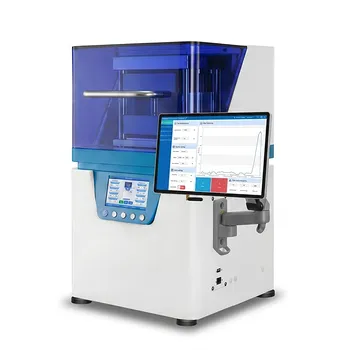
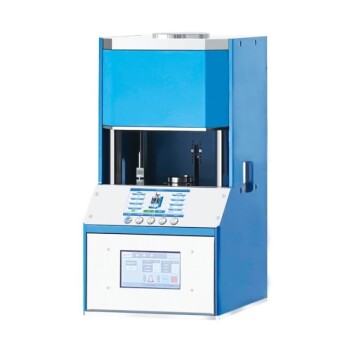
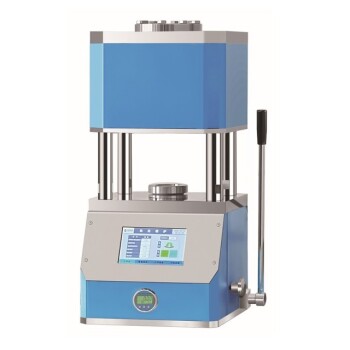
Staged pressure control is a critical process requirement for manufacturing Multi-Principal Element Alloy (MPEA) green bodies because it ensures uniform particle rearrangement and the efficient expulsion of interstitial gases. By transitioning from an initial low-pressure stage (e.g., 140 MPa) to a secondary high-pressure hold (e.g., 640 MPa), the laboratory hydraulic press minimizes internal stress gradients and maximizes relative density. This precise management prevents the green body from cracking or deforming during subsequent pressureless sintering.
Core Takeaway: Staged pressure control transforms loose MPEA powder into a high-density green body by balancing particle rearrangement with structural consolidation. This phased approach eliminates trapped air and internal voids, providing the mechanical integrity necessary to survive high-temperature sintering without structural failure.
Optimizing Particle Rearrangement and Packing
Facilitating Initial Particle Movement
During the first stage of low-pressure application, powder particles shift and rotate to fill large voids without significant deformation. This controlled movement allows the complex mixture of MPEA powders to achieve a stable, close-packed configuration before the highest forces are applied.
Transitioning to Plastic Deformation
As the press enters the second stage of high pressure, the already-rearranged particles begin to undergo plastic deformation. This ensures that the applied force is distributed evenly across the contact points, leading to a significant increase in relative density and mechanical interlocking.
Eliminating Interstitial Gases and Voids
Expelling Trapped Air
Applying high pressure too rapidly can trap air between particles, creating microscopic "pockets" of high-pressure gas. Staged control allows these interstitial gases to escape the mold during the initial low-pressure phase, preventing internal ruptures during decompression.
Reducing Residual Porosity
Uniform and sufficient initial compaction is necessary to minimize inter-particle gaps. By managing the pressure in stages, the laboratory press ensures that the green body reaches a high-quality foundation, reducing the residual porosity that can lead to micro-cracks in the final sputtering target.
Mitigating Internal Stress and Structural Defects
Balancing Density Gradients
Precise pressure management reduces internal stress gradients within the green body. Without staged control, uneven density distribution can occur, causing the material to shrink at different rates during the sintering process.
Preventing Post-Pressing Failure
High internal stresses often lead to "spring-back" or cracking during demolding or handling. Staged holding times allow the powder mass to stabilize, ensuring the green body has sufficient structural strength to be moved into a vacuum melting furnace or sintering oven.
Understanding the Trade-offs
The Risk of Excessive Pressure
Applying excessive pressure too early can lead to "capping" or laminations, where the top layers of the green body delaminate from the core. This is often caused by trapped air or extreme friction at the mold walls that prevents the pressure from reaching the center of the compact.
The Impact of Insufficient Holding Time
If the holding time at each stage is too brief, the particles may not have enough time to fully rearrange or deform. This results in low green strength, which makes the compacts fragile and prone to breaking during the transition to subsequent manufacturing steps.
Applying Pressure Control to Your Project
Staged pressure control should be calibrated based on the specific material properties and the desired dimensions of the sputtering target.
- If your primary focus is maximizing final density: Utilize a longer secondary holding stage at high pressure (e.g., 640 MPa) to ensure maximum particle deformation and interlocking.
- If your primary focus is preventing cracks in fragile alloys: Extend the initial low-pressure phase to allow for complete gas expulsion and gradual stress distribution.
- If your primary focus is reducing sintering shrinkage: Focus on achieving the highest possible green density through precise staged increments to minimize the volume change during high-temperature service.
Mastering staged pressure control is the definitive step in transitioning from loose powder to a high-performance MPEA sputtering target.
Summary Table:
| Stage | Pressure Level | Primary Function | Benefit for MPEA Green Bodies |
|---|---|---|---|
| Phase 1 | Low (e.g., 140 MPa) | Particle Rearrangement | Expels trapped gases and fills large voids without deformation. |
| Phase 2 | High (e.g., 640 MPa) | Plastic Deformation | Maximizes relative density through mechanical interlocking. |
| Holding | Sustained Press | Stress Stabilization | Reduces density gradients and prevents post-pressing cracks. |
Optimize Your MPEA Research with Precision Pressing Solutions
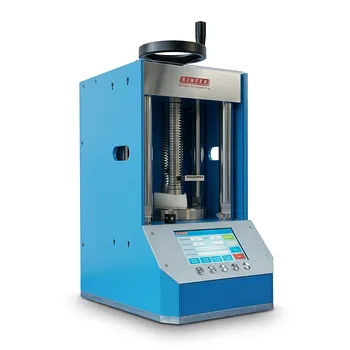
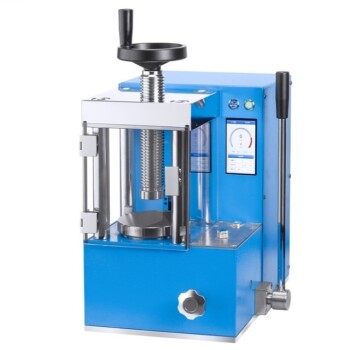
Achieve structural integrity and superior density in your green bodies with KINTEK’s advanced laboratory technology. KINTEK specializes in comprehensive laboratory pressing solutions, offering manual, automatic, heated, multifunctional, and glovebox-compatible models, as well as cold and warm isostatic presses.
Whether you are pioneering battery research or developing next-generation sputtering targets, our staged pressure control systems eliminate voids and minimize internal stress.
Ready to enhance your lab’s efficiency? Contact our experts today to find the perfect press for your specific material requirements!
References
- Elena Colombini, Paolo Veronesi. Powder Metallurgy Route for the Synthesis of Multiprincipal Element Alloys Sputtering Targets. DOI: 10.1002/adem.202101518
This article is also based on technical information from Kintek Solution Knowledge Base .
Related Products
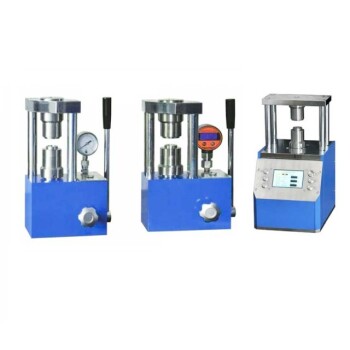
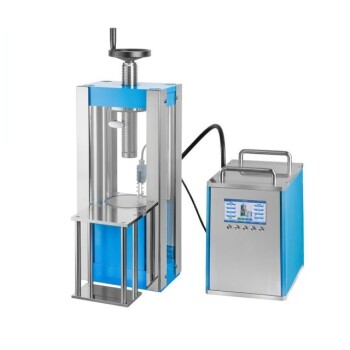
- Laboratory Hydraulic Press Lab Pellet Press Button Battery Press
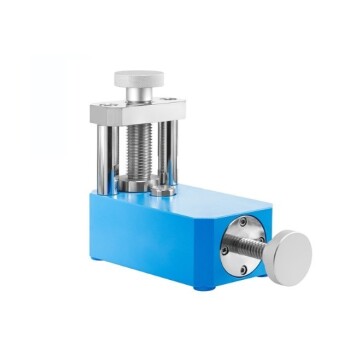
- Laboratory Hydraulic Press 2T Lab Pellet Press for KBR FTIR
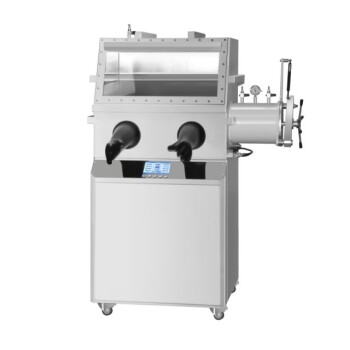
- Laboratory Hydraulic Press Lab Pellet Press Machine for Glove Box
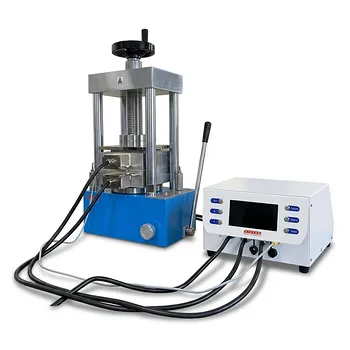
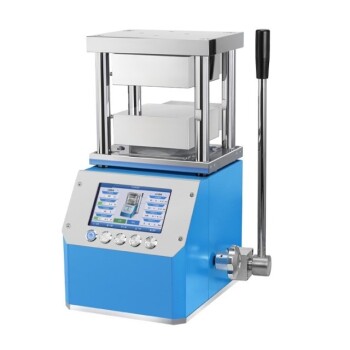
- 24T 30T 60T Heated Hydraulic Lab Press Machine with Hot Plates for Laboratory
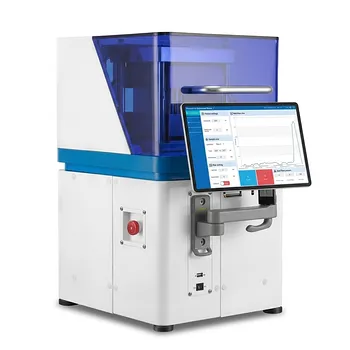
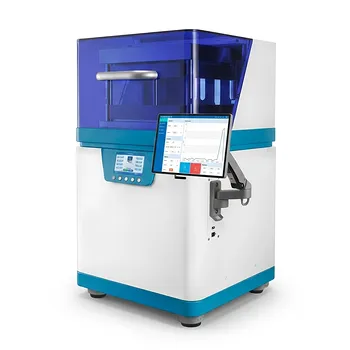
- Automatic Laboratory Hydraulic Press Lab Pellet Press Machine
People Also Ask
- How is a laboratory hydraulic press used for HAP composite gels? Master Mineral Substrate Standardization
- What role does a laboratory hydraulic press play in reaction pellets? Optimizing Lunar Soil and Metal Fuel Density
- What role does a laboratory hydraulic press play in the preparation of piezoelectric ceramic discs for DC-PG? | KINTEK
- What role does a laboratory hydraulic press play in the assembly of all-solid-state battery test cells? Expert Guide
- Why is a laboratory hydraulic press required for PBAT and PLA sample preparation? Achieve Flawless Characterization