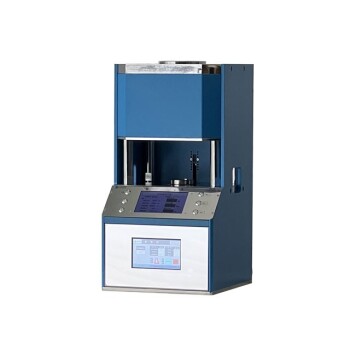
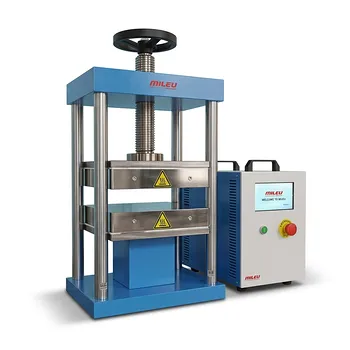
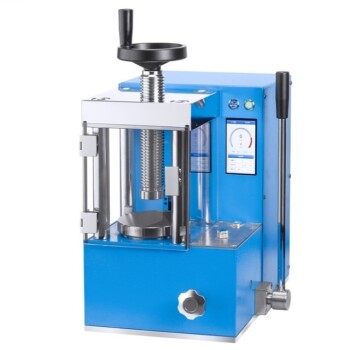
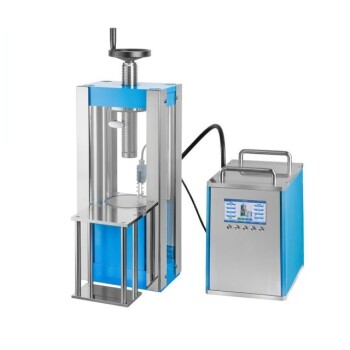
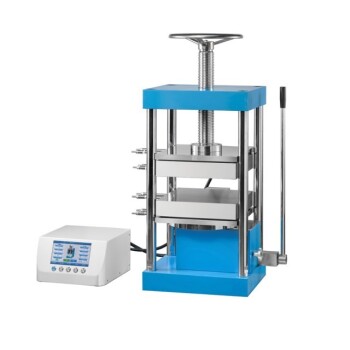
The immediate transfer of polylactic acid (PLA) sheets to a cold press is a critical step to "lock" the material's molecular structure and ensure dimensional stability. This rapid transition from heat to a pressurized, room-temperature environment prevents the polymer from warping, shrinking, or deforming as it cools, which would otherwise compromise the flat shape achieved during the hot-pressing stage.
Core Takeaway: Immediate cold pressing is necessary to fix the polymer chain arrangement and crystallization morphology under constant pressure. By cooling the material rapidly while mechanically constrained, you prevent internal stresses from causing warping or structural defects.
The Role of Rapid Thermal Transition
Locking the Polymer Chain Arrangement
When PLA is in the hot press, its polymer chains are fluid and have been melt-shaped into a specific thickness and form. Moving the sheet immediately to a cold press "freezes" these chains in their intended arrangement before they have a chance to shift or relax.
Preventing Thermal Deformation
As thermoplastics cool naturally, they tend to shrink and pull inward. The cold press acts as a thermal stabilizer, forcing the material to reach a stable state quickly and preventing the shrinkage that occurs during slow, uncontrolled cooling.
Managing Internal Stress and Morphology
Controlling Crystallization Morphology
The rate of cooling significantly influences how PLA crystals form. Rapid cooling in a cold press helps establish a uniform microstructure, preventing the development of large, uneven crystals that can lead to brittle spots or optical cloudiness in the film.
Mitigating Internal Stresses
As the temperature of the PLA drops, internal mechanical stresses develop due to thermal contraction. By maintaining constant pressure (often around 1 MPa) during this cooling phase, the cold press prevents these stresses from manifesting as twists, delamination, or surface ripples.
Ensuring Dimensional Precision and Flatness
Maintaining Structural Integrity
Without the mechanical constraint of the cold press, a freshly molded PLA sheet is highly susceptible to "warping" or "memory effects" where the material tries to return to a previous shape. Continuous pressure ensures the sheet remains perfectly flat and maintains its structural integrity as it solidifies.
Achieving a Stable Physical State
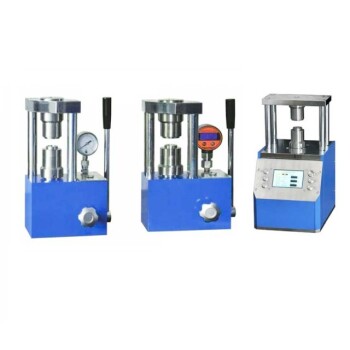
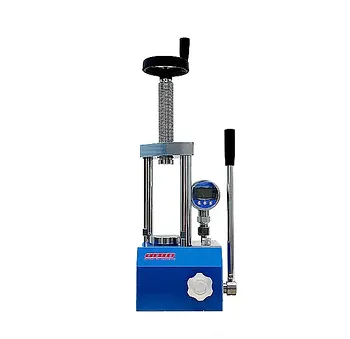
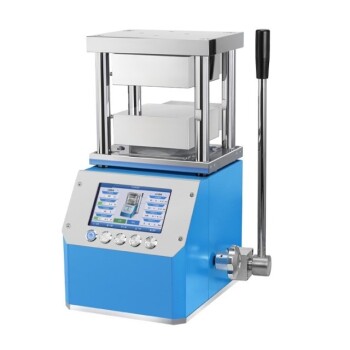
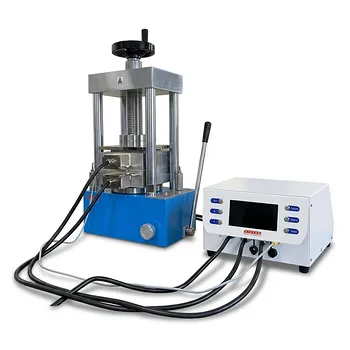
The use of a cold press, often integrated with a water-cooling system, ensures the material reaches room temperature in a predictable, uniform manner. This prepares the samples for accurate subsequent testing or industrial application by ensuring every sheet has undergone the same thermal history.
Understanding the Trade-offs
The Risk of Improper Timing
Even a short delay in transferring the sheet can allow the edges to cool faster than the center while unconstrained. This temperature gradient creates "residual stress," which may not be visible immediately but can cause the material to crack or bow days after production.
Pressure Consistency
While rapid cooling is vital, applying too much pressure during the cold-press phase can cause "flash" or thin out the edges of the sheet. Conversely, insufficient pressure may fail to lock the flatness, leading to a rejected part that does not meet dimensional tolerances.
How to Apply This to Your Process
Implementation Guidelines
To ensure the highest quality results when working with PLA molding, follow these strategic recommendations based on your specific objectives:
- If your primary focus is dimensional accuracy: Ensure the cold press is pre-set to the exact required pressure before the hot-press cycle ends to minimize the "open time" between machines.
- If your primary focus is optical clarity: Focus on the efficiency of the cold press’s cooling system; faster heat extraction generally leads to smaller crystal structures and better transparency in PLA films.
- If your primary focus is mechanical strength: Maintain a consistent pressure throughout the entire cooling duration until the sheet has reached a uniform room temperature to prevent internal micro-cracks.
Mastering the transition from hot to cold pressing is the single most effective way to guarantee that the high-quality shape formed in the melt phase is preserved in the final, solid product.
Summary Table:
| Key Factor | Role of Cold Pressing | Benefit to PLA Product |
|---|---|---|
| Polymer Chains | "Freezes" chains in a fluid state | Prevents molecular shifting and relaxation |
| Thermal Control | Acts as a thermal stabilizer | Eliminates shrinkage and uncontrolled deformation |
| Crystallization | Ensures uniform heat extraction | Prevents brittle spots and improves optical clarity |
| Internal Stress | Maintains mechanical constraint | Mitigates surface ripples, twists, and cracks |
Optimize Your PLA Processing with KINTEK Precision
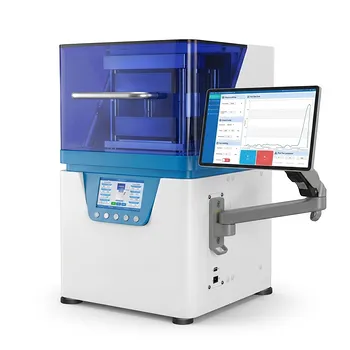
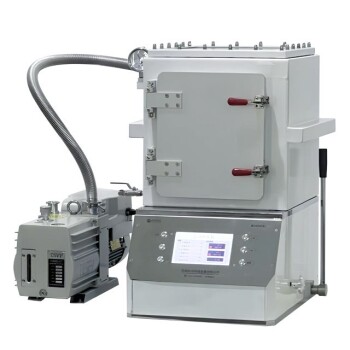
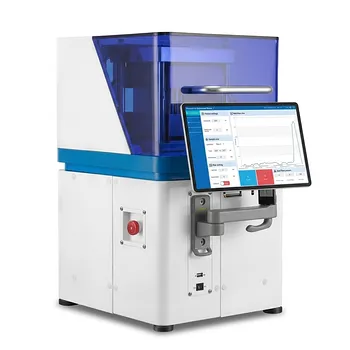
Achieving dimensional perfection in polymer research requires equipment that provides consistent pressure and temperature control. KINTEK specializes in comprehensive laboratory pressing solutions, offering manual, automatic, heated, multifunctional, and glovebox-compatible models designed to meet the rigorous demands of material science.
Whether you are focusing on battery research or advanced polymer morphology, our range of cold and warm isostatic presses ensures your samples maintain their structural integrity from melt to solid state.
Ready to enhance your lab's efficiency and sample quality?
Contact our experts today to find the perfect pressing solution for your application!
References
- Muhammad S. Hasan, Colin A. Scotchford. Cytocompatibility and Mechanical Properties of Short Phosphate Glass Fibre Reinforced Polylactic Acid (PLA) Composites: Effect of Coupling Agent Mediated Interface. DOI: 10.3390/jfb3040706
This article is also based on technical information from Kintek Solution Knowledge Base .
Related Products
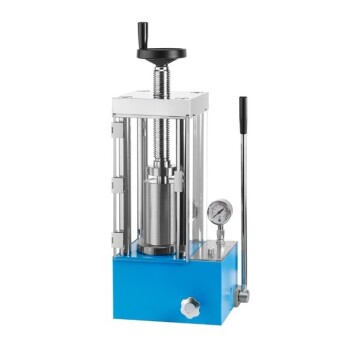
- Manual Cold Isostatic Pressing CIP Machine Pellet Press
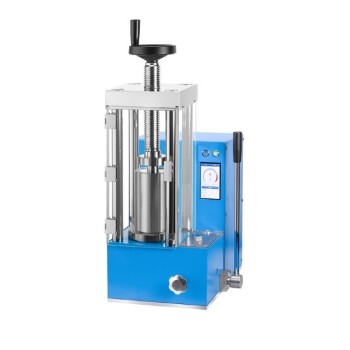
- Electric Lab Cold Isostatic Press CIP Machine
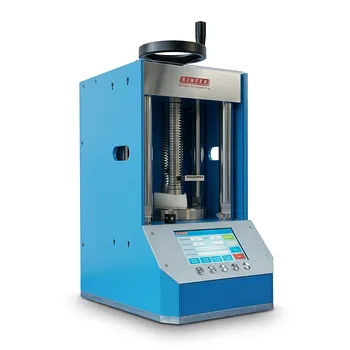
- Automatic Laboratory Hydraulic Press Lab Pellet Press Machine
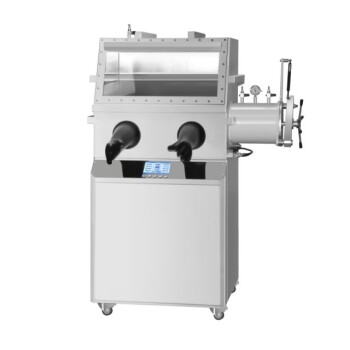
- Laboratory Hydraulic Press Lab Pellet Press Machine for Glove Box
- Automatic High Temperature Heated Hydraulic Press Machine with Heated Plates for Lab
People Also Ask
- Why is Cold Isostatic Pressing (CIP) necessary for SBN ceramics? Achieve High-Density and Crack-Free Sintering
- What are the process advantages of using Cold Isostatic Pressing (CIP) for LSMO? Achieve Defect-Free Density
- Why is Cold Isostatic Pressing (CIP) applied after uniaxial pressing? Optimize Superconductor Precursor Density
- What types of equipment are available for cold isostatic pressing? Explore CIP Solutions for Labs and Production
- What are the technical advantages of cold isostatic pressing equipment compared to uniaxial compression equipment? Learn More!