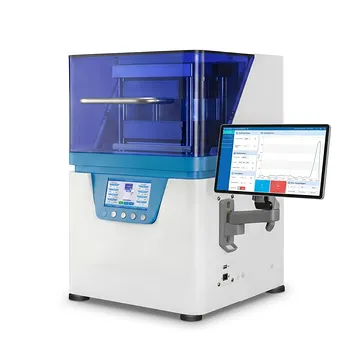
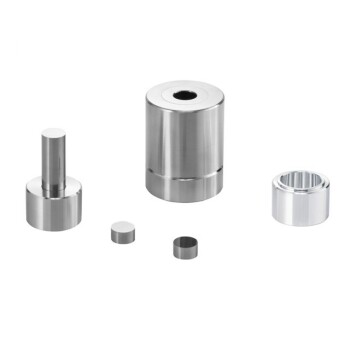
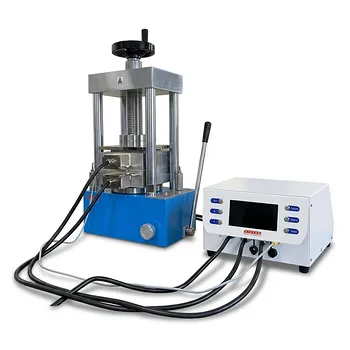
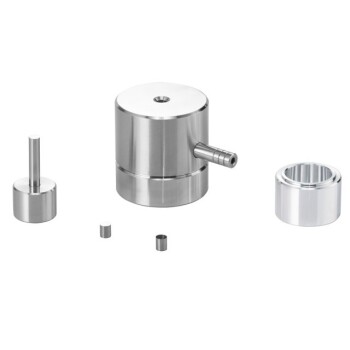
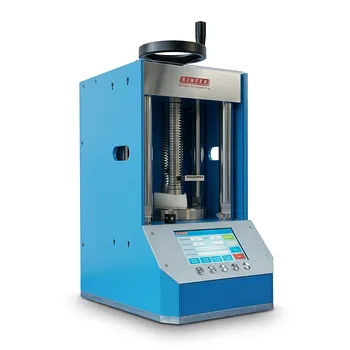
Precision laboratory presses serve as the critical integration point in MEA fabrication by bonding the proton exchange membrane, catalyst layers, and gas diffusion layers into a single, cohesive unit. This process uses precisely controlled heat and pressure to establish "atomic-level" contact between functional layers, which is essential for minimizing ohmic polarization loss and maximizing the fuel cell's power density.
Core Takeaway: The precision laboratory press transforms individual components into a high-performance electrochemical interface by balancing uniform pressure with thermal control to ensure electrical and ionic conductivity without damaging fragile porous materials.
The Mechanics of Interfacial Bonding
Establishing the Three-Phase Reaction Interface
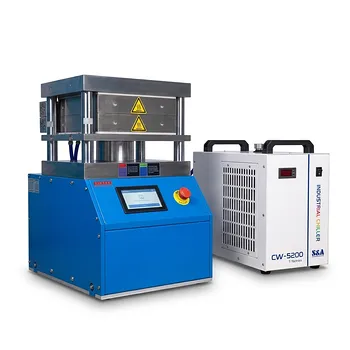
The primary role of the laboratory press is to hot-press the catalyst-coated membrane (CCM) and the gas diffusion layer (GDL). This creates a robust physical bond that allows for an efficient three-phase reaction interface, where hydrogen, protons, and electrons can interact seamlessly.
Achieving Atomic-Level Contact
By applying uniform pressure, the press eliminates microscopic gaps between the membrane and the catalyst. This molecular-level bond is vital because even minor separation increases interfacial contact resistance, which directly degrades the fuel cell's efficiency.
Thermal Integration
High-precision hot presses allow for specific temperature settings, often around 120°C, to soften the membrane slightly during pressing. This controlled heat ensures the catalyst particles become partially embedded or tightly adhered to the membrane surface, enhancing ionic transport channels.
Enhancing Electrochemical Performance
Reducing Ohmic and Contact Resistance
The most significant technical benefit of precision pressing is the drastic reduction in High-Frequency Resistance (HFR). By ensuring every square millimeter of the MEA is under identical pressure, the press minimizes the electrical resistance that electrons face when moving between the catalyst and the bipolar plates.
Preventing Internal Gas Leakage
A precision press ensures a robust seal within the assembly by creating uniform thickness across the entire active area. This uniformity prevents hydrogen or oxygen from bypassing the reaction layers, which protects the cell from internal leakage and potential hotspots.
Ensuring Data Repeatability in R&D
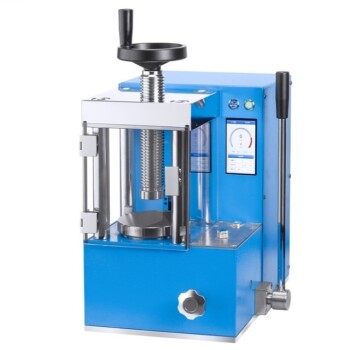
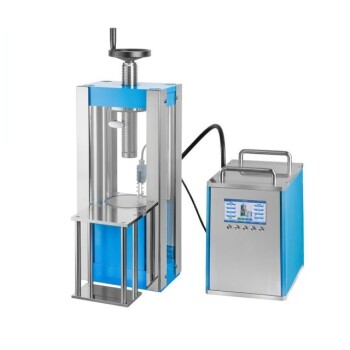
In laboratory settings, hydraulic presses with programmable loading allow researchers to apply the exact same force across different samples. This eliminates "assembly pressure" as a variable, ensuring that changes in electrochemical performance are due to material chemistry rather than mechanical inconsistency.
Understanding the Trade-offs and Constraints
The Risk of Porous Structure Collapse
While high pressure reduces contact resistance, excessive force can cause the structural collapse of porous transport layers like carbon paper or titanium felt. If these pores are crushed, gas permeability drops, leading to mass transport losses where the fuel cannot reach the catalyst.
Thermal Degradation of the Membrane
Applying heat is necessary for bonding, but exceeding the glass transition temperature of the proton exchange membrane for too long can cause dehydration or structural weakening. Precision presses must maintain a tight tolerance on both temperature and "dwell time" to avoid compromising the membrane's mechanical stability.
Pressure Non-Uniformity
Even a high-end press can fail if the plates are not perfectly parallel. Non-uniform pressure distribution leads to some areas of the MEA being under-bonded (high resistance) while others are over-compressed (low gas flow), significantly shortening the operational life of the fuel cell.
Making the Right Choice for Your Goal
How to Apply This to Your Project
Selecting and operating a laboratory press requires aligning its precision capabilities with your specific fabrication objectives.
- If your primary focus is Maximizing Power Output: Prioritize a press with high-accuracy thermal control to optimize the catalyst-membrane interface and minimize ohmic loss.
- If your primary focus is Material Research and Durability: Use a hydraulic press with digital pressure logging to ensure that porous structures are not being crushed during the assembly of new GDL materials.
- If your primary focus is Standardized Testing: Focus on a system with programmable "recipes" to ensure that every MEA in your study is pressed with identical force and duration for repeatable HFR data.
Through the precise application of force and heat, the laboratory press provides the essential physical foundation required for an efficient and long-lasting hydrogen fuel cell.
Summary Table:
| MEA Fabrication Process | Press Parameter | Key Performance Impact |
|---|---|---|
| Interfacial Bonding | Uniform Pressure | Achieves atomic-level contact & minimizes resistance |
| Thermal Integration | Precise Heat Control | Embeds catalyst particles to enhance ionic transport |
| Uniform Compression | Plate Parallelism | Prevents internal gas leakage & structural hotspots |
| R&D Standardization | Programmable Loading | Ensures data repeatability & prevents porous collapse |
Elevate Your Fuel Cell Research with KINTEK Precision
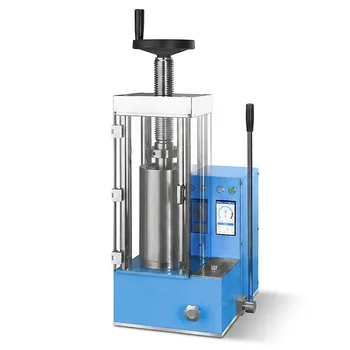
To achieve high-performance MEAs, you need mechanical precision that protects your advanced materials while maximizing electrochemical efficiency. KINTEK specializes in comprehensive laboratory pressing solutions, offering manual, automatic, heated, multifunctional, and glovebox-compatible models, as well as cold and warm isostatic presses.
Our systems are designed to provide the uniform pressure and thermal stability required for cutting-edge battery and fuel cell research. Don't let inconsistent assembly ruin your R&D data.
Contact KINTEK today to find the ideal press for your laboratory!
References
- Dominik Horváth, Norbert Miskolczi. Thermo-catalytic co-pyrolysis of waste plastic and hydrocarbon by-products using β-zeolite. DOI: 10.1007/s10098-023-02699-6
This article is also based on technical information from Kintek Solution Knowledge Base .
Related Products
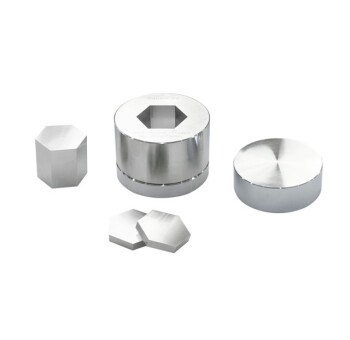
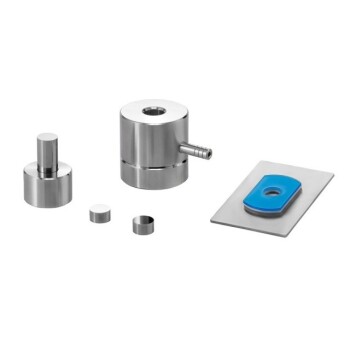
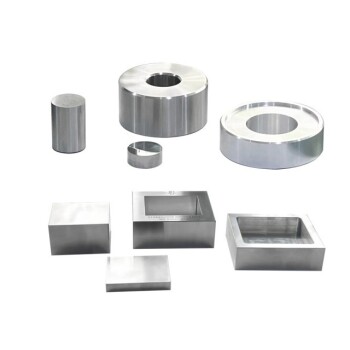
- Lab Polygon Press Mold
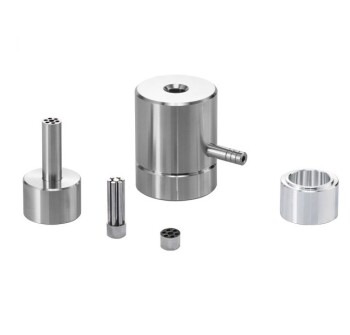
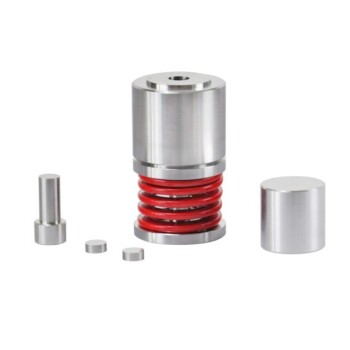
- Special Shape Lab Press Mold for Laboratory Applications
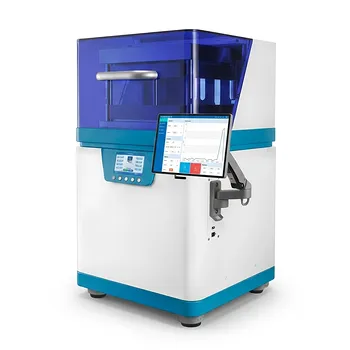
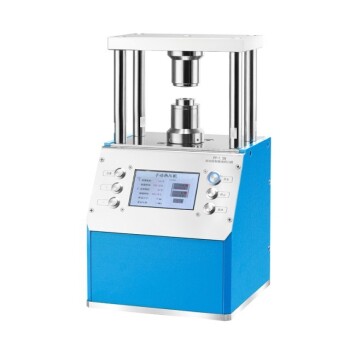
- Automatic Hydraulic Hot Press with Large Plate and Precision Temperature Control for Advanced Material Sample Preparation and Industrial Research
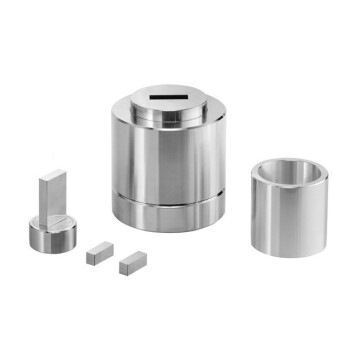
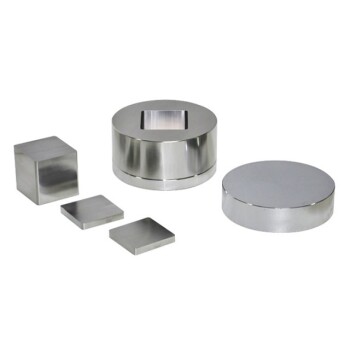
- Assemble Square Lab Press Mold for Laboratory Use
- Automatic Heated Hydraulic Lab Press with Programmable Touch Screen Controls and Precision Temperature Regulation
People Also Ask
- What is the purpose of incorporating cartridge heaters into a lab press mold for MLCC block compression? Optimize Results
- How do the design and geometric precision of pressing molds and mandrels affect the quality of PTFE composite samples?
- What role do precision positioning and pressure molds play in single-lap joints? Ensure 100% Data Integrity
- What are the requirements for pressing molds when using SSCG? Key Materials for Complex Single Crystal Production
- How do industrial-grade pressure molds affect zinc metal pouch cells? Maximize Energy Density & Performance