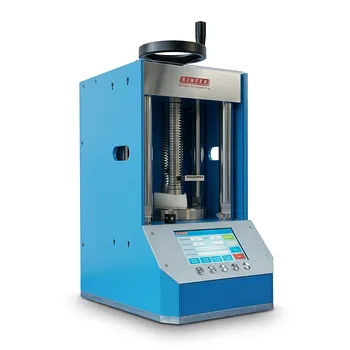
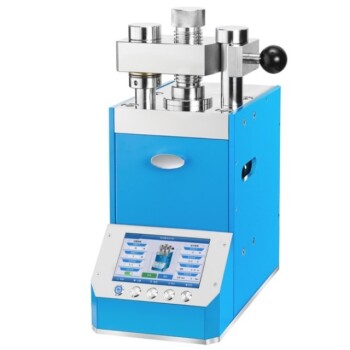
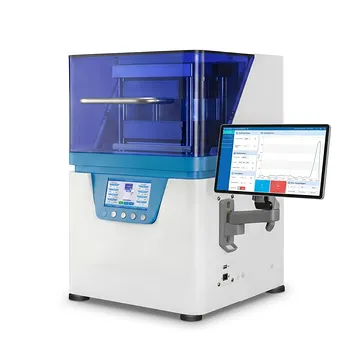
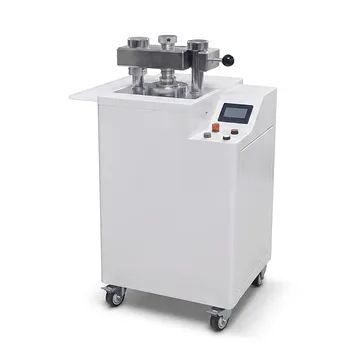
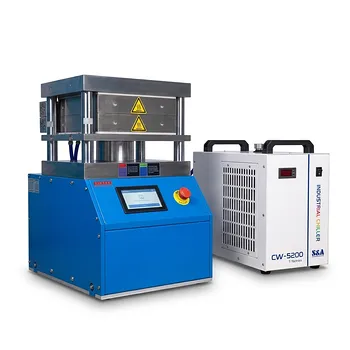
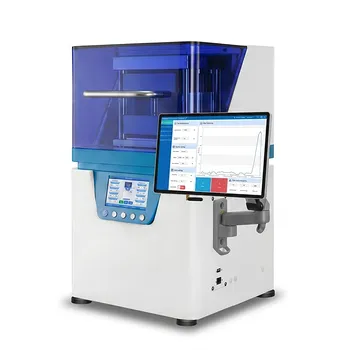
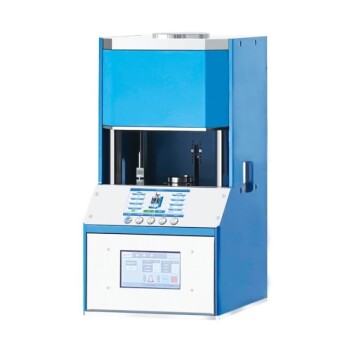
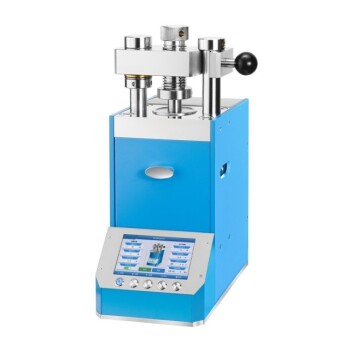
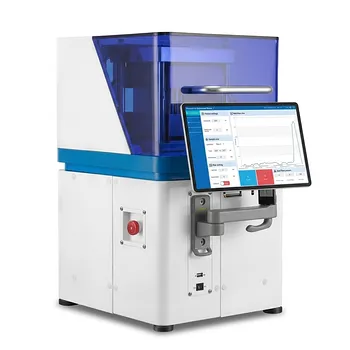
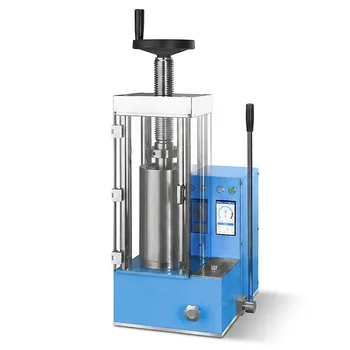
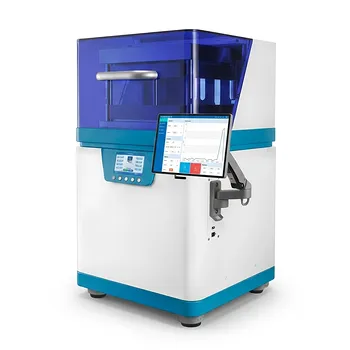
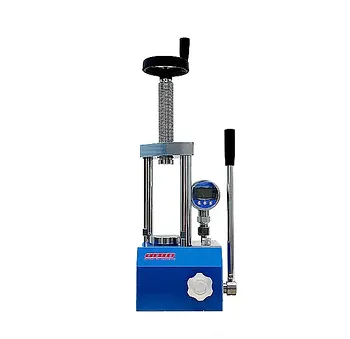
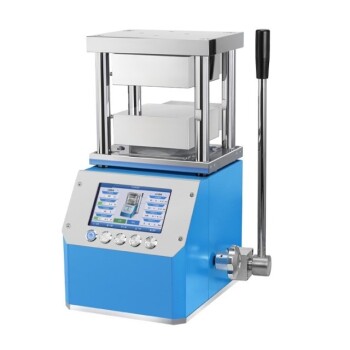
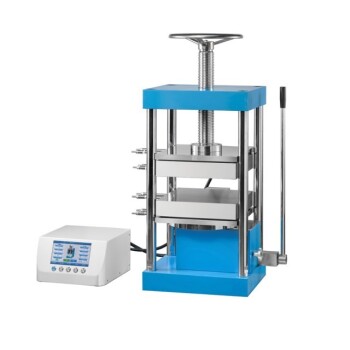
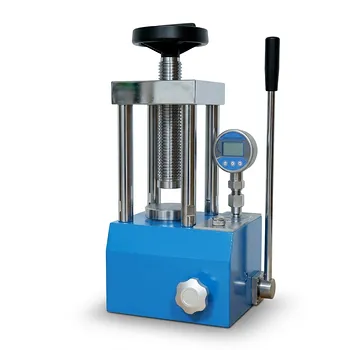
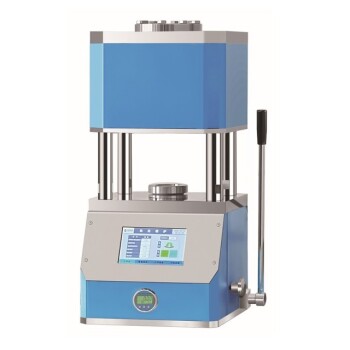
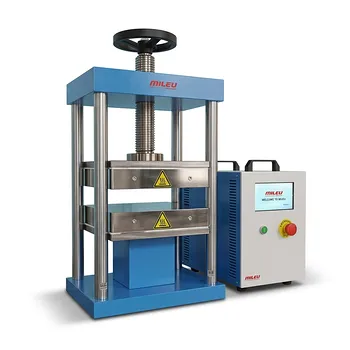
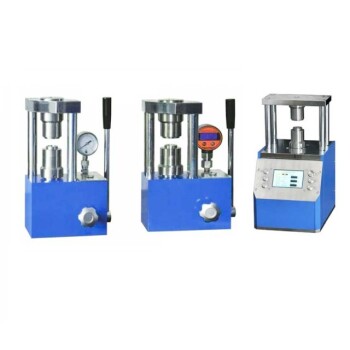
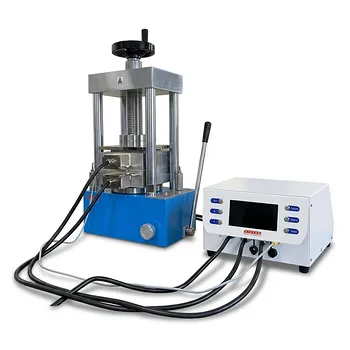
Automatic laboratory presses are the cornerstone of precision in modern material science. These machines enable the creation of highly consistent, standardized test specimens by applying programmable pressure and temperature to ceramic or composite powders. This precision is vital for accurately measuring thermal conductivity, compressive strength, and durability—parameters that define the performance of next-generation construction insulation.
Core Takeaway: By eliminating manual variability and internal material defects like density gradients and air pockets, automatic laboratory presses ensure that experimental results for new insulation materials are both reproducible and reliable for industrial-scale application.
Enhancing Material Consistency and Reliability
Eliminating Manual Variability
Manual pressing often introduces subtle differences in force application and holding times, leading to inconsistent samples. Automatic presses use programmable logic to ensure every test bar or block is subjected to the exact same pressure profile. This high degree of consistency is essential for validating the performance of high-performance building materials.
Resolving Density Gradients
Variations in density within a single sample can lead to skewed test results regarding thermal resistance and structural integrity. The use of preset pressure levels ensures uniform density throughout the specimen. This uniformity allows researchers to confidently attribute material performance to the chemical composition rather than manufacturing flaws.
Optimizing Thermal Conductivity Measurements
In the construction industry, minimizing heat loss is a primary goal for materials like those used in pre-insulated pipes. By ensuring consistent sample density and structural integrity, an automatic press allows for the precise measurement of thermal conductivity. This data is critical for developing insulation capable of withstanding extreme climates.
Advanced Fabrication and Structural Integrity
Removing Internal Pores and Voids
Internal air bubbles or "micro-pores" act as thermal bridges or structural weak points. Automatic presses utilize high static pressure to eliminate these voids, ensuring the tight stacking of components like ceramic powders or nanosheets. This results in a densified material with superior volumetric energy density and stability.
Fiber Impregnation and Lamination
For composite insulation, such as Glass Mat Thermoplastics (GMT), the press ensures that resin fully impregnates the fiber matrix. By maintaining rigorous control over heating and compression cycles, the machine creates high-quality laminates. This process is essential for verifying the performance of lightweight, reinforced structures used in modern construction.
Isostatic vs. Uniaxial Compression
While traditional uniaxial pressing applies force from one direction, isostatic laboratory presses transmit equal pressure from all directions. This method is particularly effective at eliminating internal stress imbalances and mold wall friction. The result is an isotropic green body that maintains its shape and mechanical properties during the subsequent sintering process.
Understanding the Trade-offs
The Lab-to-Production Gap
While laboratory presses provide extreme precision, the conditions they create are often difficult to replicate at massive industrial scales. Materials that perform perfectly in small-batch laboratory samples may behave differently when manufactured using continuous-flow industrial equipment.
Cost and Complexity
Automatic and isostatic presses require a higher initial investment and more specialized training than manual alternatives. The complexity of programmable cycles and the maintenance of hydraulic systems add to the operational overhead of a research facility.
Material Sensitivity
Certain composite mixtures may be sensitive to the heat generated during rapid compression. If the thermal cycles are not meticulously calibrated, the press can inadvertently degrade the polymer matrix or cause premature curing in thermoset materials.
Making the Right Choice for Your Goal
To maximize the effectiveness of an automatic laboratory press in material development, align the equipment's capabilities with your specific research objectives.
- If your primary focus is thermal efficiency: Use a heated press with precise holding times to eliminate internal voids that compromise insulation values.
- If your primary focus is structural durability: Prioritize a press capable of high-pressure consistency to ensure reliable compressive strength testing.
- If your primary focus is isotropic uniformity: Utilize an isostatic press to eliminate internal stress gradients and prevent warping during the firing or curing stage.
By mastering the precision of the laboratory press, researchers can bridge the gap between experimental composite theory and the reality of high-performance construction.
Summary Table:
| Key Contribution | Benefit to Insulation Development | Critical Feature |
|---|---|---|
| Eliminating Variability | Ensures reproducible thermal and structural test results. | Programmable logic & pressure profiles |
| Uniform Density | Resolves density gradients for accurate conductivity data. | Constant pressure maintenance |
| Void Removal | Eliminates micro-pores that act as thermal bridges. | High static pressure cycles |
| Fiber Impregnation | Ensures full resin saturation in composite matrices (e.g., GMT). | Controlled heating and compression |
| Isotropic Uniformity | Prevents warping and stress imbalances during sintering. | Isostatic compression capability |
Elevate Your Material Research with KINTEK
Take the guesswork out of your material development with KINTEK’s comprehensive laboratory pressing solutions. Whether you are pioneering next-generation ceramic insulation or advancing battery research, our precision equipment—including manual, automatic, heated, multifunctional, and isostatic presses—is designed to deliver the consistency your innovations require.
Our value to you:
- Precision Engineering: Eliminate manual variability and internal defects.
- Versatility: Solutions for everything from lightweight composites to densified ceramics.
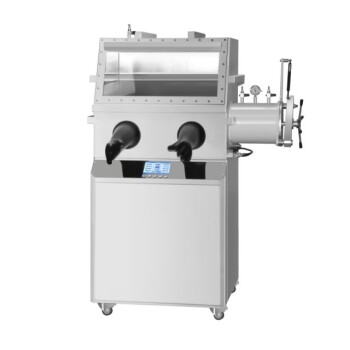
- Expert Support: Specialized equipment tailored for both standard lab environments and glovebox-compatible setups.
Ready to transform your experimental results into industrial-scale success? Contact us today to find your pressing solution!
References
- Dominik Horváth, Norbert Miskolczi. Thermo-catalytic co-pyrolysis of waste plastic and hydrocarbon by-products using β-zeolite. DOI: 10.1007/s10098-023-02699-6
This article is also based on technical information from Kintek Solution Knowledge Base .
Related Products
- Automatic Laboratory Hydraulic Press Lab Pellet Press Machine
- Automatic Laboratory Hydraulic Press for XRF and KBR Pellet Pressing
- Automatic Heated Hydraulic Lab Press with Programmable Touch Screen Controls and Precision Temperature Regulation
- Automatic XRF Pellet Press for Laboratory Spectrometry Sample Preparation
- Automatic Heated Hydraulic Press Machine with Hot Plates for Laboratory
People Also Ask
- What is the primary purpose of a manual lab hydraulic pellet press? Ensure Accurate Sample Prep for XRF and FTIR
- What is the primary purpose of manual lab hydraulic pellet presses? Achieve High-Precision Sample Preparation for Spectroscopy
- How does an automatic laboratory hydraulic press improve KBr pellet preparation? Achieve Precision IR Spectroscopy
- What are the advantages of using an automatic laboratory hydraulic press? Enhance Precision in Sample Preparation
- What are the technical advantages of an automatic laboratory hydraulic press for biomimetic surfaces?