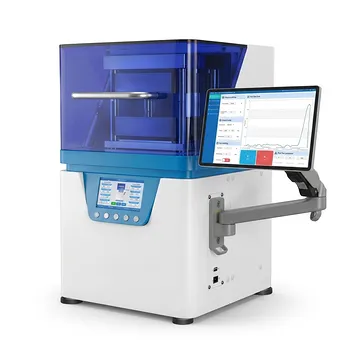
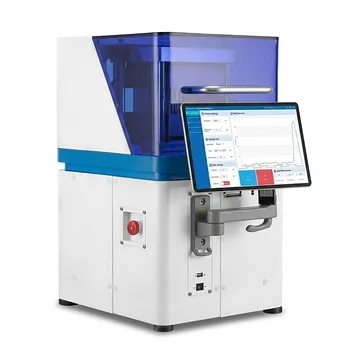
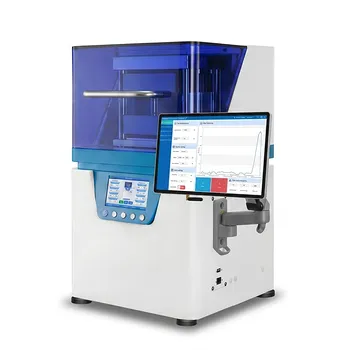
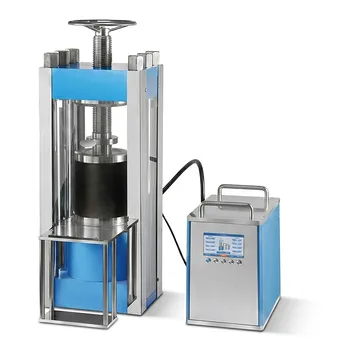
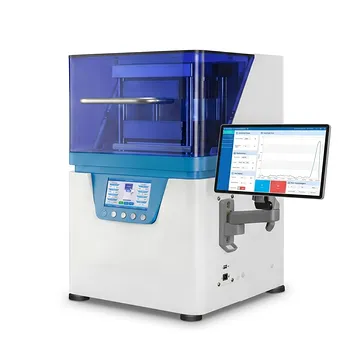
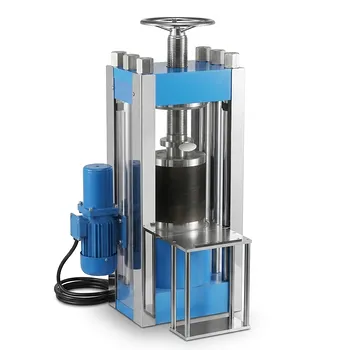
Heating platens are the primary drivers of structural integrity and mechanical performance in CF/PA6 laminates. They facilitate the critical phase transition of the Polyamide 6 matrix, specifically targeting temperatures between 240°C and 260°C to ensure the melting of large crystalline structures. This thermal energy enables molecular diffusion (autohesion) and ensures the resin thoroughly wets the carbon fiber interfaces, resulting in a high-strength, cohesive composite.
The heating platens regulate the fundamental phase changes and molecular interactions required for effective bonding. By providing a precise and uniform thermal environment, they eliminate internal defects and ensure the laminate achieves the high densification necessary for optimal mechanical properties.
Thermal Activation and Phase Transition
Reaching the Melting Threshold
The heating platens must first raise the PA6 matrix above its standard melting point of approximately 220°C. This initial heating stage transitions the thermoplastic from a solid to a flowable state, allowing the resin to begin moving through the carbon fiber reinforcement.
Overcoming Crystalline Resistance
To achieve peak performance, the platens must provide higher temperatures ranging from 240°C to 260°C. This specific range is necessary to melt larger, more stable crystalline structures within the polymer, which is a prerequisite for total molecular mobility.
Facilitating Resin Flow
Once the matrix is sufficiently molten, the platens enable the resin to flow into the microscopic gaps between fibers. This ensures that the reinforcement is fully encapsulated, preventing dry spots that could lead to premature structural failure.
Interfacial Bonding and Autohesion
Promoting Molecular Diffusion
The high-temperature environment maintained by the platens triggers autohesion, also known as molecular diffusion. This process allows polymer chains to interpenetrate across the interlayer interfaces, creating a seamless chemical and physical bond.
Achieving High Interfacial Strength
By ensuring thorough wetting of the carbon fiber surfaces, the heating platens directly enhance the mechanical bonding strength. This interfacial integrity is what allows the finished laminate to effectively transfer loads between the matrix and the fibers.
Eliminating Porosity and Defects
Precise thermal control helps eliminate porosity and inter-particle defects that often occur during initial deposition. The heat re-softens the matrix, allowing pressure to collapse voids and create a dense, void-free microstructure.
Structural Uniformity and Precision
Removing Internal Residual Stresses
High-precision heating ensures that the material is heated evenly throughout its volume. This uniformity is critical for eliminating internal residual stresses that can cause warping or dimensional instability during the cooling and reshaping process.
Securing Accurate Material Parameters
Uniform heating is essential for producing high-quality samples used in numerical simulations. Consistently processed laminates provide accurate viscoelastic parameters, ensuring that physical performance aligns with predicted wave propagation characteristics in technical models.
Ensuring Consistent Densification
The simultaneous application of heat and pressure leads to high densification of the composite. This consolidated structure is necessary for achieving superior radiation shielding, moisture resistance, and long-term durability in industrial applications.
Understanding the Trade-offs
The Risk of Thermal Degradation
While high temperatures are required to melt crystalline structures, exceeding the stable thermal window of PA6 can lead to polymer degradation. Excessive heat breaks down molecular chains, which significantly reduces the impact strength and longevity of the laminate.
Temperature Gradient Challenges
If the platens do not provide uniform heat distribution, different areas of the laminate will solidify at different rates. This creates localized "frozen-in" stresses and uneven crystallinity, which can result in unpredictable mechanical weak points.
Balancing Flow and Cycle Time
Higher temperatures increase resin fluidity, which improves wetting but can also lead to resin squeeze-out. Managing the balance between peak temperature and residence time is vital to prevent losing too much matrix material during the pressing cycle.
Optimizing the Pressing Process for Your Goal
How to Apply This to Your Project
To achieve the best results with CF/PA6 laminates, your processing parameters must be tailored to the specific demands of your application.
- If your primary focus is Maximum Mechanical Strength: Prioritize the 240°C–260°C temperature range to ensure total molecular diffusion and peak autohesion.
- If your primary focus is Dimensional Stability: Focus on the precision and uniformity of the heating platens to eliminate residual stresses and prevent post-process warping.
- If your primary focus is Research and Simulation: Ensure the press maintains a perfectly constant thermal environment to secure accurate viscoelastic data for PTZ modeling.
- If your primary focus is Porosity Reduction: Use the platens to maintain a molten state long enough for pressure to fully collapse internal voids and consolidate the microstructure.
Mastering the thermal output of your laboratory hot press is the definitive factor in transforming raw materials into high-performance structural composites.
Summary Table:
| Factor | Influence on CF/PA6 Laminate | Optimal Target/Result |
|---|---|---|
| Melting Threshold | Transitions PA6 from solid to flowable state | ~220°C |
| Crystalline Melting | Ensures total molecular mobility and diffusion | 240°C - 260°C |
| Interfacial Bonding | Promotes autohesion and thorough fiber wetting | High bond strength |
| Thermal Uniformity | Eliminates residual stresses and warping | Dimensional stability |
| Densification | Collapses voids and removes internal porosity | Dense microstructure |
Elevate your material science research with KINTEK’s precision laboratory pressing solutions. From manual and automatic models to heated, multifunctional, and glovebox-compatible systems, we provide the thermal accuracy required for high-performance CF/PA6 composites. Our expertise also extends to cold and warm isostatic presses, which are widely applied in advanced battery research. Contact our experts today to find the perfect press for your lab's needs!
References
- Sepehr SIMAFROOKTEH. Process-performance relationship of the CF/PA6 laminates. DOI: 10.21741/9781644903599-68
This article is also based on technical information from Kintek Solution Knowledge Base .
Related Products
- Laboratory Split Manual Heated Hydraulic Press Machine with Hot Plates
- 24T 30T 60T Heated Hydraulic Lab Press Machine with Hot Plates for Laboratory
- Heated Hydraulic Press Machine with Heated Plates for Vacuum Box Laboratory Hot Press
- Automatic Hydraulic Hot Press with Large Plate and Precision Temperature Control for Advanced Material Sample Preparation and Industrial Research
- Laboratory Manual Heated Hydraulic Press Machine with Hot Plates
People Also Ask
- Why is a laboratory hydraulic press with heating plates required for PLA/TEC films? Achieve Precise Sample Integrity
- What role does a laboratory heated hydraulic press play in LTCC? Essential for High-Density Ceramic Lamination
- Why reduce load when applying composite strengthening tabs? Protect Specimen Integrity and Data Accuracy
- Why is a laboratory heated hydraulic press required? Ensure Precise Vulcanization for NBR/EPDM Nanocomposites
- Why Use a Laboratory Heated Hydraulic Press for SSAB CCM? Optimize Solid-State Battery Interfacial Bonding