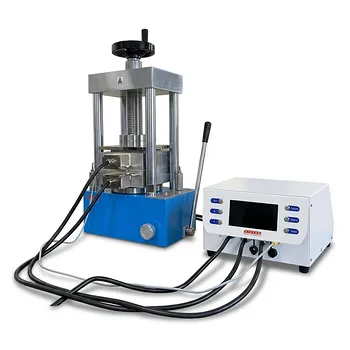
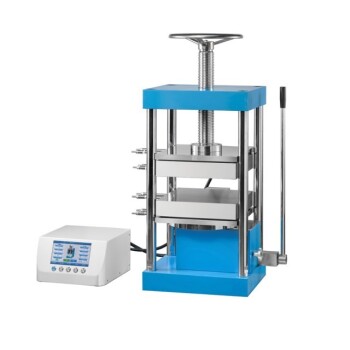
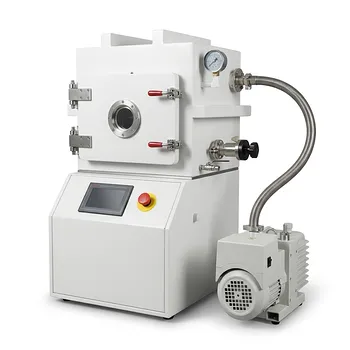
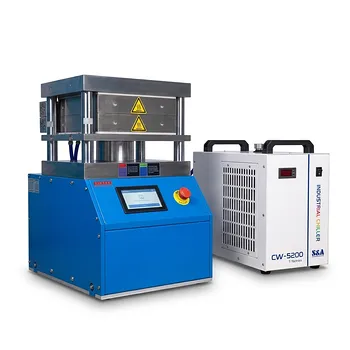
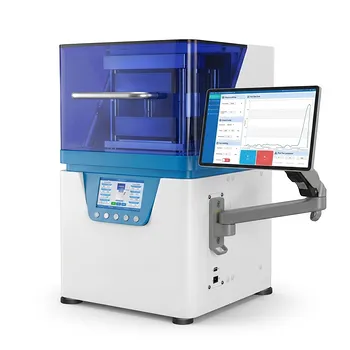
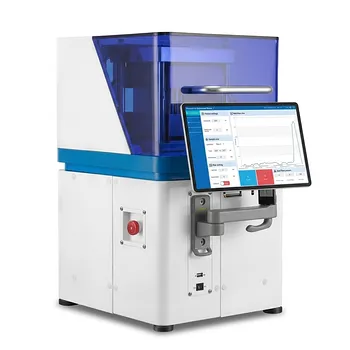
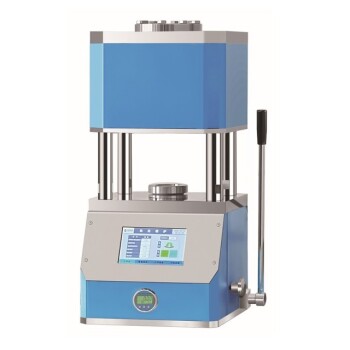
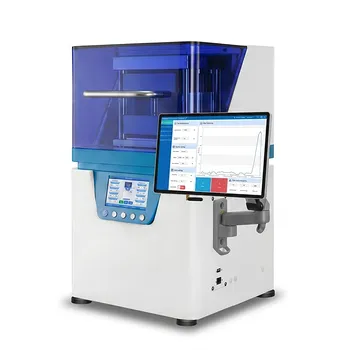
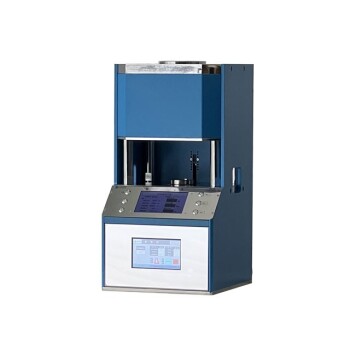
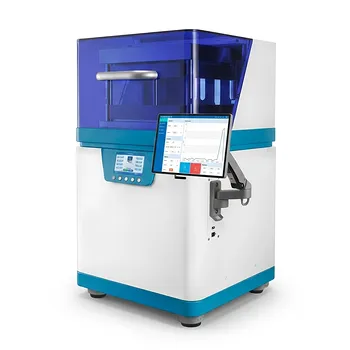
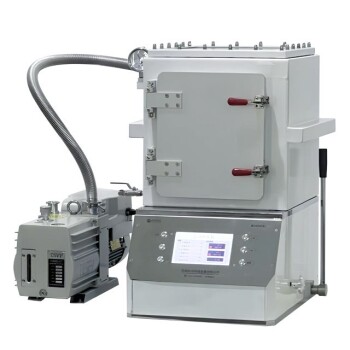
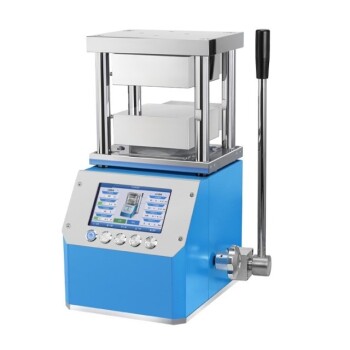
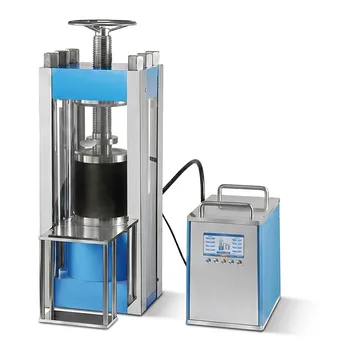
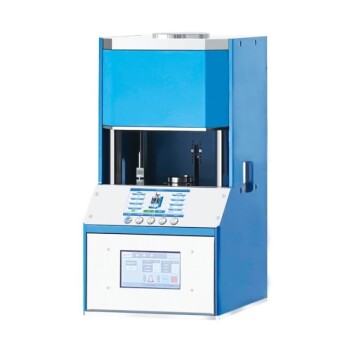
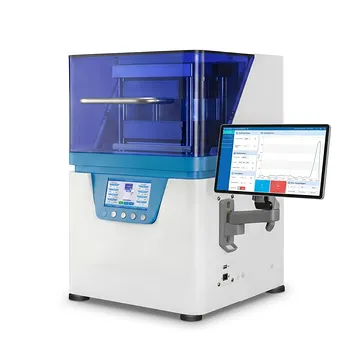
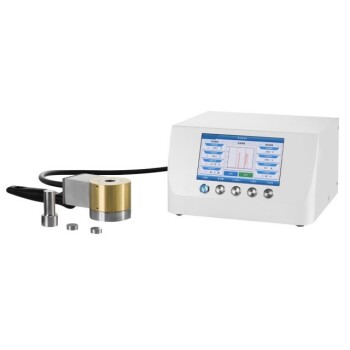
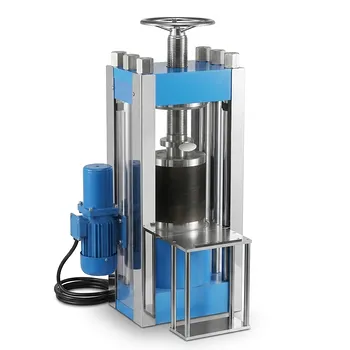
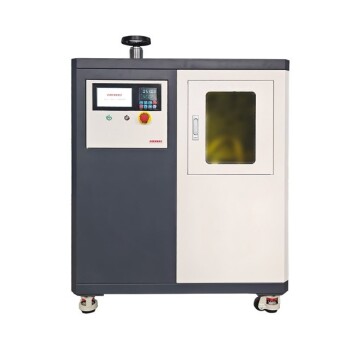
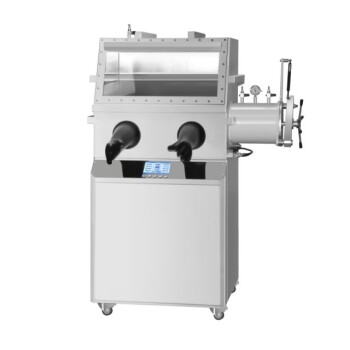
Precision hot pressing is the defining step in gas sensor fabrication. A laboratory hot press ensures gas sensor performance by applying simultaneous heat and pressure to bond electrodes and membranes into a unified, high-conductivity structure. This process minimizes interfacial contact resistance and establishes the efficient electrochemical signal transmission required for accurate and stable sensor detection.
A laboratory hot press transforms separate material layers into a unified electrochemical system by establishing molecular-level contact between the membrane and electrodes. By precisely controlling temperature and pressure, the machine creates the "three-phase interface" necessary for the efficient transport of ions, electrons, and reaction gases.
Optimizing Electrochemical Signal Channels
The primary role of the hot press is to eliminate physical gaps between the different layers of the Membrane Electrode Assembly (MEA).
Minimizing Interfacial Contact Resistance
In a gas sensor, the signal is transmitted via the movement of ions and electrons across the interface of the electrode and the membrane. The hot press applies specific pressure—often around 1 MPa or higher—to force these layers into tight physical contact. This reduces the electrical resistance at the junction, ensuring that the sensor's response to gas is rapid and the signal loss is minimal.
Establishing the Three-Phase Interface
Effective sensing occurs at the "three-phase interface," where the gas, the catalyst, and the electrolyte (membrane) meet. The combination of heat and pressure optimizes this micro-structure, creating clear pathways for protons, electrons, and reactant gases. Proper assembly ensures that the catalyst is fully utilized, leading to higher sensitivity and lower detection limits.
Promoting Ionic Conductivity
For sensors using proton exchange membranes like Nafion, heat is used to reach the glass transition temperature of the polymer. This allows the membrane to slightly soften and "embed" the catalyst layer or electrode fibers. This thermal embedding establishes permanent ion conduction paths, which are critical for maintaining a consistent baseline signal.
Structural Integrity and Long-Term Stability
A sensor must perform reliably over time, which requires a robust physical bond that survives environmental fluctuations.
Preventing Internal Gas Leakage
The high-precision pressure distribution of a laboratory press ensures a uniform seal across the entire surface of the MEA. This physical packaging prevents gas from leaking around the edges of the sensing area. By ensuring the target gas passes only through the active electrode area, the sensor maintains high accuracy and prevents internal "cross-talk" or gas bypass.
Enhancing Mechanical Durability
Simultaneous application of heat and pressure (for example, 90°C to 130°C) creates a unified structure rather than a simple stack of layers. This mechanical bonding prevents the delamination of the electrodes during operation or handling. A tightly bonded assembly is less susceptible to vibration or humidity-induced swelling, which extends the service life of the sensor.
Understanding the Trade-offs and Pitfalls
While hot pressing is essential, it is a delicate balancing act that requires precise calibration of equipment.
Structural Collapse of Porous Materials
Excessive pressure can crush the gas diffusion layer (GDL) or porous transport layers like titanium felt. If the pores are compressed too tightly, the gas cannot reach the catalyst, which "suffocates" the sensor and degrades performance. Finding the "sweet spot"—such as precisely 4 kN or 1 ton of force—is necessary to maintain porosity while ensuring contact.
Thermal Degradation of Membranes
Applying temperatures that are too high for extended periods can damage the chemical structure of the proton exchange membrane. If the membrane is overheated, its ability to transport ions may decrease, or it may become brittle and prone to cracking. Technical advisors must match the hot press temperature (e.g., 90°C for some setups vs. 130°C for others) strictly to the material specifications of the membrane being used.
Applying Hot Pressing to Your Project
To achieve the best results for your specific gas sensor application, you must tailor the hot-pressing parameters to the materials in your stack.
- If your primary focus is Maximum Sensitivity: You must prioritize reducing interfacial resistance by optimizing the three-phase interface through high-precision temperature control.
- If your primary focus is Long-Term Durability: You should focus on the mechanical bonding quality to ensure the layers remain integrated under harsh environmental conditions.
- If your primary focus is Rapid Prototyping: You must use a press with repeatable, digital controls to ensure that every MEA produced has consistent performance characteristics.
By mastering the precise application of heat and pressure, you turn a collection of individual materials into a high-performance electrochemical engine for gas detection.
Summary Table:
| Key Hot Pressing Factor | Impact on Gas Sensor Performance |
|---|---|
| Interfacial Resistance | Minimizes signal loss and ensures rapid response to gas detection. |
| Three-Phase Interface | Optimizes pathways for ions, electrons, and gases to maximize sensitivity. |
| Ionic Conductivity | Establishes permanent conduction paths via thermal embedding of the membrane. |
| Structural Sealing | Prevents internal gas leakage and cross-talk through uniform pressure. |
| Mechanical Bonding | Prevents delamination, extending sensor service life in harsh environments. |
Elevate Your Sensor Research with KINTEK Precision
Achieving the perfect balance of heat and pressure is critical for high-performance gas sensors and battery research. KINTEK specializes in comprehensive laboratory pressing solutions tailored for precision MEA construction.
Whether you need manual, automatic, heated, or multifunctional models, our equipment delivers the repeatability required for excellence. We also offer glovebox-compatible systems and cold/warm isostatic presses designed for advanced material science.
Ready to optimize your electrochemical signal channels? Contact KINTEK today to discuss our tailored solutions and how we can enhance your lab's productivity.
References
- Xuefei Zhao, Minghui Yang. Titanium nitride sensor for selective NO2 detection. DOI: 10.1038/s41467-024-55534-x
This article is also based on technical information from Kintek Solution Knowledge Base .
Related Products
- 24T 30T 60T Heated Hydraulic Lab Press Machine with Hot Plates for Laboratory
- Laboratory Split Manual Heated Hydraulic Press Machine with Hot Plates
- Heated Hydraulic Press Machine with Heated Plates for Vacuum Box Laboratory Hot Press
- Automatic Heated Hydraulic Press Machine with Hot Plates for Laboratory
- Automatic Large Format Laboratory Heated Hydraulic Press 400x400mm Plate Capacity
People Also Ask
- Function of a Laboratory Hydraulic Press with Heated Platens in SSE? Enhance Battery Density & Conductivity
- Why is a laboratory hydraulic press with heating plates required for PLA/TEC films? Achieve Precise Sample Integrity
- What role does a laboratory heated hydraulic press play in LTCC? Essential for High-Density Ceramic Lamination
- Why reduce load when applying composite strengthening tabs? Protect Specimen Integrity and Data Accuracy
- What role does a laboratory heated hydraulic press play in PI/PA based SPE membranes? Optimize Solid Battery Performance