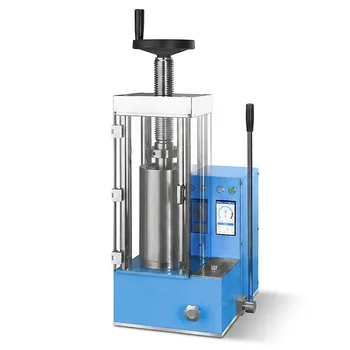
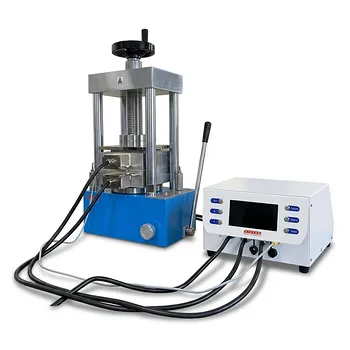
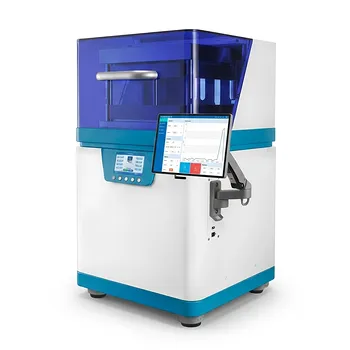
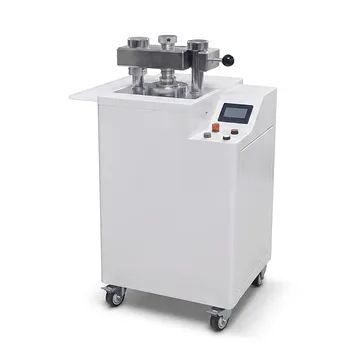
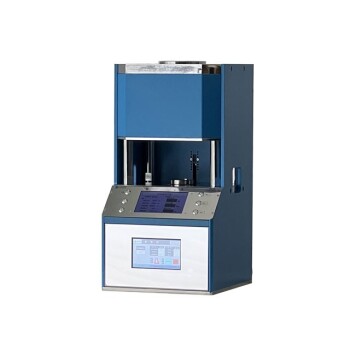
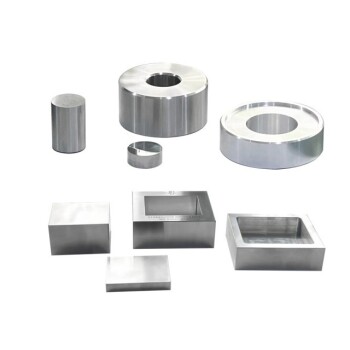
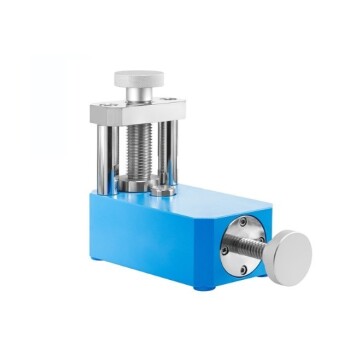
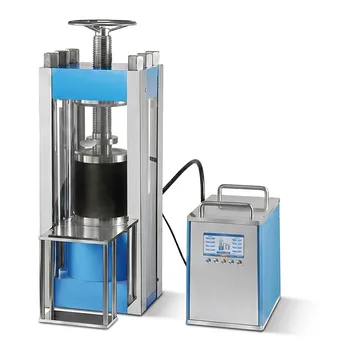
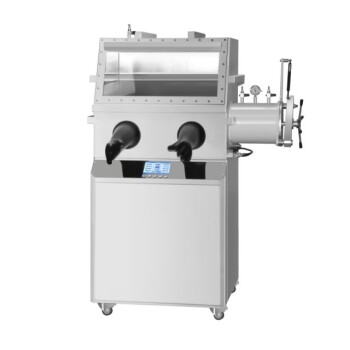
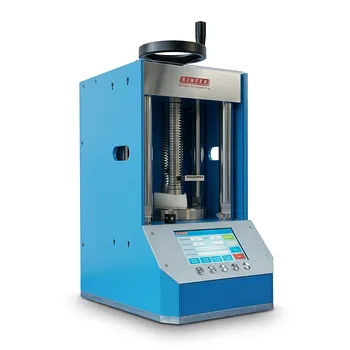
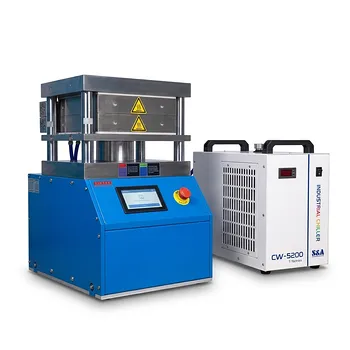
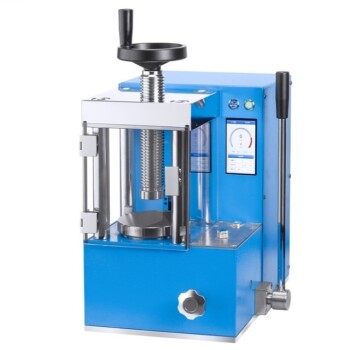
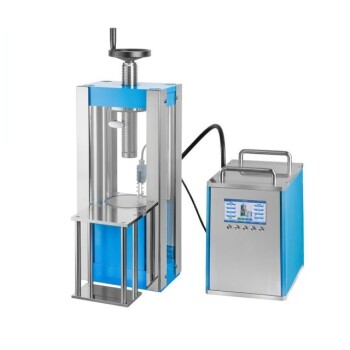
The high-pressure laboratory press is the fundamental tool for the densification and structural integration of hexagonal boron nitride (h-BN) within composite solid-state electrolytes. By applying several tons of uniform mechanical force, the press compacts the mixture of h-BN, polymer matrices, and lithium salts into a monolithic membrane. This process eliminates internal micropores and voids, which is essential for establishing continuous ion-conduction pathways and reinforcing the electrolyte against lithium dendrite penetration.
The core function of a high-pressure laboratory press in h-BN composite fabrication is to achieve maximum material density, thereby minimizing ionic resistance and providing the mechanical robustness required for stable solid-state battery operation.
The Role of Compaction in Densification
Eliminating Micropores and Voids
The laboratory press applies extreme pressure to force h-BN particles and polymer chains into a dense rearrangement. This step is critical because it removes trapped air pockets and microscopic gaps that would otherwise act as insulators, hindering the movement of lithium ions.
Ensuring Intimate Component Contact
High-pressure compaction brings the h-BN reinforcement, polymer matrix, and lithium salts into direct, atomic-level contact. This intimate interface reduces the bulk resistance of the electrolyte, ensuring that the combined materials function as a single, efficient transport medium.
Increasing Volumetric Energy Density
By compressing raw powders or layered structures into a dense pellet or thin film, the press maximizes the amount of active material within a given volume. This densification is a prerequisite for creating high-performance batteries that maintain structural integrity during intense electrochemical cycles.
Enhancing Electrochemical and Mechanical Stability
Mitigation of Lithium Dendrite Growth
A high-density electrolyte created under pressure acts as a formidable physical barrier. The increased mechanical resistance provided by the compacted h-BN composite prevents lithium dendrites from piercing the electrolyte, which significantly reduces the risk of internal short circuits.
Optimizing Ion Transport Pathways
When pressure is applied uniformly, it creates a consistent internal environment for ion migration. This eliminates "dead zones" within the composite material, allowing for efficient electrochemical reactions even at higher current densities.
Facilitating Homogeneous Slurry Formation
In some fabrication workflows, high-pressure compaction of h-BN and binders (like CMC) is used as a preliminary step. This forces the particles into a dense state that, when later dissolved, ensures a more homogeneous and symmetrical distribution of materials in the final measurement structure.
The Synergy of Thermal-Mechanical Processing
The Advantages of Hot Pressing
Utilizing a heated laboratory press allows for the simultaneous application of thermal and mechanical energy. The heat softens the polymer matrix (such as PEO), enabling it to flow more effectively around the h-BN particles at lower mechanical pressures.
Formation of Flexible Networks
This combination of heat and pressure results in a continuous, flexible polymer network that encapsulates the ceramic h-BN filler. The resulting electrolyte membrane achieves a unique balance between high ionic conductivity and the mechanical flexibility needed for cell assembly.
Understanding the Trade-offs and Risks
Risks of Excessive Pressure
Applying pressure beyond the material's specific threshold can lead to micro-cracking or the permanent deformation of the h-BN crystal structure. If the particles are crushed or the polymer chains are over-compressed, the electrolyte may suffer from decreased ionic mobility or structural failure.
Impact of Pressure Inconsistency
If the laboratory press does not apply force with perfect uniformity, the composite will develop density gradients. These variations cause uneven ion transport across the membrane, which can lead to localized "hot spots" and accelerated degradation during battery operation.
Making the Right Choice for Your Goal
To achieve the best results when fabricating h-BN reinforced electrolytes, tailor your pressing parameters to your specific performance targets:
- If your primary focus is Maximum Ionic Conductivity: Utilize a heated press to ensure the polymer matrix flows optimally around the h-BN particles, creating a seamless interface for ion transport.
- If your primary focus is Dendrite Suppression: Prioritize high-tonnage, uniform pressure to reach maximum material density, creating the hardest possible physical barrier against lithium penetration.
- If your primary focus is Material Consistency: Use a press with precise digital controls and automated pressure maintenance to eliminate density variations between experimental batches.
By mastering the precise application of pressure and heat, researchers can unlock the full potential of h-BN composites for the next generation of safe and efficient solid-state batteries.
Summary Table:
| Process Objective | Lab Press Role | Key Performance Outcome |
|---|---|---|
| Densification | Eliminates micropores and voids | Higher volumetric energy density |
| Interface Quality | Ensures intimate component contact | Reduced ionic resistance |
| Mechanical Shielding | Compacts h-BN into a hard barrier | Suppression of lithium dendrites |
| Thermal Synergy | Simultaneous heat and pressure | Flexible, continuous polymer network |
| Structural Control | Precise, uniform force application | Consistent ion transport & batch stability |
Elevate Your Battery Material Innovation with KINTEK
Precision is paramount in the fabrication of hexagonal boron nitride (h-BN) electrolytes. KINTEK specializes in comprehensive laboratory pressing solutions designed to help researchers achieve maximum material density and mechanical robustness.
Our extensive range includes:
- Manual & Automatic Presses: For versatile, high-tonnage applications.
- Heated & Multifunctional Models: Ideal for optimizing polymer-ceramic interfaces through thermal processing.
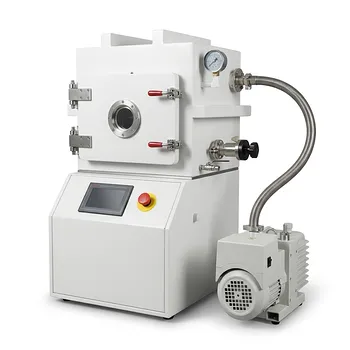
- Glovebox-Compatible Systems: Essential for sensitive lithium-ion battery assembly.
- Isostatic Presses (Cold & Warm): Ensuring perfectly uniform density across complex samples.
Whether you are focusing on dendrite suppression or maximizing ionic conductivity, our equipment provides the digital control and reliability your research demands. Contact KINTEK today to find the perfect pressing solution for your lab!
References
- G. Yaman, Recep Yüksel. The Role of Hexagonal Boron Nitride (h‐BN) in Enhancing Electrolytes for Safer and Efficient Lithium‐Based Batteries. DOI: 10.1002/celc.202500011
This article is also based on technical information from Kintek Solution Knowledge Base .
Related Products
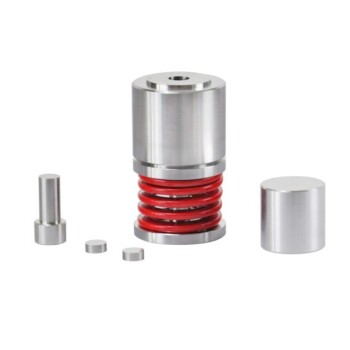
- Lab Round Bidirectional Press Mold
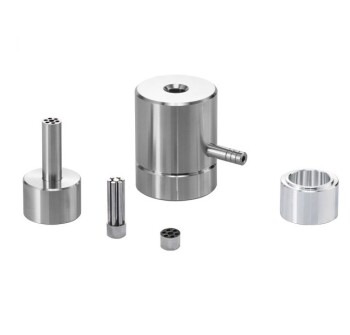
- Special Shape Lab Press Mold for Laboratory Applications
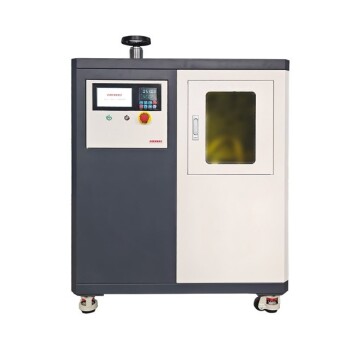
- Warm Isostatic Press for Solid State Battery Research Warm Isostatic Press
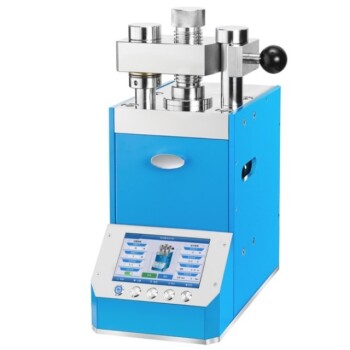
- Automatic Laboratory Hydraulic Press for XRF and KBR Pellet Pressing
- Lab Polygon Press Mold
People Also Ask
- What is the purpose of incorporating cartridge heaters into a lab press mold for MLCC block compression? Optimize Results
- What is the function of a pressing tool in thermoplastic panels? Master Precision Shaping & Fusion Bonding
- Why is precise cooling management of the lab press mold necessary? Protect Core Integrity in Thermoforming
- Why is a high-performance laboratory molding press critical for in-situ electrolyte formation? Unlock Battery Success
- How do the design and geometric precision of pressing molds and mandrels affect the quality of PTFE composite samples?