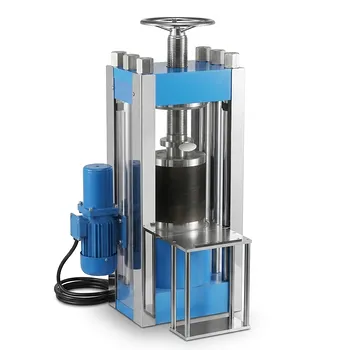
High-temperature vacuum hot pressing (VHP) offers a decisive advantage over standard heat treatment by simultaneously applying axial pressure and extreme thermal energy within a contaminant-free environment. This thermo-mechanical coupling significantly reduces the activation energy required for sintering, enabling near-theoretical densification and preventing the oxidation of sensitive refractory elements like Niobium, Molybdenum, and Tungsten.
Core Takeaway: Unlike standard pressureless heat treatment, vacuum hot pressing utilizes mechanical force to accelerate atomic diffusion and eliminate internal porosity. This process is essential for fabricating high-melting-point refractory composites that require both extreme structural integrity and high chemical purity.
The Mechanism of Thermo-Mechanical Coupling
Reducing Sintering Activation Energy
Refractory metals possess exceptionally high melting points, making them resistant to traditional sintering methods. The application of axial pressure during heating reduces the energy barrier required for atoms to migrate across particle boundaries.
This allows the material to reach a state of consistent densification in a much shorter timeframe than standard heat treatment. By lowering this activation energy, manufacturers can achieve superior results without reaching the extreme temperatures that might cause grain overgrowth.
Accelerated Atomic Diffusion and Mass Transport
The combination of heat and pressure enhances plastic deformation and mass transport within the composite. As the material softens, the mechanical load forces particles together, promoting "particle welding" and the closing of micro-pores.
In composites like Nb-Mo-W-ZrC, this accelerated diffusion is the only practical way to overcome the "sluggish diffusion effect" inherent in complex alloy systems. This ensures the resulting ingot is homogeneous and structurally sound.
Ensuring Material Purity and Integrity
Prevention of Oxidation in Refractory Metals
Refractory metals such as Niobium (Nb), Tantalum (Ta), and Titanium (Ti) are highly reactive and prone to oxidation at elevated temperatures. Standard heat treatment in non-vacuum environments often leads to the formation of thick oxide layers that degrade mechanical properties.
A high-vacuum environment eliminates oxygen and other impurity gases, ensuring that the metal ligaments remain in a pure metallic state. This preservation of the metallic core is critical for maintaining the intended electrical conductivity and thermal stability of the composite.
Elimination of Volatiles and Contaminants
Vacuum hot pressing effectively removes residual volatiles, such as lubricants or binders used in powder preparation, through physical sublimation. This degassing process prevents the formation of internal gas bubbles or "blowholes" during the final stages of densification.
By removing these contaminants, the equipment ensures a tight metallurgical bond between the matrix and reinforcing phases, such as graphene or carbides. This results in a material with significantly higher tensile strength and elongation compared to standard sintered parts.
Understanding the Trade-offs and Limitations
Uniaxial Pressure vs. Isostatic Pressure
While vacuum hot pressing is highly effective, it typically applies uniaxial (one-directional) pressure. This can lead to slight variations in density if the component has a complex geometry or a high aspect ratio.
For parts requiring absolute uniformity from every angle, Hot Isostatic Pressing (HIP) may be superior as it uses gas to apply pressure from all directions. However, VHP remains the more cost-effective and accessible choice for producing standard ingots and plates.
Equipment Complexity and Cost
The requirement for both a high-vacuum system and a heavy-duty hydraulic press makes VHP equipment significantly more expensive to operate than standard furnaces. The cycle times are also governed by the need to maintain vacuum integrity and controlled cooling to prevent thermal shock.
How to Apply This to Your Project
Making the Right Choice for Your Goal
- If your primary focus is reaching maximum density: Use vacuum hot pressing to eliminate internal pores and achieve near-theoretical density in difficult-to-deform refractory alloys.
- If your primary focus is chemical purity: Utilize the vacuum environment of a hot press to prevent the oxidation of active metals like Niobium and Titanium during high-temperature cycles.
- If your primary focus is complex geometries: Consider Hot Isostatic Pressing (HIP) instead of vacuum hot pressing to ensure uniform pressure application across all surfaces.
By integrating mechanical pressure with controlled thermal energy in a vacuum, you can produce refractory composites that meet the most demanding structural and thermal specifications.
Summary Table:
| Feature | Standard Heat Treatment | Vacuum Hot Pressing (VHP) |
|---|---|---|
| Pressure Application | None (Pressureless) | Uniaxial Axial Pressure |
| Atmosphere | Inert or Ambient | High Vacuum (Contaminant-free) |
| Densification | Limited / Slower | Near-Theoretical (Accelerated) |
| Oxidation Risk | High for reactive metals | Minimal / Prevented |
| Mechanism | Thermal Diffusion | Thermo-Mechanical Coupling |
Upgrade Your Lab with KINTEK’s Precision Pressing Solutions
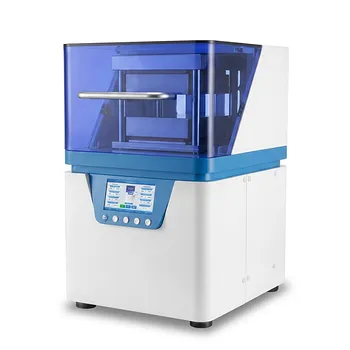
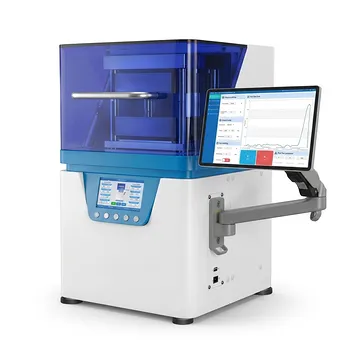
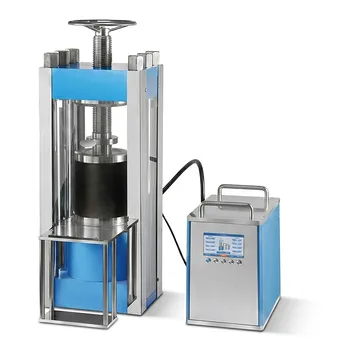
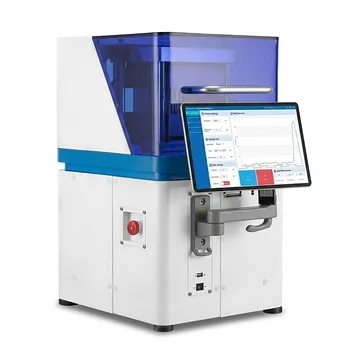
Achieve unmatched material integrity and purity with KINTEK. We specialize in comprehensive laboratory pressing solutions, offering a versatile range of equipment including manual, automatic, heated, multifunctional, and glovebox-compatible models, as well as cold and warm isostatic presses.
Our solutions are widely applied in high-performance sectors like battery research and advanced metallurgy. Don't let porosity or oxidation compromise your research outcomes—leverage our expertise to find the perfect system for your specific requirements.
Contact KINTEK today to enhance your lab's efficiency!
References
- Yi Tan, Jin‐Mo Yang. High Temperature Deformation of ZrC Particulate-Reinforced Nb-Mo-W Composites. DOI: 10.2320/matertrans.47.1527
This article is also based on technical information from Kintek Solution Knowledge Base .
Related Products
- Automatic High Temperature Heated Hydraulic Press Machine with Heated Plates for Lab
- Heated Hydraulic Press Machine With Heated Plates For Vacuum Box Laboratory Hot Press
- Heated Hydraulic Press Machine with Heated Plates for Vacuum Box Laboratory Hot Press
- Automatic Hydraulic Hot Press with Large Plate and Precision Temperature Control for Advanced Material Sample Preparation and Industrial Research
- Automatic Hydraulic Heat Press Machine with Multi Stage Programmable Control and Integrated Water Cooling Plate Size 180x180mm
People Also Ask
- Function of a Laboratory Hydraulic Press with Heated Platens in SSE? Enhance Battery Density & Conductivity
- How does a laboratory heated hydraulic press facilitate PBN sample prep for WAXS? Achieve Precise X-Ray Scattering
- What are the requirements for electrode pressing with high-viscosity ionic liquids like EMIM TFSI? Optimize Performance
- What are the industrial applications of heated hydraulic presses? Master Heat & Force for Precision Manufacturing
- Why is a laboratory hydraulic press with heating plates required for PLA/TEC films? Achieve Precise Sample Integrity