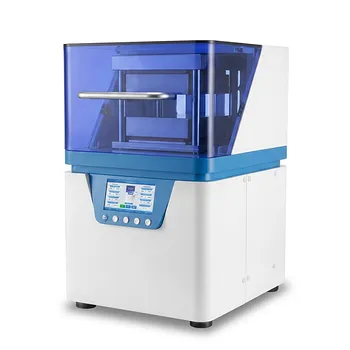
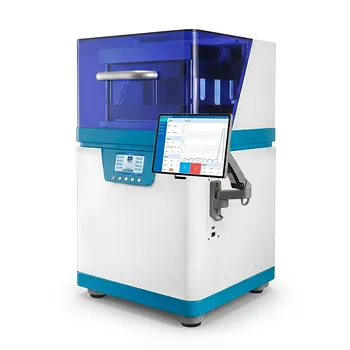
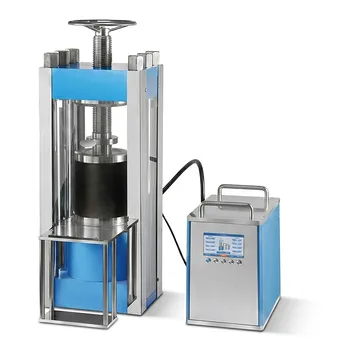
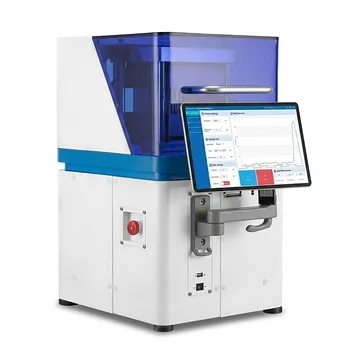
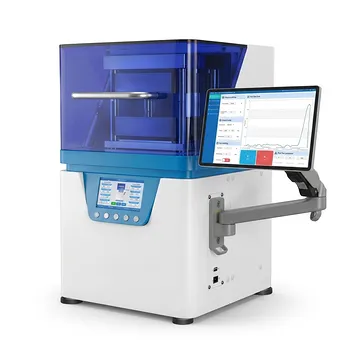
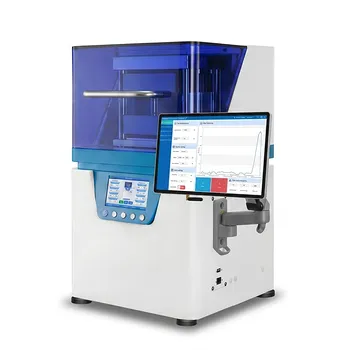
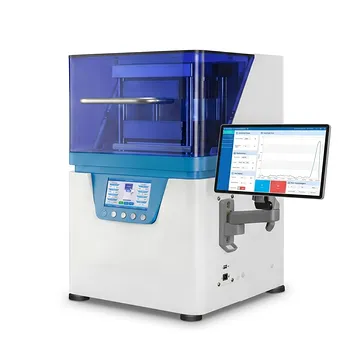
The hot press machine is the critical transition point that converts loose, porous fungal insulation into structural-grade composite panels. By simultaneously applying temperatures between 160°C and 220°C and high mechanical pressure, the machine facilitates a fundamental chemical and physical transformation of the material.
The core function of a hot press in fungal-based manufacturing is to achieve physical densification and trigger the Maillard reaction. This dual action converts soft, organic matter into a hard, high-strength composite with significantly improved structural properties.
Fundamental Mechanisms of Hot Pressing
Triggering the Maillard Reaction
The application of heat (up to 220°C) initiates a complex chemical process known as the Maillard reaction. This reaction occurs between the fungal mycelium and the lignocellulosic matrix (the plant-based filler).
This chemical cross-linking is essential for creating a permanent bond between the biological components. Without this heat-triggered reaction, the panel would lack the internal cohesion necessary for structural use.
Achieving Maximum Physical Densification
Fungal composites naturally begin as low-density, airy materials similar to insulation. The hot press applies axial mechanical pressure to collapse these internal voids and eliminate residual air bubbles.
By forcing the components into a tighter arrangement, the machine increases the theoretical density of the panel. This physical compaction is the primary driver behind the material’s transition from "soft" to "hard."
Enhancing Material Performance
Improving Bending Strength and Modulus
One of the most significant impacts of hot pressing is the radical improvement in mechanical stats. The combination of thermal bonding and high-pressure compaction increases both the bending strength and the elastic modulus.
These improvements allow fungal panels to compete with traditional wood-based products. The resulting material is no longer just a filler but a load-bearing component capable of resisting deformation.
Strengthening Interfacial Bonding
The hot press ensures that the fungal "binder" fully infiltrates the gaps within the plant fibers. Similar to how heat softens thermoplastic binders in other industries, it allows the fungal matrix to encapsulate the reinforcing fibers.
This creates a tight interfacial bond that prevents delamination. A well-pressed panel functions as a single, monolithic unit rather than a collection of loose particles.
Understanding the Trade-offs
While hot pressing is essential for strength, it requires careful calibration. Applying excessive temperature (beyond 220°C) can lead to the thermal degradation of the organic fibers, actually weakening the panel.
Similarly, improper pressure cycles can trap internal moisture or gases. If the pressure is released too quickly before the chemical bonds have stabilized, the panel may suffer from internal stresses or "blowouts," where trapped steam ruptures the surface.
Applying This to Your Manufacturing Goal
How to Apply This to Your Project
When integrating a hot press into your fungal composite workflow, your settings should be dictated by the intended final use of the material.
- If your primary focus is Maximum Structural Rigidity: Aim for the higher end of the temperature scale (near 220°C) and maximum pressure to ensure full densification and a complete Maillard reaction.
- If your primary focus is Dimensional Stability: Focus on the isothermal holding time, ensuring the heat is uniform across the entire plate to reduce internal residual stresses.
- If your primary focus is Aesthetic Surface Quality: Utilize precise mold control and moderate pressure to eliminate surface voids without scorching the organic fibers.
By mastering the synergy of heat and pressure, you transform a biological growth process into a repeatable, industrial manufacturing standard.
Summary Table:
| Feature | Function in Fungal Composites | Key Benefit |
|---|---|---|
| Physical Densification | Applies axial pressure to eliminate air voids | Increases material density and hardness |
| Chemical Activation | Triggers the Maillard reaction (160°C - 220°C) | Creates permanent bonds for structural cohesion |
| Interfacial Bonding | Encapsulates plant fibers within the fungal matrix | Prevents delamination and improves stability |
| Mechanical Scaling | Compresses components into monolithic units | Enhances bending strength and elastic modulus |
Elevate Your Material Research with KINTEK
Transform your material concepts into high-performance realities with KINTEK’s comprehensive laboratory pressing solutions. Whether you are developing sustainable fungal composites or advancing battery research, our specialized equipment provides the precision control over temperature and pressure required for consistent, industrial-grade results.
Our versatile range includes:
- Manual & Automatic Presses for flexible batch production.
- Heated & Multifunctional Models for precise chemical reactions like the Maillard process.
- Glovebox-Compatible & Isostatic Presses (Cold and Warm) for specialized research environments.
Ready to optimize your manufacturing workflow? Contact our technical experts today to find the perfect pressing solution for your lab’s specific needs.
References
- Bertram Schmidt, Vera Meyer. Mechanical, physical and thermal properties of composite materials produced with the basidiomycete Fomes fomentarius. DOI: 10.1186/s40694-023-00169-8
This article is also based on technical information from Kintek Solution Knowledge Base .
Related Products
- Automatic High Temperature Heated Hydraulic Press Machine with Heated Plates for Lab
- Automatic Heated Hydraulic Press Machine with Hot Plates for Laboratory
- Automatic Hydraulic Heat Press Machine with Multi Stage Programmable Control and Integrated Water Cooling Plate Size 180x180mm
- Automatic Heated Hydraulic Press Machine with Heated Plates for Laboratory
- Laboratory Manual Heated Hydraulic Press Machine with Hot Plates
People Also Ask
- Function of a Laboratory Hydraulic Press with Heated Platens in SSE? Enhance Battery Density & Conductivity
- What are the requirements for electrode pressing with high-viscosity ionic liquids like EMIM TFSI? Optimize Performance
- How does a laboratory heated hydraulic press facilitate PBN sample prep for WAXS? Achieve Precise X-Ray Scattering
- What are the industrial applications of heated hydraulic presses? Master Heat & Force for Precision Manufacturing
- Why is a laboratory hydraulic press with heating plates required for PLA/TEC films? Achieve Precise Sample Integrity