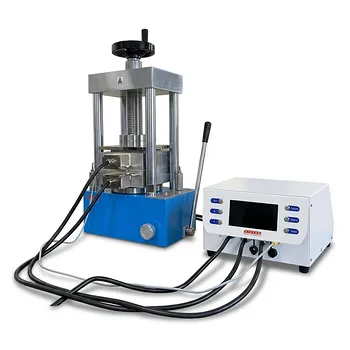
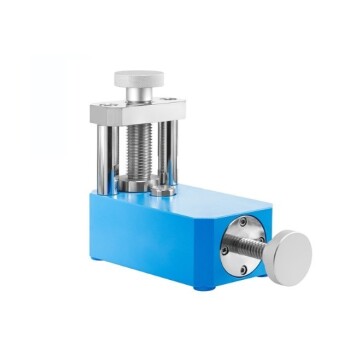
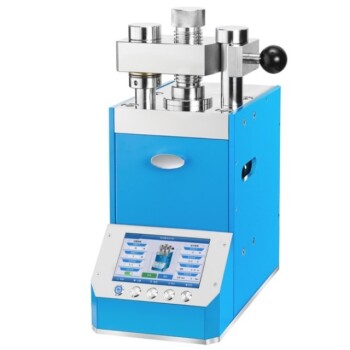
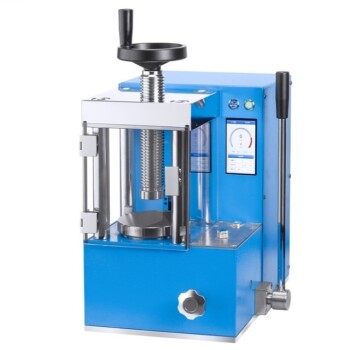
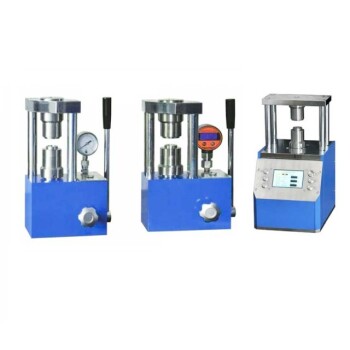
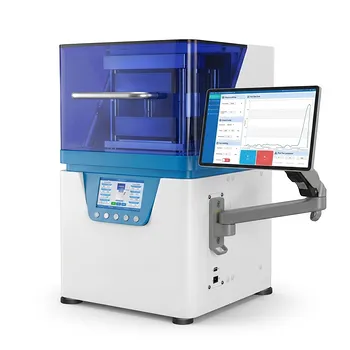
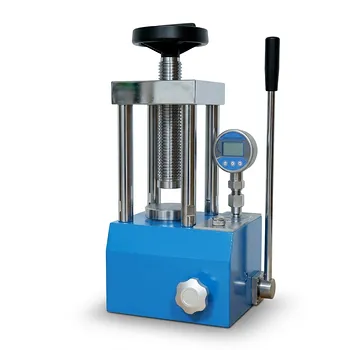
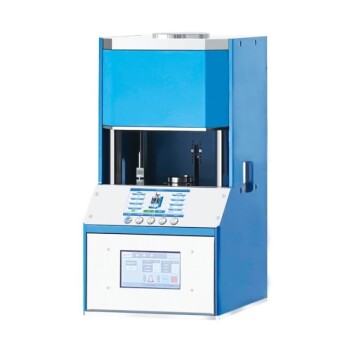
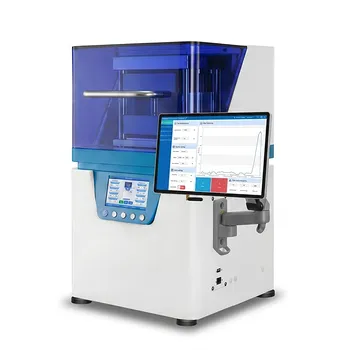
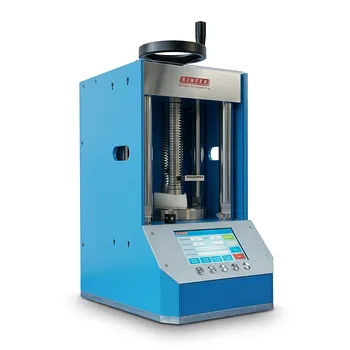
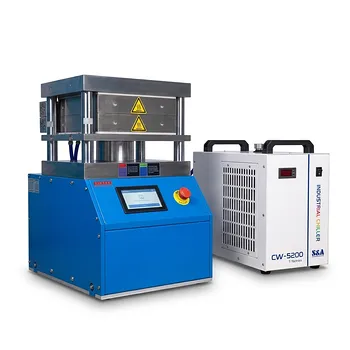
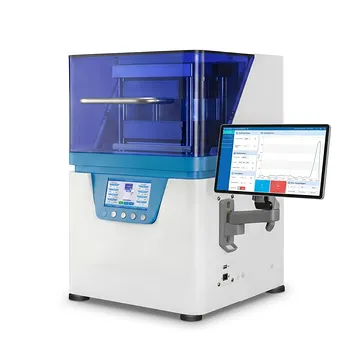
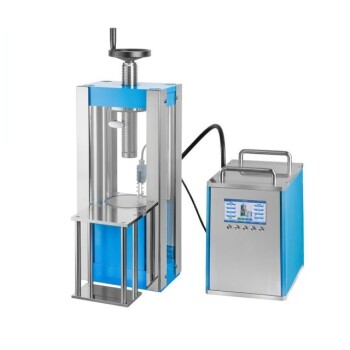
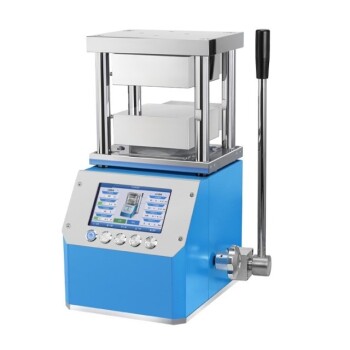
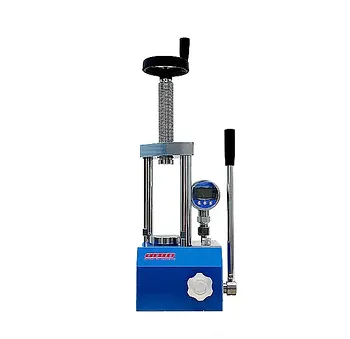
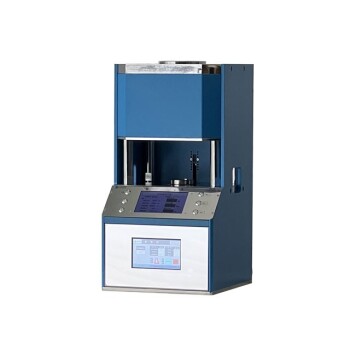
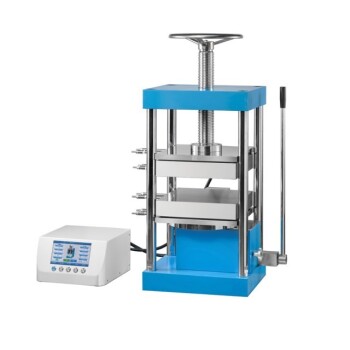
The laboratory hydraulic press is the fundamental tool for transforming loose sulfide electrolyte powders into high-density, electrically conductive pellets. By applying intense mechanical pressure—often ranging from 240 MPa to 370 MPa—the press induces plastic deformation in the powder particles. This process eliminates internal voids, minimizes grain boundary resistance, and establishes the continuous ion transport channels required for accurate electrochemical testing and optimized battery performance.
A laboratory hydraulic press provides the critical mechanical force needed to achieve full densification via cold-pressing, allowing researchers to eliminate porosity and measure the true ionic conductivity of sulfide solid electrolytes without the risks of high-temperature sintering.
Achieving High Density and Ionic Conductivity
Eliminating Internal Porosity
Sulfide solid electrolytes (SSEs) are synthesized as loose powders with significant air gaps between particles. The hydraulic press applies high-pressure compactive stress to collapse these pores, creating a dense ceramic sheet or pellet.
Reducing Grain Boundary Resistance
High-pressure compaction forces particles to bond tightly, which significantly lowers interfacial and grain boundary impedance. This is a physical prerequisite for achieving high ionic conductivity levels, such as the 9 mS cm⁻¹ benchmarks found in advanced sulfide materials.
Establishing Ion Transport Paths
By inducing plastic deformation, the press ensures that electrolyte particles are in constant, intimate contact. This contact is essential for creating a continuous path for lithium ions to migrate through the solid-state structure.
The Advantages of Cold-Pressing Sulfide Materials
Leveraging Material Plasticity
Unlike oxide-based electrolytes that require high-temperature sintering to densify, sulfide materials like Li6PS5Cl exhibit low mechanical hardness. This high plastic deformability allows them to reach near-theoretical density through cold-pressing at room temperature.
Avoiding Thermal Decomposition
Because the hydraulic press achieves densification through mechanical force alone, it removes the need for high-heat processing. This protects the material from thermal decomposition or unwanted phase changes that often occur during sintering.
Simulating Manufacturing Environments
The press allows researchers to record the relationship between pressure and displacement. This data helps evaluate the macroscopic compressibility of the material, serving as a vital simulation for large-scale all-solid-state battery manufacturing.
Understanding the Trade-offs and Technical Challenges
Mold Strength and Insulation
Using a hydraulic press requires high-strength, often insulating molds to contain the powder during extreme compression. If the mold is not appropriately rated for pressures exceeding 370 MPa, it can fail catastrophically or lead to uneven density distribution.
Pressure Distribution Inconsistency
While the press provides total force, the uniformity of pressure within the pellet can vary. Non-uniform compaction leads to "dead zones" with higher porosity, which may cause lithium dendrite growth or skewed conductivity readings during physical testing.
Material Contamination Risks
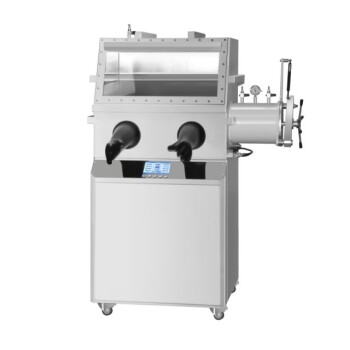
Sulfide electrolytes are often sensitive to moisture and air. The compaction process must frequently be performed in a controlled environment (like a glovebox) or using sealed dies to prevent the material from reacting with the atmosphere during the pressing cycle.
How to Apply This to Your Research Project
Making the Right Choice for Your Goal
- If your primary focus is accurate conductivity measurement: Utilize pressures at or above 370 MPa to ensure the pellet reaches a density that matches the configurations used in simulation models.
- If your primary focus is manufacturing scalability: Use the press to generate pressure-displacement curves to determine the minimum "optimal molding pressure" required to achieve necessary densification.
- If your primary focus is interfacial stability: Focus on the cold-pressing duration and pressure consistency to minimize internal grain boundary resistance and inhibit lithium dendrites.
By precisely controlling mechanical compaction, the laboratory hydraulic press bridges the gap between raw powder synthesis and high-performance solid-state battery integration.
Summary Table:
| Key Benefit | Mechanism | Impact on Performance |
|---|---|---|
| Full Densification | Compactive Stress | Eliminates internal porosity and air gaps |
| High Conductivity | Plastic Deformation | Reduces grain boundary and interfacial resistance |
| Material Integrity | Cold-pressing | Prevents thermal decomposition and phase changes |
| Process Simulation | Pressure-Displacement | Provides vital data for large-scale manufacturing |
Optimize Your Battery Research with KINTEK Precision Pressing
Unlock the full potential of your sulfide solid electrolytes by achieving superior densification. KINTEK specializes in comprehensive laboratory pressing solutions tailored for high-performance battery research. Whether you need manual, automatic, heated, multifunctional, or glovebox-compatible models, or require specialized cold and warm isostatic presses, our equipment ensures the consistent mechanical force necessary for accurate testing.
Enhance your lab's efficiency and material performance—contact KINTEK today to find the perfect pressing solution for your needs!
References
- Ruoyu Wang, Zhicheng Zhong. A pre-trained deep potential model for sulfide solid electrolytes with broad coverage and high accuracy. DOI: 10.1038/s41524-025-01764-6
This article is also based on technical information from Kintek Solution Knowledge Base .
Related Products
- 24T 30T 60T Heated Hydraulic Lab Press Machine with Hot Plates for Laboratory
- Laboratory Hydraulic Press 2T Lab Pellet Press for KBR FTIR
- Automatic Laboratory Hydraulic Press for XRF and KBR Pellet Pressing
- Laboratory Hydraulic Pellet Press for XRF KBR FTIR Lab Press
- Laboratory Hydraulic Press Lab Pellet Press Button Battery Press
People Also Ask
- Function of a Laboratory Hydraulic Press with Heated Platens in SSE? Enhance Battery Density & Conductivity
- Why is a laboratory hydraulic press with heating plates required for PLA/TEC films? Achieve Precise Sample Integrity
- What role does a laboratory heated hydraulic press play in LTCC? Essential for High-Density Ceramic Lamination
- Why reduce load when applying composite strengthening tabs? Protect Specimen Integrity and Data Accuracy
- What role does a laboratory heated hydraulic press play in PI/PA based SPE membranes? Optimize Solid Battery Performance