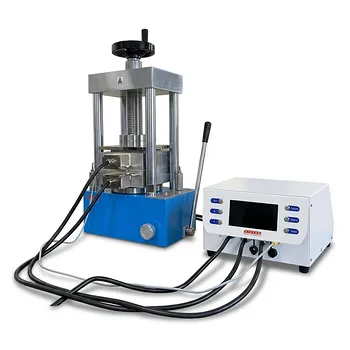
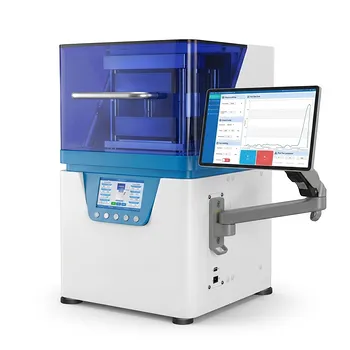
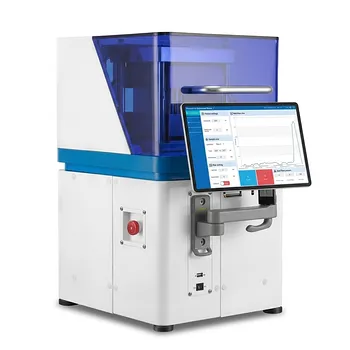
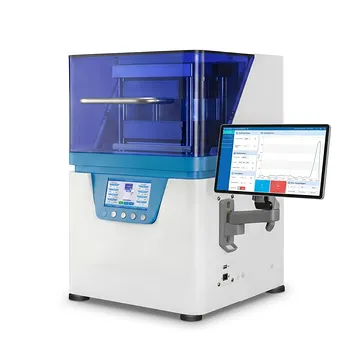
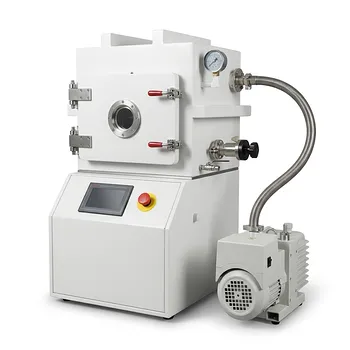
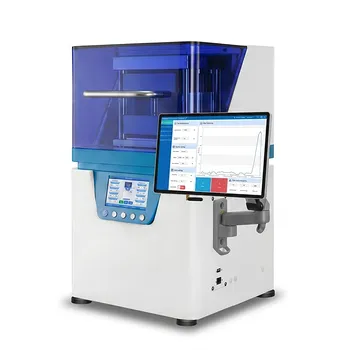
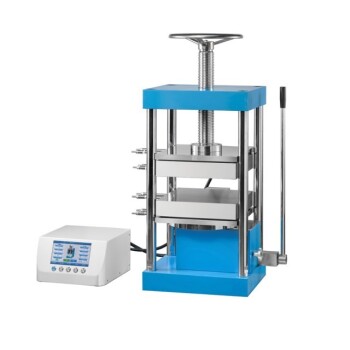
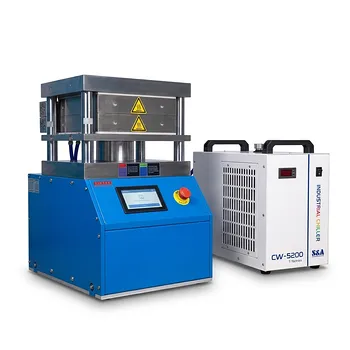
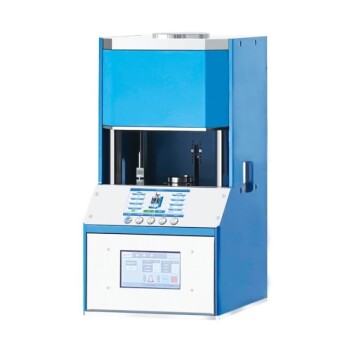
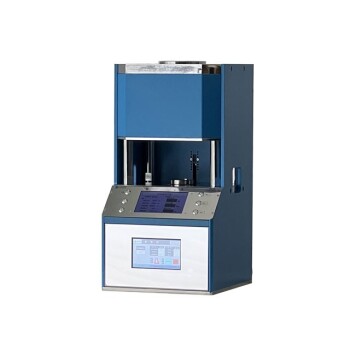
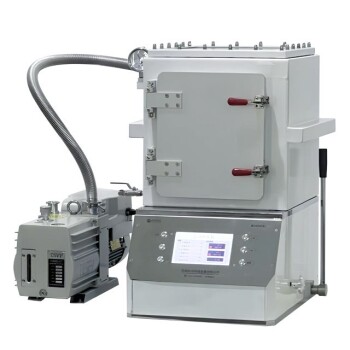
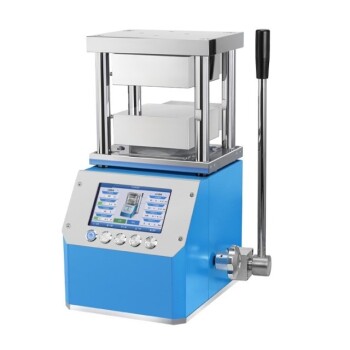
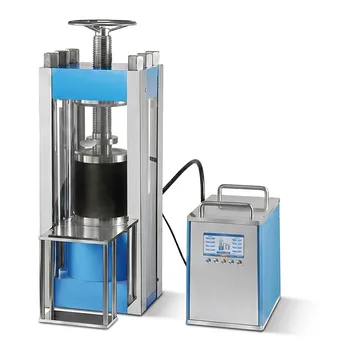
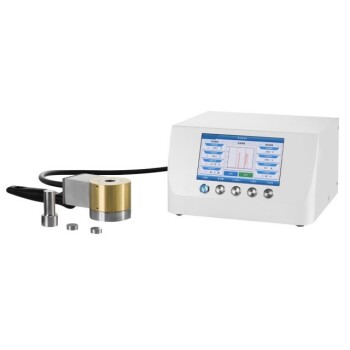
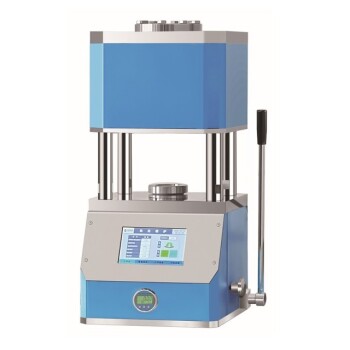
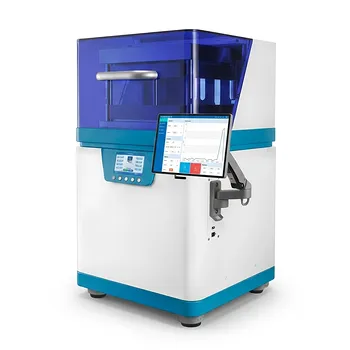
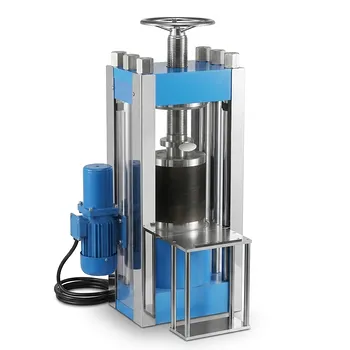
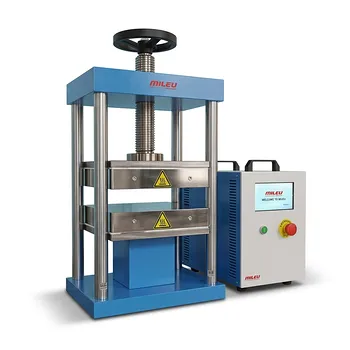
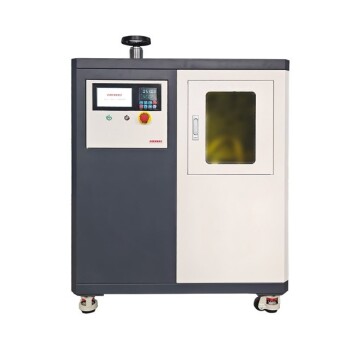
The high-precision heated laboratory press is the critical instrument for consolidation and bonding in aluminum-polyamide (Al-PA) composite fabrication. It serves to simultaneously apply high temperatures (typically around 270°C) and stable compressive forces (often up to 10 tons or 690 kPa) to melt the polyamide matrix and achieve full impregnation of the aluminum structure. This process is essential for eliminating internal voids and establishing a robust interfacial bond between the metal and the polymer, ensuring consistent mechanical performance.
The heated laboratory press transforms raw Al-PA components into high-performance solids by precisely managing the thermal and mechanical energy required for molecular diffusion and void elimination. This synchronization of heat and pressure ensures the resulting composite is structurally sound, uniform in density, and capable of meeting rigorous engineering standards.
Optimizing the Matrix-Metal Interface
Achieving Complete Polymer Wetting
Polyamide (PA6) requires precise temperatures to reach a molten state with a low enough viscosity for effective impregnation. The press provides a stable thermal environment that allows the polymer to flow into the micro-textures of the aluminum surface.
This complete "wetting" of the aluminum is the first step in creating the spontaneous adhesion necessary for effective load transfer between the matrix and the reinforcement. Without the precision of a laboratory press, inconsistent heating can lead to "dry spots" where the polymer fails to bond with the metal.
Facilitating Diffusion and Chemical Bonding
The application of high pressure at or above the melting point of the polyamide facilitates diffusion bonding. This process allows polymer chains to move and interact closely with the aluminum oxide layer.
By maintaining constant pressure, the press ensures that the materials remain in intimate contact throughout the bonding phase. This results in a chemical and mechanical lock that significantly enhances the interfacial bonding strength of the thermoplastic composite.
Structural Integrity and Defect Elimination
Pressurized Degassing and Void Removal
During the melting of polyamide, air bubbles and residual volatiles can become trapped within the viscous melt. The press acts as a pressurized degassing unit, using high tonnage to force these gases out of the material.
Eliminating internal voids is critical because air pockets act as stress concentrators. Removing these defects prevents premature failure and ensures the material achieves its maximum theoretical density.
Ensuring Uniform Density and Thickness
A high-precision press maintains a constant pressure environment that prevents density variations across the specimen. This level of control is necessary to produce standardized test plates with smooth surfaces.
Consistent thickness and stable geometric dimensions are non-negotiable for accurate mechanical testing. If the specimen thickness varies, data from hardness, tensile, or acoustic tests will be scattered and unreliable.
Thermal Management and Crystallization
Regulating Polymer Microstructure
The role of the press extends beyond the heating phase; many units allow for programmed cooling. This is vital for regulating the crystallization behavior of the polyamide as it returns to a solid state.
Controlled cooling rates influence the size and distribution of polymer crystals. This microstructural management directly impacts the final composite's toughness, ductility, and thermal stability.
Understanding the Trade-offs
Temperature-Pressure Synchronicity
One of the primary challenges in using a laboratory press is the timing of pressure application. If high pressure is applied before the polyamide has reached its optimal flow temperature, the material can experience internal stresses or fiber damage.
Conversely, if the temperature is held too high for too long, the polyamide may undergo thermal degradation. This breaks down the polymer chains, leading to a brittle matrix and a significant loss in overall mechanical strength.
The Risk of Flash and Resin Loss
Applying excessive pressure can cause "flash," where the molten polyamide is forced out of the mold cavity. This results in a resin-poor composite that lacks the necessary matrix to support the aluminum reinforcement.
Precision calibration is required to balance the pressure needed for degassing against the pressure that would compromise the fiber-to-matrix ratio.
How to Apply This to Your Project
Recommendations for Material Prep
- If your primary focus is maximizing bond strength: Prioritize precise temperature control at the polyamide’s melting point to ensure deep diffusion into the aluminum surface.
- If your primary focus is standardized mechanical testing: Use the press to produce sheets with uniform thickness and smooth surfaces to minimize data scatter in your results.
- If your primary focus is preventing structural failure: Utilize high-pressure degassing cycles to eliminate internal air bubbles and ensure maximum material density.
- If your primary focus is controlling material ductility: Implement a programmed cooling cycle to regulate the crystallization of the polyamide matrix after consolidation.
The high-precision laboratory press is the definitive tool for bridging the gap between raw material components and a cohesive, high-performance aluminum-polyamide composite.
Summary Table:
| Key Role | Processing Mechanism | Impact on Al-PA Composite |
|---|---|---|
| Bonding | Thermal melting & pressure-driven wetting | Establishes robust interfacial bond and load transfer |
| Consolidation | High-tonnage pressurized degassing | Eliminates internal voids and maximizes material density |
| Uniformity | Constant pressure & thermal stability | Ensures standardized thickness and smooth surface finish |
| Microstructure | Programmed cooling & crystallization | Regulates polymer crystal size for improved toughness |
Elevate Your Composite Research with KINTEK Precision
Achieve the ultimate bond strength and structural integrity in your Al-PA composites with KINTEK’s industry-leading technology. KINTEK specializes in comprehensive laboratory pressing solutions, offering a versatile range of manual, automatic, heated, multifunctional, and glovebox-compatible models, as well as cold and warm isostatic presses widely applied in battery research and advanced material science.
Whether you are optimizing interfacial adhesion or producing standardized test plates, our equipment provides the thermal and mechanical precision required for rigorous engineering standards.
Ready to enhance your lab's performance? Contact our experts today to find the perfect pressing solution for your specific application!
References
- Ihab S. Hasan, Emad Q. Hussein. Optimizing Crash Performance in Aluminum-Polyamide Hybrid Material Systems: Insights from Drop-Weight and Quasi-Static Indentation Testing. DOI: 10.26706/ijaefea.4.10.20232000
This article is also based on technical information from Kintek Solution Knowledge Base .
Related Products
- 24T 30T 60T Heated Hydraulic Lab Press Machine with Hot Plates for Laboratory
- Automatic Large Format Laboratory Heated Hydraulic Press 400x400mm Plate Capacity
- Automatic Heated Hydraulic Lab Press Machine 200x200 Plate Size for Battery Research and Materials Science
- Automatic Heated Hydraulic Lab Press with Programmable Touch Screen Controls and Precision Temperature Regulation
- Heated Hydraulic Press Machine with Heated Plates for Vacuum Box Laboratory Hot Press
People Also Ask
- Function of a Laboratory Hydraulic Press with Heated Platens in SSE? Enhance Battery Density & Conductivity
- Why is a laboratory hydraulic press with heating plates required for PLA/TEC films? Achieve Precise Sample Integrity
- What role does a laboratory heated hydraulic press play in LTCC? Essential for High-Density Ceramic Lamination
- Why reduce load when applying composite strengthening tabs? Protect Specimen Integrity and Data Accuracy
- What role does a laboratory heated hydraulic press play in PI/PA based SPE membranes? Optimize Solid Battery Performance