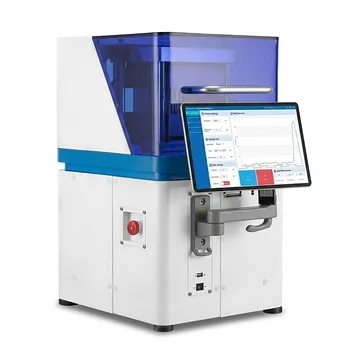
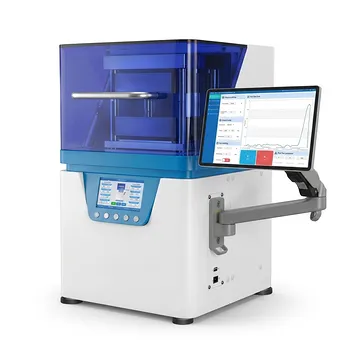
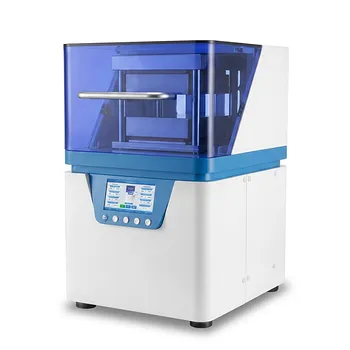
The vulcanization of rubber nanocomposites requires a synergistic environment of extreme precision and controlled energy. Electrically heated plate presses and steel molds are used to provide the specific thermal energy (typically 160°C) and mechanical pressure needed to trigger the chemical cross-linking of polymer chains. This setup ensures that the raw material transforms into a stable, three-dimensional network with uniform density and exact geometric dimensions.
Core Takeaway: The use of electrically heated presses and steel molds is necessary to guarantee a uniform chemical reaction and physical density throughout the material, which is critical for producing standardized samples for accurate mechanical and thermal testing.
The Role of Controlled Heat in Chemical Transformation
Activating the Vulcanization Reaction
The electrically heated plate press provides a stable thermal field, often held at 160°C, which is the threshold required to activate cross-linking agents like sulfur or peroxides. This heat triggers the chemical bonds that connect individual rubber molecular chains, turning a viscous plastic substance into a resilient elastomer.
Ensuring Uniform Cross-linking Density
A precise temperature environment is vital because even minor fluctuations can lead to uneven vulcanization. Uniform heat distribution across the plates ensures that the spatial cross-linking density remains consistent throughout the entire sample, preventing weak spots in the rubber matrix.
Impact on Structural Integrity
Stable thermal control directly determines the final structural integrity of the nanocomposite. This is particularly important for materials intended for high-temperature environments, as the three-dimensional network structure provides the necessary thermal stability and flame retardancy.
The Necessity of Pressure and Steel Molds
Expelling Air and Ensuring Density
High hydraulic pressure (often up to 1500 psi) is applied to the rubber compound to expel internal air bubbles. This process results in high structural density and eliminates internal voids that could otherwise lead to premature material failure.
Defining Standardized Dimensions
Steel molds are used to constrain the material into precise geometric shapes, such as 50 x 10 x 4 mm. These standardized dimensions are mandatory for scientific testing, including oxygen index (LOI) and micro-combustion calorimetry, where accuracy depends on consistent sample volume.
Achieving Low Surface Roughness
The use of polished steel molds under high pressure produces samples with low surface roughness. This smooth finish is not just aesthetic; it ensures that physical tests and measurements are not skewed by surface defects or irregularities.
Understanding the Trade-offs and Pitfalls
The Risk of Thermal Gradient
If the electric press plates are not calibrated correctly, a thermal gradient can occur, where the edges of the mold are cooler than the center. This leads to incomplete vulcanization at the periphery, compromising the sample's overall mechanical properties.
Pressure Management and Material Flash
Excessive pressure can cause material to leak out of the mold (known as "flash"), potentially leading to variations in the final density. Conversely, insufficient pressure fails to eliminate micro-bubbles, which act as stress concentrators during physical testing.
Over-Vulcanization Concerns
Leaving the samples in the heated press for too long—even at the correct temperature—can lead to over-vulcanization. This makes the rubber brittle and reduces its elasticity, effectively ruining the nanocomposite's intended performance characteristics.
Making the Right Choice for Your Goal
To achieve the best results in rubber nanocomposite fabrication, your approach should be guided by your specific testing requirements:
- If your primary focus is thermal stability testing: Ensure your press can maintain a perfectly stable 160°C for the duration of the cycle to create a robust 3D molecular network.
- If your primary focus is geometric standardization for LOI testing: Use high-grade steel molds to ensure the 50 x 10 x 4 mm dimensions are exact and repeatable.
- If your primary focus is mechanical strength: Prioritize high hydraulic pressure to maximize structural density and eliminate any potential air bubble inclusions.
By mastering the balance of precise heat and uniform pressure, you ensure that every sample produced is a true representation of the nanocomposite's potential.
Summary Table:
| Key Component | Technical Function | Benefit to Nanocomposites |
|---|---|---|
| Heated Plates | Maintains stable 160°C thermal field | Ensures uniform cross-linking density & thermal stability |
| Hydraulic Pressure | Applies ~1500 psi mechanical force | Expels air bubbles and maximizes material density |
| Steel Molds | Hardened geometric constraint | Produces standardized samples (e.g., 50x10x4mm) for testing |
| Polished Surfaces | High-precision finish | Achieves low surface roughness for accurate measurements |
Elevate Your Laboratory Precision with KINTEK
To achieve true consistency in rubber nanocomposite fabrication and battery research, precise control over heat and pressure is non-negotiable. KINTEK specializes in comprehensive laboratory pressing solutions designed to meet the most rigorous scientific standards.
Whether you need manual, automatic, heated, multifunctional, or glovebox-compatible models, our equipment provides the stability required for perfect chemical cross-linking. We also offer advanced cold and warm isostatic presses for complex material densification.
Ready to standardize your sample production? Contact KINTEK today to discover how our high-performance presses can enhance your research accuracy and material structural integrity.
References
- Przemysław Rybiński, Agnieszka Katarzyna Pająk. Thermal properties and flammability of nanocomposites based on diene rubbers and naturally occurring and activated halloysite nanotubes. DOI: 10.1007/s10973-011-1787-z
This article is also based on technical information from Kintek Solution Knowledge Base .
Related Products
- Automatic High Temperature Heated Hydraulic Press Machine with Heated Plates for Lab
- Automatic Heated Hydraulic Press Machine with Heated Plates for Laboratory
- Automatic Heated Hydraulic Press Machine with Hot Plates for Laboratory
- Cylindrical Lab Electric Heating Press Mold for Laboratory Use
- Automatic Hydraulic Hot Press with Large Plate and Precision Temperature Control for Advanced Material Sample Preparation and Industrial Research
People Also Ask
- Function of a Laboratory Hydraulic Press with Heated Platens in SSE? Enhance Battery Density & Conductivity
- What are the requirements for electrode pressing with high-viscosity ionic liquids like EMIM TFSI? Optimize Performance
- How does a laboratory heated hydraulic press facilitate PBN sample prep for WAXS? Achieve Precise X-Ray Scattering
- What are the industrial applications of heated hydraulic presses? Master Heat & Force for Precision Manufacturing
- Why is a laboratory hydraulic press with heating plates required for PLA/TEC films? Achieve Precise Sample Integrity