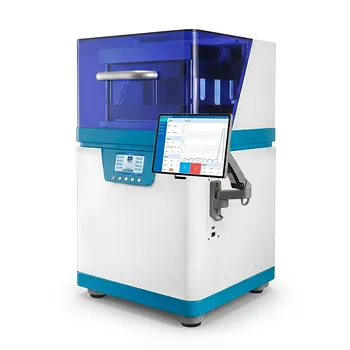
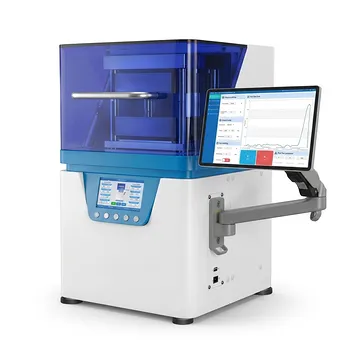
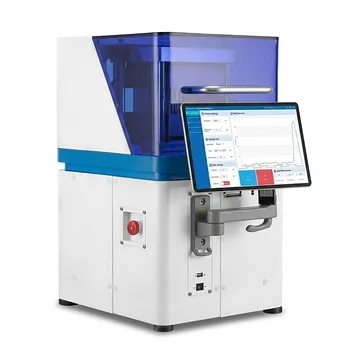
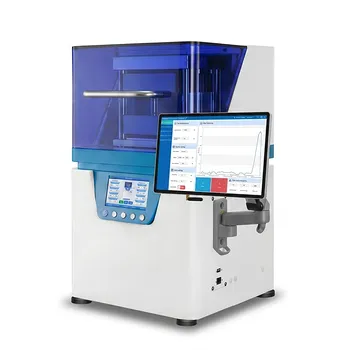
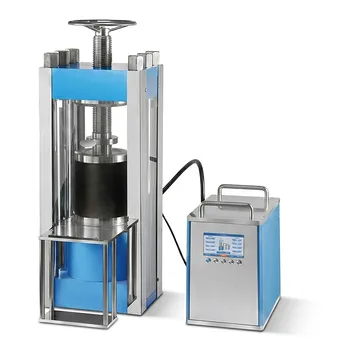
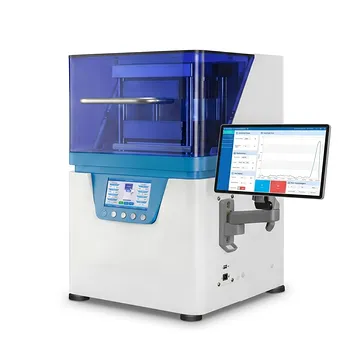
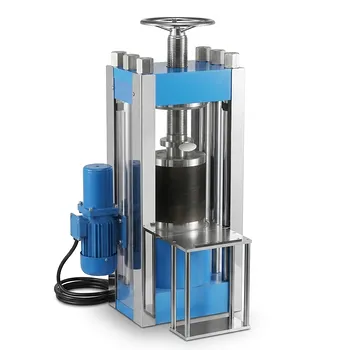
A high-performance laboratory hot press is the definitive tool for transforming raw polypropylene granules into standardized films by precisely orchestrating thermal and mechanical energy. This equipment is critical because it ensures the absolute consistency of film thickness, eliminates internal residual stresses, and removes structural defects like air bubbles, all of which are mandatory for valid downstream physical and chemical testing.
The laboratory hot press serves as the bridge between raw polymer resin and accurate data; without its precise control over temperature and pressure cycles, the resulting films would possess inconsistent thermal histories and structural flaws that invalidate scientific analysis.
Achieving Structural Homogeneity and Precision
The Role of Precise Temperature Control
High-performance presses provide the exact thermal environment, often reaching temperatures like 210°C, necessary to fully re-melt polypropylene granules. This precise heating ensures that the crystalline structure of the polymer is reset, allowing for a uniform melt flow across the platens.
Uniform Pressure and Thickness Consistency
By applying high, consistent pressure—such as 29.4 MPa or specific staged cycles—the equipment forces the melt into a predetermined thickness, often as precise as 200 µm. This uniformity is vital for tests like peel strength and corona treatments, where even minor thickness deviations can lead to significant data interference.
Elimination of Internal Defects
The application of multi-stage pressure cycles (e.g., shifting from 20 kN for preheating to 50 kN for compaction) facilitates the removal of micro-air bubbles. This degassing process ensures a dense internal structure, which is a prerequisite for rigorous safety evaluations like the UL94 vertical burning test.
Managing Thermal History and Material Stress
Neutralizing Processing Stresses
As polypropylene is molded, internal stresses naturally develop within the polymer matrix. A high-performance press manages the cooling rate and pressure maintenance to "relax" these stresses, ensuring the film remains flat and dimensionally stable.
Establishing a Consistent Thermal History
In polymer science, the "memory" of previous heating and cooling cycles influences mechanical behavior. The hot press provides a standardized thermal history for every sample, making it possible to accurately compare the tensile strength and elastic recovery of different material batches.
Optimizing Cross-linking and Density
For composite materials, such as those involving flame retardants or natural fibers, the press ensures optimal cross-linking density. The uniform thermal field provided by the upper and lower platens ensures that the polypropylene matrix bonds correctly with additives, creating a reliable specimen for X-ray diffraction (WAXD).
Understanding the Trade-offs
Manual vs. Automated Pressure Cycles
While manual presses are more affordable, they often fail to provide the repeatable pressure ramping required for complex composites. Automated systems reduce human error but require higher initial capital investment and more rigorous calibration schedules.
Cooling Rate Limitations
The speed at which a press cools can drastically alter the crystallinity of polypropylene. Rapid cooling may freeze in amorphous structures, while slow cooling encourages crystal growth; failure to strictly control this phase can lead to inconsistent results across a single study.
Sample Size and Edge Effects
Standard laboratory presses have finite platen areas. Material near the edges of a mold may experience slightly different thermal gradients than the center, necessitating careful mold placement and the use of "overflow" channels to maintain central film integrity.
How to Apply This to Your Project
Making the Right Choice for Your Goal
To ensure your polypropylene film preparation meets industrial and scientific standards, consider your specific testing requirements:
- If your primary focus is mechanical property testing (Tensile/Elasticity): Prioritize a press with highly accurate cooling rate controls to ensure a consistent and repeatable crystalline structure.
- If your primary focus is flame retardancy (LOI/UL94): Select equipment capable of multi-stage pressure cycles to guarantee the complete removal of air bubbles and maximum structural density.
- If your primary focus is optical or surface analysis: Invest in high-precision, polished platens to ensure a perfectly flat surface and uniform thickness, minimizing light scattering or adhesion variables.
By mastering the variables of temperature, pressure, and time, the laboratory hot press transforms raw resin into a reliable medium for scientific discovery.
Summary Table:
| Feature | Benefit to PP Film | Key Testing Applications |
|---|---|---|
| Precise Temp Control | Resets crystalline structure & ensures uniform melt flow | WAXD, Crystallinity Analysis |
| Uniform Pressure | Guaranteed thickness consistency (e.g., 200 µm) | Peel Strength, Tensile Testing |
| Multi-stage Cycles | Eliminates micro-air bubbles & internal voids | UL94 Burning, LOI Tests |
| Cooling Rate Control | Standardizes thermal history & reduces internal stress | Elastic Recovery, Surface Analysis |
Elevate Your Material Research with KINTEK Precision
Achieving repeatable results in polypropylene film preparation requires absolute control over thermal and mechanical variables. KINTEK specializes in comprehensive laboratory pressing solutions designed for the most demanding material science and battery research applications.
Our diverse range includes:
- Manual & Automatic Presses for repeatable pressure ramping.
- Heated & Multifunctional Models for precise thermal management.
- Glovebox-Compatible Systems for sensitive material handling.
- Cold & Warm Isostatic Presses for advanced material compaction.
Don't let inconsistent sample preparation compromise your data. Ensure your films meet industrial standards for density, thickness, and homogeneity. Contact KINTEK today to find the perfect pressing solution for your laboratory!
References
- Lucas Fiamenghi Antunes, Édson Luiz Francisquetti. Effects of polyether siloxane surfactant on the hydrophilic capacity of polypropylene films. DOI: 10.1590/0104-1428.06518
This article is also based on technical information from Kintek Solution Knowledge Base .
Related Products
- Laboratory Split Manual Heated Hydraulic Press Machine with Hot Plates
- 24T 30T 60T Heated Hydraulic Lab Press Machine with Hot Plates for Laboratory
- Heated Hydraulic Press Machine with Heated Plates for Vacuum Box Laboratory Hot Press
- Automatic Hydraulic Hot Press with Large Plate and Precision Temperature Control for Advanced Material Sample Preparation and Industrial Research
- Laboratory Manual Heated Hydraulic Press Machine with Hot Plates
People Also Ask
- Why is a laboratory hydraulic press with heating plates required for PLA/TEC films? Achieve Precise Sample Integrity
- What role does a laboratory heated hydraulic press play in LTCC? Essential for High-Density Ceramic Lamination
- Why reduce load when applying composite strengthening tabs? Protect Specimen Integrity and Data Accuracy
- Why is a laboratory heated hydraulic press required? Ensure Precise Vulcanization for NBR/EPDM Nanocomposites
- Why Use a Laboratory Heated Hydraulic Press for SSAB CCM? Optimize Solid-State Battery Interfacial Bonding