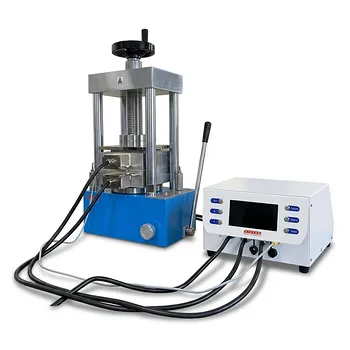
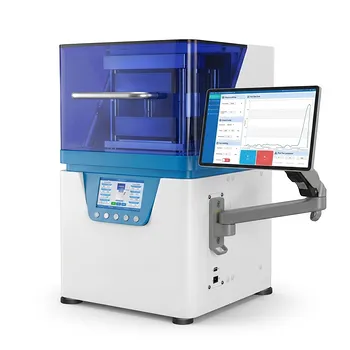
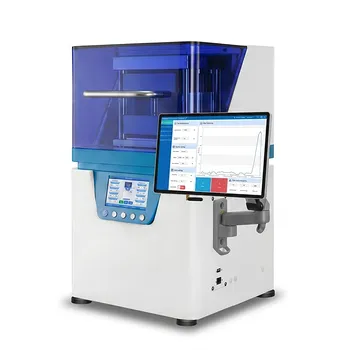
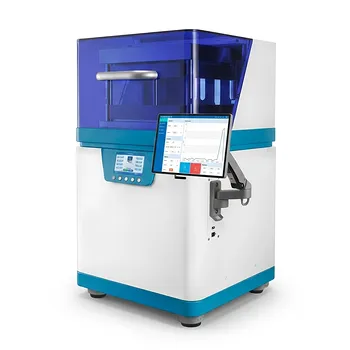
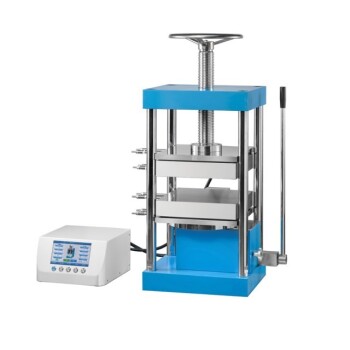
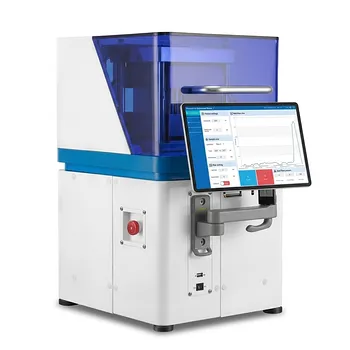
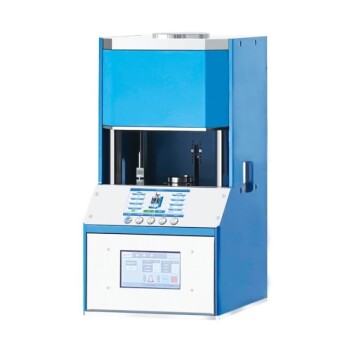
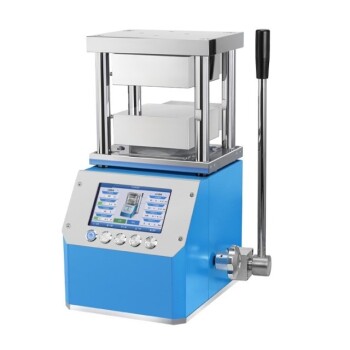
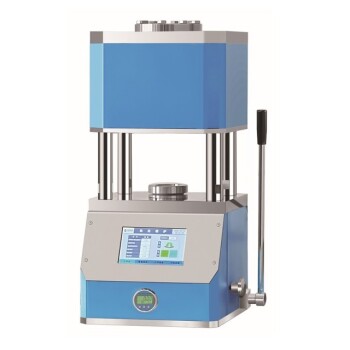
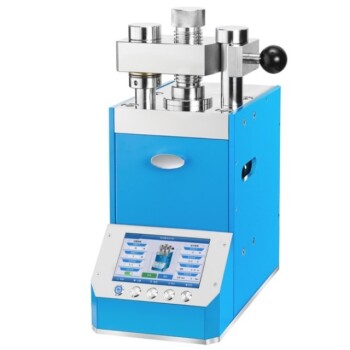
Precision and structural preservation are the primary drivers. Laboratory hydraulic hot presses are preferred for preparing composite test specimens because they maintain the integrity of reinforcements—such as natural fibers—and provide superior control over fiber orientation. This process ensures that mechanical test results are a true reflection of the material properties rather than a byproduct of processing-induced damage.
The Core Takeaway: While injection molding is efficient for mass production, a hydraulic hot press is essential for material characterization because it eliminates internal voids and prevents the fiber breakage caused by high-shear environments, ensuring high-density, repeatable, and accurate specimens.
Preserving Microstructural Integrity
Maintaining Fiber Aspect Ratio
Injection molding relies on high-shear screws to transport and inject material, which often breaks down reinforcements like bamboo powder or cellulose fibers. A hydraulic hot press uses static pressure to melt and form the composite, significantly better preserving the original fiber length integrity.
Minimizing Shear Stress
High shear during injection can lead to thermal degradation and mechanical shortening of fibers, which artificially lowers the measured strength of the composite. By using a controlled molding cycle, the hot press allows the polymer matrix to reach a viscous flow state without the destructive forces of a rotating screw.
Achieving Uniform Fiber Distribution
In a hot press, the material is compressed within a closed mold, which minimizes the extreme fiber orientation differences common in the flow patterns of injection molding. This results in more isotropic or specifically pre-oriented samples, which are critical for standardized mechanical testing.
Ensuring Specimen Density and Quality
Eliminating Internal Voids
The application of consistent, high pressure (often exceeding 8 MPa or 300 kN) effectively forces out trapped air and internal gases. This process eliminates micropores and internal bubbles that would otherwise act as stress concentrators during tensile or impact testing.
Improving Material Densification
Synchronized heat and pressure promote better wetting of the fibers by the resin, ensuring a tight bond between the matrix and the reinforcement. This high-pressure environment results in a denser microstructure and a smoother surface finish than additive manufacturing or low-pressure molding.
Thermal and Dimensional Stability
Integrated heating and cooling systems allow for precise control over the curing and solidification phases. Rapid, controlled cooling locks the microstructure in place and reduces internal stresses, preventing the finished test plates from deforming or warping.
Understanding the Trade-offs
Scalability and Speed
The primary disadvantage of the hydraulic hot press is its low throughput; it is a batch process that requires manual labor for mold loading and unloading. Unlike injection molding, which can produce parts in seconds, a hot-pressing cycle can take several minutes to ensure proper melting and cooling.
Geometric Limitations
Hot pressing is generally limited to simple geometries, such as flat plates or thin films (e.g., 0.3mm to 2mm thickness). It lacks the capability of injection molding to create complex, three-dimensional parts with intricate internal features or varying wall thicknesses.
Material Waste
While precise, hot pressing often requires "flash" or excess material to ensure the mold is completely filled, which can lead to higher material waste per specimen. However, for laboratory-scale research, this cost is usually outweighed by the need for high-quality data.
How to Apply This to Your Project
Making the Right Choice for Your Goal
Choosing between a hot press and injection molding depends on whether your priority is the integrity of the data or the speed of the manufacturing process.
- If your primary focus is material R&D or characterization: Use a laboratory hydraulic hot press to ensure high density, fiber length preservation, and repeatable mechanical data.
- If your primary focus is simulating mass-market production: Use injection molding to understand how high-shear processing and complex flow patterns will affect the final product's performance.
- If your primary focus is testing natural fiber reinforcements: Prioritize the hot press to avoid the significant fiber breakage and degradation that occurs in injection molding screws.
Ultimately, the laboratory hydraulic hot press remains the definitive tool for researchers who require standardized, defect-free specimens that accurately represent the potential of a composite material.
Summary Table:
| Feature | Laboratory Hot Press | Injection Molding |
|---|---|---|
| Fiber Integrity | Excellent (Static pressure preserves length) | Poor (High shear breaks fibers) |
| Specimen Density | High (Eliminates voids & gases) | Moderate (Risk of internal bubbles) |
| Material Flow | Minimal shear stress | High shear flow patterns |
| Primary Goal | Material Characterization & R&D | Mass Production & Scalability |
| Geometry | Simple plates and thin films | Complex 3D shapes |
| Data Accuracy | High (Repeatable, true properties) | Variable (Processing artifacts) |
Maximize Your Material Research with KINTEK Precision
Don't let processing damage compromise your laboratory results. KINTEK specializes in comprehensive laboratory pressing solutions tailored for advanced research. Whether you are developing next-generation composites or conducting battery research, our range of manual, automatic, heated, and multifunctional hot presses—including glovebox-compatible and isostatic models—ensures your specimens are high-density, defect-free, and truly representative of your material's potential.
Ready to upgrade your specimen preparation? Contact an Expert at KINTEK Today
References
- Fangbing Yu, Wenbin Yang. BAMBOO FLOUR/PETG COMPOSITES: COMPATIBILIZING EFFECT OF POLY(METHYL METHACRYLATE) GRAFTED ONTO BAMBOO FLOUR. DOI: 10.35812/cellulosechemtechnol.2019.53.16
This article is also based on technical information from Kintek Solution Knowledge Base .
Related Products
- 24T 30T 60T Heated Hydraulic Lab Press Machine with Hot Plates for Laboratory
- Automatic Large Format Laboratory Heated Hydraulic Press 400x400mm Plate Capacity
- Automatic Heated Hydraulic Lab Press 120x120mm Plate Fully Automated Material Research Press
- Automatic Heated Hydraulic Press Machine with Hot Plates for Laboratory
- Automatic Hydraulic Hot Press with Large Plate and Precision Temperature Control for Advanced Material Sample Preparation and Industrial Research
People Also Ask
- Function of a Laboratory Hydraulic Press with Heated Platens in SSE? Enhance Battery Density & Conductivity
- Why is a laboratory hydraulic press with heating plates required for PLA/TEC films? Achieve Precise Sample Integrity
- What role does a laboratory heated hydraulic press play in LTCC? Essential for High-Density Ceramic Lamination
- Why reduce load when applying composite strengthening tabs? Protect Specimen Integrity and Data Accuracy
- What role does a laboratory heated hydraulic press play in PI/PA based SPE membranes? Optimize Solid Battery Performance