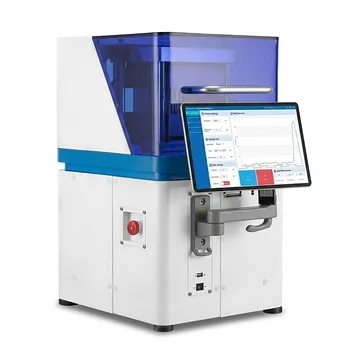
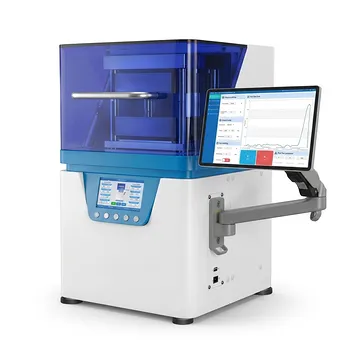
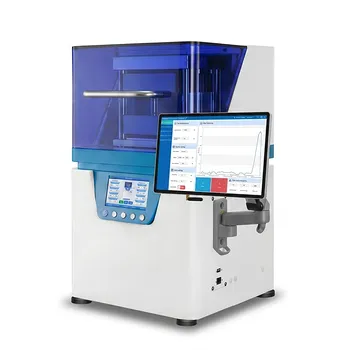
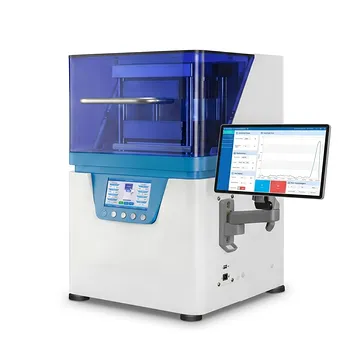
High-precision laboratory hydraulic forming systems act as the bridge between theoretical material modeling and industrial-scale production. These systems support parameter optimization by providing a highly stable mechanical environment that allows researchers to precisely control and manipulate variables like punch speed, blank holder force, and thermal gradients to define the ideal process window for high-strength materials.
Core Takeaway: By enabling the exact replication of complex forming cycles, laboratory hydraulic systems allow for the validation of numerical simulations and the identification of critical thresholds for pressure and temperature, preventing defects before they occur in full-scale manufacturing.
Validating Numerical Models and Process Windows
Precision Control of Mechanical Variables
These laboratory systems provide an ultra-stable platform for simulating deep drawing and pneumatic forming cycles. By offering exact control over punch speed and blank holder force, they allow engineers to isolate individual variables and observe their direct impact on the forming process.
Eliminating Macroscopic Defects
Optimizing the process window is essential for high-strength materials that are prone to failure under sub-optimal conditions. Laboratory presses ensure that researchers can identify the specific parameters required to form complex geometries without macroscopic defects such as tearing or wrinkling.
Validation of Predictive Simulations
High-precision systems serve as the ultimate testing ground for numerical simulations. By comparing real-world experimental data with digital models, engineers can refine their algorithms to better predict material behavior under hybrid hot forming conditions.
Controlling Microstructure and Material Integrity
Managing Dynamic Recrystallization
In advanced materials like high-strength steel, the degree of deformation—often measured as true strain—is critical. Laboratory systems allow for precise strain control (e.g., true strain of 0.6 or higher) to ensure complete dynamic recrystallization, which is vital for fine-grain strengthening.
Preventing Abnormal Grain Growth
Without the precise process guidance provided by laboratory testing, industrial production risks performance degradation. Precise controls help researchers avoid abnormal grain growth, ensuring the finished part maintains its intended mechanical properties and durability.
Ensuring Internal Structural Uniformity
For composite materials and catalysts, these systems ensure the uniformity of the internal material structure. Precise compaction to specific densities is necessary to achieve highly repeatable test results regarding thermal conductivity and mechanical strength, which are critical for high-pressure operating environments.
Synchronizing Thermal and Pressure Parameters
Balancing Density and Structural Integrity
In processes involving ceramics or granulated powders, identifying the ideal forming pressure is a delicate balance. High-precision presses can identify the specific range (for instance, 100–150 MPa) that maximizes green body density while avoiding overpressure defects like diagonal cracks or delamination.
Synchronized Temperature and Pressure Cycles
Hybrid hot forming requires the simultaneous management of heat and mechanical force. Synchronized control allows for the rapid curing of resins and ensures tight mechanical interlocking between material layers, which eliminates internal density inconsistencies and prevents interlayer cracking.
Determining Critical Pressure Thresholds
High-precision electromechanical systems provide exact pressure control across a wide range (often 10 MPa to 500 MPa). This capability is essential for identifying the thin line between achieving a high-performance bond and causing structural failure due to excessive axial pressure.
Understanding the Trade-offs and Pitfalls
Scalability Limits of Laboratory Data
While laboratory systems provide extreme precision, there is often a "scale-up" gap when moving to industrial equipment. Parameters optimized in a controlled, low-volume environment may require adjustment to account for the thermal inertia and mechanical tolerances of larger industrial presses.
The Risk of Over-Optimization
Focusing too narrowly on a specific process window in the lab can lead to a "brittle" manufacturing process. If the optimized window is too small, minor fluctuations in material quality or ambient temperature in a factory setting can lead to high scrap rates.
Equipment Complexity and Maintenance
The high degree of precision required for these systems introduces significant maintenance overhead. Sensors and hydraulic actuators must be frequently calibrated to ensure that the data being used for simulation validation remains accurate and reliable.
How to Apply Laboratory Insights to Production
To successfully transition from laboratory optimization to industrial application, consider your specific production goals:
- If your primary focus is Grain Refinement: Use laboratory simulations to identify the exact true strain and temperature thresholds required to spark dynamic recrystallization and prevent grain growth.
- If your primary focus is Defect Reduction: Conduct a series of tests across a wide pressure range to identify the "overpressure" threshold where macroscopic defects like delamination or cracking begin to appear.
- If your primary focus is Composite Durability: Prioritize the synchronization of heating rates and pressure application to ensure total resin curing and mechanical layer interlocking.
- If your primary focus is Simulation Accuracy: Use the high-precision data from the laboratory system to "tune" your finite element analysis (FEA) models, ensuring they reflect real-world material behavior.
Empowering your process with precise laboratory data ensures that your industrial production is built on a foundation of validated physical principles rather than trial and error.
Summary Table:
| Parameter Optimized | Key Benefit | Laboratory Capability |
|---|---|---|
| Mechanical Variables | Prevents tearing & wrinkling | Precision control of punch speed & holder force |
| Microstructure | Ensures fine-grain strengthening | Precise strain control for dynamic recrystallization |
| Thermal & Pressure | Eliminates interlayer cracking | Synchronized cycles for resin curing & interlocking |
| Simulation Data | Refines FEA algorithms | High-accuracy validation of numerical models |
Elevate Your Material Research with KINTEK Precision
Transition seamlessly from theoretical modeling to industrial production with KINTEK’s comprehensive laboratory pressing solutions. We specialize in providing the high-precision tools necessary for advanced battery research and material science, including:
- Manual & Automatic Presses for versatile lab use.
- Heated & Multifunctional Models for synchronized thermal processing.
- Glovebox-Compatible Systems for sensitive environments.
- Cold & Warm Isostatic Presses for superior density uniformity.
Don't leave your process optimization to trial and error. Contact KINTEK today to discover how our expert solutions can help you identify critical pressure thresholds and achieve flawless material integrity.
References
- N K Baru. A novel hybrid hot forming process concept for high strength aluminum alloys. DOI: 10.21741/9781644903551-17
This article is also based on technical information from Kintek Solution Knowledge Base .
Related Products
- Automatic Laboratory Hydraulic Press for XRF and KBR Pellet Pressing
- Automatic Laboratory Hydraulic Press Lab Pellet Press Machine
- Laboratory Split Manual Heated Hydraulic Press Machine with Hot Plates
- Automatic Heated Hydraulic Press Machine with Hot Plates for Laboratory
- Laboratory Hydraulic Press Lab Pellet Press Machine for Glove Box
People Also Ask
- Why is pressing powder into a pellet critical before sintering? Ensure Dense, Conductive Solid-State Electrolytes
- What is the role of a laboratory pressure machine and KBr in FTIR? Master Sample Preparation for Flame Retardants
- What are the advantages of using a laboratory automatic hydraulic press for HEA green compact forming?
- What are the advantages of using a lab automatic hydraulic press for HEA green body molding? Ensure Material Integrity
- Why are high-precision automatic hydraulic presses required for Martian ISRU? Ensure Reliable Regolith Forming