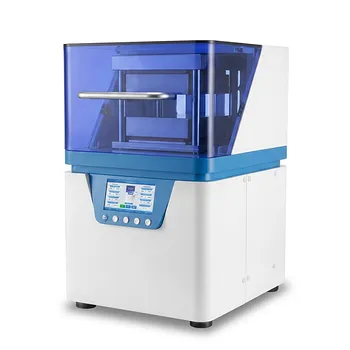
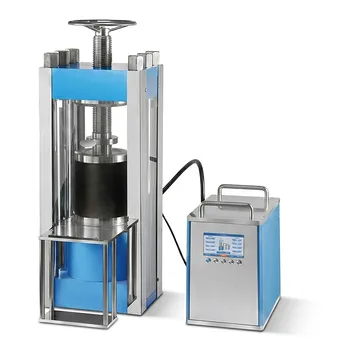
Vacuum hot pressing (VHP) equipment is the essential mechanism for embedding conductive fillers into self-healing matrices. By applying uniform heat and pressure in a void-free environment, VHP enables the creation of composite materials that repair themselves both mechanically and electrically. This process ensures the structural integrity and reliable conductivity required for high-performance flexible electronics.
Core Takeaway: Vacuum hot pressing technology eliminates internal defects to create a seamless bond between conductive networks and polymer substrates. This synergy allows flexible devices to recover their full functionality after mechanical damage by ensuring both structural strength and electrical pathways are rapidly restored.
The Role of Controlled Environments in Material Consolidation
Eliminating Voids and Internal Air Bubbles
The vacuum environment is critical for removing trapped air that naturally occurs during the mixing of conductive fillers and polymer resins. Eliminating these internal air bubbles prevents the formation of "voids," which can act as weak points or electrical insulators.
A void-free structure ensures that the material remains homogeneous, which is vital for the predictable performance of flexible electronics. Without a vacuum, trapped gas would expand during heating, potentially causing delamination or structural failure under mechanical stress.
Promoting High-Density Interfacial Bonding
VHP uses precise heat and pressure to force the conductive fillers, such as carbon nanotubes or graphene, into intimate contact with the self-healing polymer matrix. This pressure ensures that the fillers are not just sitting in the polymer, but are tightly integrated into the molecular structure.
This high-density bonding is what allows the "self-healing" mechanism to bridge gaps effectively. When the material is damaged, the tight integration ensures the matrix can pull the conductive elements back into alignment.
Achieving Structural and Electrical Recovery
Maintaining Mechanical Strength
Flexible electronics are subject to constant bending, stretching, and occasional tearing. The VHP process ensures that the composite material can recover its structural strength after such mechanical damage.
By sintering or consolidating the material under pressure, VHP creates a robust framework that supports the self-healing chemistry. This allows the polymer chains to reconnect across a fracture site without losing the overall shape or durability of the device.
Reconstructing Conductive Pathways
The primary goal of the conductive network is to maintain an electrical flow. VHP facilitates the creation of a percolating network, where conductive particles are positioned close enough to allow electron transport.
When a device is cut or cracked, the integrated network created by VHP allows for the rapid reconstruction of electrical pathways. Because the fillers are perfectly distributed and bonded, they can snap back into contact as the self-healing matrix closes the wound.
Understanding the Trade-offs
Temperature Sensitivity of Polymer Matrices
While VHP is highly effective, the technician must carefully balance the heat application. Excessive heat can degrade the self-healing polymers, effectively "cooking" the matrix and destroying its ability to reform chemical bonds after damage.
If the temperature is too low, however, the material will not reach the necessary state of plasticity to eliminate voids. This requires a narrow thermal window that is specific to the polymer chemistry being used.
Filler Distribution vs. Agglomeration
High pressure is necessary for bonding, but it can also lead to filler agglomeration. If carbon nanotubes or graphene clumps together, the material will have "hot spots" of high conductivity and "dead zones" where no electricity flows.
Achieving a uniform conductive network requires a precise pressure ramp-up. Incorrect pressure settings can ruin the transparency or the high-resolution sensing capabilities of the flexible device.
Strategic Implementation for Flexible Electronics
To successfully integrate conductive networks into self-healing substrates, you must align your equipment settings with your specific material requirements.
- If your primary focus is maximim conductivity: Prioritize higher pressure phases to ensure maximum contact between fillers, while maintaining a strict vacuum to prevent oxidation of the conductive elements.
- If your primary focus is mechanical self-healing speed: Use lower, more sustained heat cycles to preserve the integrity of the polymer's dynamic covalent bonds, ensuring the matrix remains chemically active.
- If your primary focus is device transparency: Focus on the vacuum duration to ensure every micro-bubble is removed, as even tiny voids can scatter light and reduce optical clarity.
By mastering the variables of vacuum hot pressing, engineers can produce flexible electronics that are not only durable but capable of full autonomous recovery from physical failure.
Summary Table:
| Feature | Function in Flexible Electronics | Key Outcome |
|---|---|---|
| Vacuum Environment | Removes trapped air and internal bubbles | Void-free, homogeneous structure |
| Controlled Pressure | Forces fillers into interfacial bonding | High-density conductive integration |
| Thermal Precision | Consolidates matrix without degradation | Preserved self-healing chemistry |
| Network Formation | Creates percolating conductive paths | Rapid electrical recovery post-damage |
Elevate Your Material Research with KINTEK Precision
Unlock the full potential of self-healing electronics with our advanced vacuum hot pressing technology. KINTEK specializes in comprehensive laboratory pressing solutions designed to eliminate defects and ensure perfect conductive integration.
Whether you need manual, automatic, heated, or multifunctional models—including specialized cold and warm isostatic presses—we provide the tools necessary for groundbreaking battery and flexible electronics research.
Ready to optimize your fabrication process? Contact us today to find the perfect solution for your lab!
References
- Mahesh Yadlapati. Self-Healing Materials: A Breakthrough in Material Science. DOI: 10.37745/ejcsit.2013/vol13n125261
This article is also based on technical information from Kintek Solution Knowledge Base .
Related Products
- Heated Hydraulic Press Machine with Heated Plates for Vacuum Box Laboratory Hot Press
- Heated Hydraulic Press Machine With Heated Plates For Vacuum Box Laboratory Hot Press
- Automatic Hydraulic Hot Press with Large Plate and Precision Temperature Control for Advanced Material Sample Preparation and Industrial Research
- Automatic Hydraulic Heat Press Machine with Multi Stage Programmable Control and Integrated Water Cooling Plate Size 180x180mm
- Automatic High Temperature Heated Hydraulic Press Machine with Heated Plates for Lab
People Also Ask
- What are the requirements for electrode pressing with high-viscosity ionic liquids like EMIM TFSI? Optimize Performance
- How does a laboratory heated hydraulic press facilitate PBN sample prep for WAXS? Achieve Precise X-Ray Scattering
- What are the industrial applications of heated hydraulic presses? Master Heat & Force for Precision Manufacturing
- Function of a Laboratory Hydraulic Press with Heated Platens in SSE? Enhance Battery Density & Conductivity
- How are heated hydraulic presses utilized in the preparation of thin films? Key Mechanisms and Applications