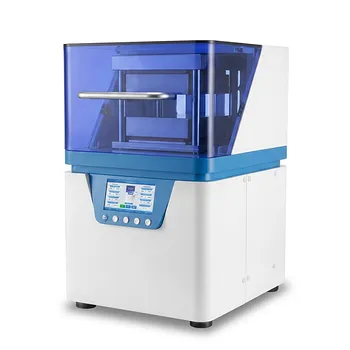
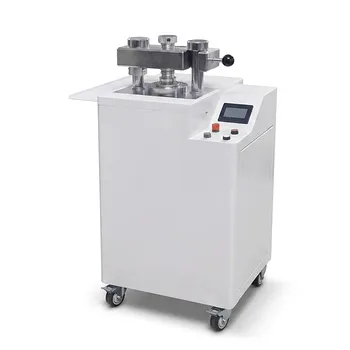
The electric heating hydraulic press serves as the critical catalyst and shaping force that transforms raw EPDM and XLPE into high-performance insulation. By simultaneously applying a precisely controlled temperature (typically 175°C) and stable high pressure (up to 20 MPa), the press facilitates the chemical cross-linking of polymer chains while eliminating internal voids. This dual-action process is fundamental to achieving the dielectric uniformity and mechanical strength required for high-voltage applications.
To produce reliable EPDM and XLPE insulation, an electric heating hydraulic press is indispensable because it synchronizes thermal energy for chemical curing with mechanical force for structural density. This ensures the material transitions from a thermoplastic state to a stable, defect-free thermoset elastomer.
The Role of Thermal Energy in Chemical Transformation
In the production of insulation materials, temperature is the primary driver of the curing reaction. The electric heating elements within the press maintain a constant environment to trigger the necessary molecular changes.
Inducing Molecular Cross-linking
The press provides the specific heat required—often around 175°C—to initiate the cross-linking curing reaction. For materials like XLPE and EPDM, this thermal energy allows polymer molecular chains to rearrange and bond into a dense, three-dimensional network.
Facilitating Material Flow
Before the material fully cures, high temperatures reduce its viscosity, allowing it to reach a plasticized state. This ensures the polymer flows effectively into every corner of the mold cavity, ensuring the final specimen precisely matches the required dimensions.
Transforming Material Properties
Through the application of heat over a specific duration (typically a 15-minute cycle), the press transforms the material from a thermoplastic state into a thermoset elastomer. This change is permanent and provides the thermal stability needed for high-voltage environments.
The Role of High Pressure in Structural Integrity
Thermal energy alone cannot produce high-quality insulation; stable mechanical pressure is required to ensure the material is physically sound and free of "weak spots."
Elimination of Internal Voids and Pores
High pressure, often reaching 20 MPa, is essential for forcing out trapped air and reaction volatiles. By eliminating internal pores, the press prevents the formation of defects that could lead to electrical discharge or mechanical failure in the field.
Ensuring Uniform Density
The application of constant pressure during the "pressure-holding" phase ensures that the polymer chains are compressed into a uniform density. This leads to dielectric uniformity, which is critical for consistent insulation performance across the entire surface of the material.
Achieving Dimensional Stability
The hydraulic system maintains a tight bond between the material and the mold, preventing curing shrinkage. This results in finished specimens with smooth surfaces and precise geometric dimensions that meet strict engineering standards.
Understanding the Trade-offs and Pitfalls
While the electric heating hydraulic press is essential, the process involves delicate balances that can lead to material failure if not managed correctly.
Precise Timing vs. Over-Curing
Maintaining the "pressure-holding" state for too long can lead to over-curing, which may cause the material to become brittle. Conversely, a cycle shorter than 15 minutes may result in incomplete cross-linking, compromising the insulation's mechanical strength.
Temperature Fluctuations
Inconsistent heating across the press plates can create "cold spots" where the vulcanization reaction is incomplete. This results in non-homogeneous specimens where one section of the insulation may fail under stress while others remain intact.
Pressure Management and Volatiles
If pressure is applied too late in the heating cycle, volatiles may already be trapped within the hardening matrix. While vacuum-integrated systems can mitigate this, standard hydraulic presses require precise synchronization between the plasticizing stage and the high-pressure stage.
How to Apply This to Your Project
The specific parameters you choose for your hydraulic press operation should be dictated by the end-use of the EPDM or XLPE material.
- If your primary focus is High-Voltage Dielectric Testing: Prioritize a press with an integrated vacuum system and stable 20 MPa pressure to ensure the absolute removal of internal pores.
- If your primary focus is Mechanical Durability Research: Focus on precise temperature control (±1°C) at 175°C to ensure a fully matured, dense cross-linked molecular network.
- If your primary focus is Rapid Prototyping: Utilize a two-stage heating process to first plasticize the material at lower temperatures before applying peak curing heat to ensure complete mold wetting.
By mastering the intersection of thermal catalysts and mechanical compression, you ensure that EPDM and XLPE materials achieve the uncompromising standards required for modern electrical insulation.
Summary Table:
| Function | Key Parameters | Role in Material Transformation |
|---|---|---|
| Thermal Energy | ~175°C Control | Triggers molecular cross-linking and ensures material flow. |
| High Pressure | ~20 MPa Force | Eliminates internal voids and ensures uniform dielectric density. |
| Timing Cycle | ~15 Minute Hold | Facilitates complete transformation from thermoplastic to thermoset. |
| Mechanical Force | Constant Pressure | Prevents curing shrinkage and ensures dimensional stability. |
Optimize Your Material Research with KINTEK Precision Presses
Elevate your insulation and battery research with KINTEK’s comprehensive laboratory pressing solutions. From manual and automatic models to advanced heated and glovebox-compatible systems, our equipment provides the precise thermal and mechanical control required for flawless EPDM and XLPE molding. Whether you are performing high-voltage dielectric testing or mechanical durability studies, our experts are ready to help you find the ideal cold or warm isostatic press for your application.
Contact KINTEK today to enhance your lab's efficiency!
References
- Dong Li, Yili Ma. Research on Nonlinear EPDM for ±525kV HVDC Cable Accessories. DOI: 10.1051/matecconf/201926002001
This article is also based on technical information from Kintek Solution Knowledge Base .
Related Products
- Automatic Heated Hydraulic Press Machine with Heated Plates for Laboratory
- Automatic Hydraulic Heat Press Machine with Multi Stage Programmable Control and Integrated Water Cooling Plate Size 180x180mm
- Automatic Heated Hydraulic Press Machine with Hot Plates for Laboratory
- Automatic High Temperature Heated Hydraulic Press Machine with Heated Plates for Lab
- Automatic Hydraulic Hot Press with Large Plate and Precision Temperature Control for Advanced Material Sample Preparation and Industrial Research
People Also Ask
- Function of a Laboratory Hydraulic Press with Heated Platens in SSE? Enhance Battery Density & Conductivity
- Why is a laboratory hydraulic press with heating plates required for PLA/TEC films? Achieve Precise Sample Integrity
- What is the function of a manual heated press for PLA 2D scaffolds? Achieve Precise Material Densification
- How does a laboratory heated hydraulic press facilitate PBN sample prep for WAXS? Achieve Precise X-Ray Scattering
- What are the requirements for electrode pressing with high-viscosity ionic liquids like EMIM TFSI? Optimize Performance