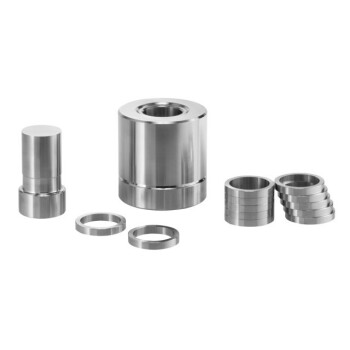
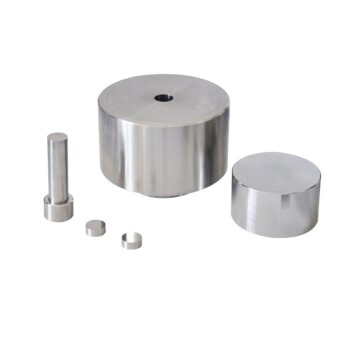
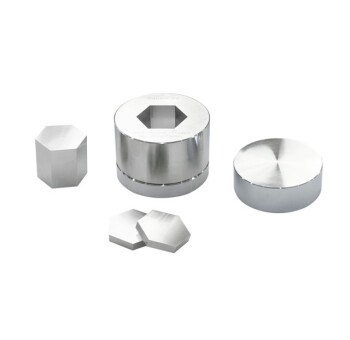
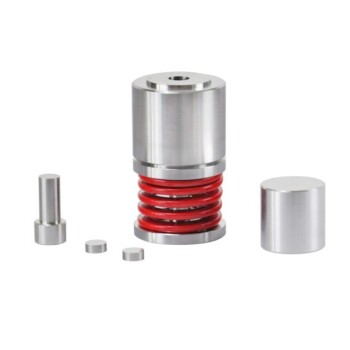
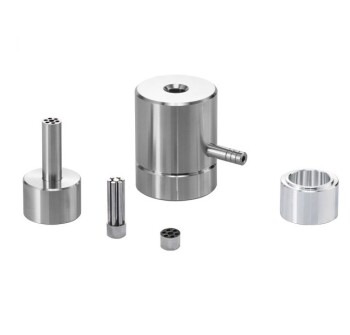
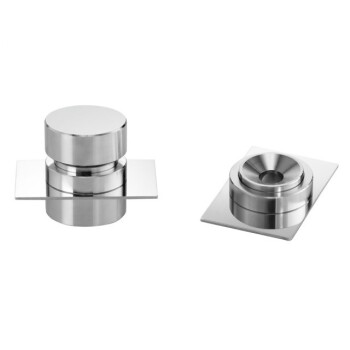
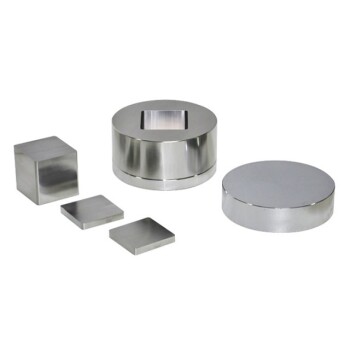
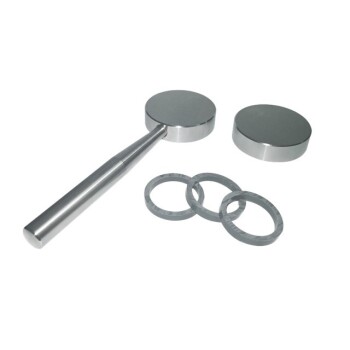
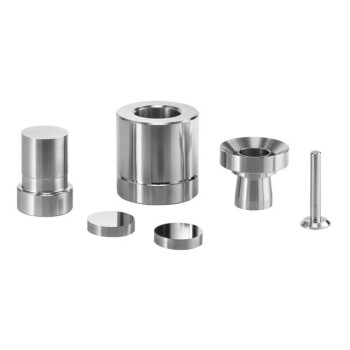
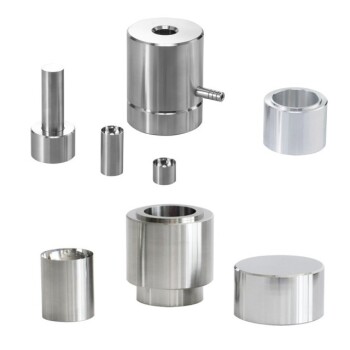
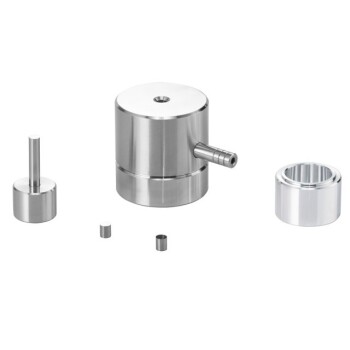
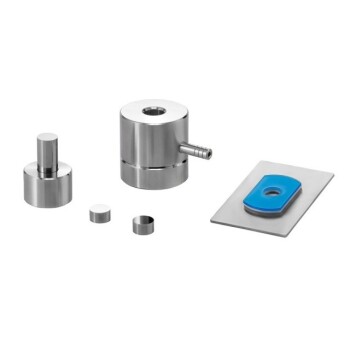
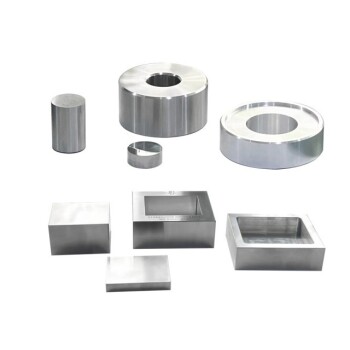
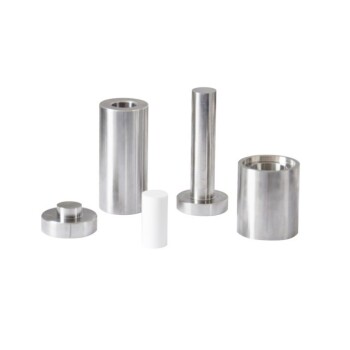
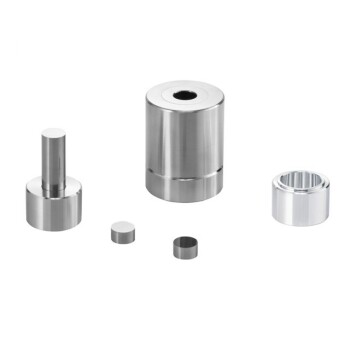
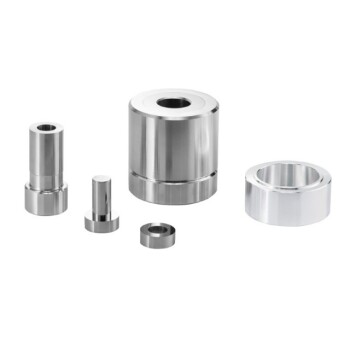
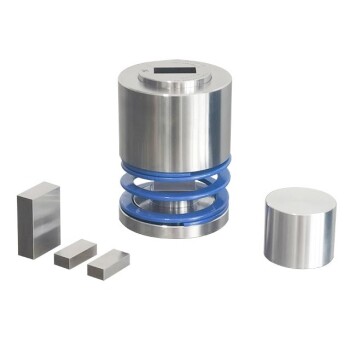
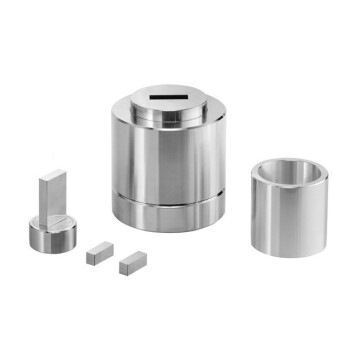
High-strength stainless steel molds serve as the critical foundation for geopolymer foam production by providing chemical resilience and structural precision. These molds offer superior dimensional stability and corrosion resistance, allowing them to withstand the highly alkaline environment inherent to geopolymer chemistry. By providing smooth internal surfaces, they ensure easy demolding after curing and produce samples with exact geometric dimensions and high-quality surface finishes.
High-strength stainless steel molds are selected for their dual ability to resist chemical degradation from alkaline geopolymers and physical deformation under high pressure. This combination ensures that the molded foam maintains precise specifications while minimizing material waste and surface defects.
Resilience in Harsh Chemical and Physical Environments
Resistance to Highly Alkaline Environments
Geopolymer foams are characterized by their high alkalinity, which can be corrosive to standard molding materials. High-strength stainless steel is specifically chosen for its excellent corrosion resistance, ensuring the mold does not degrade or react with the specimen during the curing process.
Dimensional Stability Under Pressure
During the molding stage, materials often undergo significant pressure to ensure proper densification and shaping. These molds exhibit high hardness and resistance to plastic deformation, maintaining consistent dimensions even when subjected to extreme forces reaching hundreds of Megapascals (MPa).
Durability During Room-Temperature Curing
The 24-hour room-temperature curing period requires a mold that remains stable over time without warping. Stainless steel provides the necessary confinement and shaping, ensuring the foam sets into its intended form without deviation from the design parameters.
Precision Engineering and Surface Quality
Facilitating Effortless Demolding
The smooth internal surfaces of stainless steel molds are vital for the successful removal of the cured geopolymer. This smoothness facilitates easy demolding, which protects the integrity of the specimen and prevents the foam from sticking to the walls.
Preventing Surface Micro-Cracks
High-strength dies reduce friction during the ejection of the sample, which is critical for maintaining structural integrity. By minimizing this friction, the mold prevents the formation of surface micro-cracks, ensuring uniform contact and experimental reproducibility.
Achieving Precise Geometric Dimensions
The rigid nature of high-strength steel ensures that the final test samples possess precise geometric dimensions. This accuracy is essential for applications where the foam must fit into specific substrates or meet strict engineering tolerances.
Process Efficiency and Material Conservation
Direct Pressing to Final Specifications
Customized molds allow for the direct pressing of specimens to match specific requirements, such as a particular diameter or length. This capability enables the production of "green compacts" that correspond exactly to the thickness of their intended housing or substrate.
Elimination of Secondary Cutting
By molding the geopolymer directly to its final size, manufacturers eliminate the need for secondary cutting from larger bulk materials. This lack of post-processing significantly shortens the production cycle and reduces labor costs.
Minimizing Material Loss
Direct-to-size molding is a "near-net-shape" process that drastically minimizes material loss. This efficiency is particularly valuable when working with specialized or expensive geopolymer formulations where waste must be kept to a minimum.
Understanding the Trade-offs
High Initial Fabrication Costs
While stainless steel molds offer long-term durability, they require a higher initial investment compared to plastic or silicone alternatives. The precision machining required to achieve high-strength, smooth-walled dies adds to the upfront project cost.
Rigid Constraints on Shape Complexity
Stainless steel molds are typically best suited for cylindrical or simple geometric shapes due to the limitations of uni-axial pressing. Complex or highly intricate internal lattices may be difficult to achieve with rigid steel compared to flexible molding materials.
Maintenance and Cleaning Requirements
To maintain the "mirror-like" smooth surface necessary for easy demolding, these molds require meticulous cleaning after every cycle. Any buildup of alkaline residue can compromise the surface finish of subsequent samples and eventually lead to pitting if not managed.
How to Apply This to Your Project
When selecting a molding strategy for geopolymer foams, align your material choice with your primary production requirement.
- If your primary focus is Dimensional Precision: Utilize high-strength stainless steel to ensure your samples match exact substrate dimensions without the need for post-processing.
- If your primary focus is Chemical Longevity: Opt for stainless steel grades specifically rated for high alkalinity to prevent mold corrosion over repeated curing cycles.
- If your primary focus is Surface Integrity: Prioritize molds with polished internal walls to reduce friction during ejection and prevent the formation of micro-cracks.
Choosing high-strength stainless steel molds is a strategic decision that prioritizes long-term durability and geometric accuracy over low initial costs.
Summary Table:
| Advantage | Technical Benefit | Impact on Production |
|---|---|---|
| Chemical Resilience | Resists high alkalinity | Prevents mold degradation and specimen reaction |
| Dimensional Stability | High hardness (high MPa resistance) | Maintains exact specs without plastic deformation |
| Surface Precision | Polished, smooth internal walls | Facilitates easy demolding and prevents micro-cracks |
| Process Efficiency | Near-net-shape molding | Eliminates secondary cutting and minimizes waste |
Optimize Your Geopolymer Research with KINTEK Precision
Achieve flawless sample integrity and dimensional accuracy in your laboratory. KINTEK specializes in comprehensive laboratory pressing solutions designed for demanding applications in geopolymer and battery research.
Our range includes:
- Manual & Automatic Presses for reliable sample preparation.
- Heated & Multifunctional Models for precise environmental control.
- Glovebox-Compatible & Isostatic Presses (Cold/Warm) for specialized research needs.
Ready to eliminate secondary processing and reduce material waste? Contact KINTEK today to find the perfect molding and pressing solution for your project!
References
- BOGDAN-VALENTIN PAUNESCU, ENIKO VOLCEANOV. POROUS FLY ASH-BASED GEOPOLYMER USABLE AS AN UNCONVENTIONAL CONSTRUCTION MATERIAL. DOI: 10.29081/jesr.v29i3.006
This article is also based on technical information from Kintek Solution Knowledge Base .
Related Products
- XRF KBR Steel Ring Lab Powder Pellet Pressing Mold for FTIR
- Lab Anti-Cracking Press Mold
- Lab Polygon Press Mold
- Lab Round Bidirectional Press Mold
- Special Shape Lab Press Mold for Laboratory Applications
People Also Ask
- What considerations are important regarding the die size of an XRF pellet press? Optimize for Your XRF Spectrometer and Sample
- Why are pellets used in XRF analysis, and what is their limitation? Boost Accuracy and Speed in Your Lab
- What is the general process for preparing a sample pellet for XRF? Master Consistency for Accurate Analysis
- What are the differences between manual and automatic XRF pellet presses? Choose the Right Press for Your Lab's Needs
- What are the main methods for preparing XRF pellets? Boost Accuracy and Efficiency in Your Lab