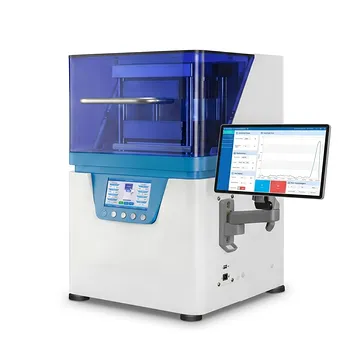
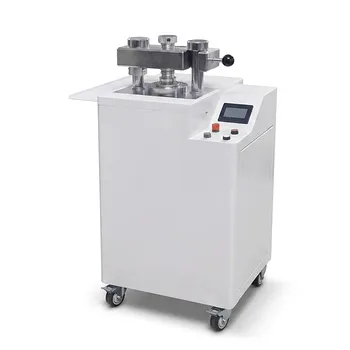
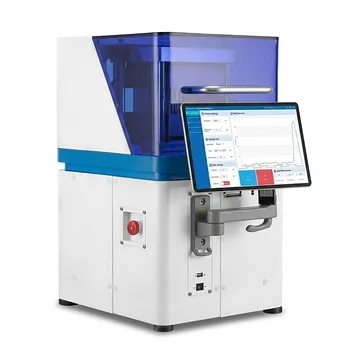
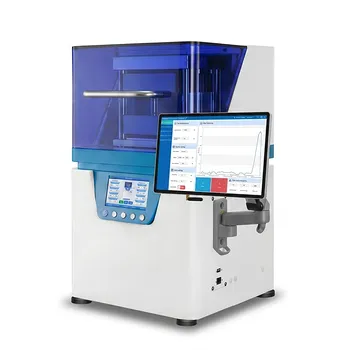
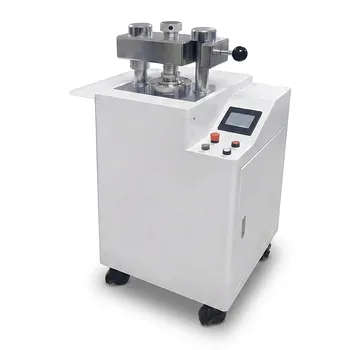
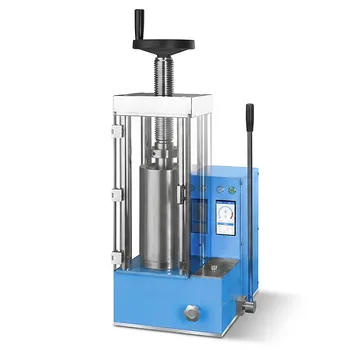
Precision in the laboratory press is the fundamental prerequisite for scientific validity in wood science. A high-precision automatic laboratory press is critical because it allows researchers to execute and repeat complex pressing programs, including specific temperature rise curves and pressure gradients, with absolute accuracy. By eliminating mechanical errors in closing and heating times, the equipment ensures that experimental data reflects the true potential of new formulations rather than preparation defects, providing a reliable foundation for industrial scale-up.
Core Takeaway: A high-precision automatic press removes mechanical variability from the R&D process, ensuring that the resulting physical properties of a particleboard—such as density, porosity, and strength—are a direct result of the material formulation rather than inconsistent processing.
Eliminating Mechanical Variability and Human Error
Precision in Complex Pressing Cycles
New formulations, particularly those involving recycled materials like waste plywood, require highly specific pressing programs. Automatic presses allow for the exact replication of temperature rise curves and pressure gradients that manual systems cannot achieve. This level of control is essential for identifying the precise moment of resin cure and fiber bonding.
Eliminating Timing and Closing Errors
Mechanical error in press closing and heating times can skew the results of an entire research project. High-precision automation ensures that every specimen is subjected to the exact same temporal conditions. This consistency allows researchers to isolate chemical variables without the "noise" of mechanical inconsistency.
Optimizing Physical and Structural Integrity
Eliminating Density Gradients and Micro-cracks
A uniform pressure environment is essential for preventing internal density gradients within the board. Precision control ensures a full rearrangement of particles, creating a high-density standard specimen. This process eliminates micro-cracks that would otherwise cause a specimen to fail prematurely during mechanical testing.
Accurate Thickness and Porosity Control
Using high-precision spacers and mechanical limits prevents the hydraulic system from over-compressing the mat. By accurately controlling the final thickness (e.g., to 16 mm), researchers can stabilize the internal porosity of the board. This stability is vital for optimizing physical properties like moisture resistance and internal bond strength.
Bridging the Gap to Industrial Production
Establishing Scalable Technical Parameters
The primary goal of R&D is to create a "recipe" that works on a factory floor. A high-precision lab press provides the reliable data foundation needed to set technical parameters for large-scale production. Without this precision, a formulation that works in the lab may fail in the factory due to a lack of understanding of its pressure tolerances.
Standardizing Samples for Characterization
Particleboards often undergo advanced characterization, such as X-ray Fluorescence (XRF) or mechanical stress tests. High-density specimens with smooth surfaces and consistent shapes are required for accurate signal-to-noise ratios in these tests. Precision pressing ensures that the intrinsic properties of the material are being measured, rather than surface irregularities.
Understanding the Trade-offs
While high-precision automatic presses are superior for data integrity, they come with a higher capital investment and require more rigorous maintenance. There is also a risk of "over-optimization," where a researcher creates a perfect specimen that is impossible to replicate in a less-controlled industrial environment. Furthermore, the complexity of the programming interfaces may require a steeper learning curve for lab personnel compared to simple manual hydraulic jacks.
How to Apply This to Your Project
Recommendations for Research Success
- If your primary focus is industrial scale-up: Use the press to document the exact pressure-holding times and temperature thresholds required to achieve target density, as these will be your primary constraints in a factory setting.
- If your primary focus is material innovation (e.g., new resins): Prioritize the elimination of internal density gradients by using programmed pressure gradients to ensure the resin distributes evenly before full cure.
- If your primary focus is comparative analysis of raw materials: Use automated cycles to ensure that every batch—regardless of the fiber source—is treated with identical mechanical force to isolate the performance of the fibers themselves.
By treating the laboratory press as a high-precision instrument rather than a simple tool, you ensure that your research is both repeatable and industrially relevant.
Summary Table:
| Key Feature | R&D Benefit | Impact on Results |
|---|---|---|
| Programmed Cycles | Precise temperature & pressure curves | Ensures scientific validity and repeatability |
| Timing Automation | Eliminates human & mechanical error | Isolates chemical variables from mechanical noise |
| Pressure Control | Prevents density gradients & cracks | Optimizes structural integrity and strength |
| Thickness Limits | Stabilizes internal porosity | Provides accurate data for industrial scale-up |
Optimize Your Material Research with KINTEK Precision
Achieve scientific validity and seamless industrial scale-up with KINTEK’s comprehensive laboratory pressing solutions. Whether you are developing new wood formulations or advancing battery research, our range of manual, automatic, heated, and multifunctional models—including glovebox-compatible and isostatic presses (CIP/WIP)—is engineered to eliminate mechanical variability.
Ready to enhance your lab's efficiency and data accuracy? Contact KINTEK Experts Today to find the perfect pressing solution tailored to your research requirements.
References
- Agnieszka Laskowska. Characteristics of the Pressing Process and Density Profile of MUPF-Bonded Particleboards Produced from Waste Plywood. DOI: 10.3390/ma17040850
This article is also based on technical information from Kintek Solution Knowledge Base .
Related Products
- Automatic Hydraulic Hot Press with Large Plate and Precision Temperature Control for Advanced Material Sample Preparation and Industrial Research
- Automatic Heated Hydraulic Lab Press with Programmable Touch Screen Controls and Precision Temperature Regulation
- Automatic Laboratory Hydraulic Press Lab Pellet Press Machine
- Automatic Laboratory Hydraulic Press for XRF and KBR Pellet Pressing
- Automatic XRF Pellet Press for Laboratory Spectrometry Sample Preparation
People Also Ask
- What are the specific features and applications of hydraulic hot press machines? Precision Solutions for Modern Labs
- How does an automatic hydraulic press operate? Achieve Precision and Consistency in Lab Pelleting
- What are the advantages and common applications of an automatic hydraulic press? Elevate Your Lab's Precision
- What is the technical significance of setting a precise dwell time? Achieve Peak Material Density and Stability
- When is an automatic hydraulic press more suitable than a manual press? Scale Your Lab with Precision & Speed