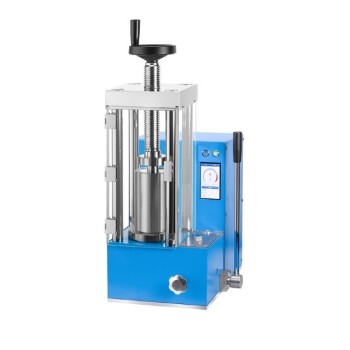
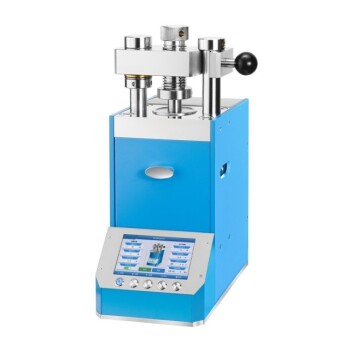
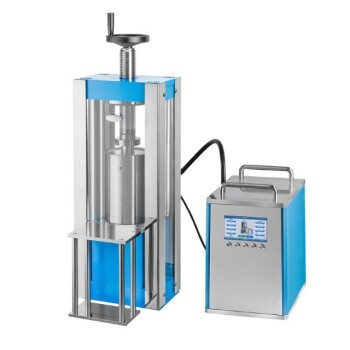
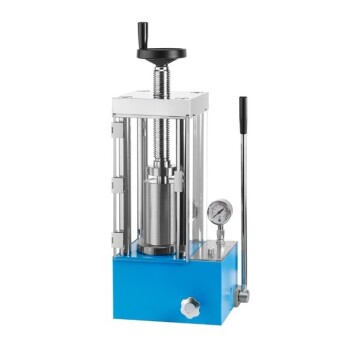
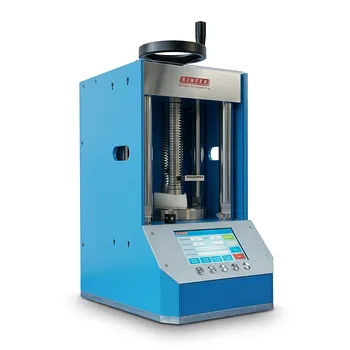
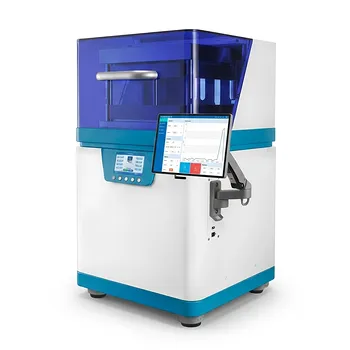
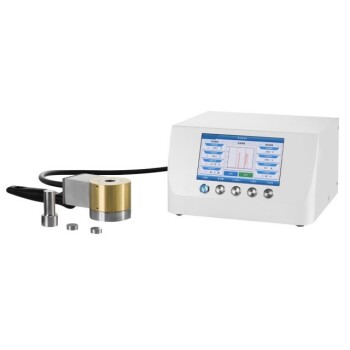
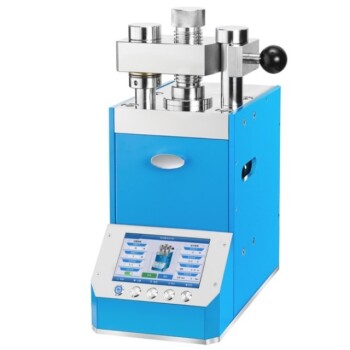
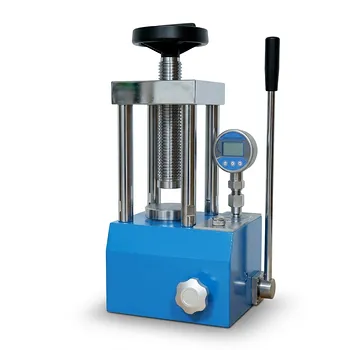
Precise pressure control is the fundamental requirement for transforming loose MONC(Li) powder into a high-performance solid-state electrolyte. In a laboratory cold press, applying a constant, specific pressure—typically around 10 MPa—ensures that micron-sized particles are tightly packed, effectively eliminating internal macroscopic voids and reducing inter-particle contact resistance. This level of control is essential for creating a homogeneous pellet with the mechanical strength necessary to yield accurate, repeatable ionic conductivity data.
Core Takeaway: Precise pressure regulation optimizes the internal microstructure of MONC(Li) pellets by maximizing densification and particle contact. Without this precision, internal defects and inconsistent density would lead to erroneous electrochemical measurements and structural failure during battery cycling.
Maximizing Ionic Conductivity Through Densification
Eliminating Internal Macroscopic Voids
At the microscopic level, electrolyte powders contain significant air gaps and pores that act as barriers to ion transport. Precise pressure control forces these micron-sized particles to rearrange and fill such gaps, effectively eliminating macroscopic voids that would otherwise impede performance.
Reducing Inter-Particle Contact Resistance
For lithium ions to move efficiently, there must be a continuous physical pathway through the material. A laboratory press induces plastic deformation and particle rearrangement, bonding particles tightly together to minimize interface resistance and create rapid migration channels.
Ensuring Accurate Test Data
A pellet that is not uniformly dense will produce "noisy" or inaccurate ionic conductivity results. High-precision pressure feedback ensures the resulting pellet is homogeneous, which is a critical prerequisite for characterizing the true bulk properties of the MONC(Li) material.
Ensuring Structural Integrity and Safety
Preventing Lithium Dendrite Penetration
One of the primary roles of a solid electrolyte is to act as a physical barrier. A dense, high-strength structure provided by precise pressing is essential for resisting lithium dendrites, which can grow through pores in the electrolyte and cause catastrophic battery short circuits.
Maintaining Minimal Thickness Without Cracking
Solid electrolyte layers must be as thin as possible to reduce ion transport resistance, yet they are inherently brittle. Precise pressure control allows researchers to achieve a high level of densification while maintaining a minimal, uniform thickness without inducing structural cracks.
Managing Local Stress Concentrations
Inconsistent pressure during fabrication creates density gradients within the pellet. These gradients lead to local stress concentrations during the charging and discharging cycles, which can cause the electrolyte to powder or crack over time.
Achieving Reproducibility and Interfacial Stability
Consistency Across Batch Fabrications
Scientific validity relies on repeatability. Automatic laboratory presses provide stable and repeatable pressure loads, ensuring that every MONC(Li) pellet produced has a highly consistent thickness and density for comparative study.
Optimizing the Electrode-Electrolyte Interface
When attaching anodes, such as lithium-indium alloys, precise pressure is required to form a stable, low-resistance interface. The press must be sensitive enough to ensure a tight bond with the soft metallic anode without crushing or damaging the hard, brittle ceramic electrolyte.
Understanding the Trade-offs
The Risk of Excessive Pressure
While high pressure increases density, exceeding the material's mechanical limits can lead to micro-fractures or total structural failure. For brittle ceramic electrolytes, "more" is not always better; specific thresholds (like the 10 MPa or 150 MPa benchmarks) must be strictly maintained.
The Consequences of Under-Pressuring
Insufficient pressure results in a "green" pellet that is fragile and porous. These pellets suffer from high interfacial resistance and low mechanical strength, making them unsuitable for practical battery applications or accurate laboratory analysis.
How to Apply This to Your Research
Effective pellet fabrication requires balancing material density with structural integrity through specific pressure parameters.
- If your primary focus is accurate ionic conductivity: Use a constant, precise pressure (e.g., 10 MPa) to ensure a homogeneous, void-free microstructure that reflects the material's true bulk properties.
- If your primary focus is preventing battery short circuits: Prioritize high-precision densification to create a robust physical barrier that inhibits the growth and penetration of lithium dendrites.
- If your primary focus is interfacial stability with anodes: Utilize a press with wide-ranging regulation to apply enough force for a stable bond without causing stress cracks in the brittle electrolyte layer.
By mastering precise pressure control, you ensure that MONC(Li) electrolyte pellets provide both the electrochemical performance and the mechanical reliability required for advanced battery research.
Summary Table:
| Key Requirement | Impact on MONC(Li) Pellet | Research Benefit |
|---|---|---|
| Densification | Eliminates macroscopic voids and air gaps | Maximizes lithium-ion migration rates |
| Particle Contact | Induces plastic deformation and bonding | Minimizes inter-particle interface resistance |
| Structural Strength | Creates a dense, robust physical barrier | Prevents short circuits from lithium dendrites |
| Precision Control | Ensures uniform thickness and no micro-cracks | Yields accurate, repeatable ionic conductivity data |
| Interface Stability | Optimizes electrode-electrolyte bonding | Enhances electrochemical stability during cycling |
Elevate Your Battery Research with KINTEK Precision
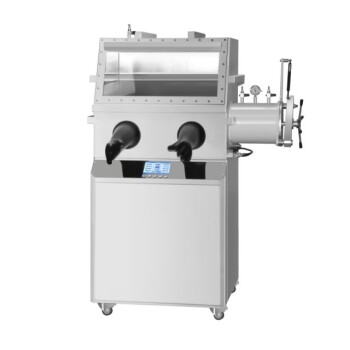
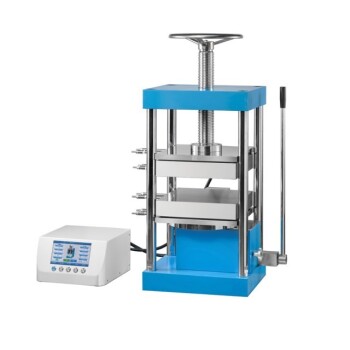
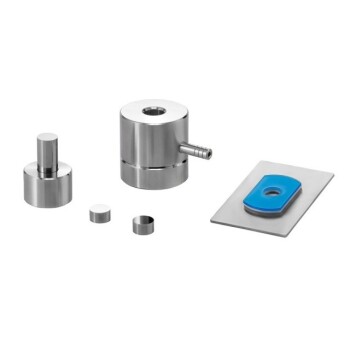
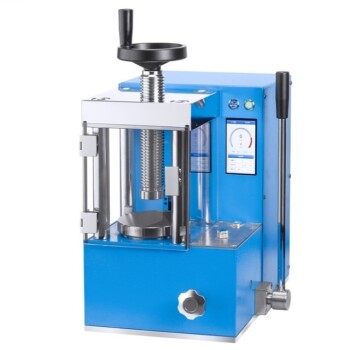
Precision is the backbone of high-performance electrolyte development. KINTEK specializes in comprehensive laboratory pressing solutions tailored for advanced material science. Our range includes manual, automatic, heated, multifunctional, and glovebox-compatible models, as well as cold and warm isostatic presses specifically designed to meet the rigorous demands of battery research.
Whether you need to eliminate internal voids in MONC(Li) powders or ensure stable interfacial contact with metallic anodes, KINTEK provides the repeatable, high-precision force your project requires.
Contact KINTEK today to find your ideal pressing solution and achieve the structural integrity your research deserves!
References
- Xinyue Ma, Ji‐Jing Xu. Molecular Design of Polymeric Metal–Organic Nanocapsule Networks for Solid‐State Lithium Batteries. DOI: 10.1002/anie.202504767
This article is also based on technical information from Kintek Solution Knowledge Base .
Related Products
- Electric Lab Cold Isostatic Press CIP Machine
- Automatic Lab Cold Isostatic Pressing CIP Machine
- Electric Split Lab Cold Isostatic Pressing CIP Machine
- Manual Cold Isostatic Pressing CIP Machine Pellet Press
- Laboratory Hydraulic Press Lab Pellet Press Machine for Glove Box
People Also Ask
- What are the applications of electric lab cold isostatic presses in research settings? Advance Material R&D with High-Pressure CIPs
- What role do electric lab cold isostatic presses play in industrial contexts? Bridge R&D and Manufacturing with Precision
- How does electrical Cold Isostatic Pressing (CIP) contribute to cost savings? Unlock Efficiency and Reduce Expenses
- What are some research applications of electric lab CIPs? Unlock Uniform Powder Densification for Advanced Materials
- What are the characteristics of standard off-the-shelf electric lab CIP solutions? Achieve Immediate, Cost-Effective Processing