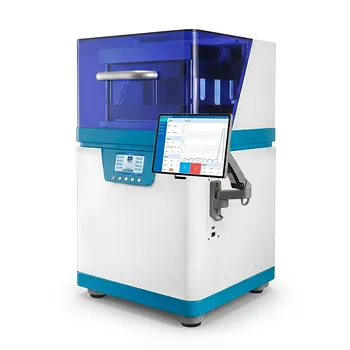
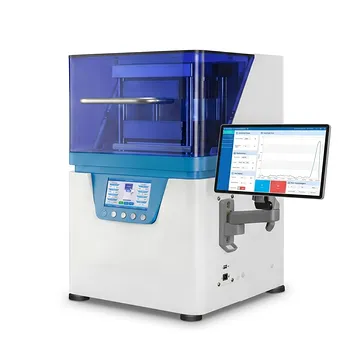
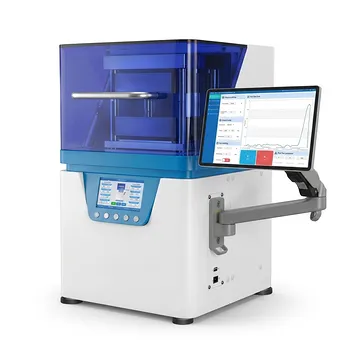
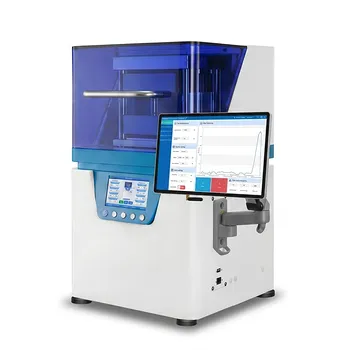
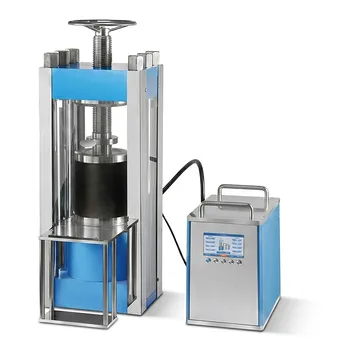
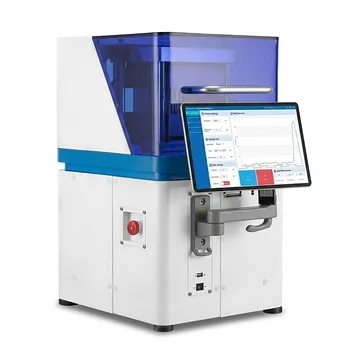
High-precision laboratory hot presses are the critical integration tools for Membrane Electrode Assembly (MEA) fabrication. They apply exact, synchronized temperature and pressure to fuse the proton exchange membrane, catalyst layer, and gas diffusion layer into a single, cohesive unit. This process establishes the molecular-level bonding necessary for efficient electron and ion transport, which is the foundation of high-performance fuel cells and electrolyzers.
Core Takeaway: High-precision hot pressing transforms discrete electrochemical components into a unified structure, minimizing contact resistance and optimizing the three-phase reaction interface. This precise mechanical integration is essential for achieving maximum power density and long-term operational stability.
Enhancing Interfacial Contact and Transport Efficiency
Molecular-Level Bonding of Functional Layers
The primary role of a hot press is to facilitate a molecular-level bond between the proton exchange membrane (PEM) and the catalyst layers. By applying specific heat—often around 120 °C—the polymers within the layers reach a state where they can interpenetrate and fuse. This ensures that the ionic pathways are continuous, allowing protons to move seamlessly across the interface.
Optimizing the Three-Phase Reaction Interface
Efficient fuel cell operation requires a "three-phase interface" where the catalyst, electrolyte, and reactant gases meet. High-precision pressing optimizes this microstructure, ensuring that the catalyst-coated membrane (CCM) and the gas diffusion layer (GDL) are in intimate contact. This creates highly conductive channels for protons and electrons while maintaining pathways for gas diffusion.
Reducing Interfacial Contact Resistance
One of the greatest hurdles in fuel cell efficiency is ohmic polarization loss caused by poor contact between layers. A laboratory press applies uniform force—sometimes reaching 1 ton of pressure—to eliminate microscopic gaps. This drastic reduction in interfacial contact resistance allows for higher current densities and improved power output, often exceeding 0.75 W cm⁻².
Structural Integrity and Performance Stability
Preventing Gas Leakage and Internal Shorts
Precise pressure control is vital for creating a robust seal within the fuel cell stack or electrolysis cell. By ensuring the components are pressed to a consistent thickness, the hot press prevents internal gas bypass and reactant leakage. This structural uniformity also protects the delicate proton membrane from localized stress that could lead to pinholes or internal short circuits.
Preserving Porous Microstructures
In components like the porous transport layer (PTL) or titanium felt, maintaining the void volume is essential for fluid transport. High-precision presses allow researchers to apply enough force to ensure electrical conductivity without causing the structural collapse of these porous materials. This balance is critical for managing water removal and gas supply during high-pressure operation.
Accuracy in R&D and Testing
For laboratory-scale research, consistency is paramount for data integrity. A high-precision press provides repeatable holding times and pressure settings, ensuring that every test sample is identical. This precision allows researchers to accurately attribute performance changes to material chemistry rather than assembly variations.
Understanding the Trade-offs and Pitfalls
The Pressure-Porosity Paradox
Increasing assembly pressure generally reduces electrical resistance, but it also risks over-compacting the gas diffusion layer. If the GDL is crushed, its permeability decreases, leading to "mass transport limitations" where reactant gases cannot reach the catalyst. Finding the "sweet spot" requires a press with granular control over force.
Thermal Degradation Risks
While heat is necessary to bond the membrane, excessive temperatures can lead to the thermal degradation of the polymer electrolyte. If the temperature exceeds the glass transition point too significantly, the membrane may thin excessively or lose its mechanical strength. Precision thermal sensors and PID controllers are necessary to prevent these irreversible structural changes.
How to Apply This to Your Project
Making the Right Choice for Your Goal
- If your primary focus is maximizing power density: Prioritize a press with high-accuracy pressure sensors to minimize contact resistance without compromising the porosity of your diffusion layers.
- If your primary focus is long-term durability: Focus on thermal uniformity across the platens to ensure a consistent molecular bond that prevents delamination over thousands of operating hours.
- If your primary focus is rapid prototyping of new catalysts: Utilize a press with programmable cycles to quickly determine the optimal pressure and temperature "recipe" for different catalyst loading levels.
A high-precision laboratory hot press is not merely a tool for assembly, but a sophisticated instrument that defines the final electrochemical efficiency and structural lifespan of the fuel cell.
Summary Table:
| Key Factor | Role in MEA & Fuel Cell Assembly | Impact on Performance |
|---|---|---|
| Molecular Bonding | Fuses PEM, catalyst, and GDL at ~120°C | Ensures continuous ionic and proton transport |
| Pressure Precision | Eliminates microscopic gaps (up to 1 ton force) | Reduces contact resistance; boosts power density |
| Interface Optimization | Creates a unified three-phase reaction interface | Enhances catalyst efficiency and electron flow |
| Porosity Retention | Prevents structural collapse of GDL/PTL layers | Maintains gas diffusion and water management |
| Thermal Stability | PID-controlled heating prevents membrane damage | Ensures long-term durability and R&D consistency |
Ready to Optimize Your Fuel Cell Assembly?
Achieving the perfect balance of pressure and temperature is vital for high-performance MEAs and fuel cell stacks. KINTEK specializes in comprehensive laboratory pressing solutions tailored for cutting-edge energy and battery research.
Whether your project requires manual, automatic, heated, multifunctional, or glovebox-compatible models, or advanced cold and warm isostatic presses, our equipment is designed to deliver the precision needed for molecular-level bonding and structural integrity.
Partner with KINTEK to minimize contact resistance and ensure the repeatable results your R&D demands. Contact our experts today to find the ideal pressing solution for your laboratory and take your electrochemical research to the next level.
References
- Hossein Pourrahmani, Ali Coşkun. Overcoming Hydrogen Losses in Fuel Cells: A Membrane-based Approach to Sustainable Energy. DOI: 10.2533/chimia.2025.516
This article is also based on technical information from Kintek Solution Knowledge Base .
Related Products
- Automatic Hydraulic Hot Press with Large Plate and Precision Temperature Control for Advanced Material Sample Preparation and Industrial Research
- Automatic Heated Hydraulic Lab Press with Programmable Touch Screen Controls and Precision Temperature Regulation
- Automatic High Temperature Heated Hydraulic Press Machine with Heated Plates for Lab
- 24T 30T 60T Heated Hydraulic Lab Press Machine with Hot Plates for Laboratory
- Automatic Heated Hydraulic Press Machine with Hot Plates for Laboratory
People Also Ask
- What are the specific features and applications of hydraulic hot press machines? Precision Solutions for Modern Labs
- How does an automatic hydraulic press operate? Achieve Precision and Consistency in Lab Pelleting
- What are the advantages and common applications of an automatic hydraulic press? Elevate Your Lab's Precision
- What is the technical significance of setting a precise dwell time? Achieve Peak Material Density and Stability
- When is an automatic hydraulic press more suitable than a manual press? Scale Your Lab with Precision & Speed