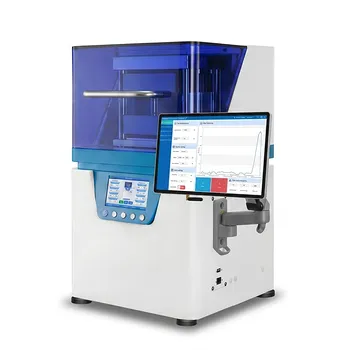
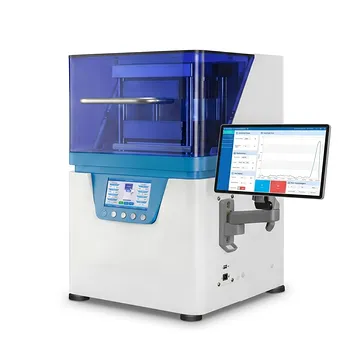
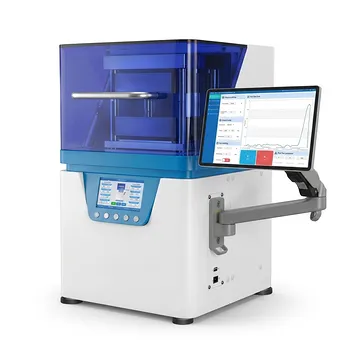
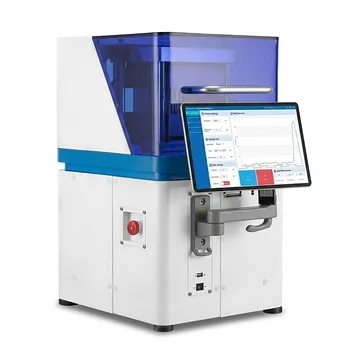
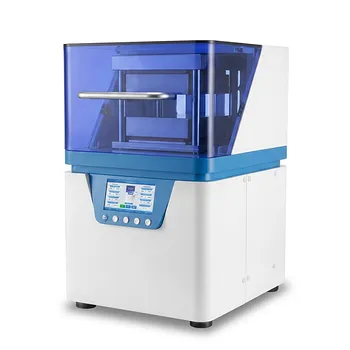
A benchtop heated laboratory hydraulic press ensures bonding strength through the simultaneous application of high-precision pressure and thermal energy. This dual-action process drives adhesive into the cellular structure of the maple veneer while providing the thermal kinetic energy required for chemical curing. By maintaining stable conditions, the press facilitates both physical wedging and molecular cross-linking, resulting in maximized dry and wet shear strength.
The core mechanism for bonding strength lies in the press's ability to eliminate internal voids and ensure the adhesive layer undergoes a complete, uniform phase transition. This transforms a liquid slurry into a rigid, structural bridge between the wood veneers.
The Mechanical Foundation of Bonding
Facilitating Physical Wedging
High-pressure application, often reaching 2.8 MPa, forces the adhesive slurry deep into the microscopic gaps of the wood fibers. This creates a "hook and eye" effect known as physical wedging, which provides the primary mechanical anchor for the bond.
Elimination of Internal Voids
The continuous application of stable pressure removes microscopic porosity and air pockets within the adhesive layer. By densifying the bond line, the press prevents weak spots that could lead to delamination under mechanical stress.
Ensuring Uniform Contact
Maple is a dense hardwood that requires significant force to ensure intimate contact between the veneers. The hydraulic system provides the mechanical interlocking necessary to overcome surface irregularities and ensure the adhesive is evenly distributed.
The Thermal Dynamics of Adhesion
Triggering Chemical Cross-linking
Precise temperatures, typically ranging from 100°C to 130°C, provide the energy required for the adhesive molecules to form strong chemical bonds. In soybean-based or resin adhesives, this heat facilitates cross-linking, which permanently hardens the adhesive into a water-resistant matrix.
Accelerating Thermal Kinetic Energy
The heating plates deliver consistent thermal kinetic energy to the bond line, which reduces the viscosity of the adhesive during the initial seconds of pressing. This temporary thinning allows the resin to wet the wood surface more effectively before the final curing begins.
Complete Curing Cycles
A heated press ensures that the adhesive layer cures completely and uniformly within a set timeframe. Without this controlled thermal environment, the center of the sample might remain under-cured, leading to inconsistent test results and lower shear strength.
Ensuring Sample Consistency
Reducing Internal Stress Gradients
Uniform heat transfer from the plates prevents the formation of internal stress gradients that occur when one side of a sample cools or cures faster than the other. This stability ensures that the mechanical performance of the sample is a true reflection of the adhesive's properties, not the preparation method.
Precision Control and Repeatability
Laboratory presses allow for the exact replication of pressure, temperature, and duration. This high level of control is essential for creating "green bodies" with consistent densities, which is vital for obtaining accurate data during subsequent analytical testing.
Understanding the Trade-offs
The Risk of Adhesive Squeeze-out
Applying excessive pressure can lead to "starved joints," where too much adhesive is forced out from between the veneers. This results in a bond line that is too thin to support the structural load, ultimately decreasing the sample's shear strength.
Thermal Degradation of Wood Fibers
Setting temperatures too high can cause thermal degradation or "charring" of the maple veneer surfaces. If the wood fibers become brittle due to excessive heat, the bond will fail at the wood interface rather than within the adhesive layer itself.
Pressure-Induced Cracking
While high pressure is necessary for densification, it must be balanced to avoid internal cracking of the veneer. If the press is closed too rapidly or at a pressure exceeding the wood's crush strength, the structural integrity of the maple itself may be compromised.
How to Optimize Your Pressing Process
Tailoring Parameters to Your Objectives
- If your primary focus is maximum dry shear strength: Prioritize a slightly longer press duration at a stable 2.8 MPa to ensure absolute completion of the chemical cross-linking.
- If your primary focus is wet shear/water resistance: Ensure the temperature is calibrated to at least 130°C to fully activate the moisture-resistant properties of the adhesive matrix.
- If your primary focus is analytical consistency (FTIR/XRF): Use the hydraulic press to eliminate all internal porosity by maintaining a slow, steady pressure ramp-up.
Precision in the pressing phase is the most critical factor in transforming raw wood and resin into a scientifically valid test specimen.
Summary Table:
| Feature | Mechanism | Resulting Benefit |
|---|---|---|
| High Pressure (2.8 MPa) | Physical Wedging & Void Elimination | Enhanced Mechanical Interlocking & Density |
| Thermal Energy (100-130°C) | Kinetic Energy & Chemical Cross-linking | Complete Curing & Maximum Water Resistance |
| Hydraulic Stability | Uniform Stress Distribution | Prevention of Delamination & Internal Cracking |
| Precision Control | Repeatable Pressing Parameters | Consistent Sample Accuracy for Analytical Testing |
Elevate Your Material Research with KINTEK Precision
Achieving superior bonding strength and sample consistency requires equipment that delivers absolute control. KINTEK specializes in comprehensive laboratory pressing solutions designed for the most demanding applications, from wood science to advanced battery research.
Our specialized range includes:
- Heated & Multifunctional Presses: Perfect for adhesive curing and thermal phase transitions.
- Manual & Automatic Models: Tailored for lab-scale efficiency and high-precision repeatability.
- Glovebox-Compatible & Isostatic Presses: Advanced solutions including cold and warm isostatic presses (CIP/WIP) for specialized material synthesis.
Don't let inconsistent sample preparation compromise your data. Contact KINTEK today to discover how our pressing solutions can enhance your lab's efficiency and results!
References
- Zhongqi He, H. N. Cheng. Comparison of the Adhesive Performances of Soy Meal, Water Washed Meal Fractions, and Protein Isolates. DOI: 10.5539/mas.v10n5p112
This article is also based on technical information from Kintek Solution Knowledge Base .
Related Products
- Automatic Heated Hydraulic Press Machine with Heated Plates for Laboratory
- Automatic High Temperature Heated Hydraulic Press Machine with Heated Plates for Lab
- 24T 30T 60T Heated Hydraulic Lab Press Machine with Hot Plates for Laboratory
- Automatic Heated Hydraulic Press Machine with Hot Plates for Laboratory
- Automatic Heated Hydraulic Lab Press 120x120mm Plate Fully Automated Material Research Press
People Also Ask
- Function of a Laboratory Hydraulic Press with Heated Platens in SSE? Enhance Battery Density & Conductivity
- Why is a laboratory hydraulic press with heating plates required for PLA/TEC films? Achieve Precise Sample Integrity
- What is the function of a manual heated press for PLA 2D scaffolds? Achieve Precise Material Densification
- What are the requirements for electrode pressing with high-viscosity ionic liquids like EMIM TFSI? Optimize Performance
- How does a laboratory heated hydraulic press facilitate PBN sample prep for WAXS? Achieve Precise X-Ray Scattering