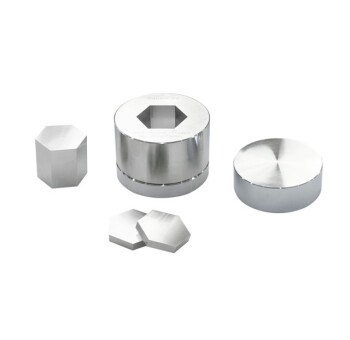
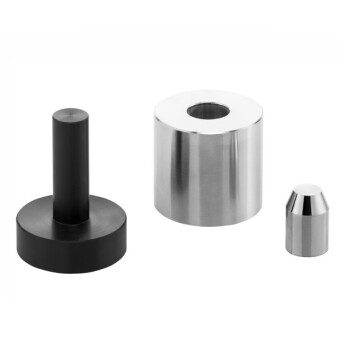
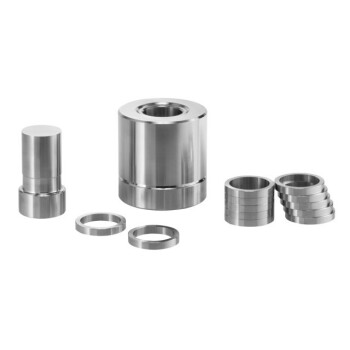
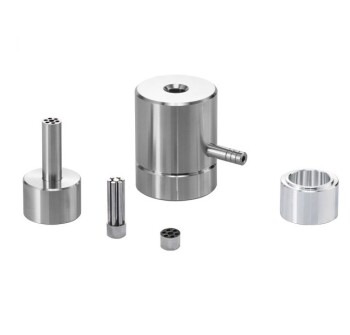
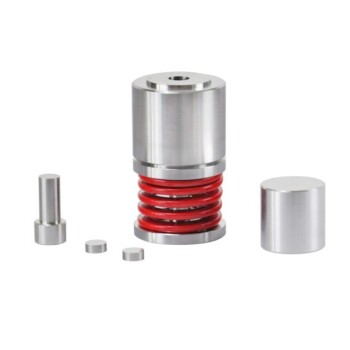
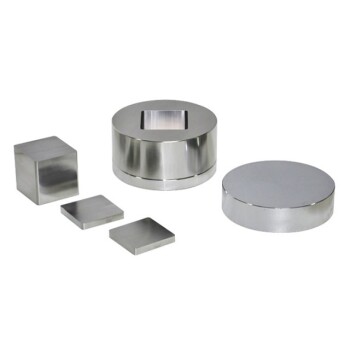
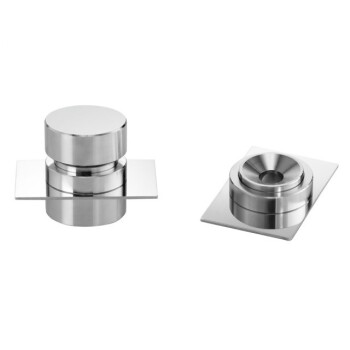
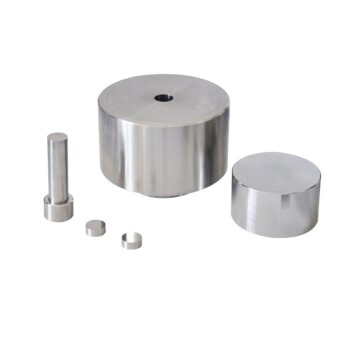
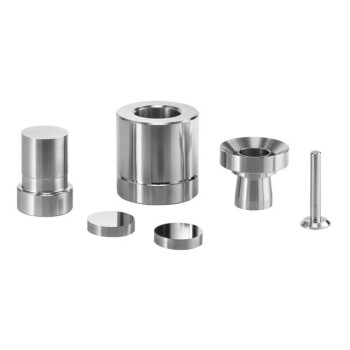
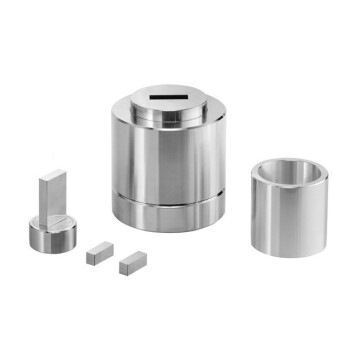
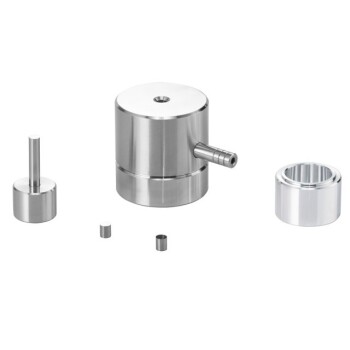
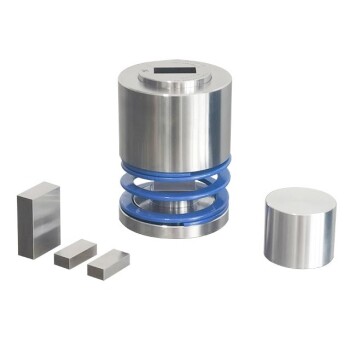
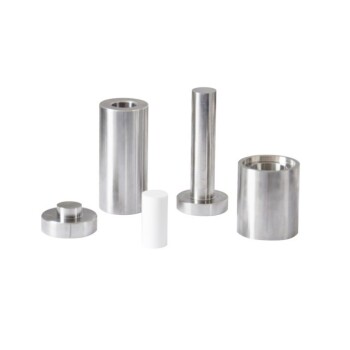
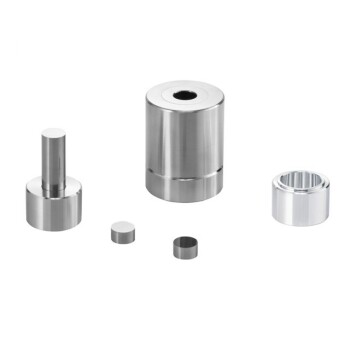
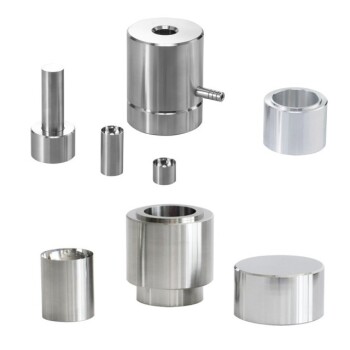
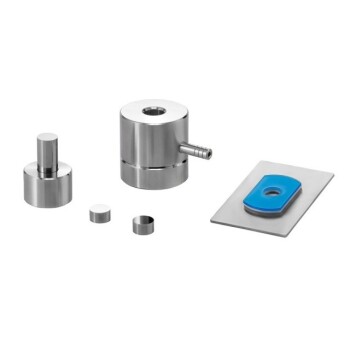
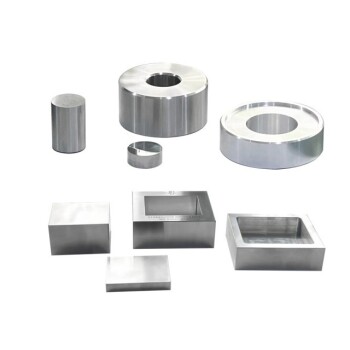
Precision steel molds serve as the technical foundation for reliable material testing in sulfur and cement mortars. These high-rigidity tools ensure that every test specimen possesses perfectly consistent geometric dimensions and superior surface flatness. By eliminating physical irregularities, these molds allow for uniform load distribution during compressive testing, which is essential for gathering accurate, repeatable, and comparable data.
Core Takeaway: The use of precision steel molds removes specimen-induced variables from the testing process by ensuring dimensional stability and surface integrity. This allows engineers to measure the true mechanical properties of the mortar rather than the flaws of an imperfectly shaped sample.
Achieving Geometric Consistency and Uniformity
Dimensional Accuracy in Testing
High-precision steel molds, such as the standard 50x50x50mm configuration, ensure that every mortar block is identical in size. This consistency is vital for calculating stress accurately, as even minor deviations in cross-sectional area can lead to significant errors in strength measurements.
Load Distribution and Stress Concentration
In uniaxial compressive strength testing, the specimen must be perfectly flat to interface with the pressure machine. Regular geometric shapes allow the applied load to be distributed uniformly across the entire compression surface.
If the specimen is deformed or irregular, stress concentrations occur at the high points. This leads to premature failure and inaccurate data that does not reflect the material's actual strength.
Material Durability and Structural Integrity
High Rigidity Under Pressure
Precision steel molds are designed to withstand extreme forces—often up to 150 MPa—without deforming. This rigidity ensures that the green body of the mortar remains stable during the initial pressing or setting phase.
Because the mold does not flex under the weight or pressure of the material, the resulting electrolyte discs or mortar blocks maintain their dimensional accuracy. This is critical for subsequent testing where tight tolerances are required.
Corrosion Resistance in Alkaline Environments
Sulfur and cement mortars, particularly geopolymers, often create highly alkaline environments that can degrade inferior materials. High-strength stainless steel molds offer the necessary corrosion resistance to withstand these chemical reactions.
This resistance ensures the mold surfaces remain smooth and pitted-free over hundreds of uses. Maintaining a pristine surface is essential for ensuring that the mold does not bond chemically with the specimen.
Surface Quality and Demolding Efficiency
Reducing Sidewall Friction
The high surface finish of the inner mold walls significantly reduces friction during the demolding process. This allows the specimen to be removed easily after the curing period without chipping or cracking the edges.
Minimizing friction also ensures that the internal structure of the mortar remains undisturbed during extraction. A smooth extraction process preserves the geometric integrity of the sample for the duration of the test.
Improving Interface Contact
A high-quality surface finish ensures that the final sample has a smooth, glass-like exterior. In advanced testing, this allows for tight contact between the material surface and testing apparatus, such as silver electrodes or loading platens.
Better contact reduces "noise" in the data and ensures that the transition of force or electrical current is consistent across the entire interface. This precision is what separates laboratory-grade results from field estimates.
Understanding the Trade-offs and Limitations
Initial Investment vs. Longevity
While precision steel molds offer superior performance, they require a significantly higher upfront cost compared to plastic or disposable alternatives. However, their ability to be cleaned and reused indefinitely often makes them more cost-effective over the life of a project.
Weight and Portability
The high-density steel required for rigidity makes these molds considerably heavy. This can pose a challenge in field laboratories where portability is required, often necessitating specialized lifting or transport equipment for larger arrays.
Maintenance Requirements
To maintain their technical advantages, these molds require meticulous cleaning and lubrication after every use. Any residue left on the sidewalls can compromise the dimensional accuracy of the next batch and lead to surface defects.
How to Apply This to Your Project
Selecting the Right Mold for Your Goal
To ensure the highest level of data integrity, choose your molding equipment based on the specific requirements of your mortar composition and testing standards.
- If your primary focus is regulatory compliance and standardization: Utilize high-rigidity standard 50mm steel molds to ensure your data meets international geometric consistency requirements.
- If your primary focus is high-pressure compaction (up to 150 MPa): Invest in hardened steel molds with reinforced sidewalls to prevent deformation during the green body pressing stage.
- If your primary focus is chemically aggressive or alkaline mortars: Prioritize high-strength stainless steel to prevent corrosion and maintain a smooth internal surface finish over time.
Choosing a precision steel mold is an investment in the accuracy and credibility of your material performance data.
Summary Table:
| Key Feature | Advantage | Technical Impact |
|---|---|---|
| Dimensional Accuracy | High Geometric Consistency | Uniform stress/load distribution |
| High Rigidity | Pressure resistance (up to 150 MPa) | Stable green body; no deformation |
| Stainless Steel | Corrosion Resistance | Longevity in alkaline environments |
| High Surface Finish | Low Sidewall Friction | Damage-free demolding & clean data |
Elevate Your Lab Results with KINTEK Precision Solutions
Ensure the highest level of data integrity in your material testing. KINTEK specializes in comprehensive laboratory pressing solutions tailored for demanding applications like sulfur/cement mortars and battery research.
Our specialized equipment range includes:
- Manual & Automatic Presses for highly consistent sample preparation.
- Heated & Multifunctional Models for advanced material synthesis.
- Cold & Warm Isostatic Presses widely applied in cutting-edge battery research.
- Glovebox-Compatible Designs for sensitive material handling.
Don't let sample irregularities compromise your engineering data. Contact KINTEK today to discuss your specific requirements and discover how our high-rigidity molds and laboratory presses can enhance your research efficiency and accuracy!
References
- Rawa Shakir Muwashee. Evaluating the Compressive Strength of Sulfur Mortar in Comparison with Conventional Cement Mortar. DOI: 10.48084/etasr.11048
This article is also based on technical information from Kintek Solution Knowledge Base .
Related Products
- Lab Polygon Press Mold
- Infrared Heating Quantitative Flat Plate Mold for Precise Temperature Control
- Lab Button Battery Tablet Press Sealing Mold
- XRF KBR Steel Ring Lab Powder Pellet Pressing Mold for FTIR
- Special Shape Lab Press Mold for Laboratory Applications
People Also Ask
- What is the purpose of incorporating cartridge heaters into a lab press mold for MLCC block compression? Optimize Results
- How do the design and geometric precision of pressing molds and mandrels affect the quality of PTFE composite samples?
- What role do precision positioning and pressure molds play in single-lap joints? Ensure 100% Data Integrity
- What are the requirements for pressing molds when using SSCG? Key Materials for Complex Single Crystal Production
- How do industrial-grade pressure molds affect zinc metal pouch cells? Maximize Energy Density & Performance