Precise pressure ramp rate control is the specialized ability to configure the exact speed of pressurization and decompression during isostatic pressing. This capability allows researchers to dictate how stress is distributed throughout a material over time, ranging from slow, uniform increases (e.g., 100 MPa/min) to extreme physical shocks during rapid decompression (e.g., 3000 MPa/min). By mastering these rates, scientists can manipulate internal pore structures, optimize fluid absorption, and ensure the structural integrity of complex materials.
Core Takeaway: Precise ramp rate control is essential for transforming isostatic pressing from a simple compaction method into a high-fidelity tool for structural engineering. It ensures experimental repeatability by eliminating internal stress concentrations and allowing for the controlled manipulation of material density and phase transitions.
Managing Structural Integrity and Uniformity
Preventing Internal Micro-Cracking
When pressure is applied too quickly or unevenly, materials can develop instantaneous stress concentrations. These concentrations often lead to micro-cracks within the green body that may not be visible until after high-temperature sintering. Precise control ensures a stable pressure-holding process, which is critical for reducing volume shrinkage deviations and improving overall production yields in materials like graphite.
Achieving Target Density Ranges
For materials like high-performance ceramics or graphite, achieving a specific density (such as 1.7–1.9 g/cm³) depends on the rearrangement and compaction degree of powder particles. Accurate ramp rates ensure that air pockets are systematically eliminated and internal porosity is reduced. This provides the structural consistency required to maintain geometric dimensions during subsequent processing stages.
Controlling Atomic and Molecular Transformations
In advanced materials like silica glass, precise ramp rates facilitate the stable transition from four-coordinated to higher-coordinated atomic structures. Maintaining a specific pressure-holding time allows for the complete rearrangement of these structures. This level of control ensures that modifications to the glass are repeatable and consistent across different batches.
Mastering Kinetics and Material Behavior
Defining Kinetic Driving Forces
Precise pressure control is a critical safeguard for distinguishing between different kinetic regimes, such as dissolution-rate control versus diffusion-rate control. High-precision equipment can adjust in real-time to maintain a constant macro-effective pressure even as particles deform. This compensation mechanism is essential for maintaining a continuous driving force during processes like pressure solution.
Optimizing Porosity via Physical Shock
While slow pressurization ensures uniformity, rapid decompression can be used as a deliberate tool to alter material properties. By dropping pressure at rates as high as 3000 MPa/min, researchers can create a "physical shock" that modifies the pore structure. This technique is often used to optimize the kinetics of fluid absorption within a material’s matrix.
Consistency in Biological and Food Sciences
In food material studies, precise decompression speeds prevent physical damage such as bursting or cracking caused by sudden pressure drops. Stable pressure holding ensures thorough microbial inactivation while preserving the food’s microstructure. This precision allows researchers to accurately evaluate the impact of pressure on texture and bioactive substance retention.
Understanding the Trade-offs
Complexity Versus Sample Throughput
Implementing high-precision ramp rate control often increases the cycle time of an experiment, especially when slow, incremental pressurization is required to prevent stress. While this produces a superior specimen, it can reduce the number of samples processed per day. Researchers must balance the need for structural perfection with the practical requirements of high-volume testing.
System Stress and Maintenance
Operating equipment at extreme decompression rates (e.g., 3000 MPa/min) subjects the press components to significant mechanical fatigue. While these "physical shocks" are valuable for material studies, they can lead to increased wear on seals and valves. Maintaining precision requires more frequent calibration and rigorous maintenance schedules compared to standard pressing equipment.
Applying Precision to Your Research Goals
How to Apply This to Your Project
To maximize the benefits of precise pressure control, align your equipment settings with the specific structural requirements of your material.
- If your primary focus is Uniform Density: Use slow, controlled pressurization rates to allow particles to rearrange without trapping air pockets or creating stress concentrations.
- If your primary focus is Structural Modification: Utilize rapid decompression to induce physical shock, which can be leveraged to open pore structures and enhance fluid absorption properties.
- If your primary focus is Repeatable Data: Prioritize equipment with high-precision load displays and real-time adjustment capabilities to ensure identical conditions across different biomass sources or powders.
- If your primary focus is Biological Preservation: Focus on stable pressure-holding phases and moderate decompression speeds to prevent tissue damage while ensuring microbial inactivation.
Achieving mastery over pressure ramp rates empowers you to dictate the internal evolution of your materials with surgical precision.
Summary Table:
| Control Strategy | Primary Objective | Key Material Benefit |
|---|---|---|
| Slow Pressurization | Stress Distribution | Prevents internal micro-cracks and stress concentrations. |
| Stable Holding | Density Optimization | Ensures uniform particle rearrangement and phase transitions. |
| Rapid Decompression | Physical Shock | Modifies pore structures to enhance fluid absorption kinetics. |
| Controlled Release | Structural Integrity | Prevents tissue damage in biological and food material studies. |
Elevate Your Material Research with KINTEK Precision
Unlock the full potential of your material studies with KINTEK’s comprehensive laboratory pressing solutions. Whether you are working in battery research, advanced ceramics, or metallurgy, our equipment provides the precise pressure ramp rate control necessary for repeatable, high-fidelity results.
Our versatile range includes:
- Manual & Automatic Presses for flexible lab workflows.
- Heated & Multifunctional Models for complex thermal processing.
- Glovebox-Compatible Systems for air-sensitive material handling.
- Cold & Warm Isostatic Presses (CIP/WIP) for superior density uniformity.
Ready to eliminate micro-cracking and master material transformations? Contact KINTEK today to find the perfect pressing solution for your lab!
References
- Иван Шорсткий, Kemal Aganovic. Influence of High Hydrostatic Pressure and Pulsed Electric Field Treatment on Moisture Absorption of Wheat Grains. DOI: 10.1002/cite.202200034
This article is also based on technical information from Kintek Solution Knowledge Base .
Related Products
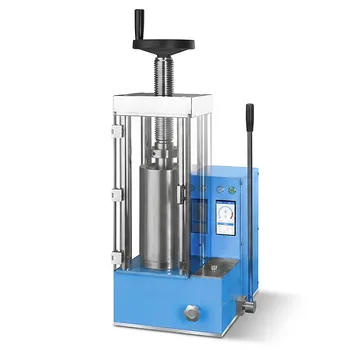
- Electric Isostatic Pressing Machine 40 Tons Automatic Laboratory Powder Compacting Press
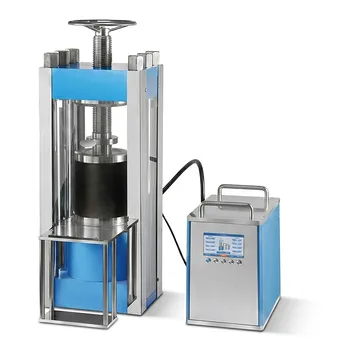
- Warm Isostatic Press for Solid State Battery Research Warm Isostatic Press
- Split Warm Isostatic Lab Press 200 Ton Powder Compaction Chamber for Battery Research and Material Science
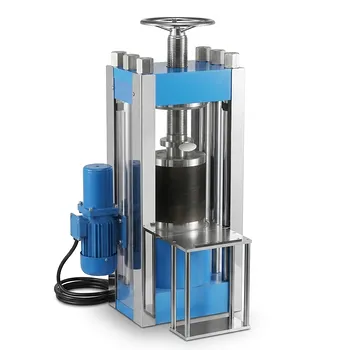
- Electric Lab Cold Isostatic Press CIP Machine
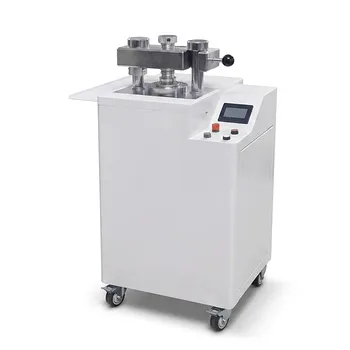
- Split Hot Isostatic Pressing Machine 150 Ton Laboratory Heated Isostatic Press
People Also Ask
- What are the key characteristics of the isostatic pressing process? Unlock Uniform Density and Complex Geometries
- Why is vacuum-sealed packaging necessary before isostatic pressing of CuPc thin films? Protect Integrity & Uniformity
- How is pressure applied to the material during isostatic pressing? Master Uniform Density and Complex Geometries
- How does pressure distribute during isostatic pressing of aluminum? Achieve Uniform Density for Your Lab Materials
- What are the applications of isostatic pressing in the automotive industry? Precision Manufacturing for High-Performance Parts