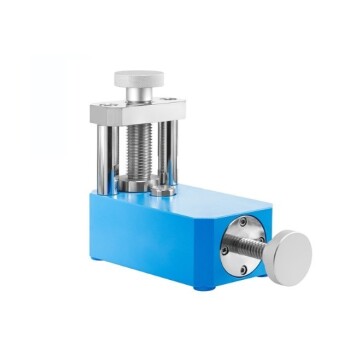
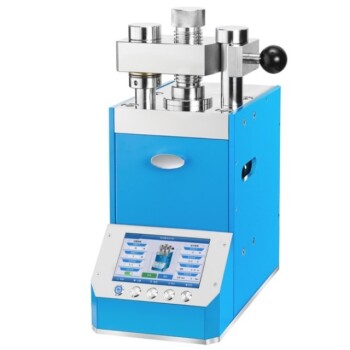
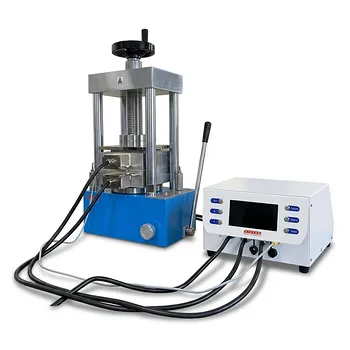
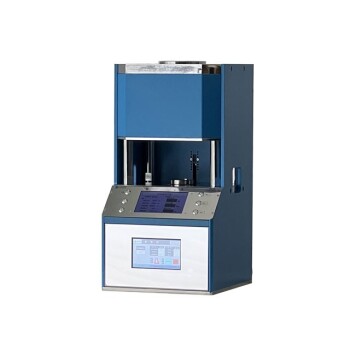
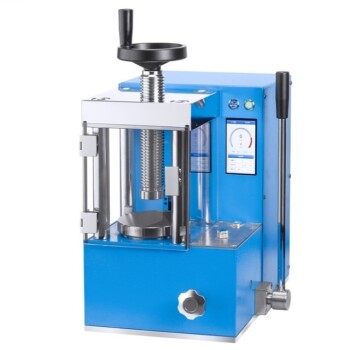
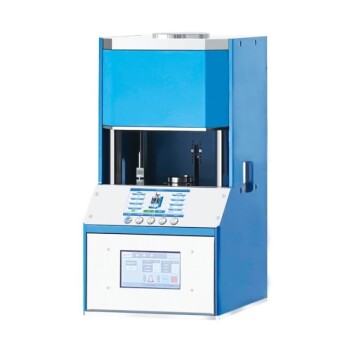
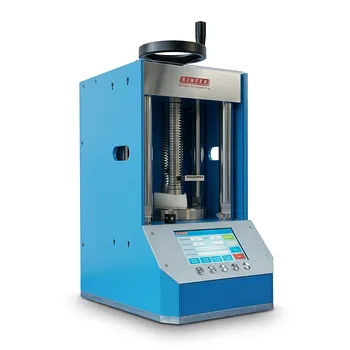
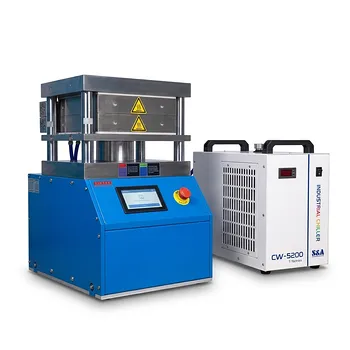
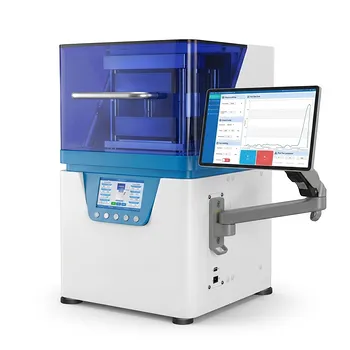
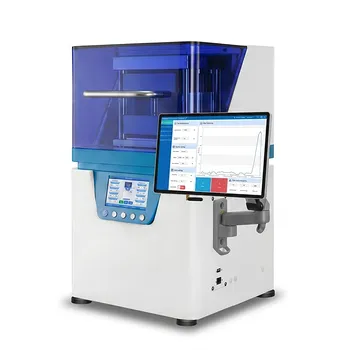
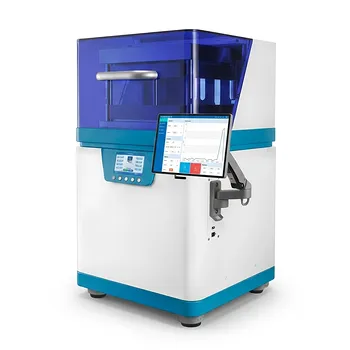
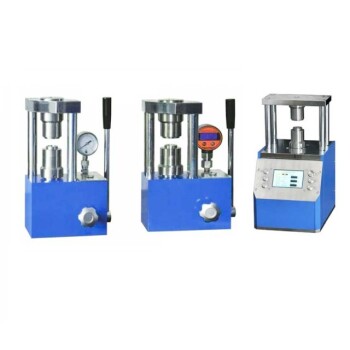
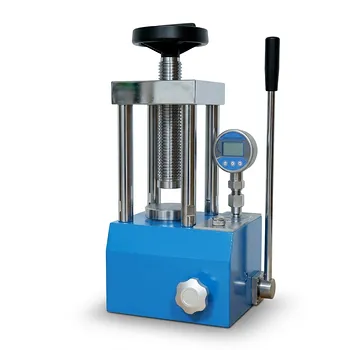
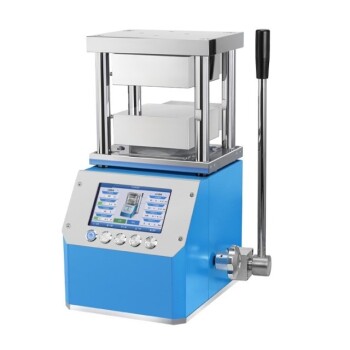
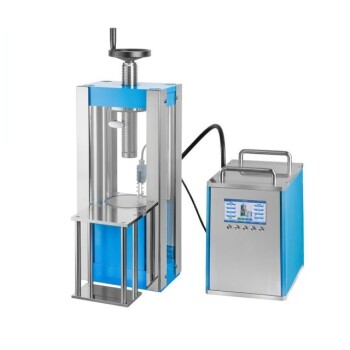
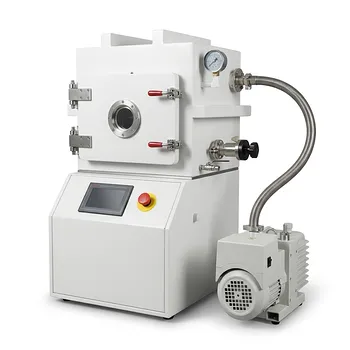
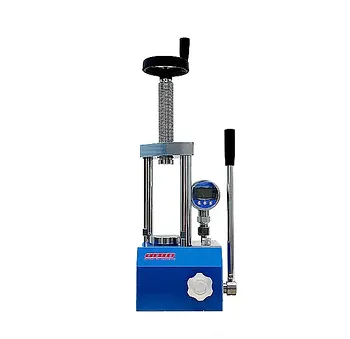
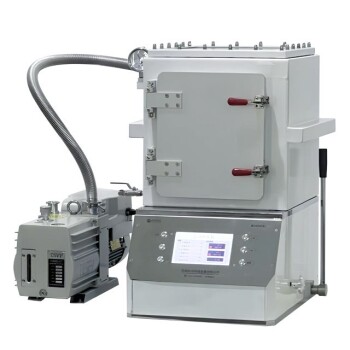
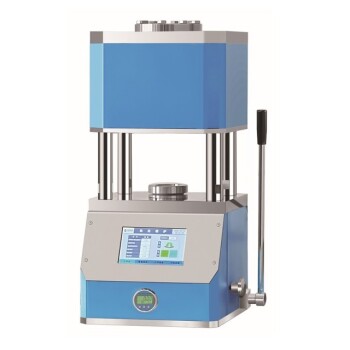
The use of a high-pressure laboratory hydraulic press is the critical factor in achieving the density required for structural integrity in stabilized soil bricks. By applying stable pressure reaching thousands of psi, the press forces soil particles to rearrange into a dense matrix and extrudes air from internal pores. This fundamental physical compaction directly determines the brick's early strength, final compressive performance, and resistance to water absorption.
A laboratory hydraulic press transforms loose soil mixtures into viable building materials by maximizing dry density and minimizing porosity. This process ensures that specimens are standardized, reproducible, and capable of meeting the rigorous mechanical demands of modern engineering.
The Physical Basis of Compaction
Particle Rearrangement and Air Extrusion
High-pressure application forces individual soil particles to overcome internal friction and slide into a more efficient, interlocking configuration. This mechanical action expels entrapped air from the pores, which is essential because air pockets act as structural weaknesses.
Maximizing Dry Density
Achieving the maximum dry density is the primary goal of compression molding. A hydraulic press provides the specific static pressure needed to reach the density levels identified in Proctor compaction tests, simulating real-world engineering conditions in a controlled environment.
Reduction of Internal Porosity
By minimizing the space between particles, the press significantly reduces the capillary action that leads to water absorption. Lower porosity not only increases strength but also protects the brick from degradation caused by moisture ingress and freeze-thaw cycles.
Enhancing Mechanical and Chemical Performance
Structural Integrity and Early Strength
The initial "green strength" of a soil brick depends entirely on the physical bond created during pressing. High pressure induces microscopic interlocking and increases the contact area between particles, preventing the brick from collapsing or cracking before it has fully cured.
Facilitating Chemical Bonding
In stabilized soil, particles must be in close contact with alkaline activators or cementitious binders for chemical reactions to occur. The hydraulic press ensures these materials are pressed firmly together, providing the necessary physical prerequisite for long-term mineral phase transformation.
Prevention of Structural Defects
Controlled, uniform pressure prevents the formation of internal micro-cracks that often occur in manually pressed bricks. This uniformity is vital for ensuring the brick does not undergo severe shrinkage or catastrophic failure during subsequent heat treatments or drying phases.
Understanding the Trade-offs
Equipment Precision vs. Manual Methods
While manual presses exist, they lack the adjustable pressure control required for scientific research. Laboratory presses allow for the precise optimization of pressure parameters, which is necessary to determine the exact point where additional pressure no longer yields density gains.
The Risk of Over-Compression
It is possible to apply excessive pressure that leads to lamination or pressure cracking. If the air cannot escape quickly enough during a rapid high-pressure cycle, it can become compressed and then expand when the load is released, causing the brick to split into layers.
Cost and Complexity
High-pressure laboratory presses represent a significant investment compared to simpler molding tools. They require regular calibration and maintenance to ensure the data produced—such as Unconfined Compressive Strength (UCS) results—remains accurate and consistent over time.
How to Apply This to Your Project
Making the Right Choice for Your Goal
To ensure your stabilized soil bricks meet industrial standards, you must match your compression strategy to your specific material requirements.
- If your primary focus is Research and Development: Utilize an automatic lab press with adjustable pressure settings to accurately map how different compaction levels affect material density and strength.
- If your primary focus is Standardized Testing: Use the hydraulic press to apply a specific, static load (such as 10 KN or 125 MPa) to ensure your specimens meet the exact dimensions and density required for UCS and direct shear tests.
- If your primary focus is Durability in Wet Climates: Prioritize high-pressure compaction to minimize internal porosity, as this is the most effective way to reduce water absorption and prevent moisture-related decay.
The laboratory hydraulic press is not merely a molding tool, but a precision instrument that dictates the ultimate physical and mechanical limits of stabilized earth materials.
Summary Table:
| Key Feature | Benefit for Stabilized Soil Bricks | Impact on Material Performance |
|---|---|---|
| High Static Pressure | Maximizes dry density by rearranging soil particles. | Increases ultimate compressive strength. |
| Air Extrusion | Removes air pockets and internal voids. | Prevents structural weaknesses and failure. |
| Porosity Reduction | Minimizes capillary action and gaps between particles. | Enhances resistance to water and freeze-thaw. |
| Precise Pressure Control | Ensures uniform compaction and standardized samples. | Eliminates internal micro-cracks and defects. |
| Chemical Facilitation | Increases contact area for alkaline/cement binders. | Accelerates mineral phase transformation. |
Elevate Your Material Research with KINTEK Precision
Achieving the perfect density in stabilized soil bricks or advanced material specimens requires precision and reliability. KINTEK specializes in comprehensive laboratory pressing solutions tailored for demanding research environments. Our extensive lineup includes:
- Manual & Automatic Models: For flexible or high-throughput testing.
- Heated & Multifunctional Presses: To simulate complex environmental conditions.
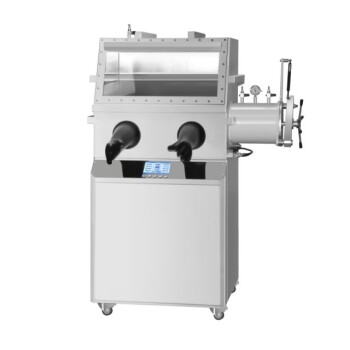
- Glovebox-Compatible Systems: For specialized, sensitive material handling.
- Isostatic Presses (Cold & Warm): Ideal for uniform compaction in battery research and advanced ceramics.
Whether you are refining sustainable building materials or pioneering battery technology, KINTEK provides the tools needed for reproducible, industry-standard results.
Optimize your laboratory workflow—contact our experts today!
References
- Y. Nidhish, S. Supreeth. Manufacturing of Stabilised Mud BlocksReinforced with Jute fiber for SustainableConstruction. DOI: 10.13052/rp-9788743807001.06
This article is also based on technical information from Kintek Solution Knowledge Base .
Related Products
- Laboratory Hydraulic Press 2T Lab Pellet Press for KBR FTIR
- Automatic Laboratory Hydraulic Press for XRF and KBR Pellet Pressing
- 24T 30T 60T Heated Hydraulic Lab Press Machine with Hot Plates for Laboratory
- Automatic High Temperature Heated Hydraulic Press Machine with Heated Plates for Lab
- Laboratory Hydraulic Pellet Press for XRF KBR FTIR Lab Press
People Also Ask
- What is the role of a laboratory pressure machine and KBr in FTIR? Master Sample Preparation for Flame Retardants
- What is the role of a laboratory hydraulic press in high-loading NCM811 cathode prep for solid-state batteries?
- Why is a laboratory hydraulic press necessary for sample preparation? Precise Pelleting for Spiro Heterocyclic Analysis
- What role does a laboratory hydraulic press play in reaction pellets? Optimizing Lunar Soil and Metal Fuel Density
- How does the application of a laboratory hydraulic press improve the performance of Tungsten Trioxide (WO3) electrodes? - Pro Tips