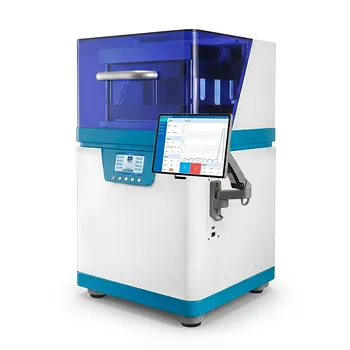
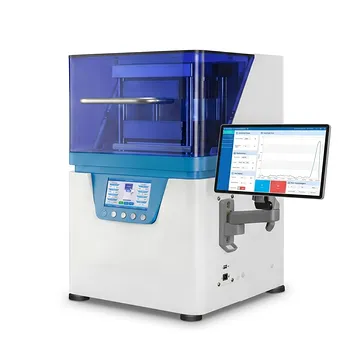
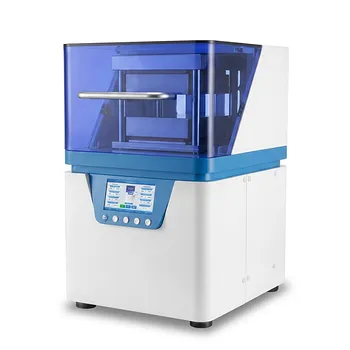
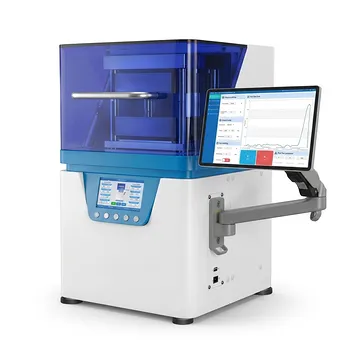
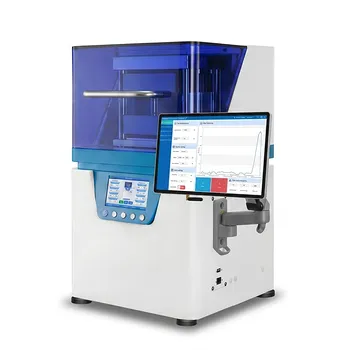
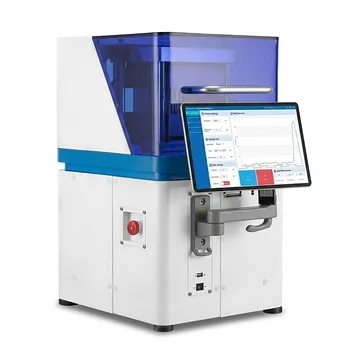
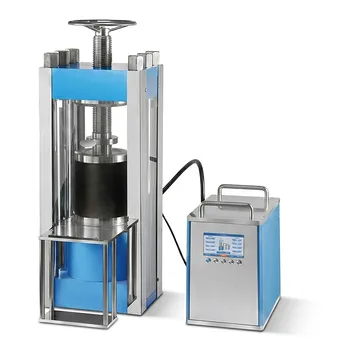
The primary function of a precision electric heated press in polyolefin composite production is to provide a strictly controlled high-temperature and high-pressure environment for material molding. This dual-action environment ensures that the molten composite material flows sufficiently within a mold to create a uniform film with standardized thickness and high surface quality. By maintaining these precise parameters, the press eliminates physical specification differences that could otherwise bias subsequent experimental results or mechanical testing.
Core Takeaway: A precision electric heated press acts as the critical bridge between raw mixed materials and standardized test specimens by using synchronized heat and pressure to ensure structural density, thickness uniformity, and the elimination of internal defects.
Standardizing Physical Specifications
In the production of polyolefin films, consistency is the primary requirement for valid data collection.
Achieving Uniform Film Thickness
The press applies a constant force—often reaching pressures like 100 bar or 300 kN—to spread the molten polymer evenly across the mold surface. This level of precision typically targets specific thicknesses, such as 200 µm, which is essential for ensuring that any subsequent performance variations are due to material properties rather than physical dimensions.
Improving Surface Quality
By precisely setting the temperature and pressure, the heated press ensures excellent surface quality and eliminates irregularities. This standardization is vital for photocatalytic degradation experiments or mechanical tests where surface flaws could act as stress concentrators and lead to inaccurate results.
Enhancing Internal Material Integrity
Beyond outward appearance, the press fundamentally alters the internal architecture of the composite.
Elimination of Internal Voids
The application of high pressure during the molding process facilitates pressurized degassing. This action removes internal air pockets and micropores, resulting in a densified structure that maximizes the mechanical strength of the polyolefin matrix.
Promoting Matrix Infiltration
In composites involving reinforcements like fibers or inorganic fillers, the press forces the thermoplastic matrix (such as polypropylene) to fully infiltrate and encapsulate the additives. This ensures a tight bond and enhances physical entanglement between components, which is critical for the structural stability of the final film.
Establishing Structural Stability
The role of the heated press extends into the stabilization phase of production.
Controlling the Crystalline Structure
When paired with a cooling unit, the press allows for controlled cooling rates once the desired shape is achieved. This step is essential to stabilize the crystalline structure of the polyolefin, ensuring that the material does not warp or develop internal stresses after it is removed from the mold.
Facilitating Interlayer Bonding
In multi-layer "film-stacking" processes, the press executes full impregnation and consolidation. By applying segmented pressures, it ensures that multiple layers of film and reinforcement fabric are fused into a single, structurally uniform orthotropic plate.
Understanding the Trade-offs
Precision pressing requires a delicate balance of variables to avoid compromising the material.
Thermal Degradation Risks
Applying excessive heat to reach high fluidity can lead to the thermal degradation of the polyolefin chains. If the temperature exceeds the polymer's stability threshold for too long, the resulting film may suffer from reduced molecular weight and weakened mechanical properties.
Pressure-Induced Fiber Damage
While high pressure is necessary for densification, excessive force can damage reinforcing fibers or fillers within the composite. Furthermore, improper pressure application can result in "flash" (excess material leaking from the mold), which leads to inconsistent thickness and material waste.
How to Apply This to Your Project
To achieve the best results with a precision electric heated press, your settings should be dictated by your specific material goals.
- If your primary focus is reproducible experimental data: Prioritize the precise calibration of pressure to ensure a standardized film thickness across all test batches.
- If your primary focus is mechanical durability: Focus on the pressurized degassing phase and controlled cooling to eliminate internal voids and stabilize the crystalline structure.
- If your primary focus is complex composite bonding: Use segmented pressure application and temperatures slightly above the polymer melting point to ensure full infiltration of reinforcing materials.
The precision electric heated press is the definitive tool for transforming raw polyolefin mixtures into high-fidelity, standardized materials ready for rigorous technical evaluation.
Summary Table:
| Key Function | Primary Benefit | Resulting Quality |
|---|---|---|
| High Pressure (300 kN) | Pressurized Degassing | Eliminates internal voids and micropores |
| Controlled Heating | Matrix Infiltration | Ensures full encapsulation of fillers/fibers |
| Precision Molding | Thickness Standardization | Guarantees reproducible experimental data |
| Stabilized Cooling | Crystalline Control | Prevents warping and internal material stress |
Elevate Your Material Research with KINTEK Precision
Achieving the perfect polyolefin composite film requires absolute control over temperature and pressure. KINTEK specializes in comprehensive laboratory pressing solutions designed to meet the rigorous standards of modern material science and battery research.
Why choose KINTEK?
- Diverse Range: From manual and automatic to heated and multifunctional models.
- Specialized Environments: Glovebox-compatible designs and advanced cold/warm isostatic presses.
- Reliable Results: Engineered for high structural density and unmatched thickness uniformity.
Ready to eliminate experimental bias and enhance your material integrity? Contact our laboratory experts today to find the ideal pressing solution for your project!
References
- Valentin Rădițoiu, Luminiţa Eugenia Wagner. Photocatalytic Degradation of Some Polyolefin-TiO2 Composites Evaluated by Molecular Spectroscopy. DOI: 10.37358/mp.19.1.5130
This article is also based on technical information from Kintek Solution Knowledge Base .
Related Products
- Automatic Hydraulic Hot Press with Large Plate and Precision Temperature Control for Advanced Material Sample Preparation and Industrial Research
- Automatic Heated Hydraulic Lab Press with Programmable Touch Screen Controls and Precision Temperature Regulation
- Automatic Hydraulic Heat Press Machine with Multi Stage Programmable Control and Integrated Water Cooling Plate Size 180x180mm
- Heated Hydraulic Press Machine with Heated Plates for Vacuum Box Laboratory Hot Press
- Automatic Large Format Laboratory Heated Hydraulic Press 400x400mm Plate Capacity
People Also Ask
- What are the specific features and applications of hydraulic hot press machines? Precision Solutions for Modern Labs
- How does an automatic hydraulic press operate? Achieve Precision and Consistency in Lab Pelleting
- What are the advantages and common applications of an automatic hydraulic press? Elevate Your Lab's Precision
- What is the technical significance of setting a precise dwell time? Achieve Peak Material Density and Stability
- When is an automatic hydraulic press more suitable than a manual press? Scale Your Lab with Precision & Speed