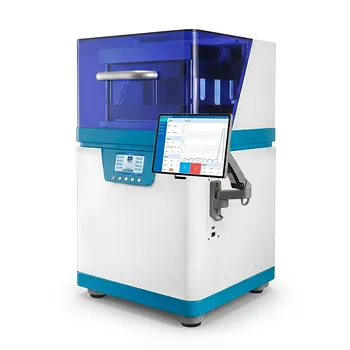
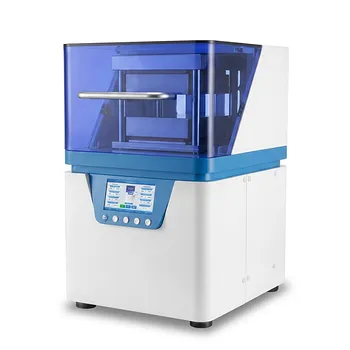
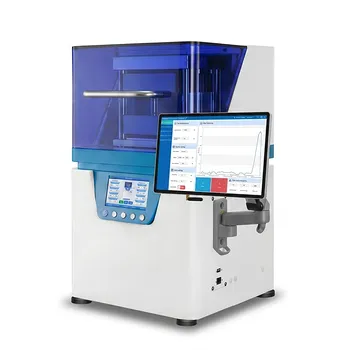
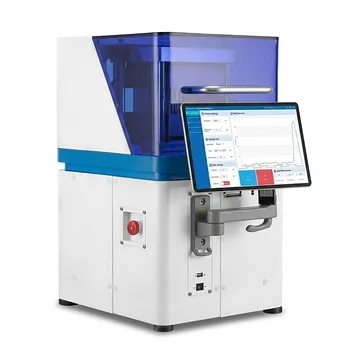
The use of metal spacers in hot pressing serves as a mechanical governor to ensure precision and consistency. These spacers are placed between the press heads to act as physical stops, accurately limiting the final closure height of the press. This mechanism ensures that every composite board reaches a uniform target thickness, which is critical for meeting industry standards and maintaining predictable material properties.
Core Takeaway: Metal spacers provide a definitive physical limit during hot pressing to prevent over-compression, stabilize internal porosity, and ensure that every board in a production run meets exact thickness specifications for standardized testing.
Ensuring Geometrical Precision
Establishing a Physical Mechanical Limit
During the hot pressing process, hydraulic presses can exert immense force that may exceed the requirements of the specific material. Metal spacers act as a hard stop between the press heads, preventing the equipment from over-compressing the composite mat beyond its intended design.
Achieving Uniformity Across Production Batches
Consistency is the cornerstone of industrial manufacturing and laboratory research. By utilizing spacers of specific dimensions—such as 5 mm, 10 mm, or 15 mm—manufacturers ensure that every board produced has an identical thickness.
Compliance with Industry Standards
Precise thickness control is not merely a preference but a requirement for regulatory compliance. Standardized testing for mechanical properties and density gradients, such as those outlined in EN 312, requires uniform samples to ensure the data is valid and comparable.
Impact on Material Integrity
Managing Internal Porosity and Density
The density of a composite board directly dictates its strength and durability. Spacers allow operators to control the internal porosity of the board by stopping compression at a calculated volume, which optimizes the physical properties of the final material.
Accelerating Diffusion and Consolidation
While the spacers limit thickness, the simultaneous application of heat and pressure facilitates pressure-assisted sintering. This process eliminates internal pores and helps the composite reach a density close to its theoretical maximum without crushing the material structure.
Improving Mechanical and Thermal Properties
By preventing over-compression while maintaining high pressure, spacers help produce fully dense materials. This results in enhanced mechanical strength, wear resistance, and thermal conductivity, particularly in high-performance fungal-based or metal-matrix composites.
Understanding the Trade-offs
Heat Sink Effects and Thermal Gradients
Because spacers are typically made of metal, they can act as heat sinks, potentially drawing thermal energy away from the edges of the composite mat. This can lead to slight temperature variations across the board, which may affect the curing rate of resins or the bonding of fibers near the spacers.
Maintenance and Alignment Risks
Spacers must be kept perfectly clean and free of debris to maintain their precision. Even a small amount of resin buildup or material "flash" on the spacer surface can result in thickness deviations or uneven pressure distribution, which compromises the integrity of the entire batch.
How to Apply This to Your Project
Recommendations for Effective Implementation
Effective use of spacers requires aligning your hardware choices with your specific material goals and the capabilities of your hydraulic press.
- If your primary focus is Regulatory Compliance: Use high-precision spacers calibrated to the exact dimensions required by standards like EN 312 to ensure your density gradient tests are valid.
- If your primary focus is Material Research: Experiment with different spacer heights to observe how varying levels of compression affect internal porosity and the resulting mechanical strength.
- If your primary focus is Production Consistency: Implement a strict cleaning protocol for spacers between cycles to prevent material buildup from causing incremental thickness errors.
By treating metal spacers as a critical variable in your pressing workflow, you transform a simple tool into a powerful instrument for material excellence.
Summary Table:
| Feature | Function | Benefit |
|---|---|---|
| Mechanical Stop | Limits press head closure height | Ensures precise, uniform board thickness |
| Porosity Control | Manages internal void volume | Optimizes density and mechanical strength |
| Standardization | Physical consistency across batches | Facilitates compliance with EN 312 standards |
| Material Integrity | Prevents structural over-compression | Enhances wear resistance and thermal conductivity |
Elevate Your Material Research with KINTEK
Precision is paramount in composite manufacturing and battery research. KINTEK specializes in comprehensive laboratory pressing solutions designed to give you total control over your results.
Whether you require manual, automatic, heated, multifunctional, or glovebox-compatible models, or advanced cold and warm isostatic presses, our equipment ensures your materials meet exact thickness and density specifications every time.
Ready to optimize your production workflow? Contact us today to find the perfect pressing solution for your lab!
References
- Bertram Schmidt, Vera Meyer. Mechanical, physical and thermal properties of composite materials produced with the basidiomycete Fomes fomentarius. DOI: 10.1186/s40694-023-00169-8
This article is also based on technical information from Kintek Solution Knowledge Base .
Related Products
- Automatic Hydraulic Hot Press with Large Plate and Precision Temperature Control for Advanced Material Sample Preparation and Industrial Research
- Automatic High Temperature Heated Hydraulic Press Machine with Heated Plates for Lab
- Heated Hydraulic Press Machine with Heated Plates for Vacuum Box Laboratory Hot Press
- Automatic Heated Hydraulic Press Machine with Hot Plates for Laboratory
- Heated Hydraulic Press Machine With Heated Plates For Vacuum Box Laboratory Hot Press
People Also Ask
- What are the specific features and applications of hydraulic hot press machines? Precision Solutions for Modern Labs
- How does an automatic hydraulic press operate? Achieve Precision and Consistency in Lab Pelleting
- What are the advantages and common applications of an automatic hydraulic press? Elevate Your Lab's Precision
- What is the technical significance of setting a precise dwell time? Achieve Peak Material Density and Stability
- When is an automatic hydraulic press more suitable than a manual press? Scale Your Lab with Precision & Speed