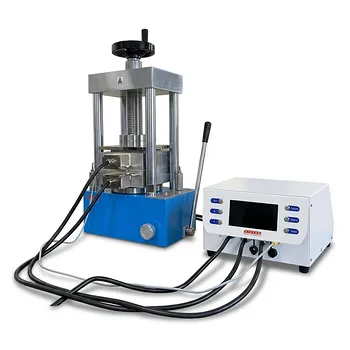
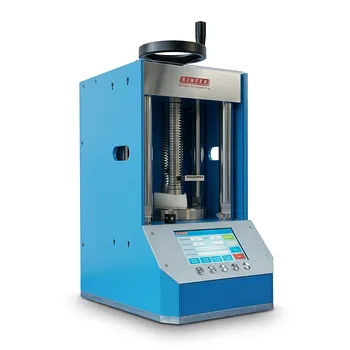
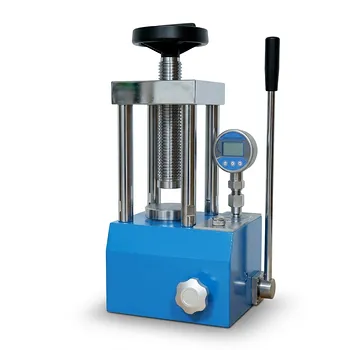
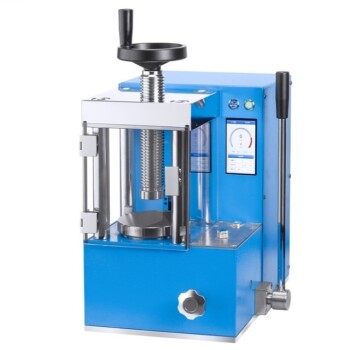
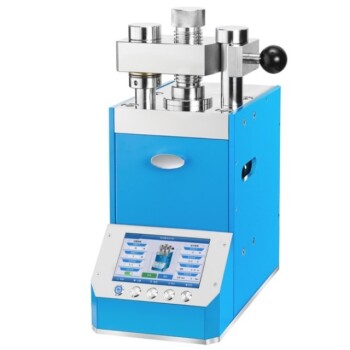
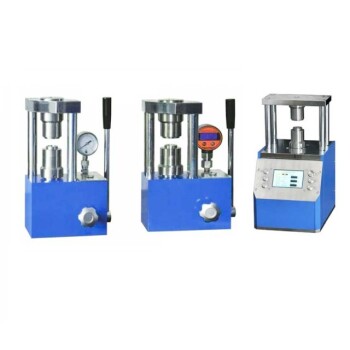
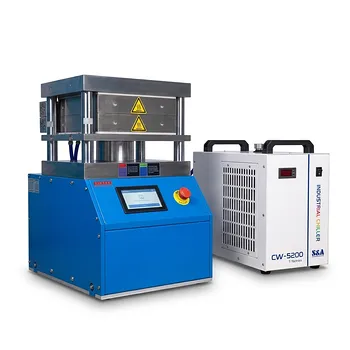
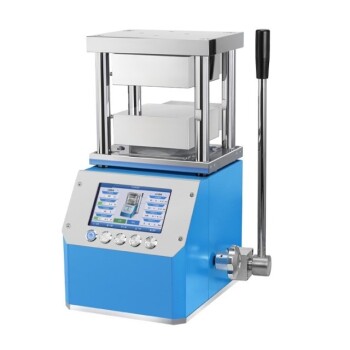
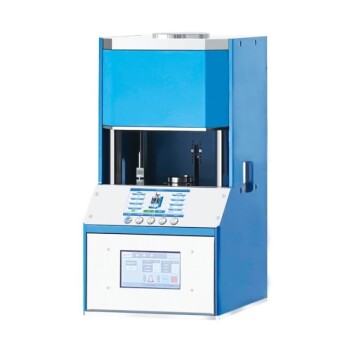
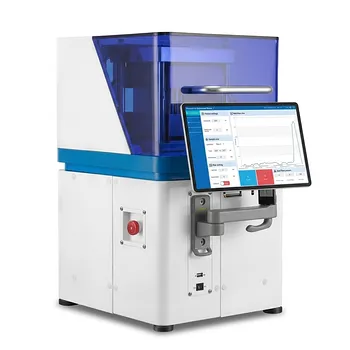
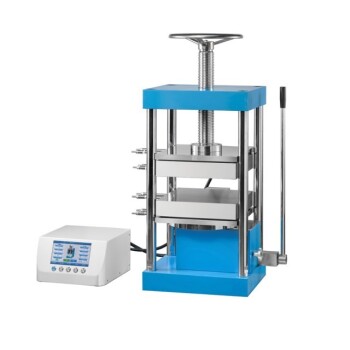
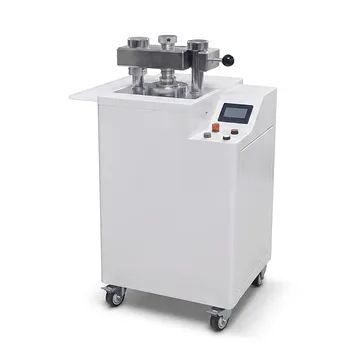
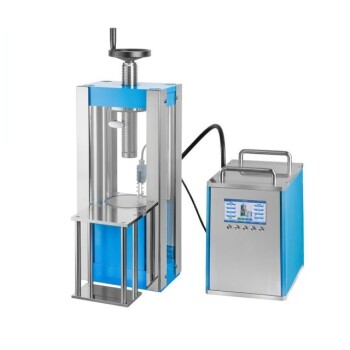
Precision densification is the cornerstone of accurate electrolyte characterization. A high-precision laboratory hydraulic press is essential for transforming loose electrolyte powders into high-density "green body" pellets by applying uniform, high-magnitude pressure. This process eliminates internal porosity and maximizes particle-to-particle contact, ensuring that subsequent ionic conductivity measurements reflect the material's intrinsic properties rather than artifacts caused by air gaps or poor physical interfaces.
The primary significance of the hydraulic press lies in its ability to achieve near-theoretical material density through mechanical compaction. By minimizing grain boundary resistance and ensuring structural integrity, it provides the necessary physical foundation for reliable electrochemical testing and successful high-temperature sintering.
Eliminating Resistance via Mechanical Densification
Minimizing Grain Boundary Impedance
High-pressure application (often reaching 500 to 720 MPa) forces particles into a state of plastic deformation and rearrangement. This eliminates the voids and air pockets that typically act as insulators, allowing ions to move freely across particle interfaces.
Facilitating Solid-Solid Contact
In all-solid-state battery research, the tightness of contact between electrolyte particles is the primary determinant of ion transmission efficiency. The press ensures that these interfaces are maximized, effectively reducing the inter-particle resistance that can hinder performance.
Establishing Material Uniformity
Precise control over the hydraulic ram ensures that pressure is distributed evenly across the mold. This results in uniform geometric dimensions and density throughout the pellet, which is critical for consistent ion flow during testing.
Ensuring Data Integrity in Electrochemical Testing
Accuracy in Impedance Spectroscopy (EIS)
Reliable Electrochemical Impedance Spectroscopy (EIS) data requires samples with minimal internal porosity. Without high-precision compaction, the resulting data may reflect surface-level voids and air gaps rather than the true bulk conductivity of the material.
Achieving Theoretical Density
Precision pressure control allows researchers to push the material density toward its theoretical limit. This provides a standardized baseline for comparing different electrolyte compositions without the "noise" of inconsistent physical preparation.
Optimizing Electrode Interfacing
The smooth, dense surface of a properly pressed pellet ensures optimal physical contact with test electrodes (such as gold or lithium). This superior contact quality is a physical prerequisite for obtaining reproducible and credible conductivity measurements.
Structural Foundations for Post-Processing
Prevention of Sintering Defects
A well-compressed green body has a uniform density that reduces internal shrinkage stress during high-temperature sintering. This prevents the formation of micro-cracks and structural deformations that would otherwise compromise the final electrolyte disk.
Creation of Self-Supporting Green Bodies
The high pressure generates sufficient mechanical strength for the pellet to be handled and moved into a furnace. This creates a self-supporting disk that maintains its integrity throughout the transition from a loose powder to a densified solid-state component.
Precision Dwell Time Control
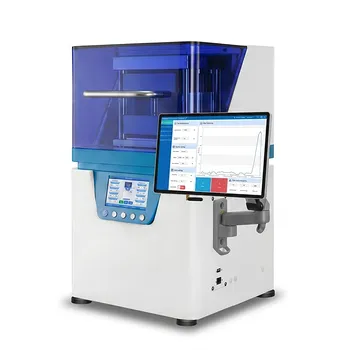
Advanced hydraulic presses allow for the precise management of dwell time, or how long the pressure is held. This ensures that the powder particles have sufficient time to settle and bond, preventing the "spring-back" effect that can lead to delamination.
Understanding the Trade-offs and Limitations
Risk of Phase Transitions
While high pressure is beneficial for density, excessive force can occasionally trigger unwanted phase transitions or amorphization in sensitive crystalline materials. Researchers must carefully calibrate pressure levels to avoid altering the material's chemical identity.
Mold Contamination and Wear
Repeated high-pressure cycles can lead to microscopic wear on the compression molds, potentially introducing impurities into the green body. Using high-quality hardened steel or tungsten carbide molds and ensuring rigorous cleaning protocols are necessary to maintain sample purity.
Equipment Calibration Requirements
A "high-precision" press is only effective if its gauges and valves are regularly calibrated. Inaccurate pressure readings can lead to inconsistent sample batches, undermining the repeatability of the entire research project.
How to Apply This to Your Research
To achieve the best results in solid electrolyte preparation, tailor your pressing strategy to the specific requirements of your material and testing protocol.
- If your primary focus is accurate intrinsic conductivity: Use the highest pressure possible (e.g., 700+ MPa) to reach near-theoretical density and eliminate grain boundary interference in EIS data.
- If your primary focus is successful sintering of ceramics: Prioritize pressure uniformity and precise dwell time to create a green body with minimal internal stress, preventing cracks during the heating phase.
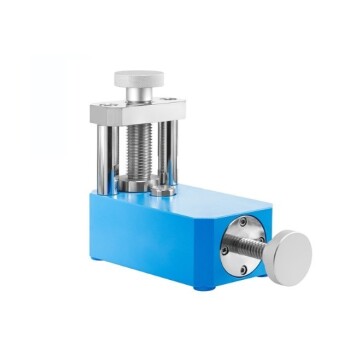
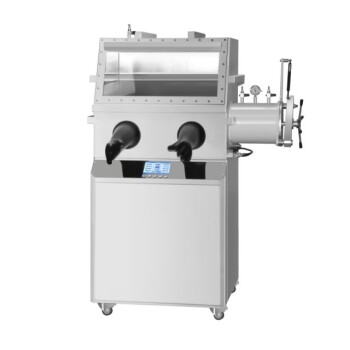
- If your primary focus is testing moisture-sensitive materials: Ensure your hydraulic press is compact enough to be operated inside a glovebox or an inert environment to prevent sample degradation during compaction.
By mastering the mechanical variables of the hydraulic press, you ensure that your experimental results are a true reflection of your material's potential.
Summary Table:
| Key Factor | Impact on Solid Electrolyte | Benefit to Research |
|---|---|---|
| Mechanical Densification | Eliminates voids and air pockets | Near-theoretical material density |
| Interface Optimization | Maximizes solid-solid contact | Minimizes grain boundary resistance |
| Pressure Uniformity | Ensures consistent geometric dimensions | Reliable and reproducible EIS data |
| Dwell Time Control | Prevents "spring-back" effect | Structural integrity for sintering |
| Precision Calibration | Standardizes sample preparation | High repeatability across batches |
Elevate Your Battery Research with KINTEK Precision
Achieve the theoretical density your solid-state electrolyte research demands with KINTEK’s comprehensive laboratory pressing solutions. Whether you require manual, automatic, heated, multifunctional, or glovebox-compatible models, our equipment is designed to eliminate grain boundary impedance and ensure the structural integrity of your green bodies.
From cold and warm isostatic presses to high-precision molds, KINTEK provides the mechanical foundation necessary for accurate electrochemical impedance spectroscopy (EIS) and flawless sintering.
Ready to optimize your material characterization? Contact our experts today to find the perfect pressing solution for your lab!
References
- Adwitiya Rao, Chandra Veer Singh. Iodide substituted halide-rich lithium argyrodite solid electrolytes with improved performance for all solid-state batteries. DOI: 10.1039/d5tc00529a
This article is also based on technical information from Kintek Solution Knowledge Base .
Related Products
- Automatic Hydraulic Hot Press with Large Plate and Precision Temperature Control for Advanced Material Sample Preparation and Industrial Research
- Automatic Heated Hydraulic Lab Press with Programmable Touch Screen Controls and Precision Temperature Regulation
- Automatic High Temperature Heated Hydraulic Press Machine with Heated Plates for Lab
- 24T 30T 60T Heated Hydraulic Lab Press Machine with Hot Plates for Laboratory
- Laboratory Hydraulic Press 2T Lab Pellet Press for KBR FTIR
People Also Ask
- What are the specific features and applications of hydraulic hot press machines? Precision Solutions for Modern Labs
- How does an automatic hydraulic press operate? Achieve Precision and Consistency in Lab Pelleting
- What are the advantages and common applications of an automatic hydraulic press? Elevate Your Lab's Precision
- What is the technical significance of setting a precise dwell time? Achieve Peak Material Density and Stability
- When is an automatic hydraulic press more suitable than a manual press? Scale Your Lab with Precision & Speed